How Do You Keep Cats off Kitchen Counters
If you’ve ever caught your cat perched on the kitchen counter, you know how frustrating it can be.
Keeping cats off kitchen counters is a common challenge for many pet owners.
Cats are naturally curious and often drawn to high surfaces, especially where food is involved.
But simply scolding them rarely works long-term.
Instead, you’ll need to understand why they’re attracted to counters and take thoughtful steps to discourage the behavior—while offering better options they actually want to use.
There’s more to it than you might expect.
Why Do Cats Climb on Kitchen Counters?

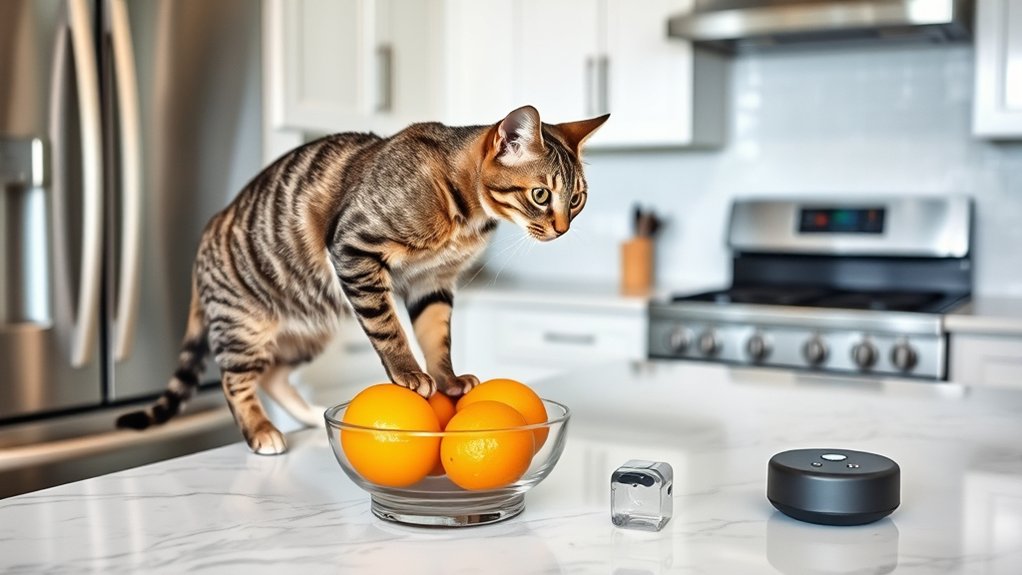
Why do cats climb on kitchen counters despite your efforts to keep them down? It’s a common question, and the answer lies in their natural instincts and curiosity. Cats see kitchen counters as elevated vantage points where they can survey their environment safely.
Cats climb kitchen counters driven by natural instincts and curiosity, seeking safe, elevated spots to observe their surroundings.
This instinctual behavior comes from their wild ancestors who climbed to avoid predators and hunt prey. You might also notice that kitchen counters often have interesting smells or food remnants, which attract cats. Their keen sense of smell draws them to these spots, making counters irresistible.
Additionally, cats are curious by nature. They explore their surroundings to satisfy their mental stimulation needs. Understanding why cats choose kitchen counters helps you empathize with their behavior.
It’s not about defiance; it’s about fulfilling their instincts and curiosity. Recognizing this is the first step toward managing their counter-climbing habit effectively.
Making Kitchen Counters Less Attractive to Cats
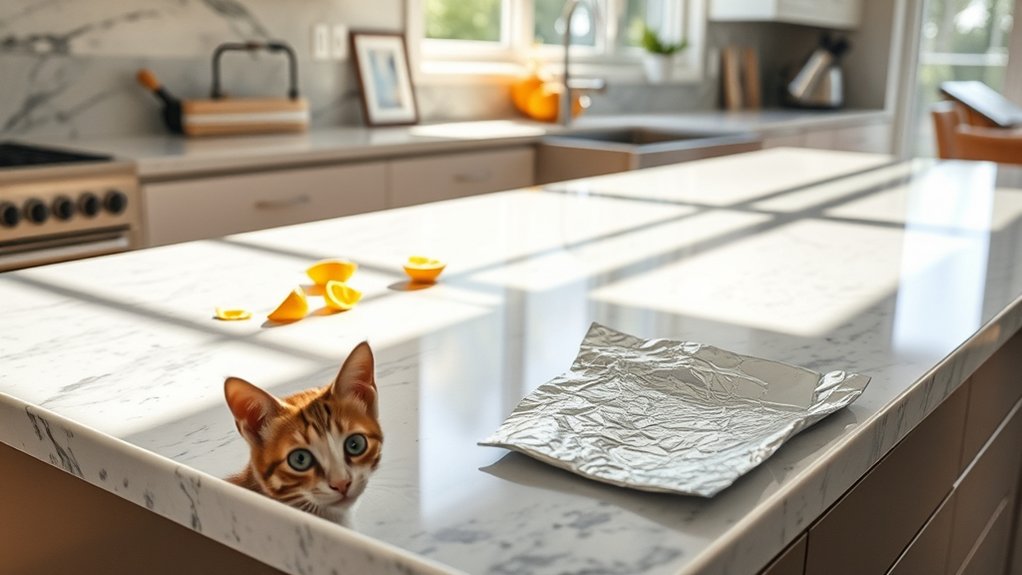
You can discourage your cat from jumping on counters by removing any food or crumbs that might tempt them. Adding textures cats dislike, like double-sided tape or aluminum foil, can also make the surface less inviting.
These simple changes help reduce your cat’s interest and keep them off the counters.
Remove Food Temptations
How often do cats jump on kitchen counters simply because they smell something delicious? Removing temptations is key to discouraging this behavior.
By decluttering surfaces and promptly putting away food, you can make your counters less appealing to your feline friend. Keep food sealed in containers and clean crumbs immediately to reduce enticing smells. Here’s a quick guide:
| Food Item | Storage Tip | Why It Helps |
|---|---|---|
| Leftovers | Use airtight containers | Minimizes food odors |
| Fruit | Store in fridge or bowl | Reduces sweet smells |
| Pet Food | Keep in sealed bins | Prevents easy access |
| Snacks | Place in cabinets | Out of sight, out of mind |
| Dirty Dishes | Wash promptly | Removes lingering scents |
Use Unpleasant Textures
Where do cats prefer to land when exploring your kitchen? Often, they choose smooth, comfortable surfaces like counters. To deter them, you can use unpleasant textures that make these spots less inviting.
Cats dislike sticky or rough surfaces, so placing materials like double-sided tape, aluminum foil, or plastic mats with nubs can discourage jumping. These two word discussion ideas, “sticky tape” and “foil barrier,” are proven, humane methods supported by animal behavior experts.
By introducing textures cats find uncomfortable, you’re not causing harm but gently training them to avoid counters. You’ll notice that with consistent use, your feline will seek more pleasant areas.
Using unpleasant textures alongside other strategies creates an effective, compassionate approach to keeping your kitchen counters cat-free.
Deterring Cats From Kitchen Counters: Effective Methods
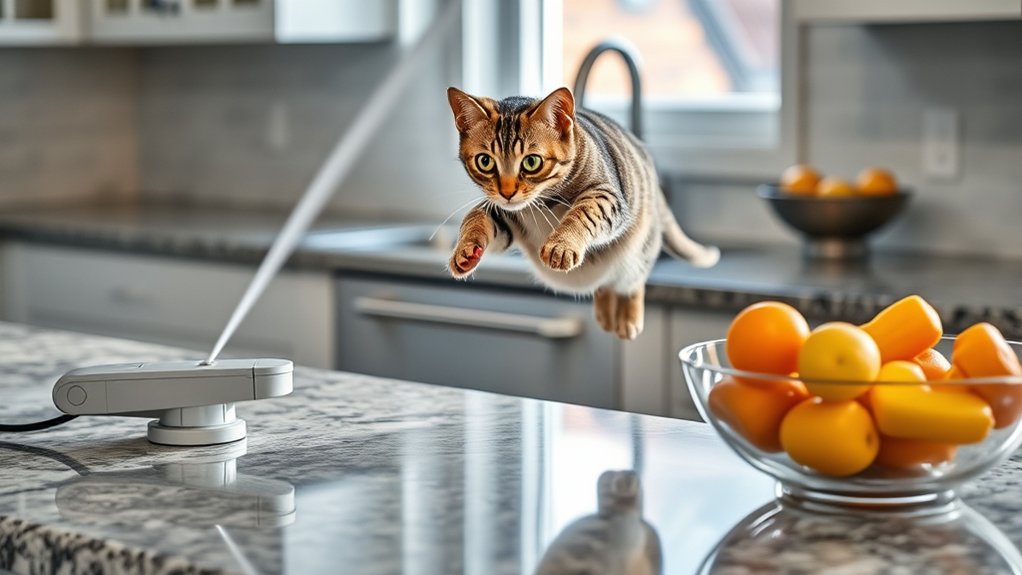
You can keep your cat off kitchen counters by combining physical barriers, sensory deterrents, and positive reinforcement training. Using items like double-sided tape or aluminum foil creates an unpleasant surface, while motion-activated devices can startle cats without harm.
Rewarding your cat for staying on the floor helps reinforce good behavior and makes these methods more effective.
Physical Barriers Installation
Why do cats love kitchen counters so much? They’re curious, love high vantage points, and often find tasty food remnants there. To keep them off, physical barriers can be very effective.
You might consider installing clear acrylic sheets or specialized mats with nubby textures that cats dislike walking on. When installing physical barriers, ensure they’re secure and cover the entire countertop edge to prevent jumping over. Use double-sided tape or non-slip pads underneath to keep barriers in place.
Sensory Deterrents Use
Physical barriers can discourage your cat from jumping onto kitchen counters, but combining them with sensory deterrents often yields better results. Sensory deterrents tap into your cat’s natural instincts and senses, making counters less appealing. You can use:
- Citrus scents, which cats typically dislike
- Double-sided tape to create an unpleasant texture
- Aluminum foil, known to deter cats with its noise and feel
- Commercial sprays containing synthetic cat pheromones to create a calming environment away from counters
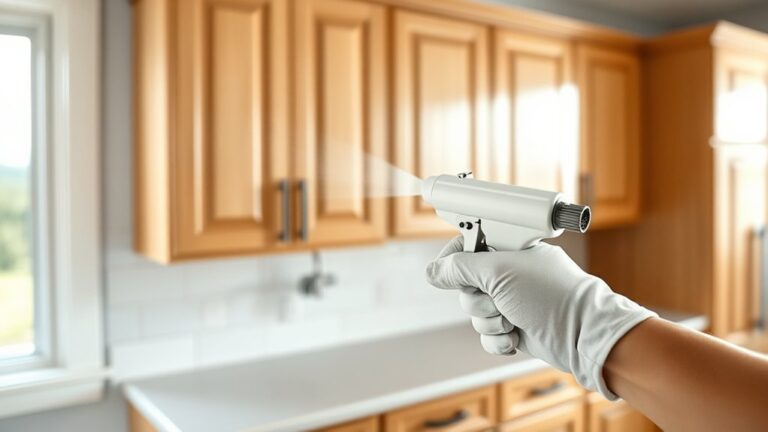
- Motion-activated air sprays that startle without harm
These methods work by targeting your cat’s senses rather than just physically blocking access. Using cat pheromones reduces stress, helping your cat feel safe without needing to explore forbidden areas. Combining sensory deterrents with barriers enhances success in keeping your kitchen counters cat-free.
Positive Reinforcement Training
A key strategy for keeping cats off kitchen counters involves positive reinforcement training, which encourages desirable behavior through rewards rather than punishment. When training animals like cats, you want to focus on rewarding them immediately after they choose an appropriate spot, such as a cat tree or bed, instead of the counter.
Use treats or praise to reinforce this choice consistently. This method not only helps your cat learn what’s acceptable but also strengthens your bond. Importantly, it supports food safety by keeping cats away from areas where food is prepared, reducing contamination risks.
Patience and consistency are essential since cats respond best to gentle encouragement. By applying positive reinforcement training, you create a respectful environment that benefits both your cat and your household.
How to Train Your Cat to Stay Off Kitchen Counters
How can you effectively teach your cat to avoid kitchen counters? Understanding training basics and cat psychology is key. Cats respond best to consistent, gentle guidance that respects their natural curiosity and behaviors.
Start by setting clear boundaries and using positive reinforcement to encourage desired behavior.
Try these strategies:
- Gently remove your cat from counters every time they jump up.
- Use a firm, calm “no” or a clap to interrupt unwanted behavior.
- Reward your cat with treats or affection when they stay off counters.
- Be consistent with rules across all family members to avoid confusion.
- Provide plenty of mental and physical stimulation to reduce boredom-driven counter exploration.
Creating Safe Alternatives to Keep Cats Off Counters
Where can your cat satisfy its natural instincts without invading your kitchen counters? Creating safe alternatives is key to redirecting their curiosity. Cats love to climb and perch up high, so providing counter height furniture like cat trees, shelves, or window perches can fulfill these needs safely.
These options offer your cat vertical territory, reducing the temptation to explore your counters. Research shows cats thrive when given dedicated spaces that mimic natural climbing environments, promoting mental and physical stimulation.
Providing vertical spaces mimicking natural environments helps cats thrive and reduces counter-climbing temptations.
When you introduce these alternatives, place them near kitchen areas to ease the transition. Use treats or toys to encourage your cat to use them. By investing in proper vertical spaces, you respect your cat’s instincts while protecting your kitchen surfaces.
Creating safe alternatives isn’t just about restriction; it’s about enriching your cat’s environment thoughtfully and effectively. This approach fosters a happier, healthier pet and a cleaner kitchen.
Handling Cats That Keep Returning to Kitchen Counters
Even with safe alternatives in place, some cats may stubbornly return to kitchen counters, drawn by smells, sights, or simple curiosity. To handle these persistent climbers, you need to tap into your cat’s counter intuition and understand clutter psychology.
Cats often explore counters because they offer a stimulating environment or hidden treats among clutter.
Try these strategies to discourage repeat visits:
- Remove tempting food and wipe surfaces to eliminate enticing smells.
- Clear clutter to reduce hiding spots and interest.
- Use double-sided tape or aluminum foil; cats dislike unstable textures.
- Offer engaging playtime elsewhere to satisfy curiosity and energy.
- Consistently redirect your cat to approved areas using gentle verbal cues.
Keeping Your Kitchen Clean When Cats Are Nearby
Why does keeping your kitchen clean become more challenging when cats are nearby? Cats are naturally curious and often jump onto counters, leaving fur, paw prints, and sometimes even knocking items over. To maintain cleanliness, you need to focus on keeping routines consistent and using scent masking strategies to deter them effectively.
Here’s a quick guide to help:
| Challenge | Solution |
|---|---|
| Fur on surfaces | Wipe counters daily |
| Paw prints & odors | Use pet-safe scent masking |
| Food spills & crumbs | Clean immediately after use |
Keeping routines, like wiping down counters after every meal, reduces the chance of lingering smells that attract cats. Additionally, scent masking using citrus sprays or commercial pet deterrents can discourage cats from approaching counters. These evidence-based approaches balance cleanliness with your cat’s natural behaviors, making your kitchen a cleaner, more pleasant space for everyone.
Frequently Asked Questions
Can Certain Cat Breeds Be More Prone to Climbing Counters?
Yes, some cat breeds show stronger counter tendencies due to instinct-driven behavior. You can use scent deterrents and dietary adjustments to reduce this.
Are There Specific Scents Cats Dislike to Keep Them Away?
Yes, cats dislike certain kitchen scents like citrus, vinegar, and lavender. You can use these smells to deter them gently, helping keep your counters clear while respecting their sensitive noses and natural preferences.
How Do Cats’ Natural Instincts Influence Their Counter Behavior?
Curiosity killed the cat, but their natural instincts drive counter exploration for safety and food. You’ll notice individual personalities and resource guarding shape behavior, so understanding these helps you manage their climbing urges effectively and compassionately.
Can Diet Changes Reduce a Cat’s Desire to Explore Counters?
Yes, diet changes can reduce your cat’s desire to explore counters by stabilizing their energy levels. Feeding balanced meals with appropriate nutrients helps prevent restlessness, making them less likely to seek extra stimulation on kitchen surfaces.
Are There Health Risks for Cats Jumping on Kitchen Counters?
You might be surprised, but yes, cats face health risks when jumping on counters. Sharp objects or hot surfaces threaten their safety, and kitchen hygiene can suffer.
Prioritizing kitchen safety protects your curious cat’s well-being.