How Do You Disinfect a Kitchen Sponge
You probably use your kitchen sponge every day, but have you thought about how often you disinfect a kitchen sponge? Sponges can harbor bacteria quickly, making proper sanitation essential to keep your kitchen safe.
There are simple methods you can use that don’t require harsh chemicals or complicated steps. Knowing which approach works best and how often to do it can make a big difference in maintaining hygiene—and it’s easier than you might expect.
Why Regularly Disinfecting Your Kitchen Sponge Matters
Why should you regularly disinfect your kitchen sponge? Because sponges are breeding grounds for bacteria, and failing to clean them properly increases sponge contamination risks significantly. Many people believe that rinsing a sponge with water or using dish soap alone is enough, but disinfection misconceptions like these can lead to unsafe kitchen practices.
Without regular disinfection, harmful pathogens such as Salmonella and E. coli can multiply rapidly, contaminating your dishes and countertops. You should understand that even a seemingly clean sponge can harbor millions of bacteria, making it a potential health hazard.
Regular disinfection interrupts this cycle, reducing microbial load and lowering your risk of foodborne illness. Ignoring this step means you’re allowing bacteria to thrive in a moist, nutrient-rich environment. So, don’t underestimate the importance of proper sponge care; it’s vital for maintaining a safe and hygienic kitchen.
How to Safely Sanitize Your Kitchen Sponge in the Microwave
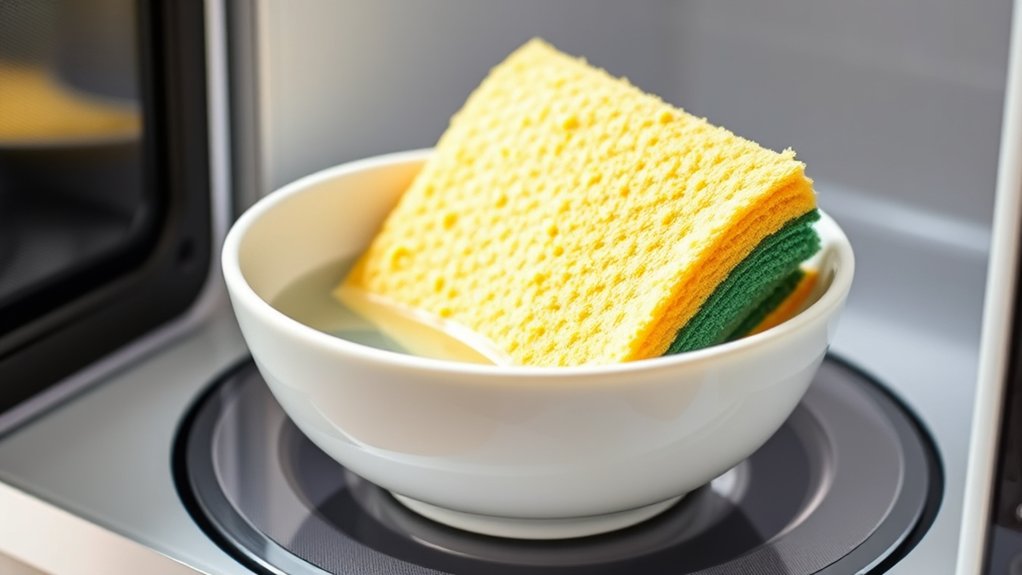
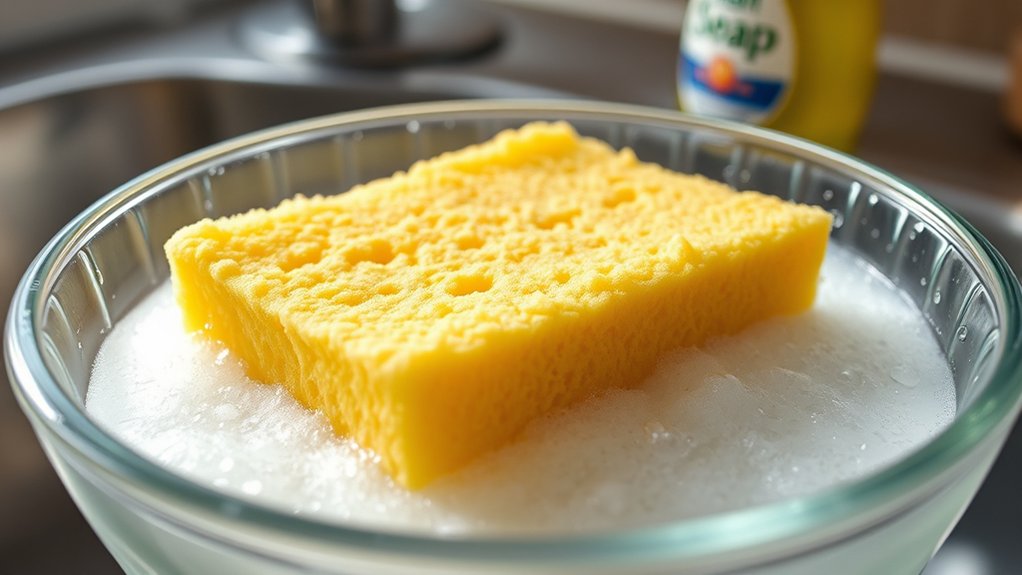
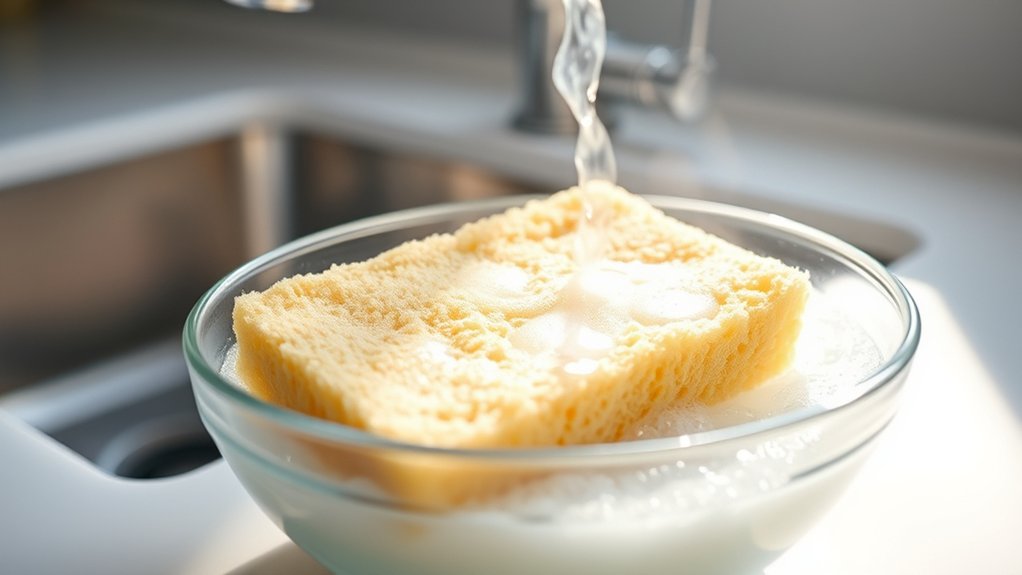
How exactly can you use your microwave to disinfect a kitchen sponge safely? First, ensure the sponge is thoroughly wet; a dry sponge can catch fire, posing serious risks. Place the damp sponge in a microwave-safe container or bowl to prevent direct contact with the microwave’s interior.
Heat it on high for about one to two minutes, depending on your microwave’s power. This process kills most bacteria and germs efficiently.
Remember to prioritize microwave safety by never microwaving sponges with metallic scrubbers or non-microwave-safe materials. After heating, let the sponge cool inside the microwave for a minute before handling to avoid burns.
Regularly sanitizing your sponge this way supports kitchen appliance care by preventing odors and residue buildup inside the microwave. Always monitor the process closely to avoid overheating. Using your microwave correctly keeps both your sponge and kitchen appliance clean and safe.
How to Disinfect Your Kitchen Sponge With Vinegar and Baking Soda
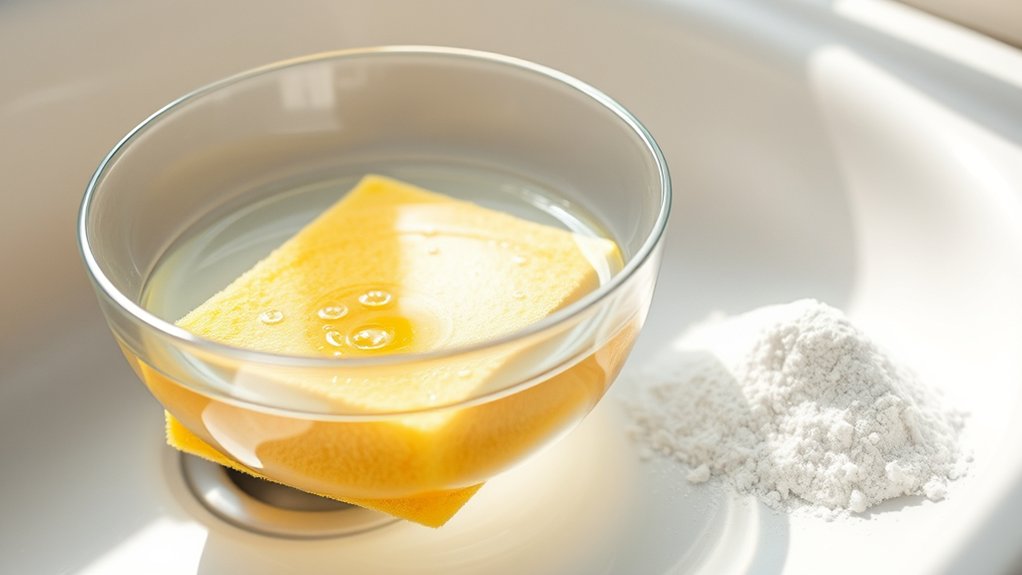
A reliable method to disinfect your kitchen sponge involves using vinegar and baking soda, both natural and effective cleaning agents. This approach aligns with disinfection science principles, exploiting vinegar’s acidity and baking soda’s mild abrasiveness to reduce bacterial load without harsh chemicals.
To properly disinfect your sponge and extend its useful sponge lifecycle, follow these steps:
- Soak the sponge in undiluted white vinegar for 5 minutes to break down grime and kill germs.
- Sprinkle baking soda over the damp sponge, allowing the fizzing reaction to lift debris and neutralize odors.
- Rinse thoroughly under hot water to remove residues and remaining contaminants.
This combination ensures a safer, chemical-free disinfection while acknowledging that sponges degrade over time. Regular application of this method can help maintain hygiene, but replacing your sponge periodically remains essential to prevent bacterial buildup and maintain kitchen safety.
Disinfecting Kitchen Sponges With Bleach and Commercial Cleaners
When dealing with stubborn bacteria, you might wonder whether bleach or commercial cleaners offer a more effective disinfection for your kitchen sponge. Bleach, diluted properly (about 3/4 cup bleach per gallon of water), can kill most bacteria and viruses quickly. Soak your sponge for five minutes, then rinse thoroughly.
Diluted bleach effectively kills most bacteria and viruses on kitchen sponges with a quick five-minute soak.
However, avoid mixing bleach with other chemicals, especially those containing ammonia or acids, to prevent toxic fumes.
Commercial cleaners often include antimicrobial coatings or ingredients like hydrogen peroxide, which can break down bacteria without harsh odors. Cleaning with hydrogen peroxide is a gentler alternative, and some products combine it with other agents for enhanced disinfection.
While these cleaners can be effective, always follow the manufacturer’s instructions and rinse sponges well afterward.
How Often Should You Replace Your Kitchen Sponge?
You should replace your kitchen sponge every one to two weeks to prevent harmful bacteria buildup. Watch for signs like unpleasant odors, discoloration, or a breakdown in the sponge’s texture.
Replacing it promptly helps keep your kitchen clean and safe.
Recommended Replacement Frequency
How often should you replace your kitchen sponge to maintain proper hygiene? Given the sponge survival rate of bacteria and its role in your cleaning cadence, replacing your sponge regularly is essential. Experts generally recommend changing your kitchen sponge every 1 to 2 weeks to minimize bacterial buildup and cross-contamination risks.
Consider these guidelines for replacement frequency:
- Replace sponges more frequently if used heavily or for raw meat cleanup.
- Adjust replacement timing based on your sponge’s exposure to moisture and food debris.
- Follow a strict cleaning cadence but remember that disinfection alone won’t extend sponge survival indefinitely.
Signs To Replace
Why should you pay close attention to the condition of your kitchen sponge? Because cleaning science shows that sponges harbor bacteria quickly, especially as their material durability declines.
You should replace your sponge as soon as you notice signs of wear, such as fraying edges, discoloration, or an unpleasant odor that doesn’t disappear after disinfecting. These indicators mean the sponge’s structure is compromised, reducing its effectiveness and increasing microbial buildup.
Even if your sponge looks intact, if it’s been in use longer than the recommended timeframe, it’s safer to replace it. Regularly assessing your sponge helps prevent cross-contamination and maintains hygiene.
Tips to Keep Your Kitchen Sponge Cleaner Between Uses
When should you clean your kitchen sponge to keep it from harboring harmful bacteria between uses? Establishing a consistent cleaning schedule is essential to minimize bacterial growth and maintain hygiene. You should clean your sponge daily or after heavy use to ensure it remains as sanitary as possible.
Additionally, proper storage methods play a critical role in preventing moisture buildup, which fosters bacteria.
To keep your kitchen sponge cleaner between uses, follow these tips:
- Rinse thoroughly with hot water and wring out excess moisture after each use to reduce bacterial buildup.
- Store your sponge in a well-ventilated area, such as a sponge holder that allows air circulation and quick drying.
- Rotate sponges regularly, replacing them every one to two weeks, or sooner if you notice odors or deterioration.
Frequently Asked Questions
Can Disinfecting a Sponge Damage Its Texture or Effectiveness?
Yes, disinfecting a sponge can risk damaging texture and reducing effectiveness if done too often or with harsh chemicals. You should use gentle methods and avoid excessive heat to keep your sponge functional and durable.
Are There Natural Alternatives to Vinegar and Baking Soda for Sponge Cleaning?
Yes, you can use lemon juice or hydrogen peroxide as natural alternatives for sponge cleaning. They effectively kill bacteria but use them cautiously to avoid damaging your sponge’s texture or reducing its lifespan.
How Do Disinfecting Methods Differ for Synthetic Versus Natural Sponges?
Think of synthetic sponge differences as a fortress needing stronger chemicals, while natural sponge differences resemble delicate gardens requiring gentle care. You’ll want to use milder disinfectants for natural sponges, avoiding harsh methods that damage their fibers.
Is It Safe to Use a Dishwasher to Sanitize Kitchen Sponges?
You can use a dishwasher for sponge sanitizing, but check dishwasher safety first. High heat may damage sponge texture, especially natural ones.
Synthetic sponges usually hold up better, so always inspect your sponge after each cycle.
Can Disinfected Sponges Spread Bacteria if Stored Improperly?
Think your disinfected sponge is safe? If you ignore proper disinfection storage, moisture lingers, turning it into a bacteria hotspot.
That careless sponge contamination can undo all your cleaning efforts, so store it dry and ventilated after disinfecting.