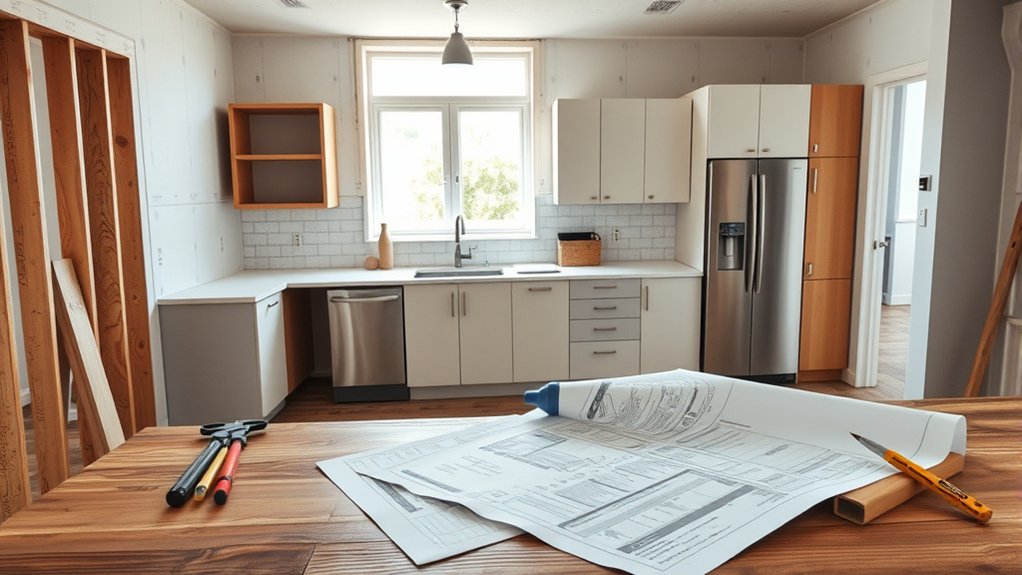
Does a Kitchen Remodel Require a Permit
When planning a kitchen remodel, you might wonder, does a kitchen remodel require a permit? The answer isn’t always straightforward—it depends on the extent of the work and your local regulations.
Structural changes, electrical upgrades, or plumbing adjustments usually require approval, while simple cosmetic updates often don’t. Understanding when permits are necessary can save you from costly fines or delays.
So, it’s vital to know what rules apply before you start.
When Do You Need a Kitchen Remodel Permit?

When do you need a kitchen remodel permit? You must obtain one whenever your project involves structural changes, electrical rewiring, or plumbing modifications. These elements directly impact safety and compliance with building codes, so skipping a permit risks fines or forced undoing.
Obtain a kitchen remodel permit for structural, electrical, or plumbing changes to ensure safety and code compliance.
It’s easy to get distracted by an unrelated topic or random idea that doesn’t affect permit requirements, but focus sharply on the legal triggers. Cosmetic upgrades like painting or replacing cabinets rarely need permits, whereas altering load-bearing walls or upgrading gas lines always do.
You’re responsible for checking with your local building department, as regulations vary by jurisdiction. Don’t assume a permit isn’t necessary just because a task seems minor; consult official guidelines to avoid costly mistakes.
Understanding exactly when you need a permit protects you, ensures your remodel meets safety standards, and preserves your home’s value. Stay precise and deliberate. Don’t let unrelated topics cloud your judgment.
Which Kitchen Projects Usually Require Permits?
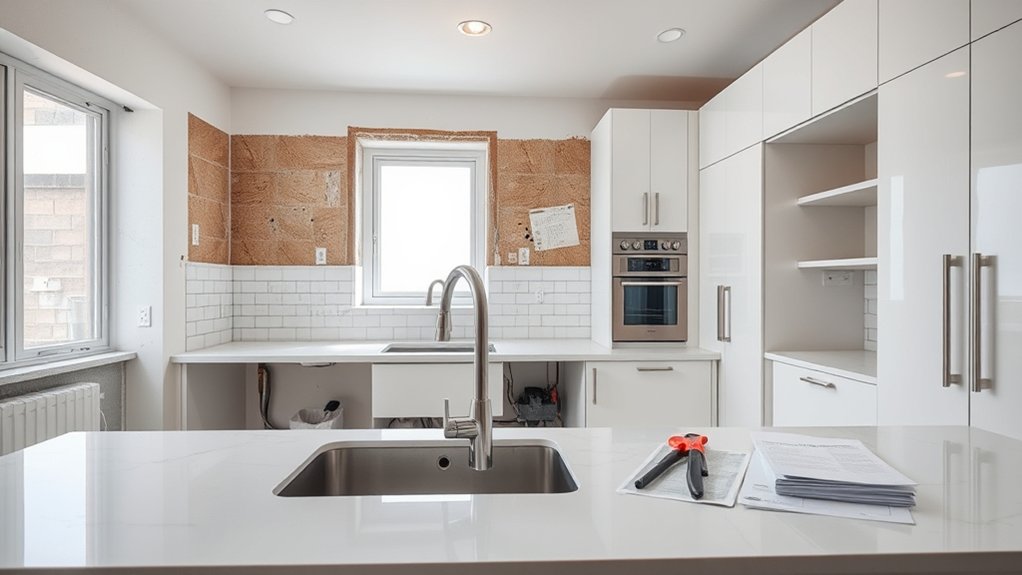
Which kitchen projects usually require permits depends largely on the scope and impact of the work involved. When you alter structural elements, change electrical or plumbing systems, or modify gas lines, you typically need a permit. These projects affect safety and compliance, influencing remodel costs and permit timelines significantly.
Minor cosmetic changes often don’t require permits.
| Kitchen Project | Permit Requirement |
|---|---|
| Structural changes | Always required |
| Electrical upgrades | Usually required |
| Plumbing modifications | Usually required |
| Cabinet or countertop replacement | Usually not required |
Understanding which projects require permits helps you plan better, avoid penalties, and manage remodel costs effectively. Permit timelines vary by jurisdiction but expect delays if you skip this crucial step.
Always factor permit acquisition into your schedule to keep your kitchen remodel on track and compliant with local codes.
How to Check Local Kitchen Remodel Permit Rules

To ensure your kitchen remodel meets local requirements, start by contacting your local building department directly for specific permit information. You can also access online resources that outline permit procedures and forms relevant to your area.
Don’t forget to review zoning and building codes to confirm your project complies with all regulations before you begin.
Local Building Department Contact
Wondering how to find out if your kitchen remodel requires a permit? The most reliable step is to contact your local department directly. Each jurisdiction sets its own contact requirements and rules, so reaching out ensures you get accurate, up-to-date information tailored to your project.
Look for the building or planning department’s phone number or email on your city or county’s official website. When you call or email, be prepared to provide specific details about your remodel, such as scope and materials involved. This helps the local department determine if a permit is necessary.
Don’t rely on assumptions. Verifying with the local department prevents costly fines or delays during your remodel. Taking this precise approach keeps your project compliant and on track.
Online Permit Resources
After contacting your local building department, you can further streamline the process by utilizing online permit resources. These tools offer clear guidelines and save you time, helping you avoid costly mistakes.
To efficiently check local kitchen remodel permit rules, follow these steps:
- Visit your municipality’s official website to find the permits section, where you’ll access specific requirements and application forms.
- Use online chat or email support for quick answers. This can provide valuable ideas and budgeting tips tailored to your project.
- Explore downloadable checklists and tutorials that clarify necessary documentation and fees, ensuring your remodel stays compliant and on budget.
Zoning and Code Requirements
How do zoning laws and building codes impact your kitchen remodel permit requirements? You need to understand local zoning variances and setback requirements before starting.
Zoning variances may be necessary if your remodel alters the footprint or expands beyond established property lines. Setback requirements dictate how far structures must be from property boundaries, affecting layout changes or additions.
To check, review your municipality’s zoning ordinances and building codes, often available online or at the local planning department. Contacting code enforcement can clarify if your remodel triggers permits.
Ignoring these rules risks costly delays, fines, or having to undo work. By verifying zoning and code requirements early, you ensure your kitchen remodel proceeds smoothly, complies fully with local laws, and avoids unexpected complications.
How to Apply for a Kitchen Remodel Permit
Where do you start when applying for a kitchen remodel permit? Begin by understanding local regulations to avoid unpermitted risks that can delay your project or incur fines. Next, prepare your application carefully to align with permit timelines set by your municipality.
Follow these steps:
- Gather Documentation: Collect detailed plans, including layout changes, electrical, and plumbing modifications. Accurate blueprints speed up approval and minimize revisions.
- Submit Application: File your permit request with the local building department. Ensure all forms are complete and fees are paid to prevent processing delays.
- Schedule Inspections: After approval, arrange inspections at key stages of your remodel. Passing inspections ensures compliance with safety codes and avoids costly rework.
Risks of Remodeling Your Kitchen Without a Permit
Why risk costly setbacks by remodeling your kitchen without a permit? Ignoring permit etiquette exposes you to serious risk considerations. Without official approval, your project might fail inspections, forcing you to redo work or pay hefty fines.
Unpermitted work can also void your homeowner’s insurance, leaving you vulnerable if accidents or damages occur. Moreover, if you plan to sell your home, unpermitted renovations can reduce its market value or delay the sale altogether.
Inspectors ensure your remodel meets safety codes. Skipping this step risks structural issues, faulty wiring, or plumbing failures that compromise your family’s safety. Adhering to permit etiquette protects your investment and guarantees your remodel complies with local laws.
Tips for a Smooth Kitchen Remodel Permit Process
When preparing to obtain a permit for your kitchen remodel, you’ll want to gather all necessary documents and plans before submitting your application. Staying organized and focused prevents delays caused by unrelated topic confusion or random ideas that don’t pertain to your project.
Follow these three tips for a smooth permit process:
- Research local requirements thoroughly. Understand exactly what permits you need and the specific codes that apply to your remodel.
- Prepare detailed, accurate plans. Include measurements, materials, and structural changes. Avoid adding unrelated topic elements that can complicate review.
- Communicate clearly with the permitting office. Ask precise questions and clarify doubts early to prevent random ideas or assumptions from prolonging approval.
Frequently Asked Questions
How Long Does It Take to Get a Kitchen Remodel Permit Approved?
You’ll typically get your kitchen remodel permit approved within two to six weeks, though planning delays and permit fees can extend this.
Staying organized and promptly addressing requests helps you avoid unnecessary hold-ups and costly setbacks.
Are Permits Required for Kitchen Cabinet Replacements Only?
Replacing cabinets is like swapping old shoes for new, fresh but simple. Generally, permits aren’t required for cabinet replacements alone.
However, always check local codes since permits required vary by location and scope of work.
Can a Homeowner Apply for a Kitchen Remodel Permit?
Yes, as a homeowner, you have the right to apply for a kitchen remodel permit. Understanding permit process nuances guarantees you submit accurate plans, meet local codes, and avoid delays, keeping your project compliant and on schedule.
Do Kitchen Remodel Permits Cover Electrical and Plumbing Work?
Yes, kitchen remodel permits typically cover electrical and plumbing work. You’ll need to follow permitting timelines closely and prepare for inspection requirements to guarantee all upgrades meet local safety codes and regulations efficiently.
What Are the Costs Associated With Obtaining a Kitchen Remodel Permit?
You’ll face permitting costs typically ranging from $100 to $500, depending on your location.
Approval timelines vary but usually take one to four weeks, so plan accordingly to avoid delays in your kitchen remodel project.