Are Cracks in Basement Floor Normal
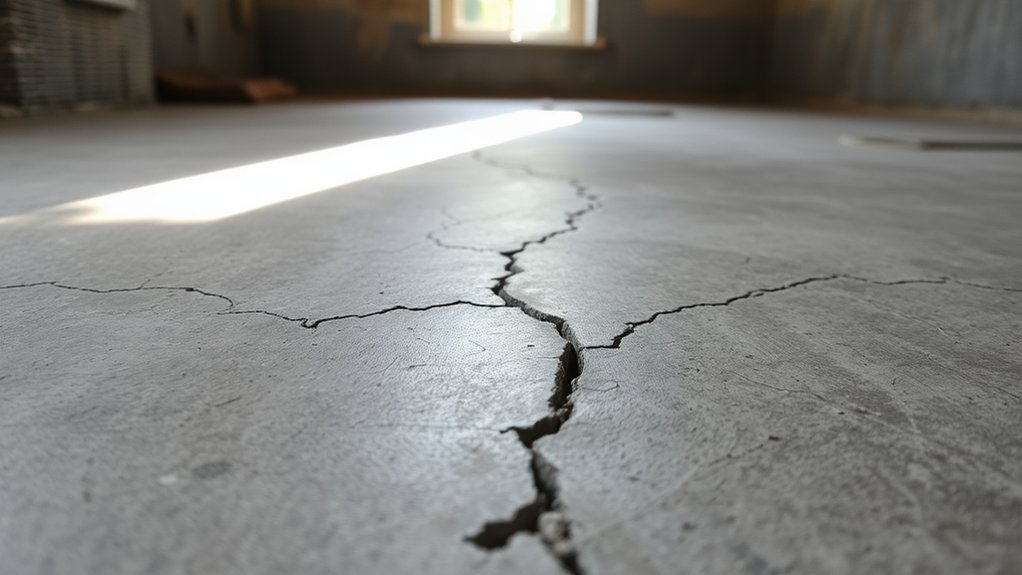
Cracks in basement floor can be like the early whispers of a deeper story—sometimes harmless, sometimes alarming. You might assume any crack signals trouble, but the reality is more nuanced. Understanding what causes these fractures, how environmental factors influence them, and which patterns require action is essential.
Before jumping to conclusions, consider the subtle clues that distinguish normal wear from structural concerns. This knowledge will guide your next steps effectively.
Key Takeaways
- Hairline shrinkage cracks in basement floors are normal and usually not a structural concern.
- Small cracks under 1/8 inch wide from minor settlement are common and often harmless.
- Cracks mainly form due to concrete shrinkage and drying during curing.
- Improper joint spacing can cause random cracks, but control joints typically guide crack locations.
- Large, widening, or irregular cracks require professional evaluation as they may indicate serious issues.
What Causes Basement Floor Cracks?
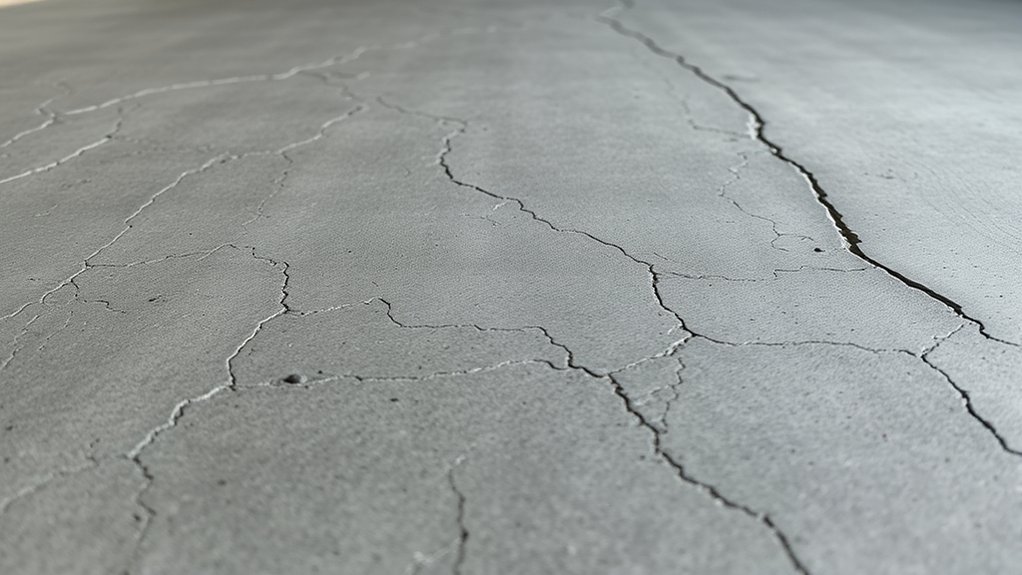
Why do basement floors develop cracks? You’ll find that most cracks originate from concrete shrinkage patterns as the slab cures and dries. Concrete loses moisture over time, causing it to contract and induce tensile stresses.
If these stresses exceed the concrete’s tensile strength, cracks form. Additionally, flooring joints, whether control joints or construction joints, play a critical role in crack formation. These joints are intentional weak points designed to manage where the concrete cracks, guiding shrinkage stresses to specific locations.
However, if joints are improperly spaced or too few, random cracking can occur due to uncontrolled shrinkage. Understanding these factors, shrinkage patterns and the strategic placement of flooring joints, helps you identify why cracks appear and how to mitigate their development in basement floors.
Which Basement Floor Cracks Are Normal to Ignore?
How can you determine which basement floor cracks warrant concern and which can be safely ignored? Generally, hairline shrinkage cracks, thin, superficial fissures caused by concrete curing, are normal and don’t compromise structural integrity.
Small cracks from uneven settlement may also be harmless if they’re less than 1/8 inch wide and show no signs of progression.
| Crack Type | Size | Action Required |
|---|---|---|
| Hairline Shrinkage | < 1/16 inch | Monitor, no immediate action |
| Uneven Settlement | < 1/8 inch | Inspect periodically |
| Large/Spreading | > 1/8 inch | Professional evaluation |
How Moisture and Temperature Affect Basement Cracks
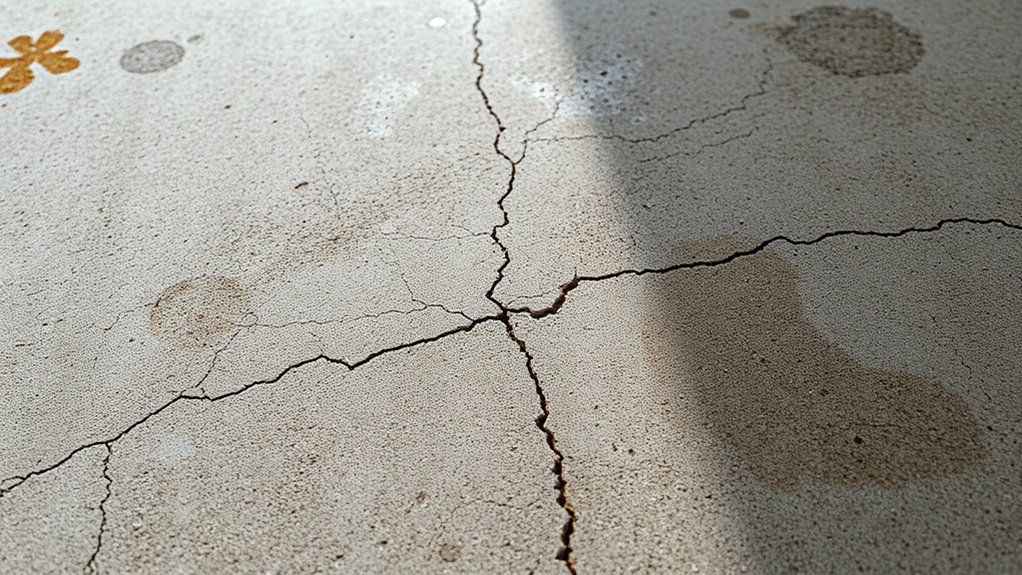
When do moisture and temperature shifts most significantly impact basement floor cracks? You’ll notice that moisture effects primarily influence cracks during periods of high humidity or water infiltration. Excess moisture causes concrete to expand slightly, exerting pressure on the slab and potentially widening existing cracks.
Conversely, drying leads to contraction, which can deepen fissures over time. Temperature impact plays a crucial role as well; concrete contracts in cold conditions and expands when warm. These cyclic expansions and contractions induce stress cycles that progressively deteriorate the integrity of the slab.
Understanding the interplay between moisture effects and temperature impact helps you anticipate when cracks might worsen. Managing environmental conditions and controlling moisture levels minimizes these stresses, reducing the likelihood of crack propagation in your basement floor.
Spotting Warning Signs in Basement Cracks
Where should you focus your attention to determine if basement floor cracks signal a serious problem? Begin by assessing crack patterns: look for horizontal, stepped, or wide cracks that may indicate shifting or settling.
Observe whether cracks intersect or form irregular shapes, which can be more concerning than simple hairline fractures. Next, examine moisture indicators around the cracks. Presence of dampness, efflorescence (white powdery residue), or mold suggests water infiltration that could exacerbate damage.
Also, note if cracks are accompanied by soil displacement or uneven flooring. Tracking changes in crack width or length over time helps identify active issues. By systematically assessing crack patterns alongside moisture indicators, you can distinguish between normal wear and potential warning signs that require further investigation or remediation.
How to Tell If Cracks Mean Structural Problems
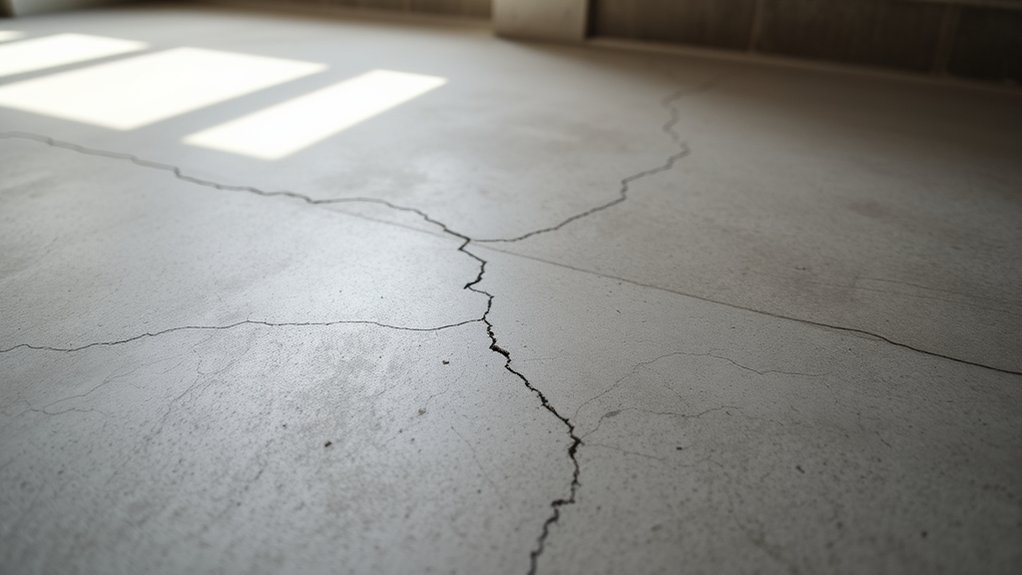
After identifying concerning crack patterns and moisture signs, you need to determine whether these cracks indicate structural issues. Focus on crack width, length, and direction.
Hairline cracks often reflect normal settling trends, while wider, jagged cracks may signal foundation problems. Also, evaluate crack aesthetics; irregular, uneven surfaces suggest stress beyond cosmetic concerns.
| Crack Characteristic | Structural Implication |
|---|---|
| Thin, straight | Normal settling, no concern |
| Wide (>1/4 inch) | Potential structural damage |
| Stair-step pattern | Possible foundation movement |
How to Monitor and Maintain Basement Floor Cracks
Although some basement floor cracks may appear harmless, you should regularly monitor them to detect any changes that signal structural issues. Begin by documenting crack dimensions, orientation, and location using precise crack assessment metrics such as width, length, and rate of progression over time.
Use a crack gauge or ruler to measure width consistently, noting any increase beyond 1/8 inch as potentially concerning. Additionally, assess basement crack aesthetics by noting discoloration, spalling, or debris accumulation, which can indicate moisture infiltration or material degradation.
Schedule monthly inspections, especially after significant weather changes, to track crack evolution. Maintain a detailed log with photographs and measurements to facilitate trend analysis. This systematic approach enables early identification of problematic cracks, ensuring you address issues before they compromise basement integrity.
When and How to Repair Basement Floor Cracks
When should you consider repairing basement floor cracks to prevent further damage? Act immediately if you notice crack widening, water seepage, or structural shifts. Delaying repairs can exacerbate foundational issues.
Use the table below to select the appropriate repair method based on crack characteristics:
| Crack Condition | Recommended Repair Method |
|---|---|
| Hairline, dry cracks | Polyurethane injection |
| Widening, water leaks | Epoxy injection |
| Structural, severe | Professional assessment |
Epoxy vs polyurethane choices depend on moisture presence: epoxy offers superior structural strength, ideal for load-bearing cracks, while polyurethane excels at sealing leaks due to its flexible, water-resistant properties.
Prepare the crack by cleaning debris and ensuring dryness for epoxy; moisture presence suits polyurethane. Applying the right material promptly prevents further deterioration and maintains basement integrity.
Frequently Asked Questions
Can Basement Floor Cracks Affect My Home’s Resale Value?
Yes, basement floor cracks can reduce your home’s resale value if left untreated. You should prioritize crack remediation and moisture mitigation to prevent structural damage. This ensures your property remains appealing and maintains its market worth.
Do Basement Floor Cracks Impact Home Insurance Coverage?
You’ll find basement floor cracks can impact home insurance if their crack origin suggests structural issues or moisture indicators.
Insurers analyze these factors to assess risk, potentially affecting coverage terms or claim approvals accordingly.
Are Basement Floor Cracks Common in New Construction Homes?
Yes, basement floor cracks are common in new construction homes due to shrinkage and settling. You should analyze crack causes precisely and apply appropriate repair strategies, like epoxy injection or slab stabilization, to ensure structural integrity.
Can Basement Floor Cracks Cause Mold Growth?
Yes, crack severity influences moisture migration through your basement floor, increasing mold growth risk. You should assess and repair severe cracks promptly to prevent water intrusion and subsequent mold proliferation in vulnerable areas.
What Materials Are Best for Basement Floor Crack Repairs?
You should use epoxy or polyurethane crack repair materials for basement floor cracks management. These offer strong adhesion, flexibility, and waterproofing, ensuring durable repairs that prevent moisture infiltration and structural deterioration in your basement floor.
Conclusion
You’ll likely see small, hairline cracks weaving through your basement floor like faint veins—these are normal signs of concrete settling. But don’t let bigger, jagged fractures creep unnoticed; they’re red flags waving structural concerns. Keep a close eye, measure widths regularly, and watch for moisture pooling.
With careful monitoring and timely patching, you can prevent minor fissures from turning into costly repairs. Maintaining the integrity beneath your feet is essential. Understanding whether cracks in basement floor are normal helps you take the right steps to protect your home.