How Much Does a Solid Surface Bathtub Weigh
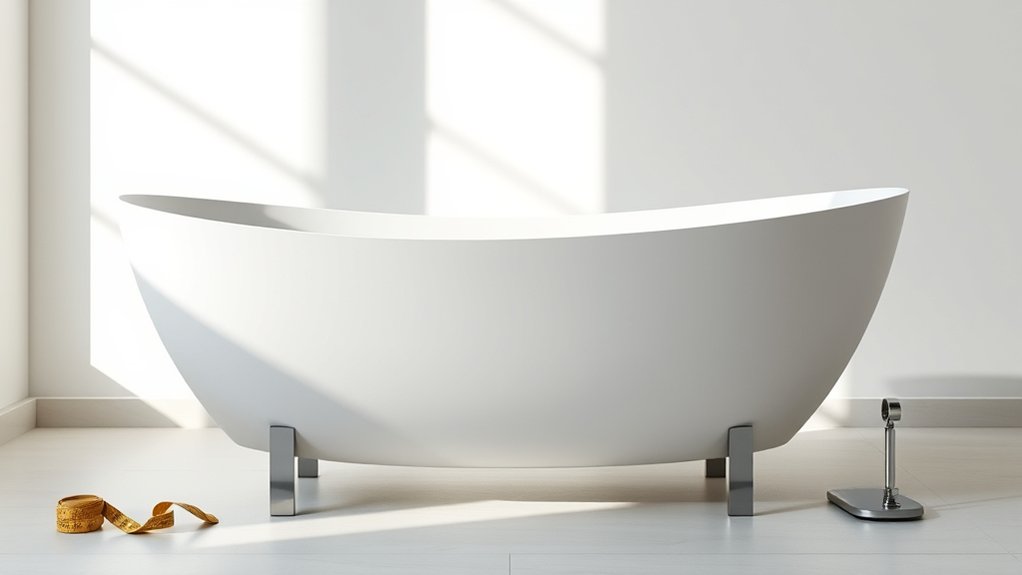
A solid surface bathtub typically weighs between 150 and 250 pounds, placing it in a unique range between acrylic and cast iron options. Understanding the weight of a solid surface bathtub is essential because it affects your bathroom’s floor structure and installation approach.
Factors like size, shape, and material composition all play a role in the final heft. Before you decide, it’s important to contemplate how these elements influence both the tub’s weight and your space’s readiness.
Key Takeaways
- Solid surface bathtubs typically weigh between 150 and 250 pounds, balancing sturdiness and manageable installation.
- Their weight is heavier than acrylic tubs but lighter than cast iron models, which often exceed 300 pounds.
- Larger or more complex tub shapes increase weight due to additional material volume and thickness.
- The non-porous composite blend of minerals and resin contributes to the tub’s durable yet substantial weight.
- Floor reinforcement may be necessary to support the increased static load of solid surface bathtubs during installation.
What’s Inside a Solid Surface Bathtub?
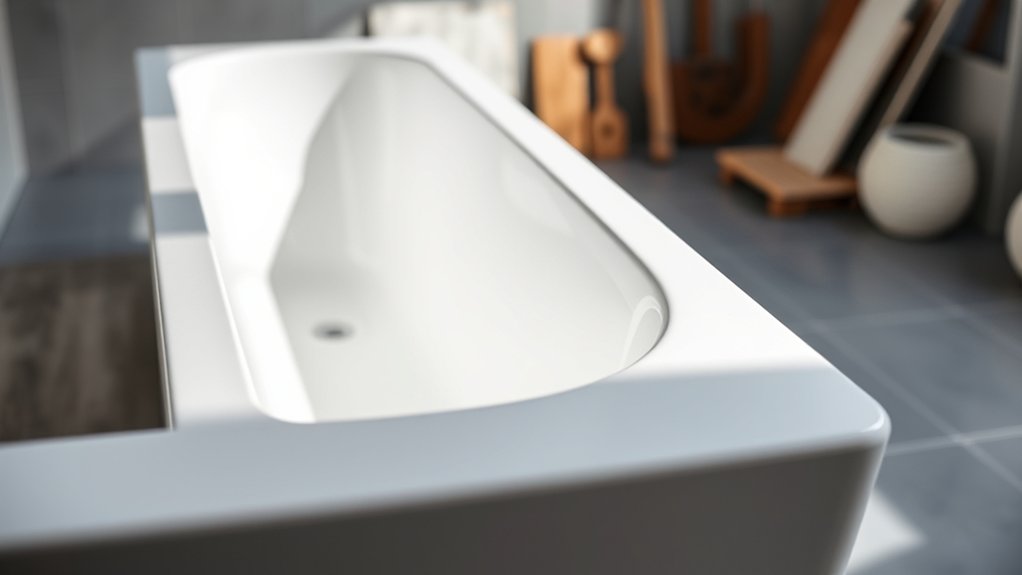
Although solid surface bathtubs may look like a single material, they actually consist of a composite blend of natural minerals and high-quality resins. This combination allows you to enjoy aesthetic materials that mimic stone or marble, providing a seamless, elegant finish without the weight or fragility of natural stone.
When you handle these bathtubs, you’ll notice their smooth, non-porous surface, which resists stains and scratches, addressing common maintenance concerns. The resin binds the minerals tightly, enhancing durability and simplifying cleaning routines.
Understanding this composition helps you appreciate how these materials balance visual appeal with practical upkeep. So, when selecting a solid surface bathtub, you’re investing in a product designed to combine beauty with functional longevity, reducing the effort needed to maintain its pristine appearance.
Typical Weight Range of Solid Surface Bathtubs
The composite blend of natural minerals and resins not only shapes the look and durability of solid surface bathtubs but also influences their weight. Typically, these tubs weigh between 150 to 250 pounds.
When considering weight, you should factor in how this range compares to materials like cast iron or acrylic. Solid surface tubs generally fall between the heavier cast iron, which can exceed 300 pounds, and lighter acrylic models, often under 100 pounds.
This balance offers both sturdiness and manageable installation. Understanding these weight considerations helps you plan for structural support and transportation. Keep in mind that the solid surface’s density directly affects the tub’s weight, making it a critical factor in your material comparison and overall bathroom design decisions.
How Size and Shape Affect Solid Surface Bathtub Weight
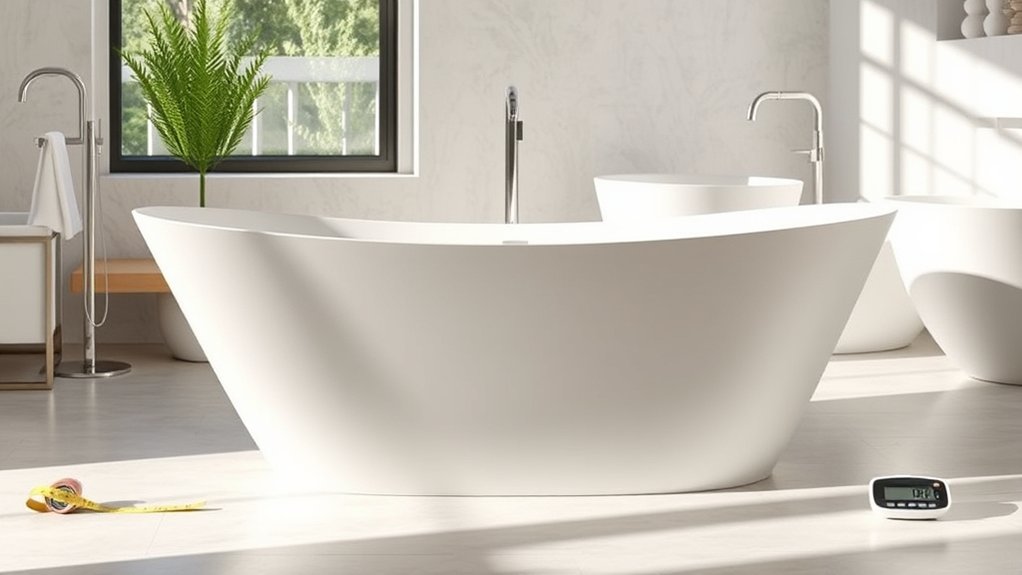
You’ll find that larger bathtubs naturally weigh more due to increased material volume. The shape also plays a critical role, as complex or thicker designs add extra weight even at similar sizes.
Understanding these factors helps you accurately estimate the load for installation and support requirements.
Size Impact on Weight
How much does the size of a solid surface bathtub influence its weight? Size considerations are critical because the overall volume of material directly impacts weight.
Since solid surface bathtubs use composite materials combining resin and mineral fillers, their material properties remain consistent regardless of size. Consequently, as you increase the bathtub’s length, width, and depth, the weight increases proportionally due to the greater amount of dense composite material required.
When planning installation or support structures, you must accurately assess the bathtub’s dimensions to estimate its weight. Ignoring size considerations can lead to underestimating load requirements.
In short, the larger the solid surface bathtub, the heavier it will be, since the weight correlates primarily with the volume of material used, given uniform material properties.
Shape Influence on Weight
Why does the shape of a solid surface bathtub matter when estimating its weight? The shape influences the volume of material used, directly affecting the overall weight. Unlike simple size metrics, shape determines how much solid surface material is necessary, impacting both structural integrity and weight distribution.
When you consider shape influence, intricate designs with curves or thicker edges typically weigh more than streamlined forms. For accurate material comparison, keep these factors in mind:
- Complex shapes require more material to maintain strength, increasing weight.
- Minimalist shapes reduce material use, lowering weight without compromising durability.
- Shape affects internal volume, altering the total amount of solid surface used.
Understanding shape influence helps you estimate weight more precisely, critical for installation planning and support structure design.
Why Your Bathroom Floor Cares About Bathtub Weight
When does bathtub weight become a critical factor for your bathroom floor? It’s the moment you realize the solid surface tub delivers a one two punch: significant static load combined with water weight.
Your floor’s structural integrity must handle this combined stress without compromising safety or stability. Ignoring this can lead to hidden costs, such as floor reinforcement or damage repairs after installation.
You need to assess your subfloor and joists’ load capacity precisely. Solid surface tubs often exceed traditional tub weights, so relying on standard flooring assumptions risks failure.
Understanding this ensures you avoid structural issues and costly fixes. In short, your bathroom floor’s ability to support the tub’s weight directly impacts your project’s success and long-term durability.
Preparing Your Bathroom for a Heavy Tub

Where do you begin to prepare your bathroom for the added weight of a solid surface bathtub? Start by evaluating your floor’s load-bearing capacity, as heavy tub considerations require precise assessment. You’ll likely need floor reinforcement to support the tub safely and prevent structural issues.
Consult a structural engineer or contractor to determine if joists need strengthening or additional support beams.
Key steps include:
- Inspecting subfloor condition and material strength
- Installing additional joists or sistering existing ones
- Using a thick, durable underlayment to distribute weight evenly
Taking these measures ensures your bathroom floor can handle the solid surface bathtub’s substantial weight without compromising safety or stability. Proper floor reinforcement is essential for a successful installation.
Best Practices for Moving and Installing Solid Surface Bathtubs
How do you safely move and install a solid surface bathtub without risking damage or injury? First, gather the right tools and at least two strong helpers to evenly distribute the tub’s weight. Use lifting straps and padded dollies to protect the surface from scratches.
Avoid dragging the tub across floors to prevent damage. When navigating tight spaces, plan your route carefully to avoid obstacles. Don’t get distracted by unrelated topics.
For installation, ensure the floor support meets weight requirements and use a level to position the tub precisely. Secure the bathtub with manufacturer-recommended brackets and seal all joints to prevent leaks.
These ideas keep the process efficient and reduce risks, ensuring your solid surface bathtub is installed safely and lasts long without costly repairs.
Frequently Asked Questions
How Do Solid Surface Bathtubs Compare to Acrylic Tubs in Durability?
You’ll find solid surface durability surpasses acrylic comparison, as it resists scratches, stains, and heat better. Solid surfaces offer a more robust, long-lasting option, while acrylic tubs may scratch or discolor more easily over time.
Can Solid Surface Bathtubs Be Repaired if Scratched or Chipped?
Sure, solid surface bathtubs support several smart repair options. While they’re known for strong scratch resistance, minor scratches or chips can be skillfully sanded or filled, restoring smooth surfaces without sacrificing structural strength or style.
What Maintenance Is Required to Keep a Solid Surface Bathtub Looking New?
You’ll maintain your solid surface bathtub by following a regular maintenance routine, using non-abrasive cleaning agents to avoid damage. Wipe surfaces after use, clean gently with mild detergents, and avoid harsh chemicals to keep it looking new.
Are Solid Surface Bathtubs Environmentally Friendly or Recyclable?
Solid surface bathtubs have a moderate environmental impact due to energy-intensive manufacturing. You’ll find recycling feasibility limited since their composite materials complicate processing.
Consider durability and reuse to minimize ecological footprint effectively.
Do Solid Surface Bathtubs Retain Heat Better Than Other Materials?
Like a cozy stone hearth, solid surface bathtubs excel in thermal efficiency, so you’ll enjoy superior solid surface heat retention. This means your bathwater stays warmer longer compared to traditional materials, enhancing your soaking experience practically and efficiently.
Conclusion
Think of your bathroom floor like a sturdy bridge: it must hold steady under the solid surface bathtub’s 150 to 250 pounds without bending or cracking. Just as engineers reinforce bridges before heavy loads, you’ll want to assess and possibly strengthen your subfloor to handle the tub’s substantial weight.
Taking these practical steps guarantees a safe, lasting installation—preventing costly damage and maintaining your bathroom’s structural integrity for years to come. Proper preparation is key when considering how much does a solid surface bathtub weigh to ensure your floor supports it reliably.