Can Floor Tile Be Painted
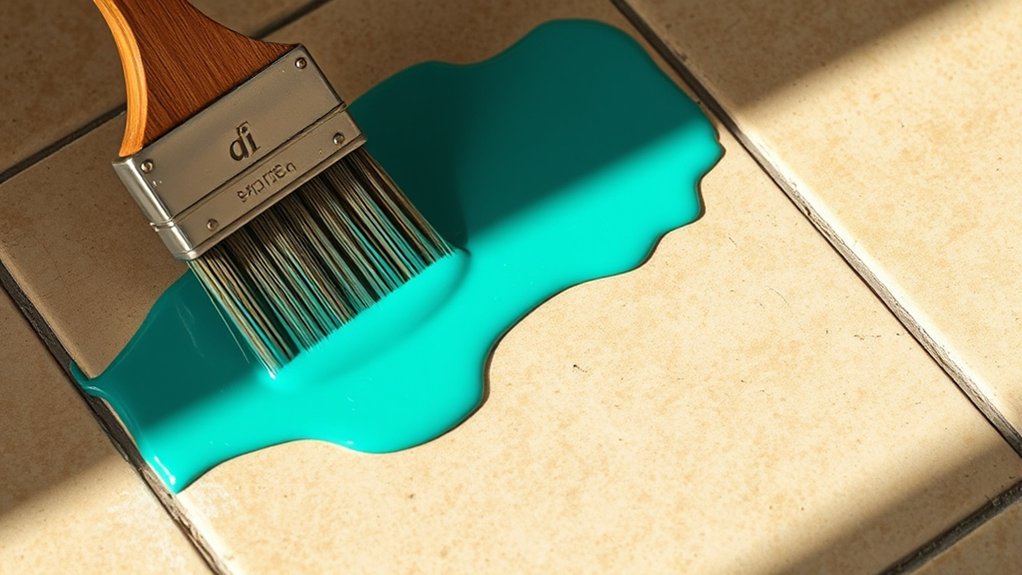
You might wonder if floor tile can be painted to refresh a space without a full renovation. The answer is yes, but achieving a durable, attractive finish requires more than just applying color.
Proper preparation, choosing the right paint, and sealing the surface are essential steps that can make or break the outcome. Before you start, it’s important to understand when painting works best and when it might fall short—details that could save you time and effort.
Key Takeaways
- Floor tiles can be painted if properly cleaned, primed, and suited for smooth, non-porous surfaces like porcelain or ceramic.
- Use epoxy-based or latex floor enamel paints for durability, especially in high-traffic areas.
- Avoid painting tiles in consistently damp or high-moisture areas due to adhesion and peeling issues.
- Applying a primer and sealing with water-based polyurethane enhances paint adhesion and longevity.
- Regular maintenance, including gentle cleaning and protecting surfaces, helps preserve the painted finish.
Can You Paint Floor Tiles? Which Types Are Best?
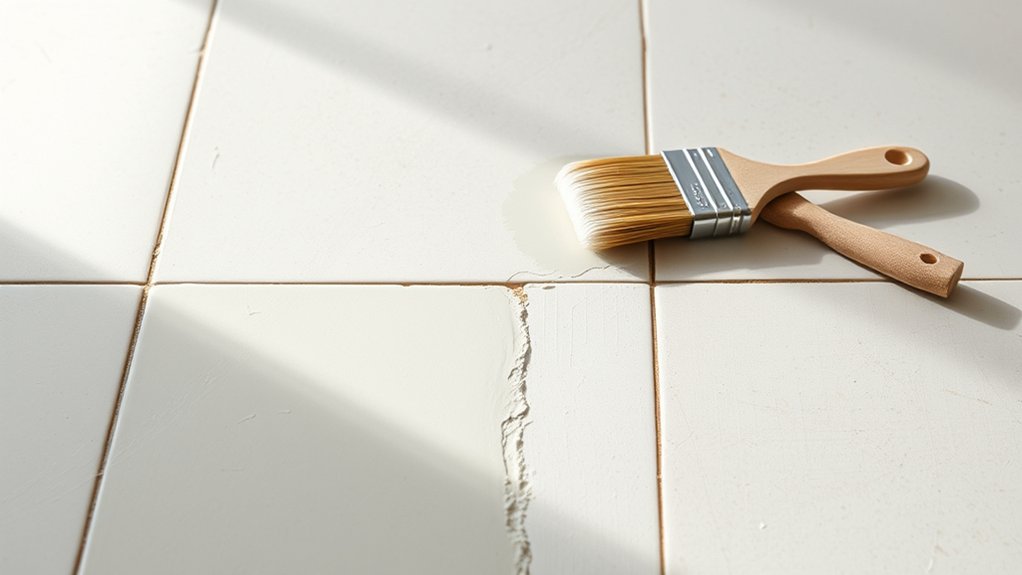
Wondering if you can paint floor tiles? Yes, you can, but the key lies in the type of tile. Porcelain and ceramic tiles, common in transit flooring and outdoor tiles, respond well to painting due to their smooth, non-porous surfaces.
These materials allow paint to adhere effectively when properly prepped with cleaning and priming. Avoid highly textured or glazed tiles, as paint may not bond securely.
Transit flooring, designed for durability, benefits from specialized epoxy or enamel paints, ensuring longevity despite heavy foot traffic. Outdoor tiles require weather-resistant coatings that withstand moisture and temperature changes.
When You Shouldn’t Paint Floor Tiles
You shouldn’t paint floor tiles in areas with high moisture, as the paint won’t adhere well and will peel quickly. Avoid painting damaged or cracked tiles, since the surface won’t be smooth or stable enough for a lasting finish.
Also, steer clear of heavy traffic zones where constant wear will quickly degrade the paint.
High-Moisture Areas
Why should you avoid painting floor tiles in high-moisture areas? High moisture creates a challenging environment for paint adherence, often leading to peeling and bubbling. Tile sealing alone can’t fully protect painted surfaces from constant dampness. Consider these factors:
- Persistent humidity undermines paint adhesion, causing early failure.
- Water seeps through grout lines, weakening the paint’s bond.
- Frequent cleaning with water and detergents accelerates paint wear.
- Mold and mildew growth thrive under paint films in wet conditions.
If you must paint tiles in these spaces, prioritize professional-grade tile sealing and moisture-resistant coatings. Still, it’s generally best to avoid painting floors in bathrooms, laundry rooms, or basements, where high moisture persists. This ensures durability and maintains the aesthetic integrity of your flooring over time.
Damaged Or Cracked Tiles
When should you steer clear of painting floor tiles? Avoid painting if your floor has damaged or cracked tiles. Cracked tiles compromise the surface’s integrity, causing paint to adhere unevenly and peel prematurely.
Painting over cracked tiles only masks the damage temporarily without addressing underlying issues. Instead, prioritize tile repair to restore a smooth, stable foundation before considering paint.
Properly repaired tiles ensure even paint application and lasting results. Skipping tile repair risks an unsightly finish and wasted effort.
If you notice chipped or broken tiles, fix them first or replace the affected pieces. Only paint on a solid, intact surface to guarantee durability and maintain your floor’s aesthetic appeal.
This approach safeguards your investment and ensures a flawless, professional finish.
Heavy Traffic Zones
Beyond ensuring your tiles are intact and free from damage, it’s important to contemplate the environment where the painted floor will be used. Heavy traffic zones are a critical two word discussion idea when deciding whether to paint floor tiles.
In areas with constant footfall, painted surfaces face accelerated wear, complicating floor maintenance and shortening aesthetic longevity. Avoid painting tiles in:
- Commercial entryways with nonstop pedestrian flow
- Kitchens where spills and frequent cleaning occur
- Hallways connecting busy rooms or offices
- Retail spaces with carts and heavy equipment
In these scenarios, paint chips quickly, undermining durability and appearance. By understanding traffic patterns and maintenance demands, you’ll ensure your investment in painted tiles remains practical and visually appealing over time.
How to Prepare Floor Tiles for Painting
Before you start painting, make sure to thoroughly clean and degrease the floor tiles to remove all dirt and oils that could prevent proper adhesion.
Next, gently sand the surface to create a texture that helps the paint grip better. These steps are essential to achieve a smooth, long-lasting finish.
Cleaning And Degreasing
A thorough cleaning and degreasing of your floor tiles is essential to guarantee paint adheres properly and lasts. Start with these effective cleaning methods and degreasing tips to prepare your surface:
- Sweep and vacuum to remove loose dirt and dust.
- Mop the tiles with a mixture of warm water and mild detergent to break down surface grime.
- Apply a degreaser specifically designed for tiled floors, allowing it to sit for 10 minutes to dissolve oils.
- Rinse thoroughly with clean water, ensuring no residue remains.
Following these steps ensures your floor tiles are impeccably clean, free from contaminants that could compromise paint adhesion. Skipping this process can lead to peeling or uneven finishes, so take the time to prepare your tiles properly for a flawless, lasting paint job.
Surface Sanding Techniques
Although thorough cleaning removes surface contaminants, you’ll need to sand your floor tiles to create the ideal texture for paint adhesion. Start with a medium-grit sanding block or electric sander, focusing on even abrasion without damaging the tile surface.
Pay close attention to edge alignment, ensuring that grout lines and tile edges are uniformly prepped for a seamless finish. This precision helps prevent paint from pooling or chipping along edges.
After sanding, wipe away dust with a damp cloth to avoid interference with primer application. For projects involving color blocking, well-prepared surfaces allow crisp, clean transitions between hues.
Proper sanding not only enhances paint durability but also elevates the aesthetic quality of your tiled floor, setting a flawless base for long-lasting, vibrant results.
Picking the Best Paint for Floor Tiles
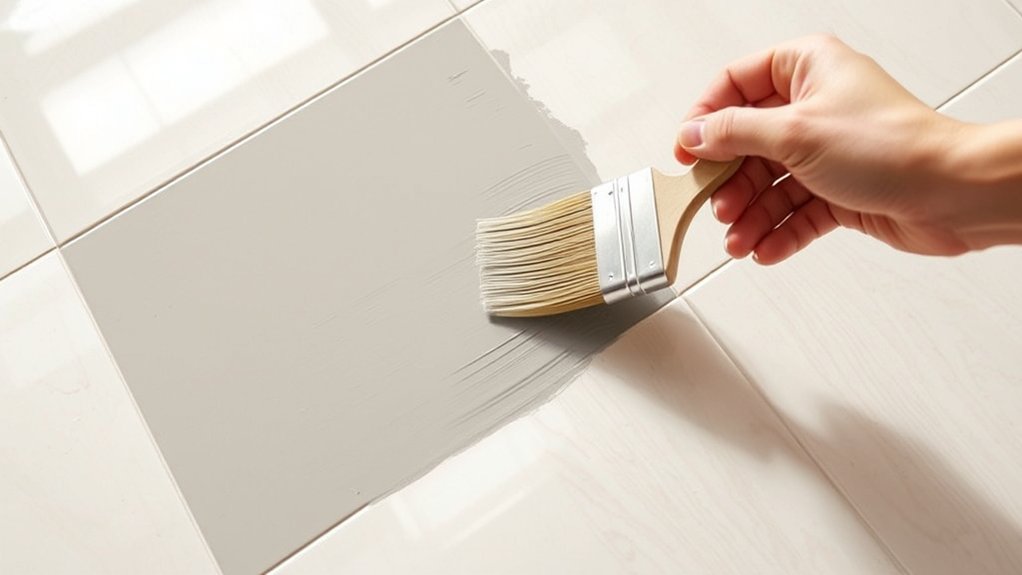
How do you choose the ideal paint for floor tiles to guarantee durability and a flawless finish? Start by considering design trends and color psychology to complement your space’s mood and style. Then focus on paint qualities that ensure lasting beauty and protection.
Here’s what to look for:
- Epoxy-based paints Renowned for toughness and resistance to wear, perfect for high-traffic areas.
- Latex paints with a floor enamel finish Provide a balance of flexibility and durability.
- Stain-blocking primers Essential for preventing discoloration and ensuring adhesion.
- Low-VOC formulas Support a healthier environment without sacrificing performance.
Selecting paint with these attributes helps you achieve a stylish, resilient surface that aligns with current design trends and color psychology principles.
How to Paint Floor Tiles Step-by-Step
Where should you begin when painting floor tiles to assure a smooth, long-lasting finish? Start by thoroughly cleaning the tiles to remove dirt and grease. Next, lightly sand the surface to promote adhesion, then wipe away dust.
Apply a high-quality primer designed for tile surfaces to create a solid base. When selecting your paint, consider color theory to choose hues that complement your space and enhance its ambiance.
Use a roller or brush to apply the paint evenly, paying attention to texture pairing. Smooth tiles work best with a satin or semi-gloss finish, while textured tiles might benefit from matte paint to avoid uneven shine. Allow each coat to dry fully before applying the next to ensure durability and a professional look.
How to Seal Painted Floor Tiles for Durability
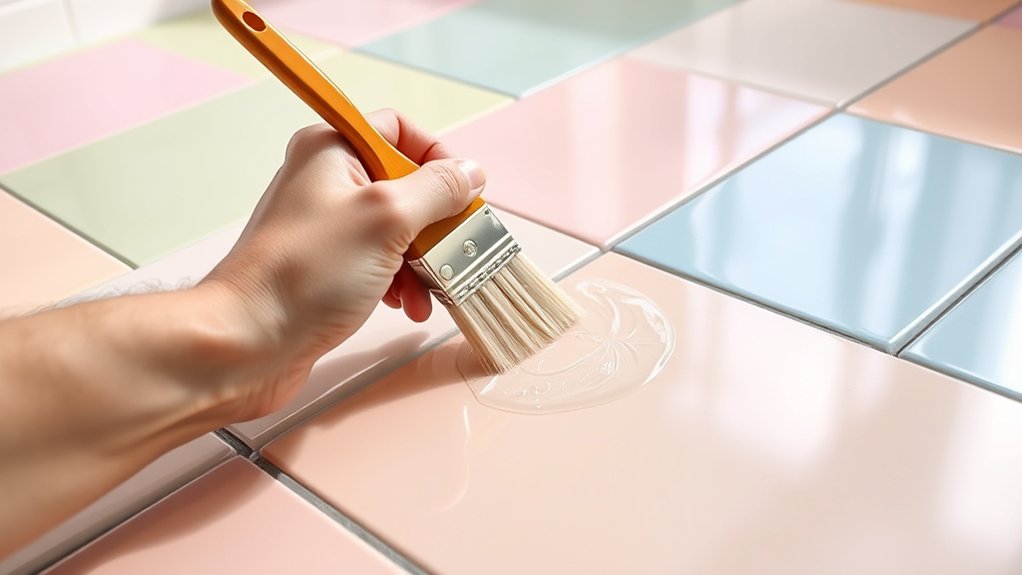
A proper sealant is essential to protect your painted floor tiles from wear, moisture, and stains, ensuring the finish lasts longer and maintains its vibrancy. To seal your tiles effectively, follow these steps:
- Choose a clear, water-based polyurethane sealant that complements current design trends for a sleek, modern look.
- Apply the sealant evenly with a high-quality brush or roller, paying attention to corners and grout lines.
- Allow the first coat to dry thoroughly, then lightly sand to smooth imperfections and enhance adhesion.
- Apply a second coat for maximum durability and protection, reinforcing the psychological impact of your chosen color by preserving its intensity.
This approach ensures your painted floor stays stylish and resilient, reflecting both aesthetic appeal and thoughtful color psychology.
How to Avoid Common Painting Mistakes
Sealing your painted floor tiles properly protects your work and enhances the longevity of your design, but even the best preparations can be undermined by common painting mistakes. To avoid these, start by selecting high-quality paint suited for tile surfaces, balancing creative budgeting with durability.
Skipping primer or rushing the drying process often leads to peeling, so patience is key. Pay attention to seasonal color trends. Choosing timeless hues can prevent frequent repainting and maintain aesthetic appeal.
Avoid overloading your brush, which causes uneven textures, and always test small areas first to assess adhesion. By carefully planning each step and considering your environment, you ensure a flawless finish that complements your space beautifully, preserving both your effort and investment.
How to Maintain and Clean Painted Floor Tiles
How often you clean and maintain your painted floor tiles directly impacts their appearance and durability. To preserve the fresh look and align with evolving color trends, consider these essential steps:
- Sweep or vacuum daily to prevent grit from scratching the paint.
- Mop with a mild, pH-neutral cleaner weekly, avoiding harsh chemicals that damage the finish.
- Wipe spills immediately to prevent stains and discoloration, crucial for maintaining your chosen concept considerations.
- Use protective pads under furniture to avoid chipping or peeling paint.
Creative Design Ideas for Painted Floor Tiles
Maintaining your painted floor tiles keeps them looking pristine, but exploring creative design ideas can truly transform your space. Start by selecting a creative palette that complements your room’s existing colors and style. Consider bold contrasts or soft, muted tones to set the mood.
When it comes to pattern ideas, geometric shapes, intricate stencils, or even freehand designs add personality and depth. You might try a checkerboard for a classic look, or experiment with Moroccan-inspired motifs for an exotic flair.
Layering multiple patterns can create a dynamic visual effect if done thoughtfully. Remember to plan your layout carefully, ensuring symmetry and balance. By combining a well-chosen palette with inspired pattern ideas, you’ll elevate your floor tiles from simple surfaces to artistic focal points.
Frequently Asked Questions
Can Painted Floor Tiles Be Removed Easily Without Damage?
You won’t find painted floor tiles easy to remove without damage due to paint removal challenges. The paint’s long-term durability bonds tightly, so you’ll need careful techniques to avoid harming the tile beneath during removal.
How Long Does Painted Floor Tile Typically Last?
You’d think painted tile lasts forever, but it typically endures 3-5 years depending on tile durability and maintenance frequency.
Regular sealing and gentle cleaning extend its beauty while preventing premature wear and chipping.
Are There Eco-Friendly Paints Suitable for Floor Tiles?
Yes, you can choose eco-friendly paints designed for floor tile coatings, like low-VOC or water-based options. These paints offer durability, minimize environmental impact, and maintain your floor’s aesthetic while ensuring a safer indoor environment.
Can Floor Tile Paint Be Used Outdoors?
You can’t judge a book by its cover. Outdoor floor tile paint offers excellent outdoor durability and slip resistance.
Just ensure you pick specialized, weatherproof formulas designed to withstand elements while maintaining safety and aesthetic appeal.
Will Painting Floor Tiles Affect Home Resale Value?
Painting floor tiles can affect resale value if paint durability is low, causing wear or peeling. However, high-quality finishes enhance aesthetics, so you should choose durable paint carefully to minimize negative resale impact.
Conclusion
Transforming your floor tiles with paint can breathe fresh life into your space, turning wear and age into charming character. With thoughtful preparation and the right materials, you’ll create a surface that not only looks stunning but stands resilient against time’s quiet touch.
Remember, a little care goes a long way in preserving your masterpiece. Embrace the journey—your floors are ready to tell a new, beautiful story with every step you take.
When considering this makeover, keep in mind that yes, floor tile can be painted to achieve a vibrant, renewed look that enhances your home’s appeal.