Does Drano Work for Kitchen Sinks
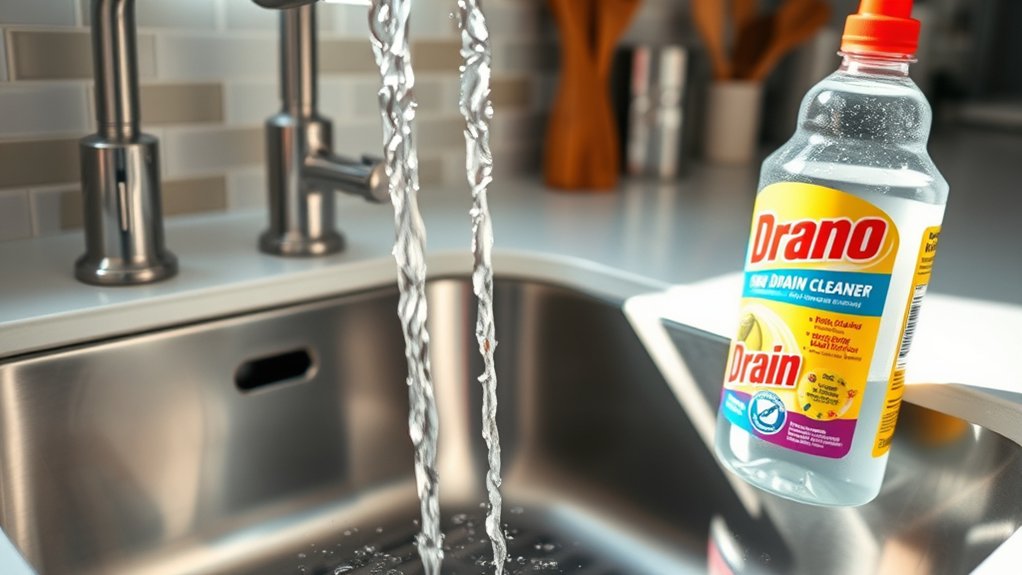
When stubborn clogs block your kitchen sink, you might wonder if Drano works for kitchen sinks as the quick fix you need. Drano is designed to tackle organic buildups like grease and food residue by generating heat to dissolve them.
But its effectiveness depends on the clog’s nature and location. Before you pour it down the drain, it’s important to understand when Drano works—and when it doesn’t.
This knowledge will help you avoid damaging your pipes or wasting time on an ineffective solution.
Does Drano Work for Kitchen Sink Clogs?
How effective is Drano for clearing kitchen sink clogs? Drano can be a practical solution for minor blockages caused by grease, soap residue, or food particles. It works best when the clog is accessible and not caused by solid objects or severe buildup.
For kitchen sinks, Drano’s chemical formula targets organic material, breaking it down to restore flow. However, it’s not a one-size-fits-all fix. In comparison, bathroom drains and shower stalls often involve hair and soap scum, which Drano also addresses but sometimes less effectively due to the nature of these clogs.
You should avoid using Drano if your pipes are old or damaged, as its harsh chemicals can worsen leaks or corrosion. For persistent or severe clogs, mechanical methods or professional help may be necessary.
How Does Drano Clear Kitchen Sink Clogs?
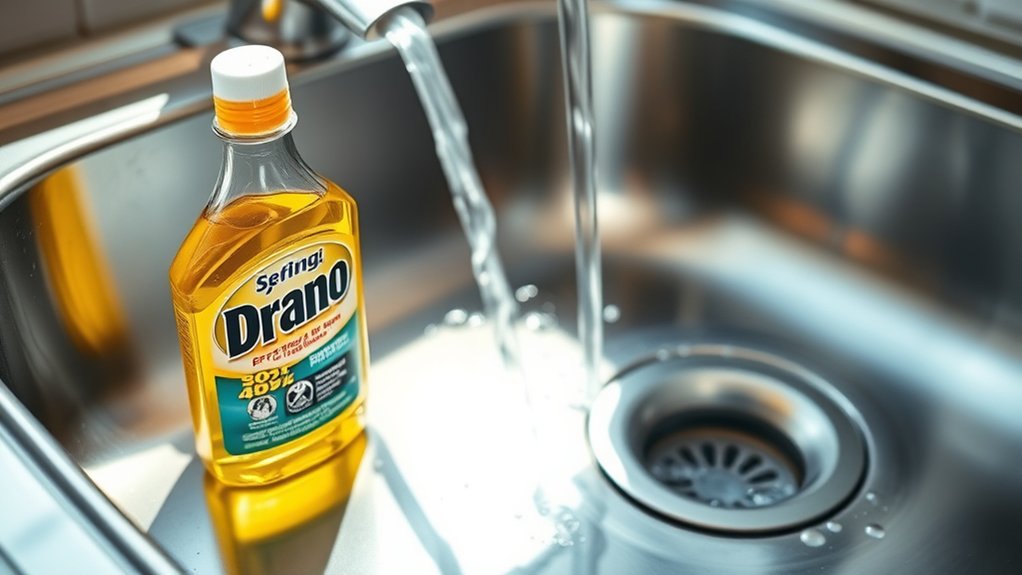
Why do Drano’s chemicals effectively break down kitchen sink clogs? Drano contains sodium hydroxide and bleach, which react with organic material like grease, hair, and food particles. When you pour Drano into your sink, these chemicals generate heat through an exothermic reaction, raising the drain temperature.
This elevated temperature helps melt grease and dissolve tough blockages faster. However, you must follow packaging safety instructions carefully to avoid damage or injury. Never use Drano in a completely clogged sink or combine it with other chemicals.
The product’s straightforward chemical action breaks down the clog’s structure, allowing water to flow freely again. The increased drain temperature accelerates this process, making Drano effective for common kitchen sink clogs. Always wear protective gloves and pour Drano slowly to minimize splashing.
What Types of Kitchen Sink Clogs Can Drano Handle?
You can use Drano to break down common kitchen sink clogs caused by grease and food buildup. It also handles hair and soap scum that accumulate in the drain.
Understanding these clog types helps you decide when Drano is an effective solution.
Grease and Food Buildup
When dealing with grease and food buildup in your kitchen sink, Drano targets organic matter that clings to pipes and causes blockages. It works by breaking down fats, oils, and food particles that solidify and restrict water flow.
Drano is designed to be disposal safe, meaning it won’t harm your garbage disposal unit when used as directed. However, it’s important to note that Drano works best on fresh clogs caused by grease and food debris, not on hardened or extensive buildup.
For a grease-free kitchen sink, avoid pouring cooking oils down the drain, and use Drano only as a preventive or immediate solution. This approach helps maintain clear pipes without damaging plumbing or disposal components.
Hair and Soap Scum
Frequently, hair and soap scum combine to create stubborn clogs in kitchen sinks, especially around the drain area. Drano can be effective for hair removal since its chemical formulation breaks down keratin proteins, which make up hair.
It also dissolves soap scum by reacting with fatty acid compounds, turning them into soluble substances that wash away easily. However, if the hair and soap scum buildup is severe or mixed with other debris, Drano’s effectiveness may decrease.
For best results, avoid pouring Drano into standing water; let it work directly on the clog. Remember, Drano is designed for organic blockages, so it handles hair removal and soap scum well but may not clear mechanical obstructions.
Use it as a targeted solution for these specific types of kitchen sink clogs.
When Should You Avoid Using Drano in Your Kitchen Sink?
How can you tell if Drano is a poor choice for clearing your kitchen sink? You should avoid using it if your plumbing has certain vulnerabilities or if the clog involves materials Drano can’t dissolve.
Also, consider your kitchen décor and plant care setup; strong chemicals might damage nearby finishes or kill houseplants through fumes or spills.
| Condition | Reason to Avoid Drano |
|---|---|
| Old or fragile pipes | Risk of corrosion or damage |
| Garbage disposal present | May harm disposal components |
| Clogs caused by grease | Drano less effective on grease |
| Nearby plants or décor | Chemical fumes may cause damage |
If your kitchen sink fits any of these conditions, opt for mechanical cleaning methods instead. Drano’s chemical action isn’t always suitable, so understanding your plumbing and environment helps prevent costly damage.
Could Drano Harm Your Kitchen Sink Pipes or Plumbing?
Could using Drano cause damage to your kitchen sink pipes or plumbing? The answer depends largely on your drain pipe material and the nature of the clog causes. Drano contains strong chemicals designed to dissolve organic blockages like grease, hair, and food particles.
However, if your drain pipes are made of older or weakened materials such as galvanized steel or certain plastics, these chemicals can accelerate corrosion or degrade the pipe surface over time. Additionally, Drano isn’t effective against clogs caused by solid objects or severe buildup, and repeated use may worsen pipe damage.
You should also avoid using Drano if your clog causes involve chemical reactions or residue buildup that can react adversely with the product. In summary, while Drano can clear typical organic clogs, it poses risks to certain drain pipe materials and won’t address all clog causes, so use it cautiously and consider pipe compatibility before application.
Is Drano Safe for Septic Systems and Garbage Disposals?
When you consider using Drano in your kitchen sink, you might wonder if it’s safe for your septic system and garbage disposal. Drano contains strong chemicals that can disrupt the natural bacteria in septic tanks, potentially compromising septic system safety.
Additionally, its harsh ingredients may damage garbage disposal components, especially rubber seals and blades. Because of these risks, you might want to explore drano alternatives that are gentler on plumbing systems.
| Aspect | Impact of Drano |
|---|---|
| Septic System Safety | Can kill beneficial bacteria |
| Garbage Disposal | May erode seals and blades |
| Chemical Strength | Highly caustic |
| Environmental Impact | Potentially harmful runoff |
| Drano Alternatives | Enzyme-based, biodegradable |
To protect your septic system and disposal, consider enzyme-based cleaners or natural remedies. These drano alternatives maintain septic system safety while effectively clearing clogs without corrosion.
How to Use Drano Correctly in Your Kitchen Sink
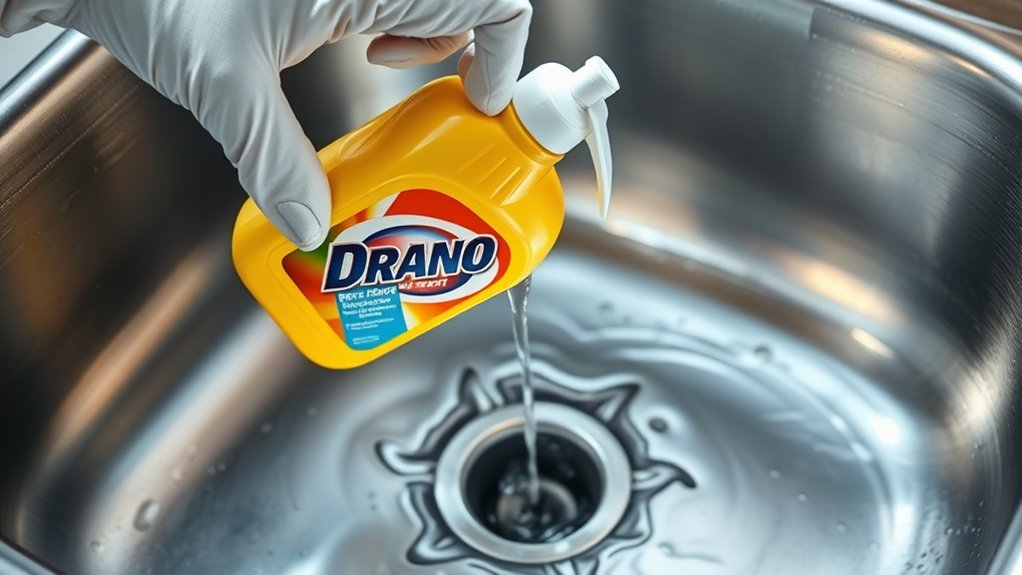
Knowing the potential risks Drano poses to septic systems and garbage disposals, you’ll want to handle it with care to minimize damage. Before applying Drano, remove any standing water in the sink to ensure maximum effectiveness.
Handle Drano cautiously to protect septic systems and disposals; always remove standing water before use.
Pour the recommended amount directly into the drain without mixing it with other chemicals. Avoid using a drain colorant simultaneously, as it can interfere with Drano’s chemical action.
For tougher clogs, you can first pour half a cup of baking soda down the drain, followed by a cup of vinegar, then wait 15 minutes before adding Drano. This combination helps break down organic material more efficiently.
After pouring Drano, let it sit for the time specified on the package, usually 15 to 30 minutes, then flush the drain with hot water to clear the clog and residual chemicals.
Never use Drano repeatedly within short intervals to prevent pipe corrosion or damage. Following these steps ensures safer, more effective drain clearing in your kitchen sink.
Signs Drano Isn’t Working on Your Kitchen Sink
If your kitchen sink still drains slowly after using Drano, it’s a clear sign the product isn’t clearing the clog. You might also notice foul odors that don’t go away, indicating buildup remains in the pipes.
Recurrent clogs after treatment further confirm that Drano isn’t resolving the blockage effectively.
Persistent Slow Drainage
Why does your kitchen sink remain sluggish even after using Drano? Persistent slow drainage indicates that the clog isn’t fully cleared or that buildup remains in the pipes. Drano may dissolve organic matter, but it can’t remove grease, hair, or solid debris trapped deeper in the plumbing system.
This ongoing blockage affects drainage aesthetics by causing water to pool or drain unevenly, disrupting your kitchen’s functionality and cleanliness. To address this, focus on clutter management: remove food scraps, avoid grease disposal, and regularly clean the drain strainer.
If slow drainage continues, mechanical methods like a plumber’s snake or professional cleaning may be necessary. Don’t rely solely on chemical solutions; combine maintenance with practical habits to restore efficient drainage and prevent future issues.
Foul Odors Persisting
Persistent slow drainage often comes hand in hand with foul odors, signaling that Drano hasn’t fully resolved the underlying problem. If you notice persistent smells after using Drano, it may indicate trapped organic matter or partial blockages beyond the chemical’s reach.
These odors can also result from venting issues, which prevent proper airflow and cause gases to build up in your kitchen sink drain. Additionally, if your sink has a garbage disposal, improper disposal safety measures, such as running Drano directly into the disposal, can damage components and worsen odors.
To address foul odors effectively, inspect vent pipes for blockages and avoid using Drano on disposal units unless explicitly specified. Otherwise, professional mechanical cleaning may be necessary to eliminate the source of persistent odors and ensure proper drainage function.
Recurrent Clogs After Use
How often do you find your kitchen sink clogging again shortly after using Drano? Recurrent clogs indicate that Drano isn’t effectively clearing the entire blockage or the cause is more complex.
This subtopic not relevant to other H2s highlights when Drano fails, prompting alternative solutions. Here’s a quick reference table with two word discussion ideas to help you identify signs of ineffective treatment:
| Symptom | Possible Cause | Suggested Action |
|---|---|---|
| Slow Drain | Partial Blockage | Use mechanical tools |
| Water Backup | Severe Clog | Call a plumber |
| Foul Smell | Residue Build-up | Clean pipes |
| Frequent Clogs | Recurring Issue | Investigate debris |
If clogs persist, Drano may not be the right solution for your kitchen sink.
Natural and DIY Alternatives to Drano for Kitchen Sink Clogs
When you face a clogged kitchen sink, you don’t always need harsh chemicals like Drano to clear the blockage. Natural remedies offer effective chemical alternatives that are safer for your plumbing and the environment. For instance, a combination of baking soda followed by vinegar creates a fizzy reaction that can help break down organic debris in the drain.
After letting it sit for 15-30 minutes, flush the sink with hot water to clear loosened material. Another practical option is using a manual plunger or a drain snake to physically remove the clog, avoiding chemicals altogether. These methods target the blockage directly without risking pipe damage or toxic exposure.
Additionally, boiling water poured slowly down the drain can dissolve grease buildup that commonly causes clogs.
How to Prevent Kitchen Sink Clogs and Reduce Drano Use
You can prevent most kitchen sink clogs by properly disposing of food waste instead of rinsing it down the drain. Regularly flushing your drain with hot water and using a drain strainer helps maintain clear pipes.
These simple steps reduce the need for harsh chemical treatments like Drano.
Proper Food Waste Disposal
Why do kitchen sinks clog so frequently? The main culprit is improper disposal of food waste. To prevent clogs and reduce your need for Drano, you must manage food scraps correctly.
Avoid putting fibrous, starchy, or greasy materials down the drain, as they accumulate and cause blockages. Instead, scrape plates into a compost bin or trash before rinsing.
Maintaining good kitchen organization helps you consistently separate food waste from sink drainage, enhancing food safety by minimizing bacterial growth in your sink area.
Use a sink strainer to catch debris and empty it regularly. By adopting these practices, you protect your plumbing system and reduce chemical drain cleaner use, promoting a safer kitchen environment and prolonging your sink’s functionality.
Routine Drain Maintenance
Proper food waste disposal lays the foundation for a clog-free kitchen sink, but maintaining clear drains requires consistent care beyond that. To prevent clogs and reduce Drano use, regularly flush your drains with hot water to dissolve grease buildup.
Avoid pouring cooking oils or coffee grounds down the sink, as these contribute to blockages. Incorporate a drain strainer to catch food particles before they enter your pipes, aligning with your kitchen design without compromising your home decor.
Schedule periodic inspections and cleanings to detect early signs of buildup. Using enzyme-based cleaners monthly can also break down organic matter safely.
Maintaining your drains not only preserves plumbing function but supports the overall efficiency and aesthetic appeal of your kitchen, ensuring your kitchen design and home decor stay pristine without frequent chemical interventions.
Frequently Asked Questions
Can Drano Be Used in Bathroom Sinks?
You can use Drano in bathroom sinks, but handle it carefully. For effective drain maintenance, follow safety considerations: wear gloves, avoid mixing chemicals, and never use it on old pipes to prevent damage.
How Long Does Drano Take to Work?
Drano typically takes 15 to 30 minutes to work, balancing drain cleaning efficiency with drano safety. Avoid prolonged exposure to prevent pipe damage, and always follow the product’s instructions for optimal, safe results when clearing clogs.
Is Drano Safe for Metal Pipes?
You want drano metal safety, so you choose rust resistance pipes. Drano is generally safe for metal pipes but avoid frequent use, as harsh chemicals can eventually degrade pipe integrity and cause corrosion despite initial rust resistance.
Can Drano Cause Skin Irritation?
Yes, Drano can cause skin irritation if it contacts your skin. When using Drano for bathroom sink use, always wear gloves and avoid splashes to prevent chemical burns and irritation.
Rinse immediately if contact occurs.
Where Can I Buy Drano Products?
You can buy Drano products at major retailers like Walmart, Home Depot, and Target. Online options like Amazon also offer product availability.
Check store websites for buying options and stock updates to guarantee you get what you need.