Can You Put Mattress on Floor
Imagine your mattress on the floor—this setup might seem convenient, but it’s important to understand the implications.
Placing a mattress directly on the floor is like putting a plant pot without proper drainage; moisture can accumulate underneath, leading to potential issues over time.
While skipping a bed frame can save space and money, you should consider how this choice impacts your health, comfort, and the mattress’s lifespan.
Before you decide to put your mattress on the floor, weigh the benefits and risks carefully to ensure you’re making the best decision for your space and well-being.
Is It Safe and Healthy to Put a Mattress on the Floor?
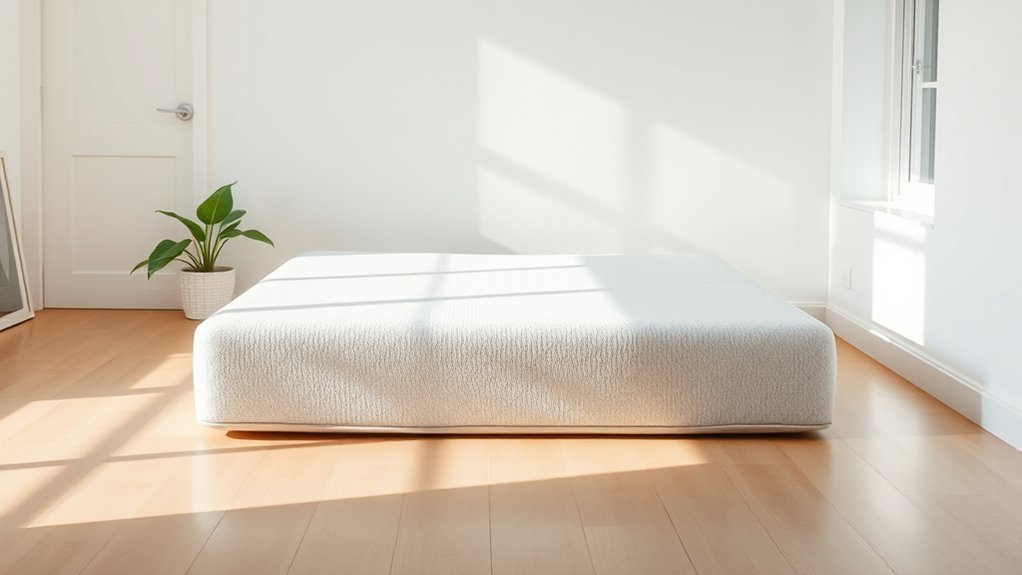
Wondering if placing your mattress directly on the floor is safe and healthy? You’ll find it can be, but there are important factors to regard. Lower mattress height might appeal for minimalist spaces or if you want bed frame alternatives, but putting your mattress on the floor reduces airflow underneath.
This can lead to moisture buildup, encouraging mold and dust mites, which impact your health. If you’re sensitive to allergens or prone to respiratory issues, this setup might not be ideal. However, if you maintain good ventilation and regularly clean both mattress and floor, you can minimize these risks.
Ergonomically, a mattress on the floor means you’ll get in and out of bed at a lower height, which can be uncomfortable or impractical for some. Ultimately, it’s a balance between aesthetics, comfort, and health. So, while mattress height and bed frame alternatives influence your choice, prioritize cleanliness and air circulation for a safe, healthy sleep environment.
What Types of Mattresses Work Best on the Floor?
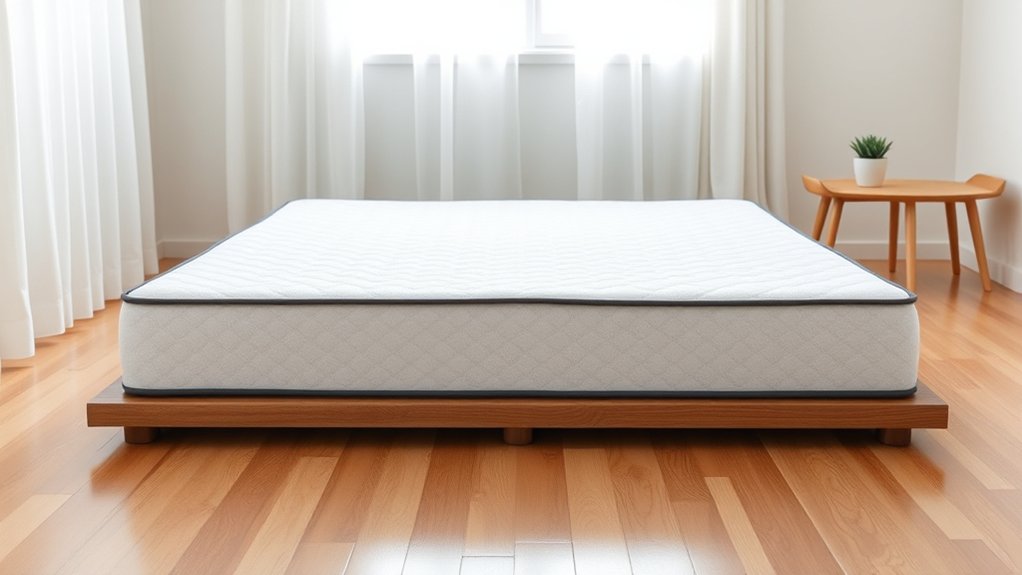
Choosing the right mattress is key when placing it directly on the floor, as not all mattresses handle this setup equally well. You’ll want to focus on mattress materials that resist moisture and provide adequate support without a traditional bed frame. Memory foam and latex mattresses work best because they conform to your body while maintaining durability against floor contact.
These materials also minimize dust and allergens, which can accumulate more on the floor. Innerspring mattresses, on the other hand, tend to absorb moisture and lose support quickly without proper ventilation. If you’re exploring bed frame alternatives, consider low-profile platforms or slatted bases that elevate the mattress slightly to improve airflow.
But if you prefer sticking to the floor, choose a mattress designed for such use to avoid sagging and discomfort. Prioritizing the right mattress materials ensures comfort, hygiene, and longevity in your mattress-on-floor setup.
How to Prepare Your Floor for a Mattress on the Floor
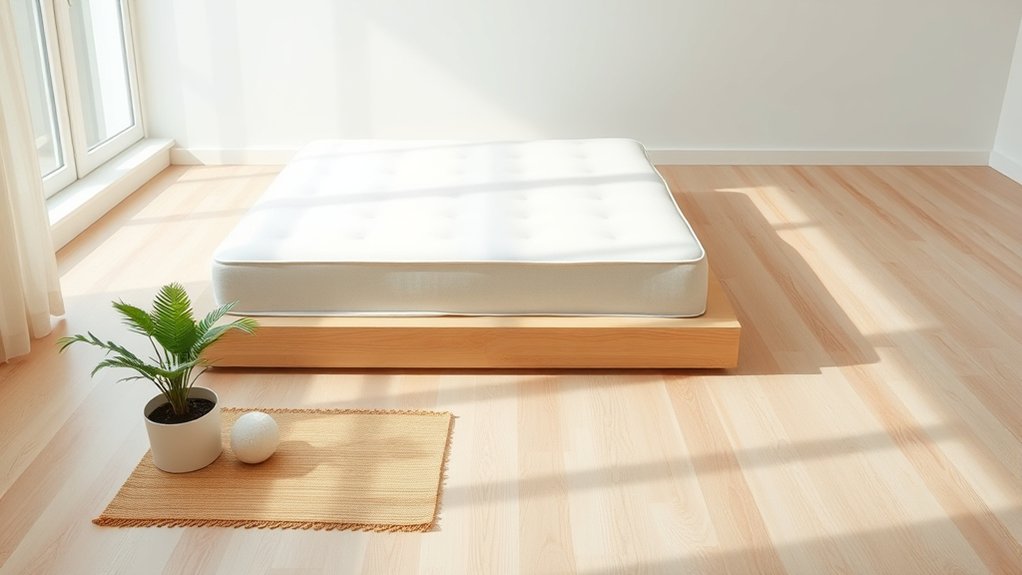
Where you place your mattress directly impacts its comfort and longevity, so preparing your floor properly is essential. Start by cleaning the floor thoroughly to remove dust, dirt, and allergens that can affect your mattress and health.
Properly preparing your floor by cleaning it ensures mattress comfort and longevity while protecting your health.
Consider adding a moisture barrier, like a rug pad or a breathable mat, to prevent mold and mildew, especially on concrete or cold floors. Pay attention to floor height; a mattress on a very low surface can make getting in and out harder, so choose a spot that balances comfort and accessibility.
You might also want to elevate the mattress slightly with a thin platform or wooden slats for improved airflow, which helps maintain mattress freshness. Preparing your floor this way not only safeguards your mattress but can contribute to energy savings by reducing drafts and cold air seepage near the floor, keeping your sleeping area warmer naturally.
Taking these steps ensures a comfortable and healthy sleeping environment on the floor.
How Floor Placement Affects Mattress Durability
How does placing your mattress directly on the floor impact its durability? When you skip a bed frame, you’re embracing alternative sleeping setups that can affect your mattress lifespan in several ways. Understanding these effects helps you close exploration gaps about floor placement.
Placing a mattress on the floor can:
- Increase moisture retention, leading to material breakdown if not managed properly.
- Limit airflow, which is crucial for maintaining the mattress’s structural integrity.
- Expose the mattress to dust and dirt, potentially accelerating wear.
- Cause uneven pressure distribution, especially on softer floor surfaces, impacting support over time.
To protect your mattress, ensure you regularly air it out and clean the surrounding floor area. While floor sleeping offers simplicity and style, being mindful of these durability factors helps you enjoy your mattress longer without compromising comfort or support.
Hygiene Concerns With Floor Mattresses: What to Know
Why does placing your mattress directly on the floor raise hygiene concerns? When you opt for mattress placement on the floor, you expose it to dust, dirt, and allergens that naturally accumulate near the ground.
Floors harbor bacteria, mold spores, and even pests, especially in humid or poorly ventilated rooms. Without proper airflow beneath the mattress, moisture can get trapped, encouraging mold and mildew growth.
This compromises floor hygiene and can lead to unpleasant odors or health issues like allergies and respiratory problems. To maintain cleanliness, you’ll need to clean both the floor and mattress regularly, using a vacuum and disinfectant solutions.
Consider using a barrier, such as a mat or bed frame slats, to improve ventilation and protect your mattress from direct contact with the floor. Understanding these hygiene factors ensures your mattress placement supports a healthy sleeping environment, keeping you comfortable and safe night after night.
Comfort and Support When Sleeping on the Floor
Can sleeping directly on the floor provide the comfort and support your body needs? When you adopt a floor stance for sleep, your body experiences a different kind of alignment than on a raised bed. Some find this closer to their natural comfort zone, while others may struggle with firmness.
Here’s what you should consider about comfort and support when sleeping on the floor:
Spinal alignment: The hard surface can promote a neutral spine, relieving pressure points.
Body adaptation: Your muscles and joints may initially feel stiff but often adjust over time.
Mattress choice: A thin mattress or mat can add slight cushioning without compromising support.
Sleeping position: Back sleepers usually adapt better to floor sleeping than side sleepers.
Pros and Cons of Sleeping With a Mattress on the Floor
Sleeping with your mattress on the floor offers benefits like improved airflow and a minimalist setup, but it also comes with potential health risks such as increased exposure to dust and allergens.
You’ll need to stay on top of maintenance to keep your sleeping area clean and comfortable. Understanding these pros and cons will help you decide if this setup suits your lifestyle and health needs.
Benefits of Floor Placement
How does placing your mattress directly on the floor impact your sleep experience and overall bedroom setup? It can offer several benefits, especially when you consider place compatibility and budget considerations. Lowering your mattress eliminates the need for a bed frame, saving space and money.
Here are some key advantages:
- Enhanced Stability: Your mattress stays firmly in place, reducing movement during sleep.
- Cost Efficiency: Avoid purchasing a bed frame, making it budget-friendly.
- Minimalist Aesthetic: Creates a simple, modern look that complements various room styles.
- Better Place Compatibility: Ideal for small rooms or unconventional spaces where bed frames won’t fit well.
Potential Health Risks
While placing your mattress directly on the floor offers practical benefits, it also comes with potential health risks you should consider. Reduced floor insulation can expose you to cold temperatures, affecting your sleep quality and comfort.
Additionally, mattress durability may decrease faster due to increased exposure to moisture and dust. You might also face increased allergen exposure, which can impact respiratory health.
| Risk | Explanation |
|---|---|
| Cold Exposure | Poor floor insulation lowers warmth |
| Moisture Damage | Floor contact traps humidity |
| Allergen Build-up | Dust and mites accumulate easily |
| Reduced Mattress Life | Pressure points cause wear |
| Respiratory Issues | Increased allergens affect breathing |
Understanding these risks helps you decide if sleeping on the floor suits your health needs and lifestyle.
Maintenance and Cleanliness Challenges
What challenges might you face when maintaining cleanliness with a mattress on the floor? Placing your mattress directly on the floor can complicate your nighttime routines and affect bedroom aesthetics. Dust, dirt, and moisture tend to accumulate more easily, demanding extra care.
You’ll need to stay on top of cleaning to keep your space hygienic and visually appealing.
Consider these maintenance challenges:
- Increased dust and allergens collecting under and around the mattress
- Limited airflow causing moisture buildup and potential mold growth
- Difficulty thoroughly cleaning the floor beneath the mattress regularly
- Impact on bedroom aesthetics due to a less elevated, cluttered look
Being proactive with cleaning and ventilation helps you maintain a healthy, attractive bedroom despite these challenges.
How to Maintain a Mattress on the Floor
To keep your mattress fresh and comfortable on the floor, you’ll need to focus on proper ventilation, regular cleaning, and preventing moisture buildup. Without these steps, your mattress can develop mold or odors that affect your sleep quality.
Let’s explore simple ways to maintain your mattress and protect your investment.
Proper Ventilation Techniques
How often do you think about the air circulation beneath your mattress on the floor? Many ventilation misconceptions and floor placement myths suggest mattresses must be elevated, but proper techniques can keep your mattress fresh and dry.
To maintain good ventilation, you should:
- Lift your mattress periodically to allow air to flow and prevent moisture buildup.
- Use breathable materials like natural fiber mats or slatted platforms beneath the mattress.
- Keep the room well-ventilated with open windows or fans to reduce humidity.
- Avoid placing your mattress directly on cold, damp surfaces that restrict airflow.
Regular Cleaning Practices
When was the last time you gave your mattress on the floor a thorough cleaning? Regular maintenance is crucial to keep it fresh and hygienic. Start by lifting your mattress regularly to air out both sides.
This mattress lifting helps prevent dust buildup and allows the floor beneath to breathe. If your floor lacks proper insulation, dust and cold air can seep in, affecting your mattress’s condition.
Use a vacuum with a brush attachment to remove dust, hair, and allergens from the mattress surface. Spot-clean stains immediately with mild detergent and water.
Moisture Prevention Tips
Why does moisture pose such a threat to a mattress on the floor? When your mattress sits directly on the ground, it’s more prone to dampness and mold, which can ruin mattress height and compromise floor sleeper comfort. To keep your mattress dry and in top shape, you need to be proactive.
Here are essential moisture prevention tips:
- Use a moisture barrier or waterproof mattress protector beneath your mattress.
- Elevate your mattress periodically to air out the underside.
- Keep the room well-ventilated to reduce humidity.
- Avoid placing your mattress near windows or damp walls.
Styling Tips for Bedrooms With Floor Mattresses
Where should you start when styling a bedroom with a mattress on the floor? Focus on floor aesthetics to create a balanced, inviting space. Begin by choosing a low-profile rug that complements your mattress and adds texture without overwhelming the room. This anchors your bed area and enhances comfort.
Embrace a minimalist setup by limiting furniture to essentials, such as a sleek nightstand or a simple lamp. Keep your color palette neutral or soft to maintain a calm, cohesive vibe. Incorporate storage solutions that keep clutter off the floor, preserving the clean look.
You can also add a few plants or wall art to bring life without crowding the space. Remember, the key is to highlight the openness and simplicity that a mattress on the floor provides. With thoughtful choices, you’ll transform your bedroom into a stylish, serene retreat that respects both function and form.
When Should You Avoid Putting Your Mattress on the Floor?
You should avoid placing your mattress directly on the floor if you live in a humid environment, as this can lead to mold growth and damage.
If you suffer from allergies or are sensitive to dust, keeping your mattress elevated helps reduce exposure. Additionally, placing your mattress on the floor can cause structural wear over time, affecting its support and comfort.
Risk of Mold Growth
How safe is it to place your mattress directly on the floor? You should be cautious because mold risk markedly increases when moisture buildup occurs beneath your mattress. Floors often trap humidity, creating an ideal breeding ground for mold, which can damage your mattress and harm your health.
Avoid putting your mattress on the floor if:
- Your room has poor ventilation or high humidity levels.
- You live in a damp or basement environment.
- You often experience condensation on windows or walls.
- You don’t regularly lift and air out your mattress.
Allergies and Dust Exposure
Why does placing your mattress on the floor increase allergy and dust exposure risks? When your mattress sits directly on the ground, it becomes more vulnerable to dust, dirt, and allergens that naturally accumulate closer to the floor.
This environment can exacerbate allergy triggers like dust mites and pet dander, especially if you already suffer from respiratory sensitivities. You may notice increased sneezing, congestion, or irritated skin.
If you have allergies, it’s wise to avoid placing your mattress on the floor to reduce these risks. Instead, consider elevating your mattress to improve air circulation and minimize dust exposure. Taking these precautions helps create a cleaner, healthier sleeping environment, protecting your wellbeing and ensuring a better night’s rest.
Structural Damage Concerns
While keeping your mattress off the floor can reduce allergy risks, it’s also important to contemplate potential structural damage when deciding where to place it. You should avoid putting your mattress directly on the floor if you face certain structural concerns or floor-related hazards that could compromise both the mattress and your health.
Consider these factors before making a choice:
- Damp or uneven flooring that may cause mold or sagging
- Presence of pests like bedbugs or insects attracted to floor-level bedding
- Poor ventilation leading to trapped moisture and mattress degradation
- Heavy foot traffic areas increasing wear and tear on the mattress base
Frequently Asked Questions
Does Putting a Mattress on the Floor Affect Room Temperature?
Imagine a Victorian parlor where floor temperature changes impact comfort. You’ll notice mattress moisture increases on the floor, which can make your room feel cooler and damp.
Can a Mattress on the Floor Impact Indoor Air Quality?
Yes, placing your mattress on the floor limits mattress airflow, increasing moisture buildup and potentially promoting mold or dust mites. To protect indoor air quality, you’ll want to elevate it or guarantee proper ventilation beneath.
How Does Floor Mattress Placement Influence Allergy Symptoms?
Placing your mattress on the floor can worsen allergy symptoms by increasing exposure to dust mites and mold, common allergy triggers.
Your bedside climate becomes damper and less ventilated, so keep it clean and dry to reduce risks.
Are There Specific Flooring Types Better for Mattress Placement?
Oh sure, just plop your mattress on any flooring materials you fancy unless you enjoy mold. You’ll want moisture-safe options like sealed hardwood or tile; they keep dampness at bay and protect your mattress and health effectively.
Can Pets Cause More Damage to Floor Mattresses?
Yes, pets can cause more damage to floor mattresses by increasing floor moisture and leaving fur or scratches.
You should protect your mattress and flooring to prevent pets damage and maintain a clean, dry sleeping area.