Are 2 Handle Shower Valves Illegal
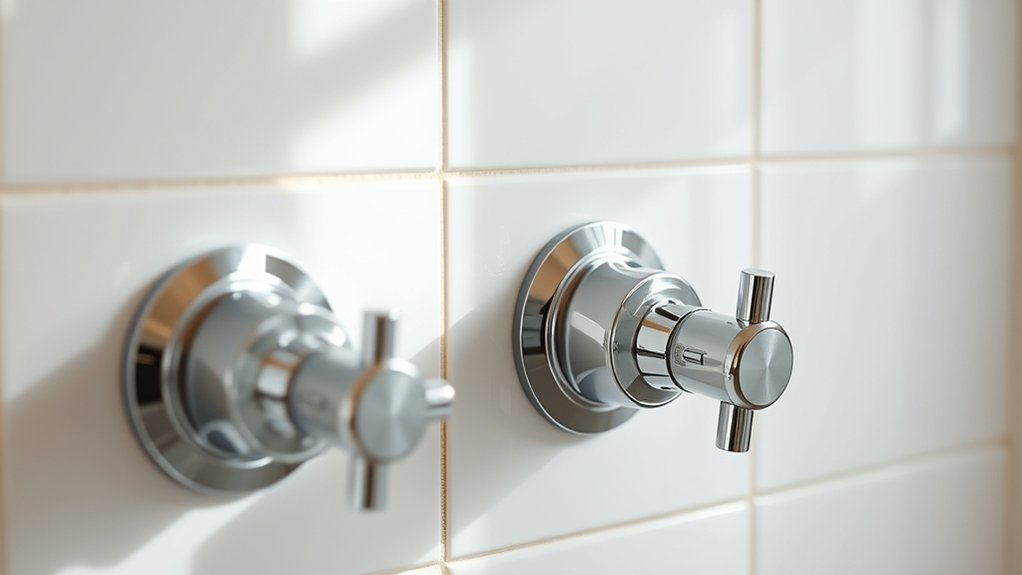
Imagine you’re updating an older bathroom and want to keep the existing two-handle shower valve. Are 2 handle shower valves illegal? While these valves aren’t explicitly illegal in many areas, local codes often require anti-scald features and certified mixing mechanisms that older models lack.
This raises questions about their compliance and safety in modern installations. Understanding when you can still use two-handle valves—and when you can’t—can help avoid costly code violations and hazards. Keeping these factors in mind ensures a safer and code-compliant bathroom update.
Key Takeaways
- Two-handle shower valves are not outright illegal but must comply with local codes and safety standards.
- Anti-scald features like pressure balancing or thermostatic control are often required for legality.
- Traditional two-handle valves lacking safety mechanisms may be deemed non-compliant or illegal.
- Two-handle valves are generally allowed in existing compliant systems if they meet current safety requirements.
- Modern single-handle or thermostatic valves are preferred for improved safety and code compliance.
Are Two-Handle Shower Valves Allowed by Current Plumbing Codes?
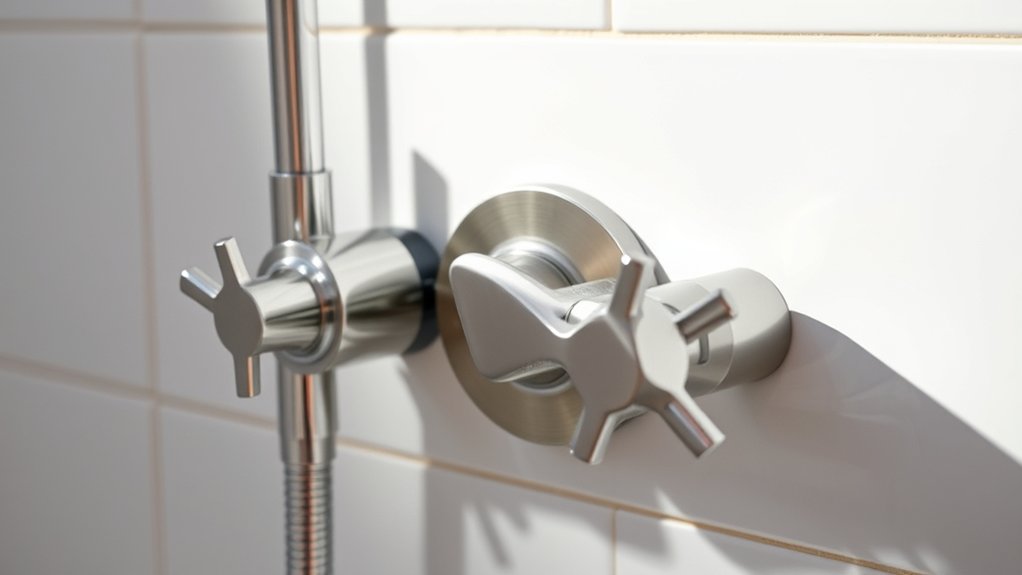
How do current plumbing codes treat two-handle shower valves? You’ll find that two-handle viability largely depends on meeting specific regulations regarding temperature control and water efficiency.
Most codes don’t outright ban two-handle valves but emphasize safe operation and code compliant concerns, such as preventing scalding and ensuring proper mixing of hot and cold water. You need to verify that your two-handle valve includes a thermostatic or pressure-balancing feature, as many jurisdictions require these for compliance.
Additionally, local amendments may impose stricter rules, so you should consult your area’s plumbing code directly. In summary, while two-handle shower valves remain allowable, you must ensure your installation addresses all code compliant concerns to maintain safety and legality.
How Do Safety Standards Impact Two-Handle Valve Legality?
While two-handle shower valves can meet plumbing code requirements, safety standards play a significant role in determining their legality. You need to evaluate two handle considerations such as temperature control and scald prevention to ensure code compliance.
Modern safety standards often require anti-scald features like pressure balancing or thermostatic controls, which traditional two-handle valves may lack. If your valve doesn’t comply with these safety benchmarks, it might be deemed illegal regardless of plumbing code approval.
To maintain compliance, verify that the two-handle valve integrates certified safety mechanisms. This ensures user protection and adherence to regulatory mandates. Ultimately, your responsibility is to balance functional design with safety standards, as failing to do so could lead to violations or unsafe installations.
When Is It Still Okay to Install Two-Handle Shower Valves?
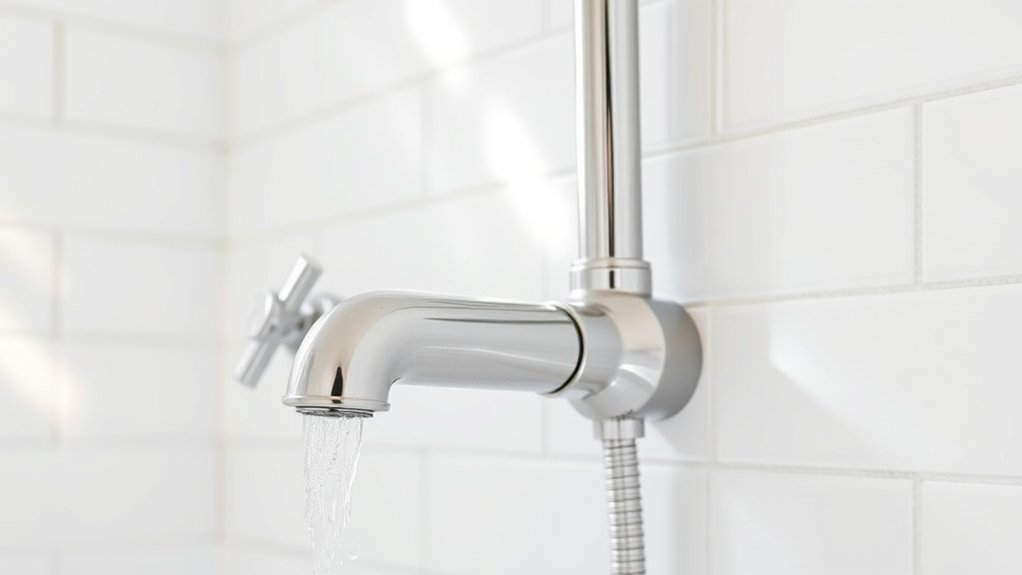
Under what conditions can you still install two-handle shower valves without violating codes? You can install them when working within existing systems that already use two-handle setups and comply with local regulations.
Two-handle shower valves are allowed when replacing or working within existing compliant systems.
However, you must ensure the valves meet current safety standards, especially regarding temperature control and anti-scald features. Using outdated materials or components lacking certification can lead to code violations and safety risks.
Retrofit challenges often arise because integrating modern safety mechanisms into older two-handle valves is complex and may require custom solutions. If replacing valves in an older home, verify that local codes permit maintaining two-handle valves and that all parts function properly.
Otherwise, upgrading to compliant, single-handle or thermostatic valves is typically necessary to meet safety and legal requirements.
What Are the Key Differences Between Two-Handle and Modern Shower Valves?
What sets two-handle shower valves apart from modern valves primarily involves control mechanisms, safety features, and installation complexity. With two-handle valves, you manipulate separate controls for hot and cold water, which often leads to imprecise temperature adjustments. This is a significant two-handle drawback.
Traditional valve limitations also include a lack of integrated pressure balancing or thermostatic control, increasing the risk of scalding. Modern valves typically combine these functions into a single control, offering safer, more consistent temperatures.
Additionally, two-handle valves require more extensive plumbing work during installation, complicating maintenance or upgrades. If you prioritize precision, safety, and ease of installation, understanding these differences will clarify why two-handle valves may not meet current performance or code standards.
What Alternatives Exist for Safer, Code-Compliant Showers?
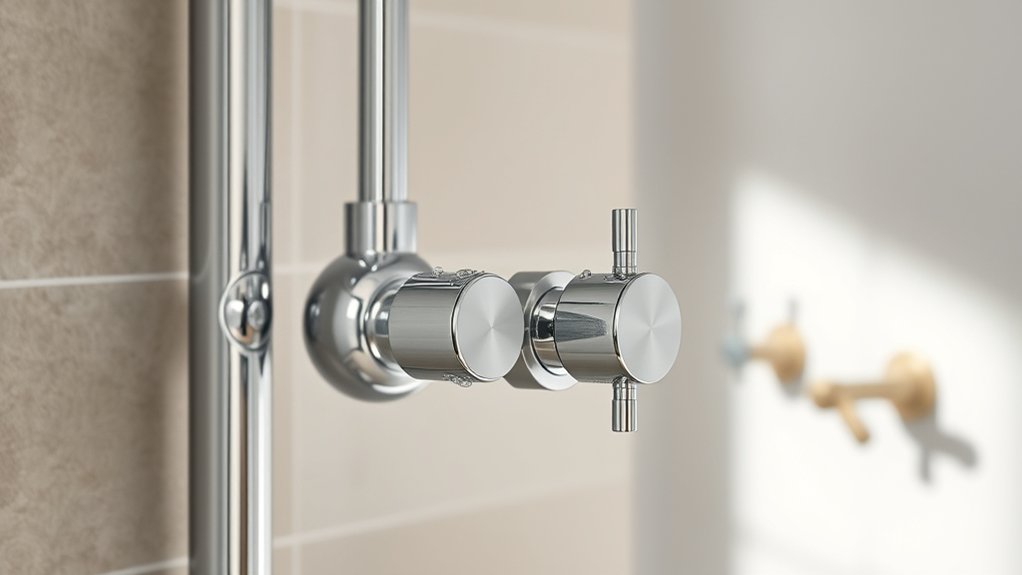
How can you guarantee your shower system meets today’s safety and code requirements? First, understand that many two handle misconceptions stem from outdated assumptions about their compliance and safety.
Modern alternatives, such as pressure-balancing valves and thermostatic mixing valves, offer precise temperature control and safeguard against scalding, aligning with current plumbing codes. These solutions address code compliance myths by meeting ANSI and ASSE standards, ensuring safer operation.
When upgrading, opt for valves with integrated anti-scald features and certifications recognized by your local jurisdiction. Digital and single-handle thermostatic models provide enhanced control, reduce water waste, and simplify maintenance.
Frequently Asked Questions
How Do Two-Handle Valves Affect Water Temperature Control?
You control water temperature precisely by adjusting each handle in a two-handle design, allowing manual temperature mixing. It requires balancing hot and cold flows, giving you direct, practical control but less automatic stability.
Can Two-Handle Valves Be Repaired or Retrofitted for Safety?
You can repair two-handle valves and improve two-handle safety by installing retrofit options like anti-scald cartridges or pressure-balancing valves. These upgrades ensure precise temperature control while meeting modern safety standards efficiently and cost-effectively.
What Are Common Causes of Leaks in Two-Handle Shower Valves?
Common causes of water leaks in two-handle shower valves include worn-out washers, damaged valve seats, corroded stems, and loose packing nuts.
You’ll want to inspect these components regularly to prevent leaks and maintain valve integrity.
How Does Water Pressure Influence Two-Handle Valve Performance?
You’ll notice water pressure effects directly impact two-handle compatibility; high pressure can cause valve wear, while low pressure reduces flow. Adjusting pressure guarantees smooth operation, preventing leaks and maintaining balanced temperature control in your two-handle shower valve.
Are There Specific Brands Known for Reliable Two-Handle Valves?
Like a well-crafted Swiss watch, brands such as Moen and Delta offer two-handle valves known for precise control and water savings. You’ll benefit from their durable, efficient designs that optimize flow while minimizing waste.