Can You Lay Wood Floor Over Tile
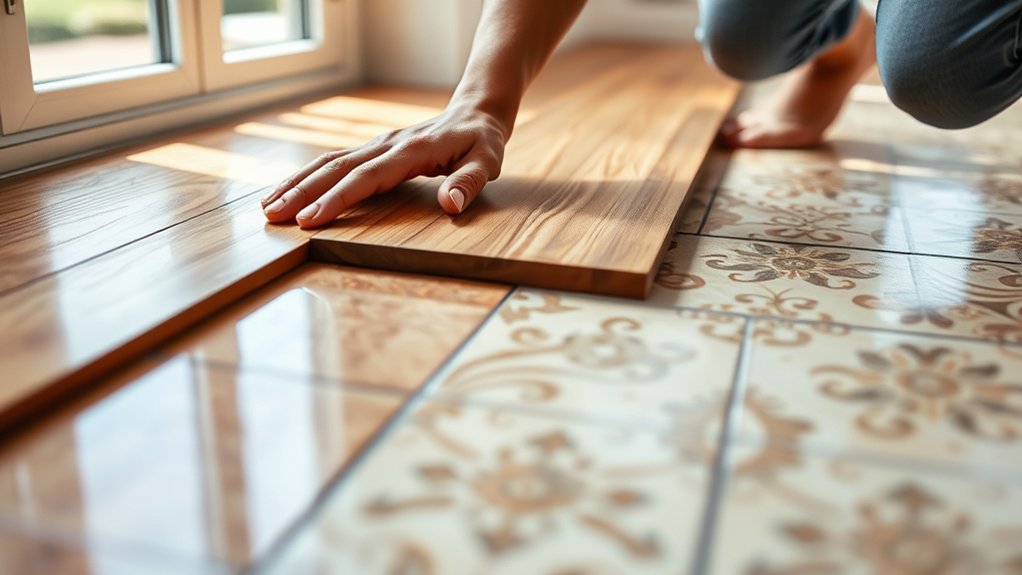
Think of your existing tile floor as a foundation stone—solid but not always ready to support a new wood floor over tile without preparation. You might assume laying wood directly over tile is straightforward, yet there are critical factors to consider.
Moisture control, surface stability, and material compatibility all demand your attention. Understanding these elements can prevent costly mistakes and ensure a durable finish. But first, you need to know what conditions make this approach feasible.
Key Takeaways
- Wood flooring can be installed over tile if the tile surface is flat, level, clean, and securely adhered.
- Engineered wood is preferred over solid wood for better moisture resistance and stability on tile subfloors.
- Remove loose, cracked, or uneven tiles to create a stable, level base before installing wood flooring.
- Use appropriate underlayment and moisture barriers to ensure adhesion and prevent moisture damage.
- Nail-down installation is not recommended over tile; floating or glue-down methods are preferable.
Can You Lay Wood Flooring Over Tile?
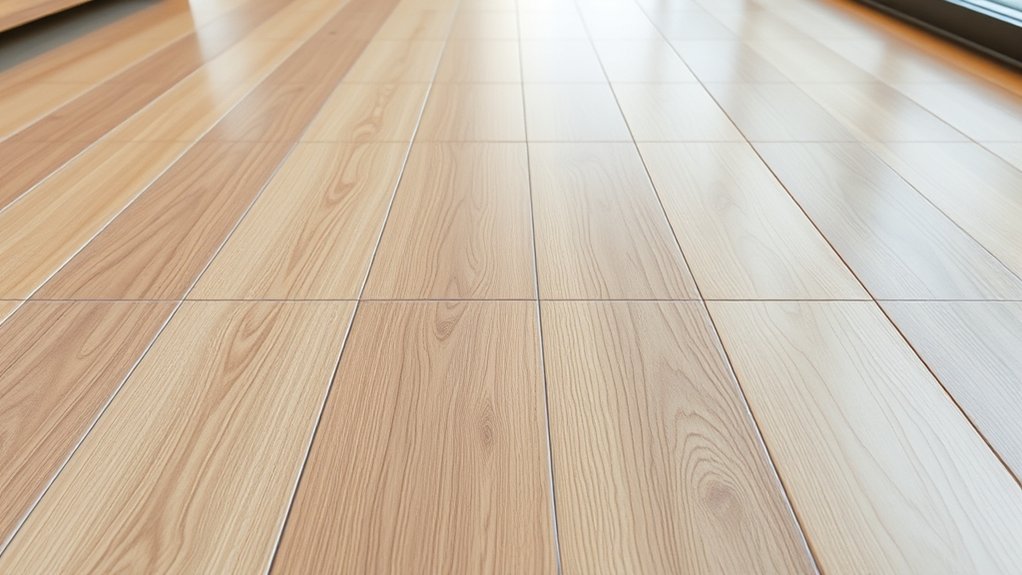
How feasible is it to lay wood flooring directly over existing tile? It’s possible but requires careful evaluation of the tile’s condition and subfloor stability. Discussion idea1 emphasizes that you need a flat, clean, and solid tile surface to avoid issues like uneven wear or squeaking.
Discussion idea2 focuses on moisture considerations; tiles can trap moisture, which may damage wood flooring over time. You’ll also need to decide between floating floors or using an adhesive, considering tile thickness and height differences with adjacent flooring.
Proper underlayment is essential to provide cushioning and sound insulation. In summary, while you can lay wood over tile, you must address surface preparation, moisture control, and installation method to ensure a durable, stable wood floor.
Best Wood Flooring Types for Tile Subfloors
When installing wood flooring over tile, you’ll find engineered wood offers better stability and moisture resistance compared to solid wood. Engineered planks are designed to handle subfloor irregularities and temperature changes more effectively.
However, if you prefer solid wood, you’ll need to assess the tile’s condition and prepare the subfloor carefully to prevent issues.
Engineered Wood Advantages
Why choose engineered wood for installing over tile subfloors? Engineered wood offers superior dimensional stability compared to solid wood, making it ideal for tile substrates prone to temperature and moisture fluctuations. Its multi-layer construction reduces expansion and contraction, preventing gaps or buckling.
Unlike solid wood, engineered wood can be installed as a floating floor, eliminating the need for nails or glue, which simplifies installation over tile. This approach directly addresses subfloor challenges, avoiding irrelevant topics like unrelated concepts in flooring types.
Additionally, engineered wood’s thinner profile allows for easier height adjustments, ensuring smooth transitions to adjacent rooms. You’ll appreciate how engineered wood combines aesthetic appeal with technical advantages, providing a durable, stable, and straightforward solution for wood flooring over tile subfloors.
Solid Wood Considerations
Which solid wood options perform best over tile subfloors? When considering irreversible trends in wood flooring, you’ll want species with dimensional stability to withstand tile’s hardness and any subfloor movement.
Woods like white oak and hard maple offer excellent performance due to their dense cellular structure, reducing expansion and contraction risks. Avoid unrelated timber classifications that focus solely on aesthetics without addressing structural compatibility.
Solid wood’s natural swelling behavior can cause issues if not matched properly with the tile subfloor’s characteristics. You’ll also need to account for moisture barriers and acclimation to prevent warping.
Ultimately, selecting solid wood species with proven stability and ensuring proper installation techniques will help your floor endure long-term, despite the challenges posed by a tile base.
How to Prepare Tile Floors for Wood Installation
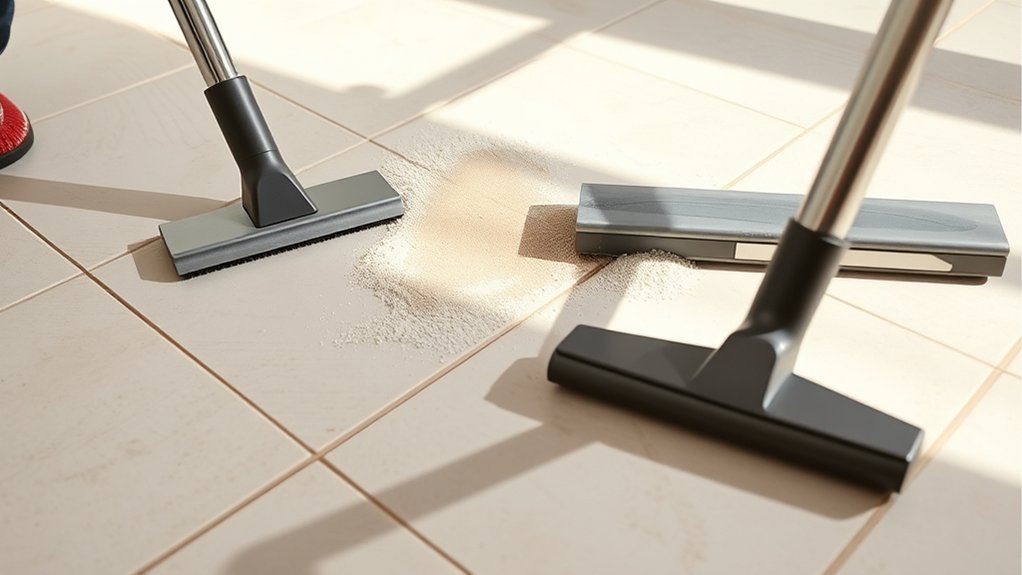
How do you ensure a tile floor is ready to support a new wood installation? First, inspect the tile surface for cracks or loose tiles; repair or replace them to create a stable base.
Next, thoroughly clean the floor, removing all dirt, grease, and residues that could impede adhesion. Check the tile’s levelness. Uneven surfaces require leveling compounds to prevent wood flooring issues.
Consider moisture levels using a moisture meter, as excessive moisture can damage wood. For two word discussion ideas, focus on “subfloor integrity” and “moisture control.”
As alternative topics, you might explore soundproofing or insulation under the wood. Proper preparation sets the foundation for a successful wood floor installation over tile, minimizing future problems and ensuring durability without addressing specific installation methods here.
Installation Methods for Wood Over Tile
Before installing wood over tile, you need to ensure the tile surface is clean, level, and secure. Choosing the right type of wood flooring, whether engineered or solid hardwood, affects your installation options.
Then, you can select the appropriate technique, such as floating, glue-down, or nail-down, based on your wood choice and subfloor condition.
Preparing Tile Surface
Why does preparing the tile surface matter when installing wood flooring over it? Proper preparation ensures adhesion, prevents unevenness, and extends flooring lifespan. You must remove any dirt, grease, or loose grout from the tile, as these contaminants hinder bonding.
Next, assess the tile’s surface for cracks or damages; repairing them avoids future wood floor instability. Grinding or sanding the tile surface is necessary to create texture, improving adhesive grip.
Avoid discussing irrelevant topics like underfloor heating or unrelated concepts such as tile color or pattern, which don’t impact preparation. Finally, thoroughly clean the surface to eliminate dust after sanding.
Skipping these steps compromises installation quality and can lead to wood floor failure over time. Preparing the tile correctly is non-negotiable for a durable, stable wood floor over tile.
Types Of Wood Flooring
Which wood flooring installation method suits laying over tile depends largely on the tile’s condition and your project goals. Understanding the types of wood flooring helps you choose the best approach without getting sidetracked by irrelevant topics or unrelated ideas.
Here are common wood flooring types suitable for installation over tile:
- Engineered wood: Stable and less prone to moisture damage, ideal for overlaying tile.
- Solid hardwood: Requires a proper underlayment; less forgiving on uneven tile.
- Laminate flooring: Click-lock systems work well over a smooth tile surface.
- Luxury vinyl plank (LVP): Not wood but mimics wood appearance; often considered due to ease of installation.
- Parquet flooring: Requires precise subfloor preparation to avoid unevenness.
Each type demands specific installation considerations tailored to your tile’s state.
Installation Techniques Explained
Successful wood floor installation over tile hinges on selecting the right technique that accommodates the tile’s surface and condition. You can either use a floating floor method, where engineered wood planks interlock over an underlayment, or glue-down installation, adhering wood directly to the tile after thorough cleaning and priming. Nail-down isn’t recommended over tile due to poor substrate compatibility.
Prior to installation, address discussion ideas related to tile flatness and moisture levels to prevent future issues. It’s also crucial to debunk maintenance myths; for instance, wood over tile doesn’t require less care. Proper acclimation and moisture control remain vital.
Each method demands precise preparation to ensure stability, durability, and performance, so choose based on tile integrity, wood type, and your long-term flooring goals.
Common Challenges When Laying Wood Over Tile (And How to Avoid Them)
How do you address the unique challenges that arise when installing wood flooring over tile? Avoid common pitfalls by understanding the technical demands of this process. Unlike other discussion ideas where subtopic not relevant issues arise, this installation requires careful preparation and execution.
Key challenges include:
Key challenges include uneven surfaces, moisture issues, height differences, underlayment problems, and adhesive incompatibility.
- Uneven tile surfaces causing wood floor instability
- Moisture trapped between tile and wood leading to warping
- Height differences creating transition difficulties
- Insufficient underlayment failing to absorb impact and sound
- Adhesive incompatibility resulting in poor bonding
To avoid these, ensure thorough tile cleaning, use a proper moisture barrier, level the substrate, select suitable underlayment, and test adhesives for compatibility. Addressing these specifics ensures a stable, durable wood floor over tile without compromising performance or aesthetics.
How to Maintain Wood Flooring Installed Over Tile
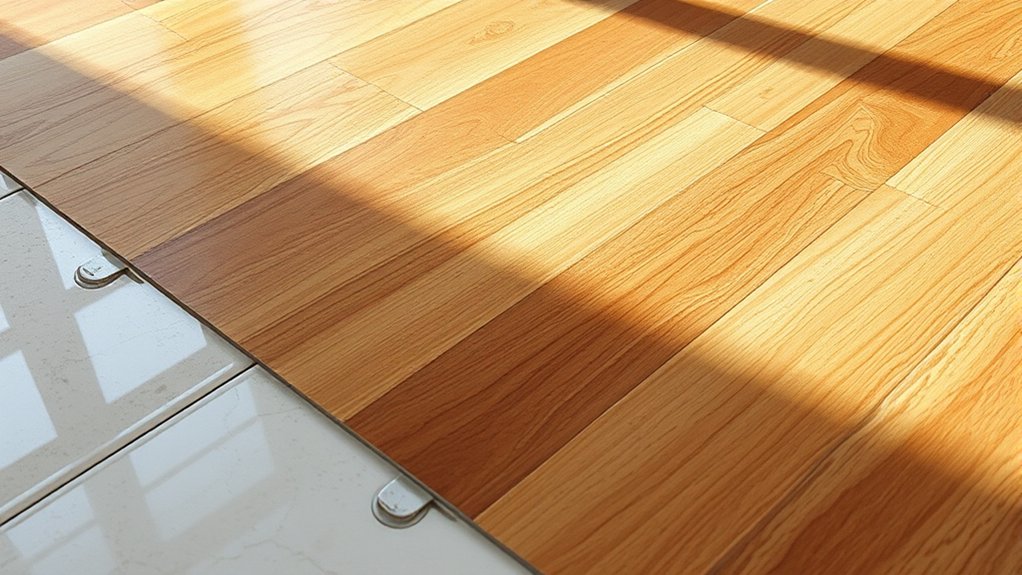
Once you’ve properly installed wood flooring over tile, ongoing maintenance plays a key role in preserving its integrity and appearance. Begin by regularly sweeping or vacuuming to remove grit that can scratch the wood surface.
Use a damp mop with a manufacturer-recommended cleaner; avoid excess water to prevent moisture damage. Monitor humidity levels between 35-55% to minimize wood expansion or contraction.
For discussion ideas, consider scheduling periodic inspections to check for signs of separation or warping caused by tile substrate movement. Address spills immediately to prevent staining or warping.
Flooring maintenance also involves protecting high-traffic areas with rugs and furniture pads to reduce wear. By following these practices, you ensure your wood flooring over tile remains durable, visually appealing, and structurally sound over time.
When to Remove Tile Before Installing Wood Flooring
Although installing wood flooring directly over tile is possible in many cases, you should remove the tile if it’s loose, uneven, or cracked. Non wood tile surfaces, such as ceramic or porcelain, must be stable to support wood flooring.
Vinyl trends have introduced smoother, more resilient substrates, but if your tile is damaged or poorly adhered, it compromises the wood floor’s longevity. Remove tile when:
Vinyl offers smoother substrates, but damaged or loose tile can undermine wood flooring durability—remove it when necessary.
- The tile surface has significant height variations exceeding 1/8 inch
- Cracks or broken tiles risk structural integrity
- Tile is loose or hollow-sounding underfoot
- Adhesive residue hinders proper wood floor bonding
- You plan to install a thin wood floor requiring a perfectly flat substrate
Removing tile ensures a stable, level base essential for successful wood floor installation.
Frequently Asked Questions
How Does Wood Flooring Over Tile Affect Home Resale Value?
You’ll find that wood flooring over tile can improve how resale value appears, provided tile compatibility is guaranteed through proper subfloor prep. This method offers a modern look, appealing to buyers seeking durability and style.
Can Radiant Heating Systems Be Used Under Wood Floors on Tile?
Wondering if radiant heating works under wood floors on tile? Yes, it does, but you need to guarantee tile compatibility and proper insulation to prevent heat damage.
This also helps maintain efficient heat transfer for a safe, comfortable wooden floor.
What Is the Cost Comparison Between Removing Tile and Laying Wood Over It?
You’ll find removal costs for tile higher due to labor and disposal, while laying wood over tile cuts tile prep costs but may require leveling.
Are There Specific Warranties for Wood Floors Installed Over Tile?
Yes, you’ll find warranty considerations depend on installation standards; manufacturers often require specific subfloor conditions. Installing wood over tile might void warranties if standards aren’t met, so you should verify with the wood floor manufacturer beforehand.
How Long Can Wood Flooring Last When Installed Over Tile?
Wood flooring installed over tile can last 20-30 years with proper subfloor preparation and moisture control. Discussing unrelated topics like tangential ideas doesn’t affect durability; focus on technical installation details to ensure longevity and performance.
Conclusion
You might think laying wood over tile is a shortcut, but with proper prep and the right materials, it’s a smart choice—coincidentally saving you time and money.
Check tile stability, choose engineered wood, and use moisture barriers to prevent warping. Skip these steps, and you risk costly repairs.
So, if you want a flawless floor without tearing out tile, follow the guidelines closely. It’s not just possible—it’s practical when done right.
In conclusion, laying wood floor over tile is a viable and efficient solution when approached correctly.