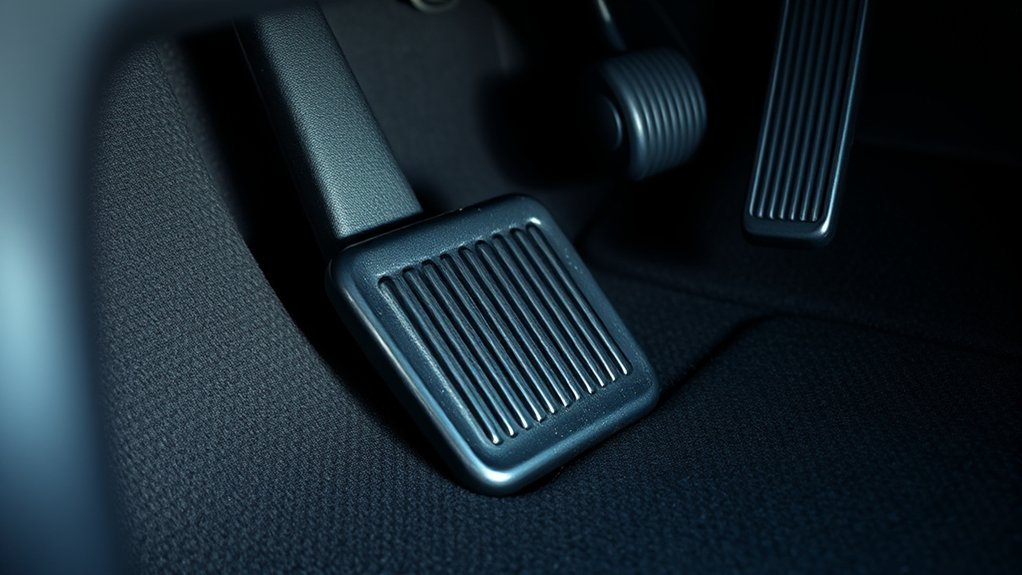
Can Abs Cause Brake Pedal to Go to the Floor
If you notice your brake pedal sinking to the floor while the ABS warning light is on, you might wonder, can ABS cause brake pedal to go to the floor? It’s a common concern, but ABS faults rarely cause the pedal to lose firmness directly.
Instead, this symptom often points to other issues such as brake fluid leaks, a failing master cylinder, or a faulty brake booster. These components play a crucial role in brake performance.
Understanding how they interact is vital before jumping to conclusions about your ABS. Proper diagnosis can save time and prevent unnecessary repairs.
Key Takeaways
- ABS issues usually do not cause the brake pedal to sink to the floor.
- ABS warning lights indicate faults in the anti-lock system, not hydraulic pressure loss.
- A sinking brake pedal typically results from brake fluid leaks or master cylinder failure.
- ABS faults prevent ABS activation but do not directly affect pedal firmness or travel.
- If the pedal sinks with an ABS warning, inspect the hydraulic brake system separately.
ABS Issues and Brake Pedal Sinking: Is There a Direct Link?
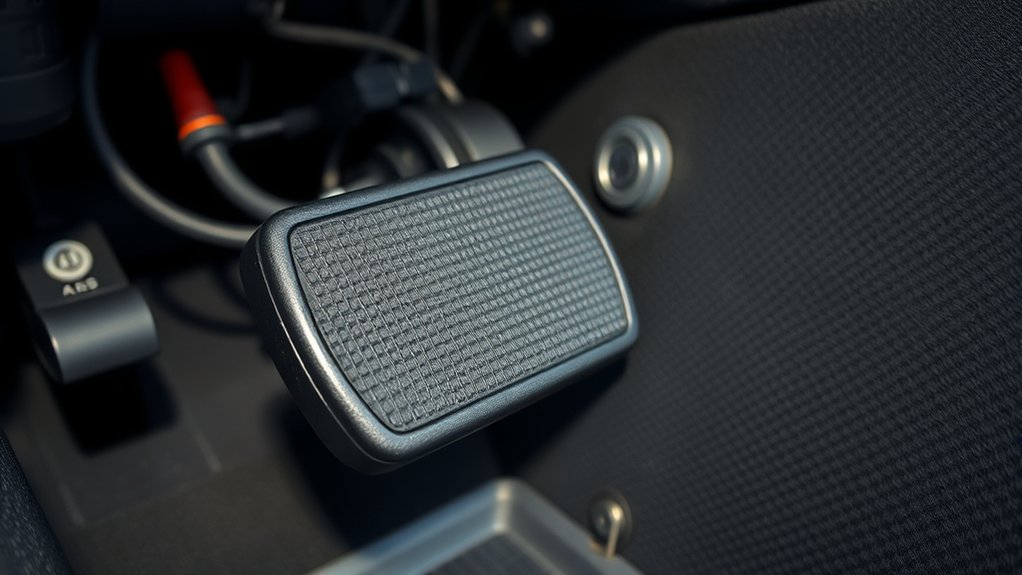
How exactly do ABS issues affect your brake pedal’s behavior? Generally, ABS problems don’t directly cause the brake pedal to sink to the floor. When the ABS warning lights up on your dashboard, it indicates a fault in the anti-lock system, such as a faulty wheel speed sensor or a malfunctioning ABS module.
These issues typically affect braking performance by preventing the ABS from activating during hard stops, but they don’t usually result in a soft or sinking brake pedal. A sinking brake pedal often signals a hydraulic problem, like a fluid leak or air in the brake lines, rather than a malfunction within the ABS system itself.
Consequently, if your brake pedal goes to the floor accompanied by an ABS warning, you should investigate the hydraulic system separately from the ABS components.
How Brake Fluid Leaks Cause Your Brake Pedal to Sink
While ABS issues rarely cause your brake pedal to sink, a brake fluid leak directly impacts pedal feel and braking performance. When brake fluid leaks from the system, whether at the calipers, brake lines, or master cylinder, it reduces hydraulic pressure necessary for proper braking.
This loss of fluid volume causes the pedal to travel farther before resistance builds, resulting in noticeable pedal sinking. You may also observe a soft or spongy pedal when pressing down.
Diagnosing brake fluid leaks involves checking for visible fluid around wheels, under the vehicle, and near the master cylinder reservoir. Addressing leaks promptly is crucial because continued brake fluid loss compromises your braking system’s integrity and safety, making pedal sinking a clear warning sign of hydraulic failure within the brake circuit.
Why a Bad Brake Booster or Master Cylinder Makes Your Pedal Sink
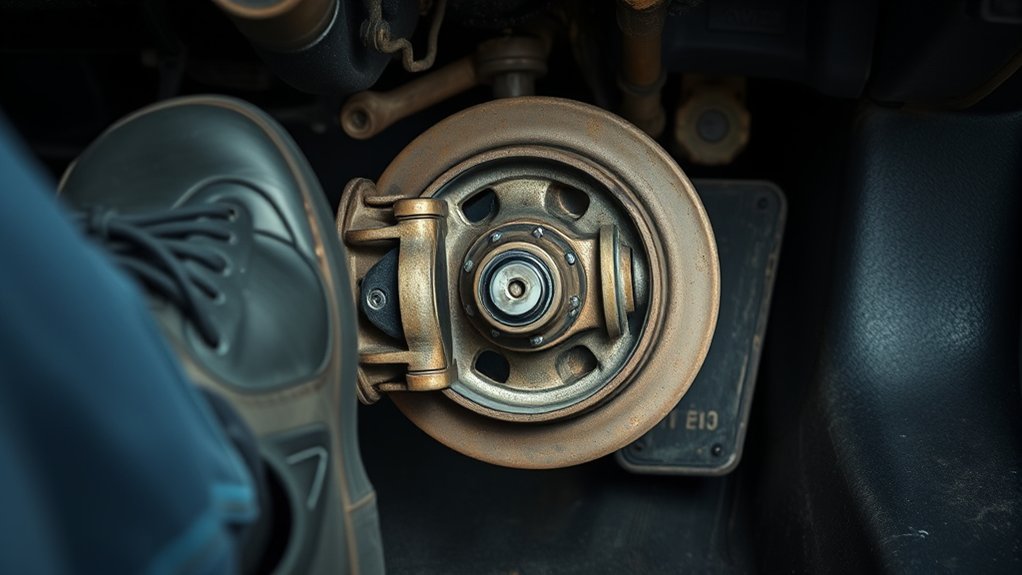
Why does your brake pedal sink when you apply pressure? A failing brake booster or master cylinder often causes this issue by compromising hydraulic pressure and vacuum assistance. The master cylinder generates the hydraulic force needed to move brake fluid; if its internal seals wear out, fluid bypasses, reducing pedal firmness.
Simultaneously, a malfunctioning brake booster fails to amplify your input, making the pedal feel soft and sink to the floor. While the abs warning typically signals problems within the anti-lock braking system, it can indirectly appear if the booster or master cylinder affects overall braking performance.
Diagnosing these components involves checking for vacuum leaks, fluid condition, and pedal response. Addressing these failures promptly restores pedal firmness and ensures safe, reliable braking.
Dashboard Warnings and Symptoms of ABS Failure
Problems with the brake booster or master cylinder can trigger dashboard warnings related to the ABS system. When the ABS control module detects issues within the brake system, it activates warning lights to alert you. Recognizing these symptoms early aids in precise ABS diagnostics and prevents pedal failure.
| Warning Light | Possible Cause |
|---|---|
| ABS Indicator | Faulty wheel speed sensor |
| Brake Warning Light | Low brake fluid or master cylinder failure |
| Check Engine Light | ABS control module malfunction |
If you see these warnings, your vehicle’s ABS diagnostics system is signaling a problem. Ignoring them may lead to compromised braking performance, including the brake pedal sinking to the floor. Always address dashboard alerts promptly for safe, reliable operation.
Simple Home Checks to Diagnose Brake Pedal Issues
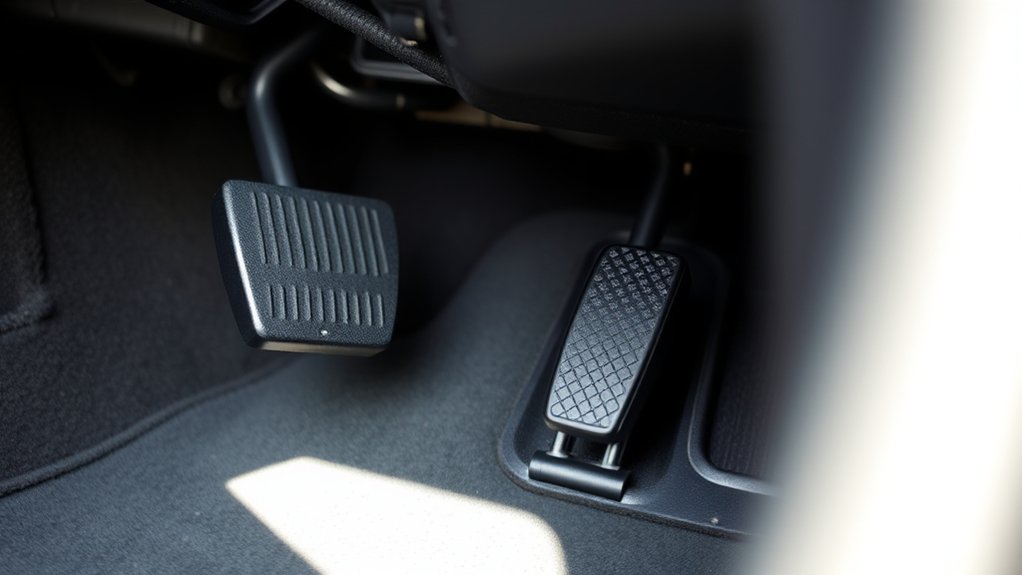
How can you quickly identify the cause of a brake pedal that sinks to the floor? Start with simple diagnostic tests at home. First, check the brake fluid reservoir for proper fluid level and signs of contamination or leaks. Low fluid often causes pedal drop.
Next, press the brake pedal firmly and hold it; if it continues to sink, suspect internal leaks or air in the brake lines. Perform a visual inspection of brake lines and hoses for cracks or damage.
Pump the brake pedal several times with the engine off to build pressure; a firm pedal indicates a healthy system. Lastly, listen for unusual noises during pedal application, which may signal ABS or master cylinder issues.
These diagnostic tests help isolate the problem before seeking professional evaluation.
When to Seek Professional Help for Brake Pedal and ABS Problems
If your home checks reveal persistent brake pedal issues or signs of ABS malfunction, it’s time to consult a professional technician. Low brake fluid levels, despite topping off, may indicate a leak or master cylinder failure requiring expert diagnosis.
A faulty ABS sensor often triggers warning lights and can disrupt brake pressure, causing the pedal to sink. Professionals use diagnostic tools to read ABS codes and test sensor functionality accurately.
Additionally, if the brake pedal feels spongy or goes to the floor after bleeding, it suggests internal hydraulic problems beyond simple fixes. Attempting repairs without proper equipment or knowledge risks safety.
Prioritize professional inspection when brake fluid contamination, ABS sensor faults, or hydraulic failures persist to ensure reliable braking performance and prevent further damage.
Frequently Asked Questions
Can Worn Brake Pads Cause the Brake Pedal to Go to the Floor?
Yes, brake pad wear can affect pedal feel, but it rarely causes the pedal to go to the floor. That usually indicates a hydraulic issue like air in the brake lines or a leak, not just worn pads.
Does ABS Failure Affect Stopping Distance?
You might think ABS failure won’t affect braking distance, but it actually can. When ABS fails, your wheels may lock, reducing control and increasing braking distance, especially on slippery surfaces.
Stay alert to maintain safety.
How Often Should ABS Sensors Be Replaced?
You should follow your vehicle’s manufacturer guidelines for ABS sensor replacement intervals, typically every 60,000 to 100,000 miles.
Regular brake system maintenance helps detect sensor issues early, preventing ABS malfunctions and ensuring optimal braking performance.
Can Low Brake Fluid Trigger ABS Warning Lights?
Don’t think your ABS warning lights just mean sensor failure. Low brake fluid can trigger ABS warnings by disrupting hydraulic pressure, causing system errors.
Check fluid levels first to diagnose before replacing expensive ABS components or sensors.
Is It Safe to Drive With a Sinking Brake Pedal?
You shouldn’t drive with a sinking brake pedal. Safety misconceptions often downplay this symptom, but two word discussion ideas like “brake failure” highlight its severity.
Diagnose immediately to avoid accidents or further system damage.
Conclusion
Think of your brake system like a chain—if one link breaks, the whole chain weakens. ABS faults usually trigger warning lights but don’t directly cause the pedal to sink.
When your pedal drops, it’s often due to a leak, air in the lines, or a failing master cylinder or booster.
If you notice your brake pedal sinking, don’t ignore it. Get a professional diagnosis promptly to avoid a complete brake failure.
Can ABS cause brake pedal to go to the floor? Typically, no—it’s more likely related to other brake system issues that need immediate attention.