What Is a Bathtub Liner
If your bathtub looks worn but is still structurally sound, a bathtub liner might be the solution you need. A bathtub liner is a custom acrylic shell that fits over your existing tub, creating a smooth, durable surface without removing the original fixture. This method seals cracks and chips while providing a waterproof barrier.
But how exactly does this process work, and what should you consider before choosing a liner over other options? Understanding these factors can help you decide if a bathtub liner is the right choice for your bathroom renovation.
Key Takeaways
- A bathtub liner is a custom-fit acrylic shell installed over an existing tub to refresh its surface without removal.
- It adheres with industrial adhesives to create a durable, waterproof barrier that protects and renovates the tub.
- Liners cover cosmetic damage like cracks and chips, providing a smooth, stain-resistant finish.
- Installation is quicker and less invasive than a full tub replacement, with minimal mess and downtime.
- Liners are cost-effective when the existing tub is structurally sound but cosmetically worn or stained.
What Is a Bathtub Liner: And How Does It Work?
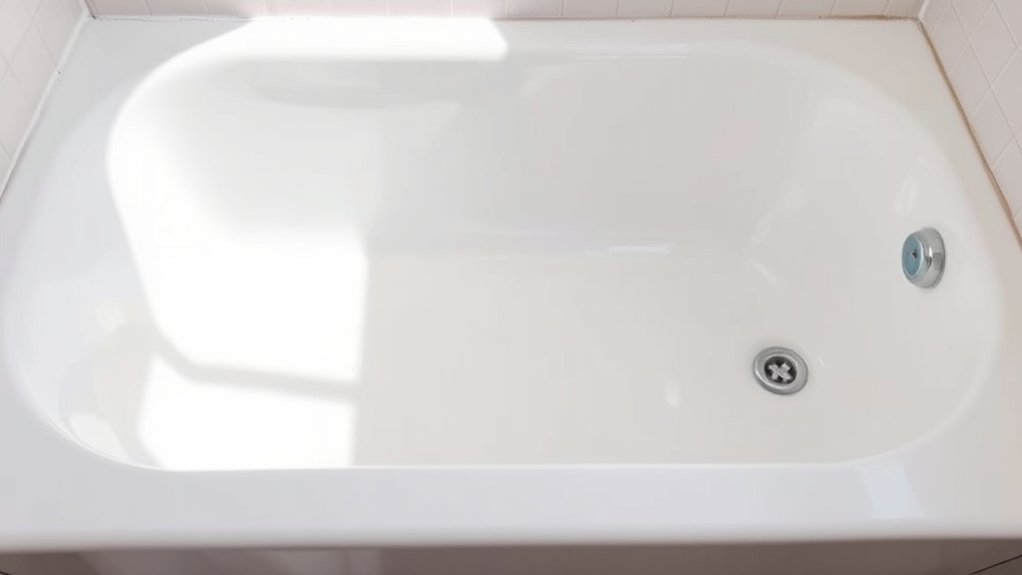
How does a bathtub liner work to refresh your tub’s surface? A bathtub liner is a custom-fit acrylic shell installed directly over your existing tub. It adheres using industrial adhesives, creating a smooth, waterproof barrier that renews the look without removing the old tub.
The bathtub liner pros include quick installation, minimal mess, durability, and cost-effectiveness compared to full replacement. It also resists stains and scratches, making maintenance easier.
However, bathtub liner cons involve potential fitting issues if your tub is irregularly shaped, the surface beneath needing to be in good condition, and occasional trapping of moisture, which can cause mold if not sealed properly. Understanding these factors helps you decide if a liner is the practical solution you need.
Common Problems Bathtub Liners Can Fix
You’ll find that bathtub liners effectively cover cracked and chipped surfaces, restoring a smooth, safe finish without full replacement. They also block stubborn stains that regular cleaning can’t remove, improving your tub’s appearance instantly.
Let’s look at how liners address these common issues efficiently.
Cracked And Chipped Surfaces
Why do cracked and chipped surfaces in your bathtub demand immediate attention? These flaws compromise your tub’s structural integrity and can worsen over time, leading to leaks or water damage. Addressing cracked surfaces and chipped surfaces promptly prevents costly repairs and maintains your bathroom’s hygiene.
A bathtub liner effectively covers these issues by:
- Sealing cracks to prevent water infiltration
- Restoring a smooth, uniform surface
- Enhancing durability against further damage
- Minimizing mold and mildew growth in damaged areas
- Providing a cost-effective alternative to full replacement
Stubborn Stains Removal
Beyond sealing cracks and chips, bathtub liners also tackle the persistent issue of stubborn stains that regular cleaning can’t remove. These stains, often caused by hard water, soap scum, or mineral deposits, resist typical cleaning hacks, requiring more invasive methods.
Installing a bathtub liner provides a smooth, non-porous surface that prevents stains from embedding, making future cleaning far easier. Instead of scrubbing aggressively or using harsh chemicals, you’ll benefit from a stain-resistant barrier that maintains a fresh appearance with minimal effort.
If you’re dealing with discoloration or marks that don’t respond to standard cleaning hacks, a bathtub liner offers a practical, long-term solution to restore your tub’s look without costly replacements or refinishing.
Why Choose a Bathtub Liner Instead of Replacing Your Tub?
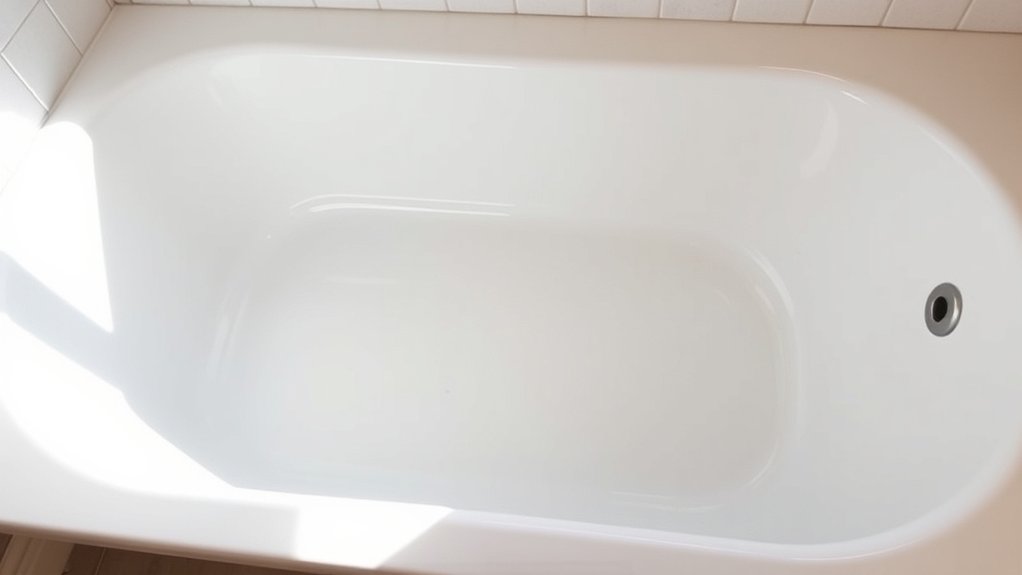
You’ll save substantially on costs by choosing a bathtub liner over a full replacement. Installation is quicker, minimizing downtime in your bathroom.
Plus, liners provide durable, low-maintenance protection that extends your tub’s lifespan.
Cost-Effectiveness Compared
How much can you really save by choosing a bathtub liner over a full tub replacement? Opting for a liner substantially cuts costs by eliminating demolition and extensive plumbing adjustments. You keep water flow efficiency intact since liners conform to existing plumbing without disruption.
Additionally, liners can enhance slip resistance with textured surfaces, improving safety without costly upgrades.
Consider these cost-effectiveness factors:
- Lower material and labor expenses compared to replacement
- Reduced risk of water damage during installation
- Maintains existing water flow dynamics, preventing extra modifications
- Increased slip resistance reduces liability and future costs
- Minimal surface prep lowers upfront investment
Choosing a bathtub liner provides a budget-friendly solution that balances performance and safety while avoiding the high expenses tied to full tub replacements.
Installation Time Benefits
Since bathtub liners fit directly over your existing tub, they considerably reduce installation time compared to full replacements. You avoid demolition, debris removal, and extended labor, making it a practical choice.
Contrary to quick fix myths, liners come with long term warranties, ensuring reliability without lengthy downtime.
| Step | Time Required | Benefits |
|---|---|---|
| Preparation | 1-2 hours | Minimal disruption |
| Liner Installation | 2-4 hours | No demolition needed |
| Curing & Finishing | 24 hours | Ready to use quickly |
Choosing a liner means you get a faster, cleaner upgrade. This efficiency translates into less hassle and a more predictable schedule, ideal for busy households or commercial properties.
Durability And Maintenance
What makes bathtub liners stand out in durability and maintenance compared to full replacements? Liners address common durability concerns by providing a tough, non-porous surface that resists cracking and chipping. You’ll find maintenance routines simplified since liners don’t require harsh chemicals or frequent refinishing.
Compared to replacing your tub, liners offer a practical balance of longevity and ease of upkeep.
Key durability and maintenance advantages include:
- Resistant to mold and mildew buildup
- Smooth surface minimizes dirt and grime adhesion
- Quick drying, reducing water damage risks
- Requires only mild cleaning agents for upkeep
- Eliminates the need for sanding or reglazing
Choosing a bathtub liner lets you maintain your bathroom’s aesthetics while avoiding the hassles linked to full tub replacement.
Bathtub Liner Materials and Styles Explained
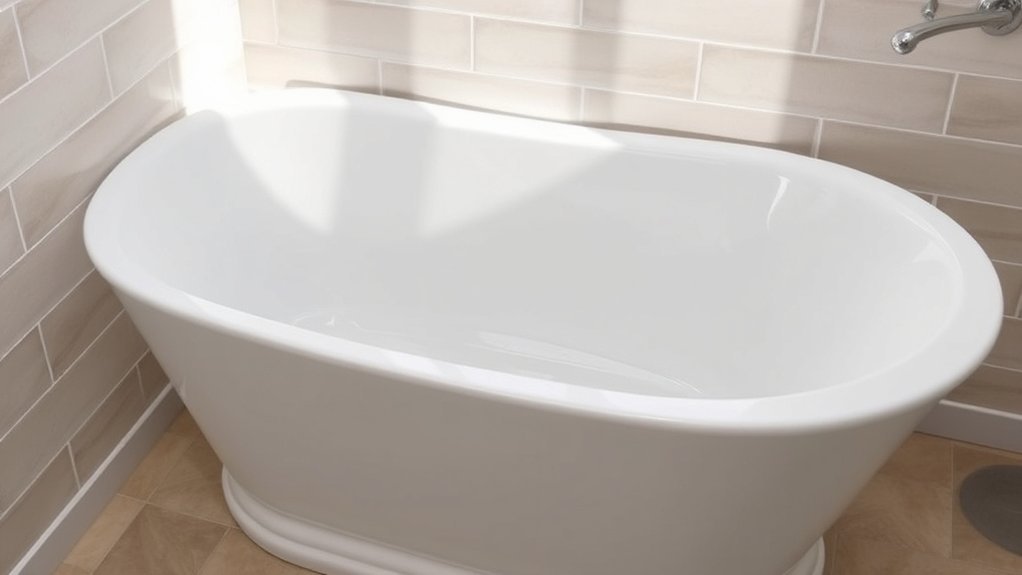
Bathtub liners come in various materials and styles, each designed to meet specific durability, aesthetic, and installation requirements. Acrylic is a popular choice for its smooth finish, excellent bathtub liner longevity, and resistance to cracking.
Fiberglass offers a lightweight, cost-effective solution but may degrade faster over time. Vinyl liners are budget-friendly but tend to have shorter lifespans and can impact indoor air quality.
When selecting styles, you can choose from textured, glossy, or matte finishes to match your bathroom decor. Consider the environmental impact of materials; acrylic and fiberglass involve more energy-intensive manufacturing, while vinyl poses recycling challenges.
Step-by-Step Bathtub Liner Installation
A successful bathtub liner installation starts with thorough preparation and accurate measurements. Begin by removing the old tub and cleaning the surface. Ensure your bathroom ventilation is adequate to prevent moisture buildup during and after installation.
Thorough preparation and accurate measurements are essential for a successful bathtub liner installation.
Next, fit the liner precisely to maintain tub surround aesthetics. Secure it with adhesive, making sure no air bubbles form.
Key steps include:
- Measure the tub accurately for a perfect fit
- Clean and dry the tub surface thoroughly
- Apply adhesive evenly to avoid gaps
- Position the liner carefully, aligning edges with the surround
- Allow curing time while maintaining good bathroom ventilation
How to Clean and Maintain Your Bathtub Liner
How often you clean your liner directly affects its durability and appearance. To maintain optimal bathroom vibes, clean your bathtub liner weekly using non-abrasive cleaners to prevent surface damage. Avoid harsh chemicals that can degrade the material and cause discoloration.
Use a soft sponge or cloth to gently scrub away soap scum and mildew. After cleaning, rinse thoroughly with warm water and dry with a microfiber towel to prevent water spots.
For small space renovation projects, regular maintenance ensures your liner stays sleek without costly replacements. Inspect the liner monthly for cracks or looseness, addressing issues promptly to avoid water damage to underlying structures.
Proper cleaning and upkeep extend the liner’s lifespan, preserving both function and aesthetic in your compact bathroom setup.
Bathtub Liner Costs: What Affects Your Budget?
What factors influence the overall cost of installing a liner in your bathroom? Several elements come into play, affecting your budget directly. Understanding these can help you plan better and avoid surprises.
- Bathroom layout complexity: Irregular shapes or tight spaces increase labor time and material waste.
- Plumbing access: Limited access requires more labor to disconnect and reconnect fixtures.
- Liner material quality: Higher-grade acrylic or custom colors cost more upfront but last longer.
- Removal of old fixtures: Extra charges apply if your existing tub or surround needs removal.
- Installation labor rates: Prices vary by region and installer expertise, impacting the total cost.
When to Choose a Bathtub Liner vs. a Full Remodel
Understanding the factors that influence bathtub liner costs helps you decide whether a liner or a full remodel makes more sense for your bathroom. You’ll want to choose a tub liner if your existing tub is structurally sound but cosmetically worn or stained.
Liners offer a remodeling alternative that’s faster, less labor-intensive, and more cost-effective than a full tear-out and replacement. However, if your tub has underlying damage, leaks, or outdated plumbing, a full remodel becomes necessary to address these issues comprehensively.
Also, remodeling allows you to upgrade fixtures and customize design, which a liner cannot provide. Evaluate your bathroom’s condition, budget, and timeline carefully. Opt for a tub liner when you need quick cosmetic improvement; choose a remodel for long-term durability and design flexibility.
Frequently Asked Questions
Are Bathtub Liners Safe for Children and Pets?
You’ll find bathtub liners generally safe for children and pets if you consider material durability and avoid harsh chemicals.
Though minor safety concerns exist, proper installation and maintenance minimize risks, ensuring a secure, long-lasting bathing surface.
Can Bathtub Liners Be Customized With Colors or Patterns?
Yes, you can choose custom color options and a pattern variety for bathtub liners. Don’t worry about limited choices; modern manufacturers use advanced techniques, ensuring your liner matches your bathroom’s style precisely and durably.
How Long Does a Typical Bathtub Liner Installation Take?
You’ll typically spend 3 to 4 hours on bathtub liner installation, minimizing installation downtime. Properly installed liners can extend bathtub liner longevity up to 15 years, offering a durable, low-maintenance surface with minimal disruption.
Do Bathtub Liners Affect Water Temperature Retention?
You might think bathtub liners improve insulation, but their impact on heat loss is minimal. They don’t considerably affect water temperature retention, so don’t expect noticeable warmth improvements after installing one.
Are Bathtub Liners Environmentally Friendly or Recyclable?
You’ll find bathtub liners vary in environmental impact; most use non-recyclable acrylic or PVC, limiting material recyclability. Choosing liners with recyclable materials reduces waste, so always check product specs to minimize negative environmental impact effectively.
Conclusion
So, you want a fresh tub without the drama of demolition? A bathtub liner’s your undercover hero—slipping over your old tub like a sleek suit of armor, hiding cracks and stains without the mess. It’s like giving your bathroom a facelift without the hospital bill.
Just remember, it’s not magic—it works best when your tub’s still structurally sound. Think of it as a cosmetic upgrade, not a miracle cure for every bathroom woe.
In the end, a bathtub liner offers a practical and stylish solution to refresh your space without tearing everything apart. It’s the perfect choice when you want a quick and effective bathroom makeover.