What Is a Slipper Bathtub
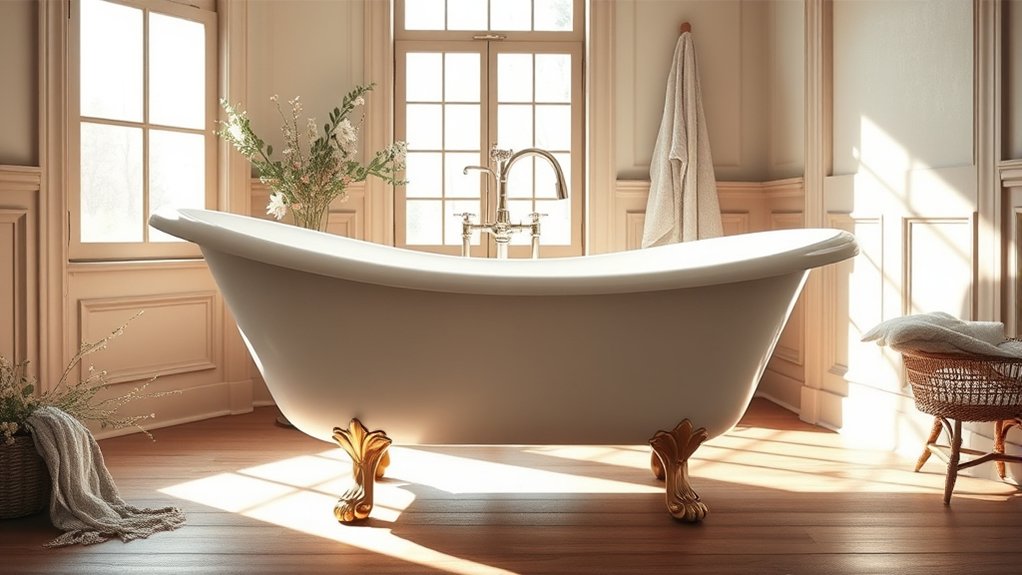
A slipper bathtub offers a subtle upgrade to your usual bathing experience, combining comfort with a distinct design that sets it apart.
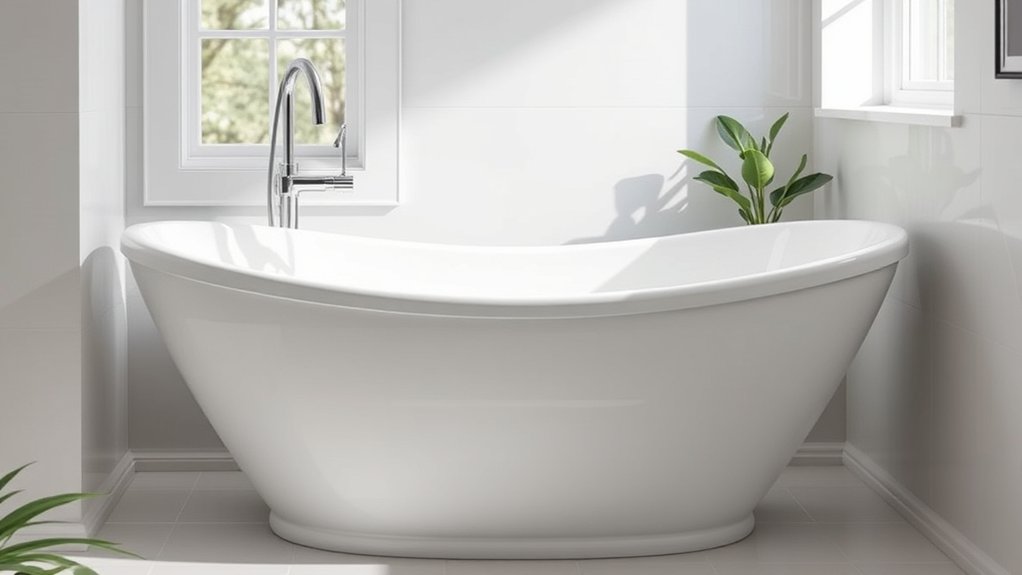
Unlike traditional tubs with uniform edges, it features one elevated, curved end that supports your back and neck ergonomically.
This unique shape isn’t just about looks—it also improves usability and maintenance.
Understanding how this design differs can help you decide if it’s the right fit for your bathroom’s needs.
Key Takeaways
- A slipper bathtub features one elevated, curved end that supports the back and neck for enhanced comfort.
- It originated in the Victorian era and symbolizes luxury and vintage bathroom aesthetics.
- The raised backrest improves ergonomic support, reducing neck and shoulder strain while reclining.
- Common materials include acrylic, cast iron, and stone resin, each offering different durability and style options.
- Slipper tubs come in freestanding, clawfoot, or drop-in styles, suitable for both traditional and modern bathrooms.
What Is a Slipper Bathtub? How Is It Different?
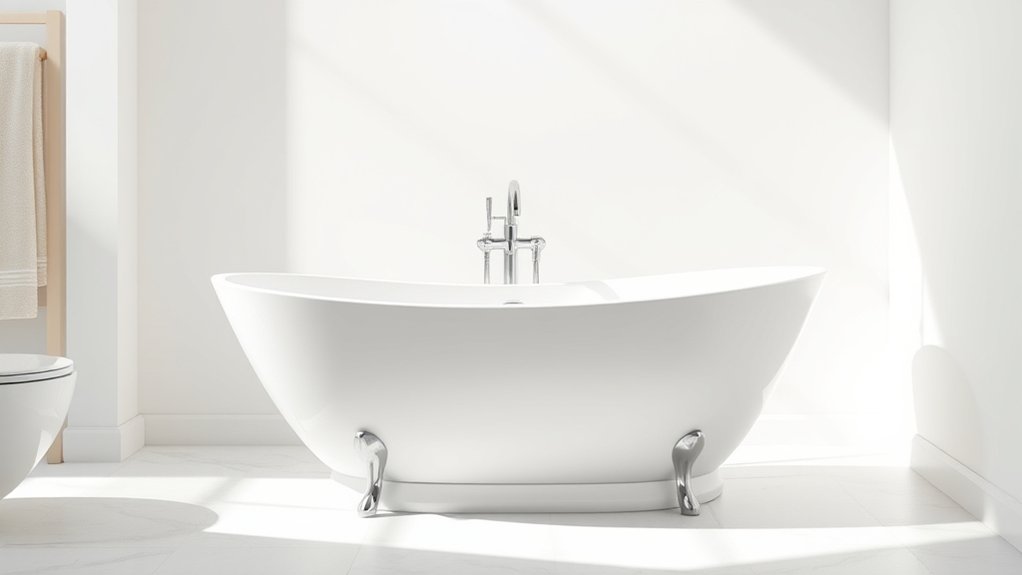
What sets a slipper bathtub apart from standard tubs? Unlike typical bathtubs with uniform edges, a slipper bathtub features one end elevated and curved, designed to support your back and neck comfortably.
A slipper bathtub is uniquely designed with an elevated, curved end for enhanced back and neck support.
This distinctive shape enhances slipper bathtub aesthetics by adding elegance and a vintage appeal to your bathroom. Originating in the late 19th century, slipper bathtubs gained popularity during the Victorian era, when clawfoot and slipper designs symbolized luxury and sophistication.
The raised backrest not only improves ergonomics but also distinguishes it visually from common rectangular tubs. When you choose a slipper bathtub, you’re selecting a fixture with historical origins that combine form and function, emphasizing comfort and visual appeal in a way standard tubs do not.
This design remains a classic choice for both traditional and modern bathrooms.
Benefits of Slipper Bathtubs for Your Bathroom
Why choose a slipper bathtub for your bathroom? Exploring slipper bathtubs reveals several practical benefits that enhance both comfort and style. Their elevated backrest supports your upper body, allowing you to recline comfortably while maximizing bathroom luxury.
This ergonomic design reduces strain on your neck and shoulders during long soaks. Additionally, slipper bathtubs often have a compact footprint, making them ideal for optimizing space without sacrificing functionality. Their classic silhouette adds visual interest, contributing to a sophisticated bathroom aesthetic.
From a maintenance perspective, their smooth curves facilitate easier cleaning compared to conventional tubs. By installing a slipper bathtub, you effectively combine ergonomic comfort with elegant design, creating a more inviting and luxurious bathing experience tailored to your daily routine and space requirements.
Popular Styles and Materials of Slipper Bathtubs
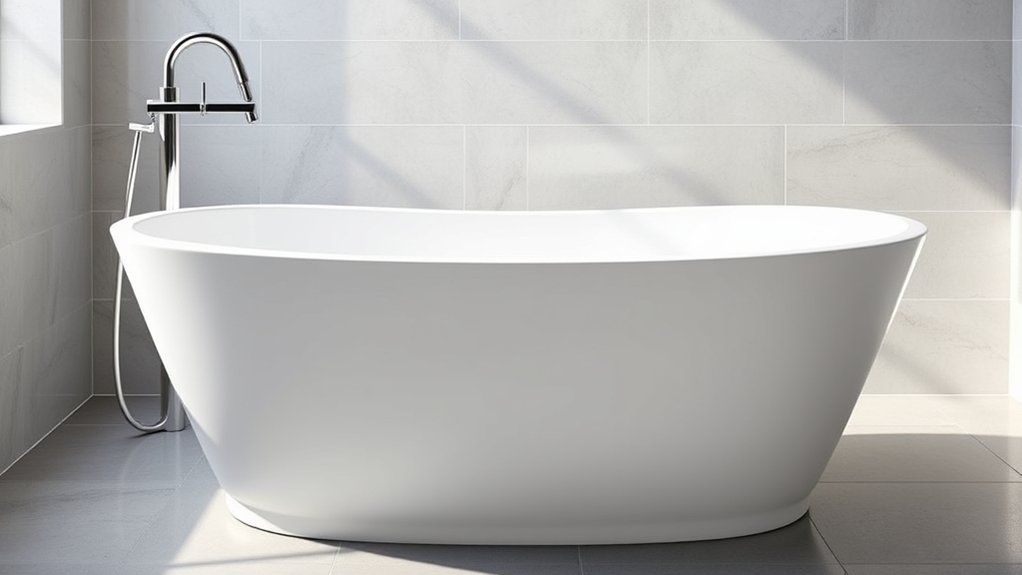
Several popular styles and materials define slipper bathtubs, each offering unique advantages to suit different bathroom designs and user preferences. You’ll commonly find slipper bathtubs crafted from acrylic, cast iron, and stone resin.
Acrylic models provide lightweight durability and ease of installation, while cast iron versions deliver excellent heat retention and a classic aesthetic. Stone resin offers a modern, sturdy option with a smooth finish.
Acrylic is lightweight and durable, cast iron retains heat beautifully, and stone resin offers modern sturdiness with a smooth finish.
In terms of style, you can choose from freestanding, clawfoot, or drop-in slipper bathtubs, depending on your space and design goals. Each style emphasizes the raised backrest for ergonomic support.
Understanding these material varieties and styles lets you select slipper bathtubs that combine comfort, functionality, and visual appeal effectively for your bathroom layout.
How to Pick the Perfect Slipper Bathtub for Your Space
When choosing a slipper bathtub for your space, consider dimensions, layout, and user comfort first. Measure your bathroom carefully to ensure the slipper bathtub fits without overcrowding. Evaluate the available floor space and plumbing location to select a model that integrates smoothly.
Focus on ergonomic design; the raised backrest should support your posture comfortably. Weight capacity and material durability also matter for long-term use. Use two word discussion ideas like “space efficiency” and “style compatibility” to guide your decision.
Consider whether the slipper bathtub’s aesthetic matches your bathroom theme and if maintenance requirements fit your routine. Prioritize function over form to avoid costly adjustments. By balancing these factors, you’ll select a slipper bathtub that enhances both comfort and practicality in your space.
Installing and Caring for Your Slipper Bathtub
How do you guarantee your slipper bathtub performs at its best over time? Start by planning your bathroom layout carefully to ensure the tub fits without obstructing access or workflow. Confirm that the space can support the tub’s weight, especially when filled with water.
Next, address plumbing considerations: verify drain and faucet alignment matches your tub’s design to avoid costly adjustments. Use professional installation to secure proper sealing and prevent leaks.
For ongoing care, clean the surface regularly with non-abrasive cleaners to maintain its finish and prevent damage. Inspect plumbing connections periodically to detect leaks early.
Avoid harsh chemicals that can degrade the material, and promptly address any chips or cracks to extend your slipper bathtub’s lifespan effectively.
Frequently Asked Questions
Are Slipper Bathtubs Eco-Friendly?
Slipper bathtubs can be eco-friendly if you choose models with water saving features and durable materials.
You’ll want to contemplate eco friendly considerations like reduced water use and long-lasting construction to minimize environmental impact.
Can Slipper Bathtubs Be Used Outdoors?
You can use slipper bathtubs for outdoor placement if they have proper weather resistance. Choose materials like acrylic or fiberglass with protective coatings to ensure durability against elements, preventing damage and maintaining structural integrity over time.
Do Slipper Bathtubs Increase Home Resale Value?
You’ll find slipper bathtub aesthetics boost your bathroom’s appeal, which can positively influence resale value impact. Their unique design attracts buyers seeking style and comfort, making them a practical upgrade to enhance your home’s marketability.
What Is the Average Cost of a Slipper Bathtub?
You’ll find the average cost of a slipper bathtub ranges from $700 to $3,000, depending on material durability.
For a cost comparison, acrylic models are cheaper, while cast iron offers greater longevity and higher price points.
Are Slipper Bathtubs Compatible With Whirlpool Systems?
While slipper bathtub history shows traditional designs, modern slipper tub material trends like acrylic enable compatibility with whirlpool systems. You’ll find most slipper tubs can integrate whirlpool jets, balancing classic form with advanced hydrotherapy technology efficiently.
Conclusion
Choosing a slipper bathtub can boost your bathroom’s comfort and style—did you know 68% of homeowners report increased relaxation after installing one? Its ergonomic design supports your neck and back, making long soaks more enjoyable. With various styles and materials, you can tailor it to your space and needs.
By understanding installation and care, you’ll ensure your slipper tub remains a functional, elegant centerpiece for years to come. Incorporating a slipper bathtub into your bathroom design creates a perfect blend of comfort and aesthetics. This makes it a smart choice for anyone looking to enhance their bathing experience.