Why Does My Bathtub Faucet Keep Running
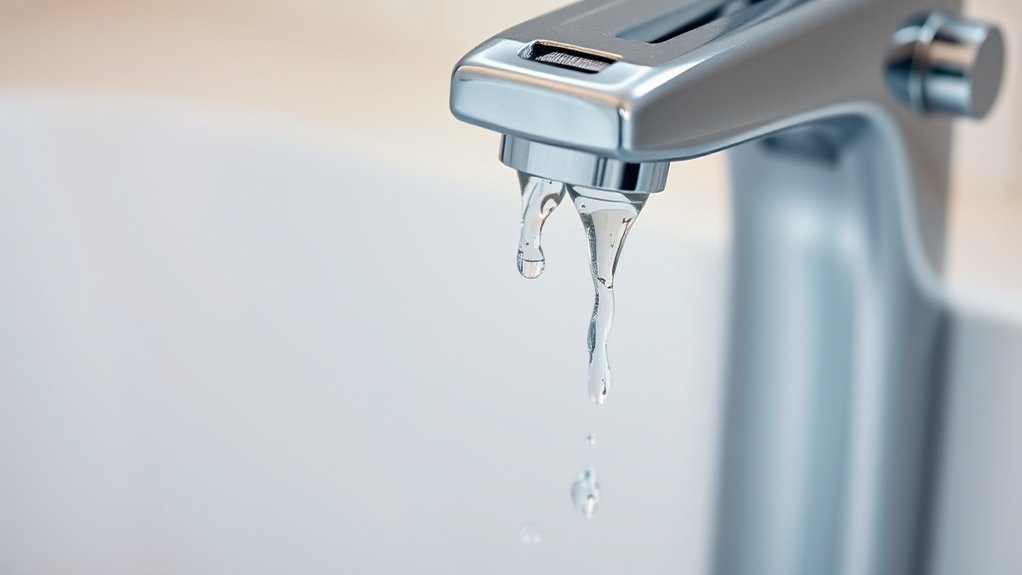
Did you know that a dripping bathtub faucet can waste over 3,000 gallons of water per year? If your bathtub faucet keeps running, it’s likely due to worn washers, faulty valves, or mineral buildup affecting the internal components.
Understanding these technical causes is key to stopping the continuous flow efficiently. Identifying the exact issue can save you from costly repairs and water waste, but pinpointing it requires a closer look at your faucet’s mechanics.
Key Takeaways
- A running bathtub faucet often results from worn-out washers, faulty valves, or damaged internal seals failing to stop water flow.
- Mineral buildup and corrosion can deteriorate valve seats and components, preventing a proper seal and causing continuous running.
- High or fluctuating water pressure may keep seals from closing properly, leading to persistent dripping or flow.
- Faulty valve orientation or damaged cartridges can cause nonstop water flow, requiring reorientation or replacement.
- Prompt inspection and replacement of defective parts restore faucet function and prevent water waste.
Common Causes of a Running Bathtub Faucet
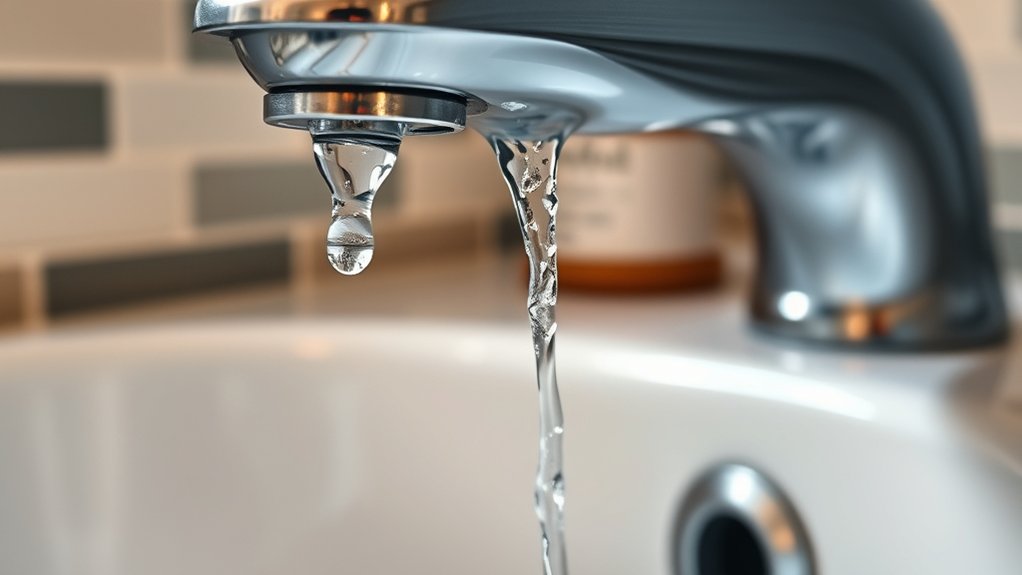
Why does your bathtub faucet keep running even after you turn it off? Typically, this issue stems from faulty internal components like a damaged valve seat or cartridge, which fail to seal water flow properly.
To address it, start with noise diagnosis: listen for continuous dripping or hissing, which indicates persistent water flow. Inspect the faucet assembly for worn parts or mineral buildup that might impair sealing.
Consider warranty considerations before replacing components; if your faucet is under warranty, you might get coverage for repairs or parts. If not, you’ll need to source compatible parts carefully.
Acting promptly prevents water waste and potential damage. By systematically diagnosing and replacing defective parts, you’ll restore proper function and stop your faucet from running unnecessarily.
Why Worn-Out Washers Make Your Bathtub Faucet Drip
How can a small washer cause your bathtub faucet to drip continuously? The answer lies in washer wear. Over time, constant water pressure and friction degrade the washer’s material, preventing it from forming a tight seal against the valve seat.
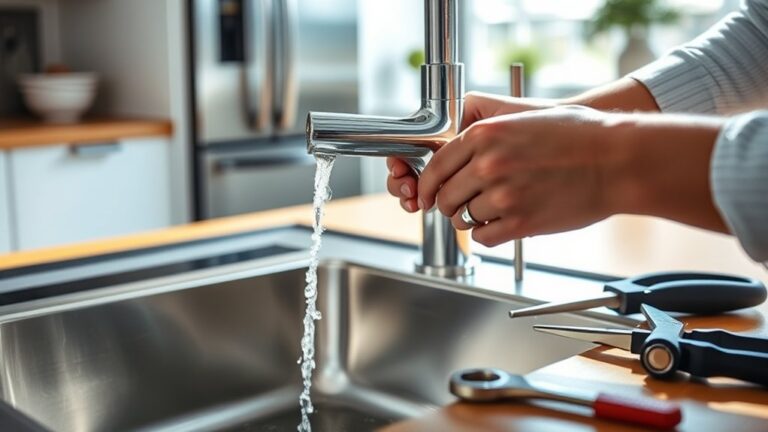
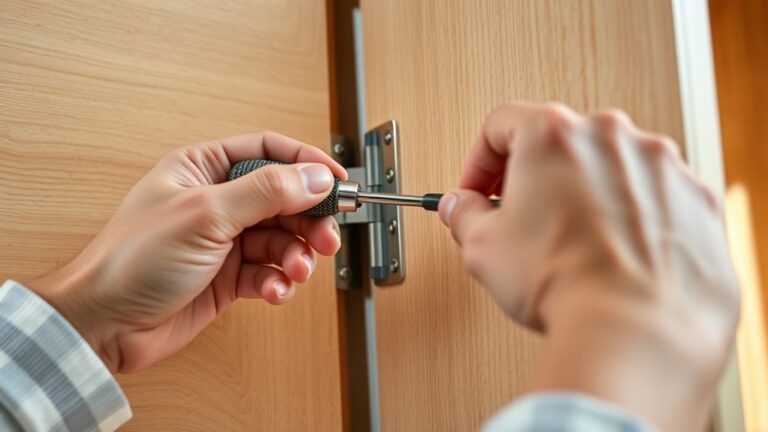
This compromised seal allows water to escape, causing that persistent drip. For accurate drip diagnosis, start by shutting off the water supply and disassembling the faucet handle to inspect the washer. Look for signs of flattening, cracking, or hardening.
Replacing the worn-out washer with a correctly sized, durable one restores the seal and stops the drip effectively. Addressing washer wear promptly prevents further water waste and potential damage to faucet components, ensuring efficient and reliable operation of your bathtub faucet.
How Faulty Valves Cause a Running Bathtub Faucet
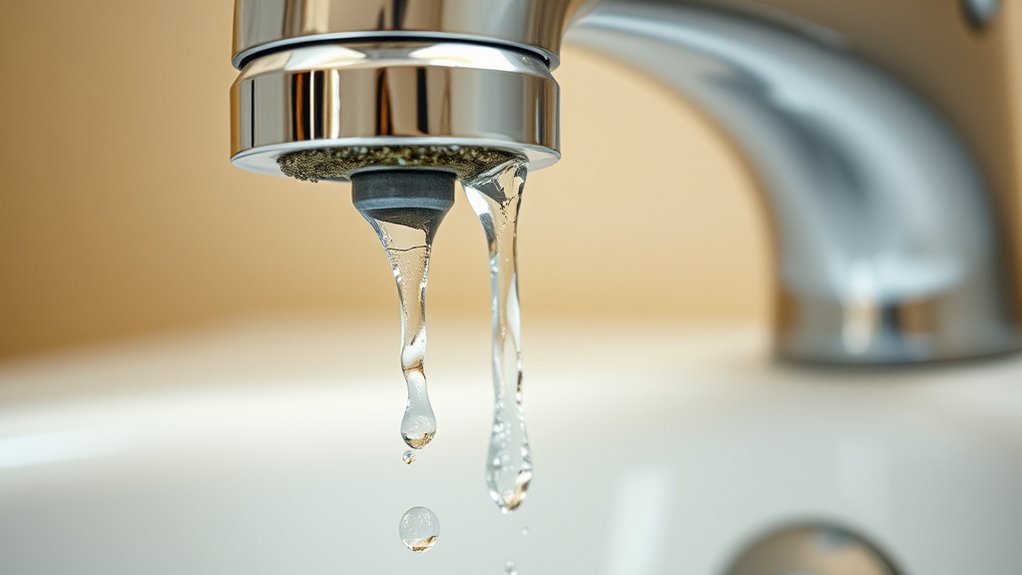
When valves inside your bathtub faucet malfunction, they fail to control water flow properly, causing continuous running. Faulty valves often result from improper valve orientation or damage to internal components. You can identify issues by checking valve seating and alignment during inspection or repair.
| Symptom | Cause | Solution |
|---|---|---|
| Constant dripping | Faulty valve seal | Replace seals or entire valve |
| Water flows nonstop | Incorrect valve orientation | Reorient or replace valve |
| Difficulty turning | Valve stem damage | Lubricate or replace stem |
Correcting valve orientation and replacing faulty valves ensures precise control of water flow, restoring proper function. Address these issues promptly to avoid water waste and higher utility bills.
How Buildup and Corrosion Affect Your Bathtub Faucet
What impact does mineral buildup and corrosion have on your bathtub faucet’s performance? Buildup corrosion and mineral scale directly deteriorate key components, causing your faucet to run continuously. Specifically, you’ll notice:
- Valve seats wear unevenly due to mineral scale, preventing a watertight seal.
- Corrosion degrades metal parts, leading to leaks and persistent drips.
- Buildup restricts valve movement, impairing the faucet’s shutoff function.
- Deposits clog internal passages, affecting water flow and pressure response.
Addressing these issues requires regular cleaning to remove mineral scale and corrosion inhibitors to protect metal surfaces. Replacing severely corroded parts ensures proper valve operation. By managing buildup corrosion proactively, you can restore your faucet’s efficiency and stop it from running nonstop.
Can Water Pressure Issues Make Your Bathtub Faucet Run Continuously?
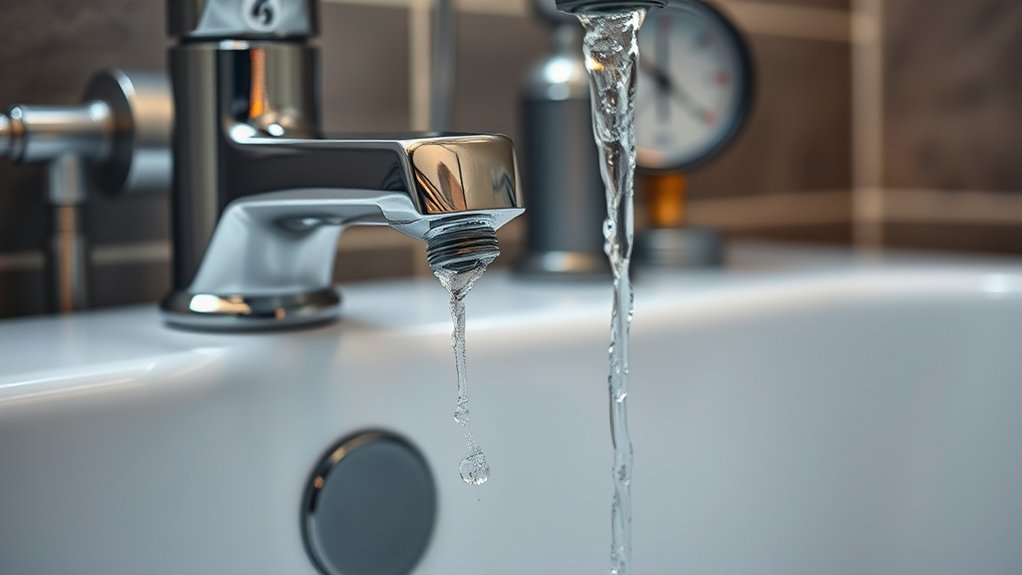
Mineral buildup and corrosion can impair your faucet’s mechanical components, but fluctuations in water pressure also play a significant role in causing your bathtub faucet to run continuously. When water pressure exceeds recommended levels, it can prevent the faucet’s internal seals from closing properly, resulting in persistent faucet drips or continuous running.
Conversely, sudden drops in pressure may cause the faucet to react unpredictably, further compromising its shutoff function. To address this, you should measure your home’s water pressure using a pressure gauge; ideal pressure ranges between 40-60 psi.
If pressure is too high, installing a pressure regulator can stabilize flow and protect your faucet. Managing water pressure effectively reduces stress on your faucet’s components, preventing leaks and continuous running, and ensuring optimal performance.
How to Find and Diagnose Leaks Inside Your Bathtub Faucet
To accurately diagnose leaks inside your bathtub faucet, start by inspecting common sources like worn-out washers, cartridge seals, and O-rings. Use a flashlight to examine these components for visible damage or mineral buildup that might cause water to bypass the valve.
Tighten connections and run the faucet to detect any persistent drips or seepage indicating internal leaks.
Common Leak Sources
Where exactly is your bathtub faucet leaking from? Pinpointing the source helps avoid unrelated topic or off-topic chatter, keeping your repair focused. Common leak sources include:
- Valve Seat Corrosion or debris here prevents a tight seal, causing drips.
- O-Rings Worn or damaged O-rings in the faucet handle assembly lead to leaks.
- Cartridge A faulty cartridge often causes continuous water flow despite faucet closure.
- Spout Base Loose or cracked spout connections let water escape externally.
Inspection Techniques
How can you accurately identify the exact source of a leak inside your bathtub faucet? Begin by shutting off the water supply and removing the faucet handle to access internal components. Inspect the cartridge, O-rings, and seals for signs of wear or damage.
Use a flashlight to detect hidden cracks or corrosion. Adhere strictly to compliance standards and safety protocols to prevent accidents and water damage during inspection. Next, turn the water supply back on briefly to observe any drips or leaks while components are exposed.
Employ leak detection dye or tissue paper to pinpoint minor leaks precisely. Document your findings and compare them against manufacturer specifications to determine faulty parts. This methodical approach ensures you diagnose leaks effectively and prepare for targeted repairs.
Simple DIY Fixes to Stop Your Bathtub Faucet From Running
Why does your bathtub faucet keep running despite your efforts? It often boils down to minor issues you can fix yourself with proper maintenance scheduling and moisture control practices. Follow these steps:
A running bathtub faucet usually stems from minor, fixable issues with proper maintenance and moisture control.
- Tighten or Replace the Washer: A worn washer often causes leaks; remove the faucet handle to access and replace it.
- Clean the Valve Seat: Mineral deposits can prevent a proper seal. Use a seat wrench and vinegar solution to clean it.
- Inspect and Replace O-Rings: Damaged O-rings cause drips; lubricate or swap them out to restore sealing.
- Adjust the Cartridge: Misalignment can cause continuous flow; realign or replace the cartridge as needed.
Regularly performing these fixes helps maintain moisture control and prevents running faucets without costly repairs.
When to Replace Parts or Call a Plumber for a Running Faucet
While simple DIY fixes can resolve most bathtub faucet running issues, some situations require replacing parts or professional intervention. If the faucet continues running after you’ve replaced washers or tightened connections, it indicates worn-out cartridges or valve seats needing replacement.
Ignoring persistent leaks often leads to water damage, so don’t treat it as an irrelevant topic or unrelated concept. Additionally, if you notice corroded pipes, damaged seals, or complex internal valve problems beyond your skill level, call a plumber.
Professional tools and expertise ensure accurate diagnosis and repair, preventing costly mistakes. Remember, replacing parts without proper knowledge risks further damage, so weigh your comfort and experience before attempting advanced repairs. Prioritize timely action to restore proper faucet function efficiently.
How Regular Maintenance Prevents Faucet Leaks and Running Water
When did you last perform maintenance on your bathtub faucet? Regular maintenance is essential for leak prevention and avoiding running water issues. By routinely inspecting and servicing your faucet, you can catch problems early and extend its lifespan.
Regular maintenance on your bathtub faucet prevents leaks and running water issues while extending its lifespan.
Follow this 4-step process:
- Check all visible parts for corrosion or damage.
- Tighten any loose components to prevent drips.
- Clean aerators and valve seats to remove mineral buildup.
- Lubricate moving parts to guarantee smooth operation.
These actions reduce wear, maintain proper seals, and prevent leaks from developing. Staying proactive with regular maintenance lets you control faucet performance and avoid costly repairs.
Don’t wait for a persistent drip or running faucet to signal neglect. Schedule these steps regularly to keep your bathtub faucet functioning efficiently.
What to Expect From Professional Repairs for a Running Faucet
When you call a professional, they’ll begin with a thorough inspection to diagnose the exact cause of your running faucet. Common repairs include replacing worn-out washers, cartridges, or valves to restore proper function.
Typically, these fixes take about 30 minutes to an hour, depending on the issue’s complexity.
Inspection and Diagnosis Process
How do professionals pinpoint the cause of your running bathtub faucet? They follow a structured inspection process designed to diagnose issues precisely and efficiently. During your two word discussion ideas session, expect them to:
- Examine faucet components, including cartridges and washers, for wear or damage.
- Test water pressure to identify irregular flow or valve issues.
- Inspect internal seals and O-rings that often cause leaks.
- Assess installation quality to rule out alignment or connection faults.
This systematic approach ensures no detail is overlooked. By understanding these steps, you’ll know what to expect and feel confident in the diagnosis. Professionals use this method to target the exact problem, preparing for effective repairs without unnecessary replacements or costs.
Common Repair Techniques
Why does your bathtub faucet keep running even after initial diagnostics? Often, unresolved issues stem from overlooked components or speculative reasoning about the cause. Professionals rely on precise repair techniques, avoiding unrelated concepts or fictional scenarios, to restore proper function.
| Repair Technique | Purpose |
|---|---|
| Cartridge Replacement | Fixes worn seals causing leaks |
| Valve Seat Grinding | Removes corrosion buildup |
| Washer Replacement | Stops drip by sealing gaps |
| O-Ring Replacement | Prevents water bypass |
| Faucet Reassembly | Ensures all parts fit correctly |
These targeted repairs tackle the root cause, not abstract theory or guesswork. Expect your plumber to methodically replace or refurbish parts identified during inspection rather than relying on unrelated concept-based fixes. This approach guarantees a lasting solution to your running faucet problem.
Estimated Repair Time
Wondering how long a professional repair for your running bathtub faucet will take? The estimated repair time depends on several factors but generally falls within a short window. Here’s a quick breakdown:
- Diagnosis: 10-15 minutes to identify the exact cause.
- Part Replacement: 15-30 minutes if common parts like washers or cartridges need replacing.
- Complex Repairs: Up to 1 hour for valve seat or pipe-related issues.
- Testing: 5-10 minutes to ensure the faucet stops running completely.
This two word discussion idea, “estimated repair,” helps set realistic expectations. Avoid getting sidetracked by unrelated topic concerns like remodeling; focus solely on fixing the running faucet. Professionals aim to solve the problem efficiently, minimizing downtime and preventing water waste.
Frequently Asked Questions
Can a Running Bathtub Faucet Increase My Water Bill Significantly?
Yes, a running bathtub faucet can substantially increase your water bill due to continuous water waste. Perform a leak diagnosis promptly to identify and fix the issue, preventing unnecessary expenses and conserving water efficiently.
Does a Running Faucet Pose Any Health Risks?
A running faucet symbolizes a slow leak in your home’s health, fostering mold growth and wasting resources.
You’ll want to fix it promptly for mold prevention and water conservation, protecting both your environment and wellbeing efficiently.
How Long Can I Ignore a Running Bathtub Faucet Before It Worsens?
You shouldn’t ignore a running bathtub faucet beyond 24-48 hours. Prompt leak detection and repair timing prevent worsening damage, higher water bills, and potential mold growth.
Act quickly to guarantee efficient, lasting fixes and safety.
Are There Eco-Friendly Faucets That Prevent Continuous Running?
Yes, you can choose eco-friendly faucets with advanced faucet technology like touchless sensors or pressure-balanced valves that automatically stop water flow. This prevents continuous running and reduces water waste efficiently.
Can Hard Water Damage Cause My Bathtub Faucet to Run?
Hard water’s harsh hardness hastens mineral buildup, causing valve wear and plumbing leaks. You’ll find deposits disrupting seals, leading to continuous running.
Regular descaling and valve replacement can resolve these issues, restoring your faucet’s flawless function.
Conclusion
Your running bathtub faucet can turn from a minor drip to costly water waste quickly. Worn washers or faulty valves often cause leaks silently, making the problem easy to overlook.
Regular maintenance and timely repairs are essential to stop that silent drip from becoming a flood. Don’t let corrosion or pressure issues keep water flowing endlessly—act now with simple fixes or call a professional plumber.
Taking precise, proactive steps ensures your faucet functions perfectly. This saves water and prevents damage before problems escalate. Understanding why your bathtub faucet keeps running is key to addressing the issue effectively.