How Do You Measure a Kitchen Sink
Did you know that over 60% of kitchen sink replacements fail due to improper measurements? Measuring a kitchen sink accurately is crucial to avoid costly errors and ensure a perfect fit. Precision is key when determining the right size and style for your space.
You’ll need to assess the installation type, overall dimensions, and countertop cutout carefully. Understanding which specific measurements matter most—and how faucet placement affects your fit—can be tricky without a clear approach.
Let’s explore the essential steps to get it right and make your kitchen sink replacement a success.
How to Identify Your Kitchen Sink’s Installation Type
How can you quickly determine your kitchen sink’s installation type? Start by identifying the mounting type, whether it’s top-mount, undermount, or farmhouse style. Look at the sink’s edges relative to the countertop. A top-mount sink will have a visible rim sitting on the counter surface, while an undermount sink is attached from beneath, leaving no rim above the countertop. Farmhouse sinks extend past the cabinet front.
Next, focus on checking under sink plumbing. Access the cabinet below and examine how the sink basin connects to the countertop and plumbing. Top-mount sinks usually have clips securing the rim above the counter, visible from underneath. Undermount sinks show mounting brackets beneath the countertop edge. Take note of these attachment points and plumbing alignment to confirm installation type.
How to Measure the Overall Size of Your Kitchen Sink
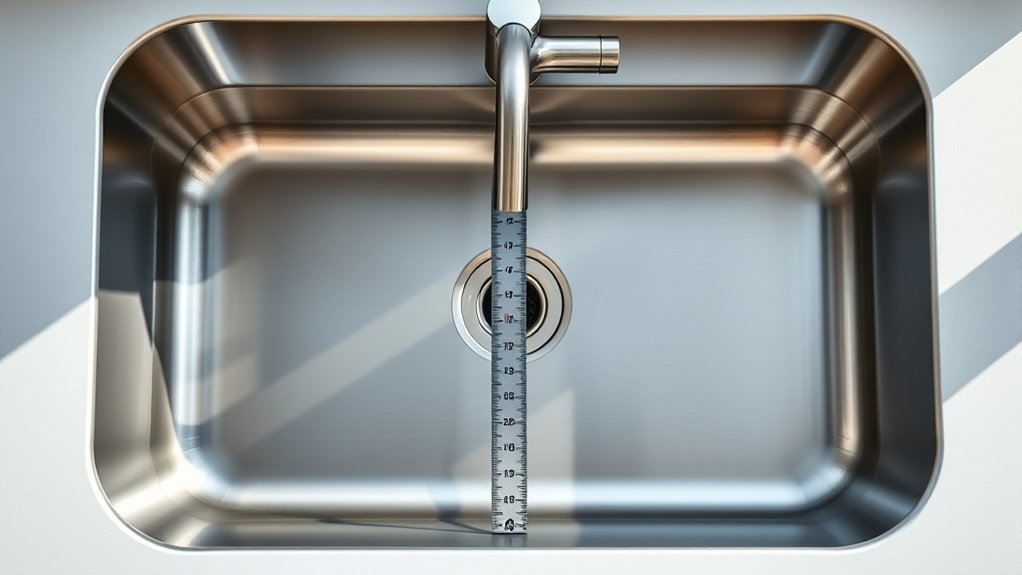
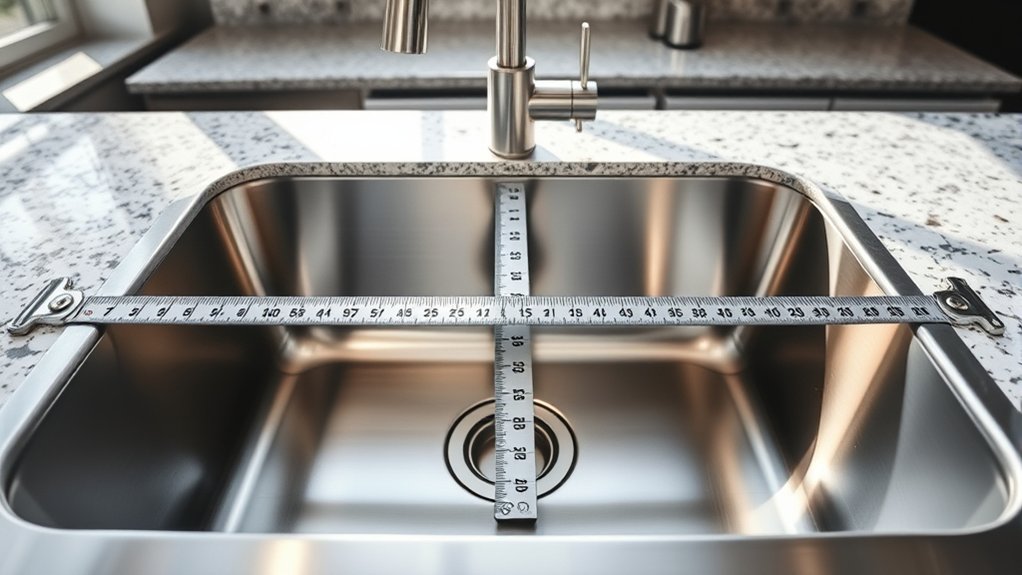
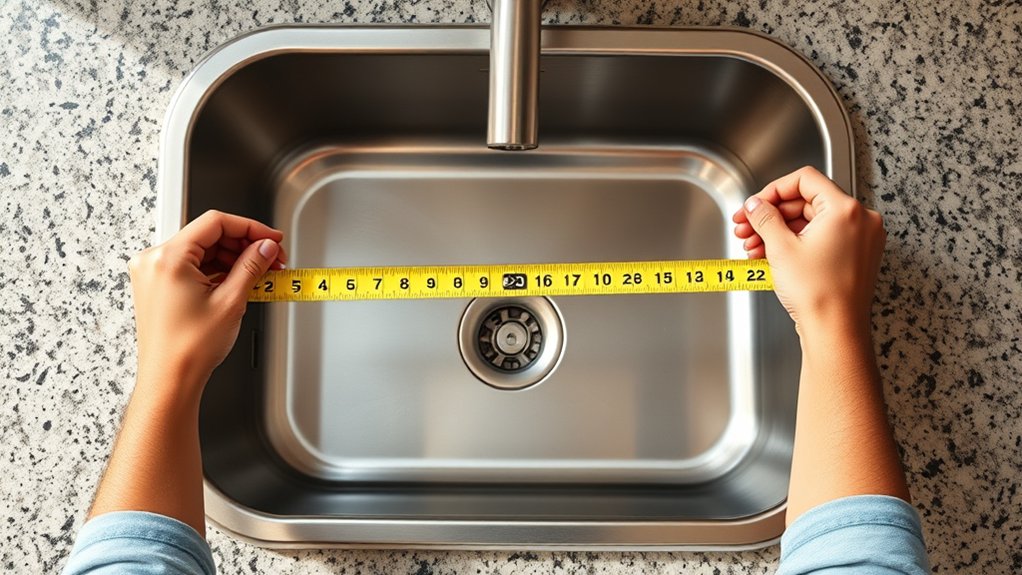
When measuring the overall size of your kitchen sink, start by determining its length, width, and depth with a tape measure. Accurate measurement precision ensures you select a sink that fits perfectly and supports material durability requirements. Follow these steps:
Begin by measuring your kitchen sink’s length, width, and depth accurately for a perfect fit and durability.
- Measure the length from the outer edge on one side to the outer edge on the opposite side.
- Measure the width from the front outer edge to the back outer edge.
- Measure the depth by placing the tape measure inside the sink, from the top rim to the bottom basin.
- Double-check each measurement to confirm accuracy.
Maintain a steady hand and ensure the tape measure lies flat against the sink surfaces for precise results. Keep in mind that different sink materials, such as stainless steel or composite, can affect durability but don’t change the measurement approach. This method provides a clear, practical basis for choosing a sink that matches both your space and durability needs.
How to Measure the Cutout Space on Your Countertop
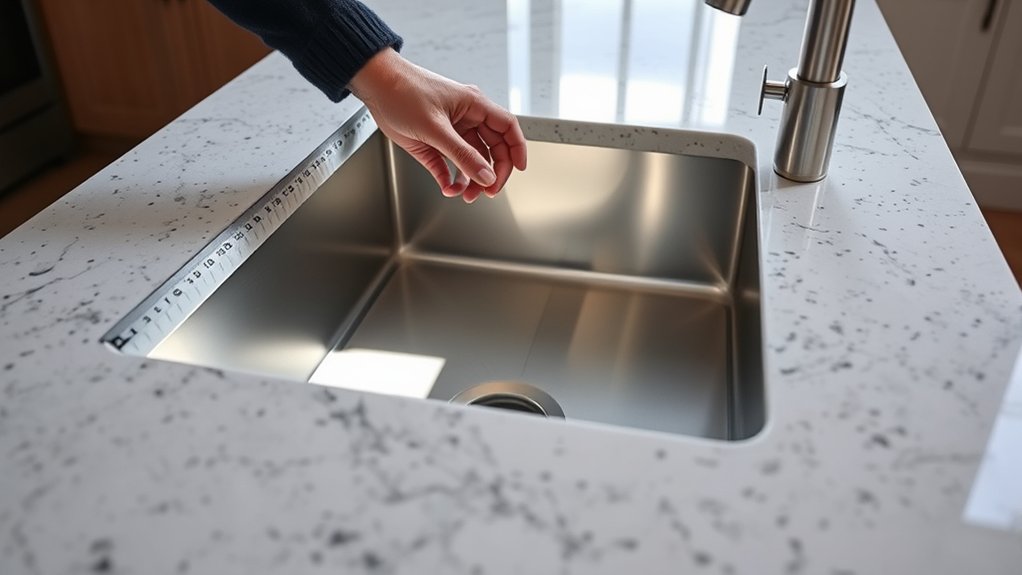
Where exactly does your sink need to fit within the countertop? To measure the cutout space accurately, focus on the opening where the sink will sit. Use a tape measure to record the length and width of the cutout from edge to edge.
Measure at multiple points to confirm consistency, as uneven edges can affect fit. Ignore ideas that suggest measuring the overall sink size here, as that’s not relevant to the cutout space.
Next, note the thickness of your countertop around the cutout, since it impacts sink mounting. Record any radius or corner shape details if the cutout edges aren’t square.
Use the table below to organize your measurements:
| Measurement Type | What to Record |
|---|---|
| Cutout Length | Edge-to-edge length (inches) |
| Cutout Width | Edge-to-edge width (inches) |
| Edge Thickness | Countertop thickness (inches) |
| Corner Radius | Radius of cutout corners |
| Edge Profile | Shape (square, rounded, etc.) |
Precise measurements ensure a secure, flush sink installation.
What Kitchen Sink Bowl Measurements Matter
Which dimensions of the kitchen sink bowl actually influence your choice and installation? You need to focus on measurements that ensure proper faucet compatibility and disposal fit. Here are the four critical dimensions to consider:
- Bowl Length and Width – These define the usable workspace inside the sink and must fit within your countertop cutout without compromising cabinet space.
- Bowl Depth – Although covered separately, note that depth impacts faucet reach and splash zones, so verify it aligns with your faucet’s specifications.
- Drain Location and Size – This affects disposal fit and plumbing connections; ensure the bowl’s drain opening matches your disposal model.
- Distance Between Bowls (for double or triple sinks) – This spacing influences installation ease and faucet placement, ensuring your faucet can serve all bowls efficiently.
Accurately measuring these dimensions guarantees your sink integrates seamlessly with your faucet setup and disposal unit, preventing costly adjustments later.
How to Measure Kitchen Sink Depth and Why It Matters
How deep should your kitchen sink be to meet both functional and installation requirements? To measure sink depth accurately, position your tape measure from the top edge of the sink bowl down to the bottom.
This vertical measurement ensures you understand the actual usable depth, which affects water capacity and ergonomic comfort. Maintaining measurement accuracy here is essential; even minor errors can lead to installation compatibility issues with cabinetry or plumbing.
How Faucet and Accessories Affect Your Kitchen Sink Fit
Why does the choice of faucet and accessories matter when fitting your kitchen sink? Because faucet fit and accessory compatibility directly affect installation success and long-term usability.
Choosing the right faucet and accessories ensures a smooth installation and enhances your kitchen sink’s functionality.
You must ensure the sink’s pre-drilled holes align with your faucet and accessory dimensions. Consider these factors:
- Hole Configuration: Confirm the number and spacing of faucet holes match your faucet and accessories.
- Faucet Height and Reach: Verify the faucet’s height and spout reach don’t interfere with cabinets or accessories.
- Accessory Size: Ensure soap dispensers, sprayers, or filtered water taps fit within the sink’s mounting area.
- Mounting Style: Check if your faucet and accessories require deck mount or wall mount setups for compatibility.
Common Mistakes to Avoid When Measuring Your Kitchen Sink
When measuring your kitchen sink, where you place the tape measure and how you interpret dimensions can make all the difference. One of the most common mistakes is measuring only the basin without accounting for the outer rim or mounting lip. This oversight can lead to ordering a sink that doesn’t fit the countertop cutout.
Another frequent error is neglecting to measure the depth accurately. Don’t just estimate; use a ruler or tape to get precise vertical dimensions. Avoid confusing overall sink length with the cutout length; these often differ.
Also, don’t forget to measure the position and size of faucet holes and accessory cutouts if applicable. Measurement tips include double-checking all numbers and measuring twice before making any purchase decisions.
Finally, ensure you measure in the correct units and convert them properly if needed. By steering clear of these common mistakes, you’ll ensure your measurements guide you to the right sink, preventing costly errors and installation delays.
How to Use Your Measurements to Find the Perfect Kitchen Sink Replacement
Where do you start once you have your precise sink measurements? First, use those numbers to narrow down your options by compatibility. Here’s how you can apply your measurements effectively:
- Verify the sink’s dimensions match your countertop cutout, ensuring a snug fit without modifications.
- Check the bowl depth and width to confirm it suits your usage needs and plumbing space.
- Consider the mounting style (top-mount or under-mount) based on your measurements and countertop material.
- Use your measurements to compare installation tips provided by manufacturers, focusing on ease and fit.
Frequently Asked Questions
What Materials Are Kitchen Sinks Commonly Made From?
You’ll find kitchen sinks commonly made from stainless steel, cast iron, composite granite, and fireclay. For materials comparison, consider durability and maintenance.
Brand recommendations like Kohler and Blanco excel in quality and performance.
How Do I Maintain and Clean My Kitchen Sink?
You’d think your sink’s dirt multiplies like rabbits! Stick to daily cleaning routines using mild detergent and warm water.
For maintenance tips, avoid harsh chemicals, clean drains monthly, and wipe surfaces dry to prevent stains and rust.
What Are the Most Popular Kitchen Sink Styles?
The most popular kitchen sink styles include undermount, farmhouse, and drop-in. You’ll find classic metals like stainless steel and cast iron dominate due to durability and ease of maintenance.
These materials fit both modern and traditional kitchen designs precisely.
How Long Does a Typical Kitchen Sink Last?
You’ll find a typical lifespan of a kitchen sink ranges from 15 to 30 years, depending on material and usage.
Stainless steel sinks often last around 20 years, while cast iron can exceed 30 years with proper care.
Can I Install a Kitchen Sink Myself or Hire a Professional?
You can DIY or hire a professional. DIY saves money but requires plumbing skills and tools, risking leaks.
Hiring ensures expert installation, warranties, and faster completion but costs more. Weigh pros and cons based on your experience.