How Do You Adjust Kitchen Cabinet Hinges
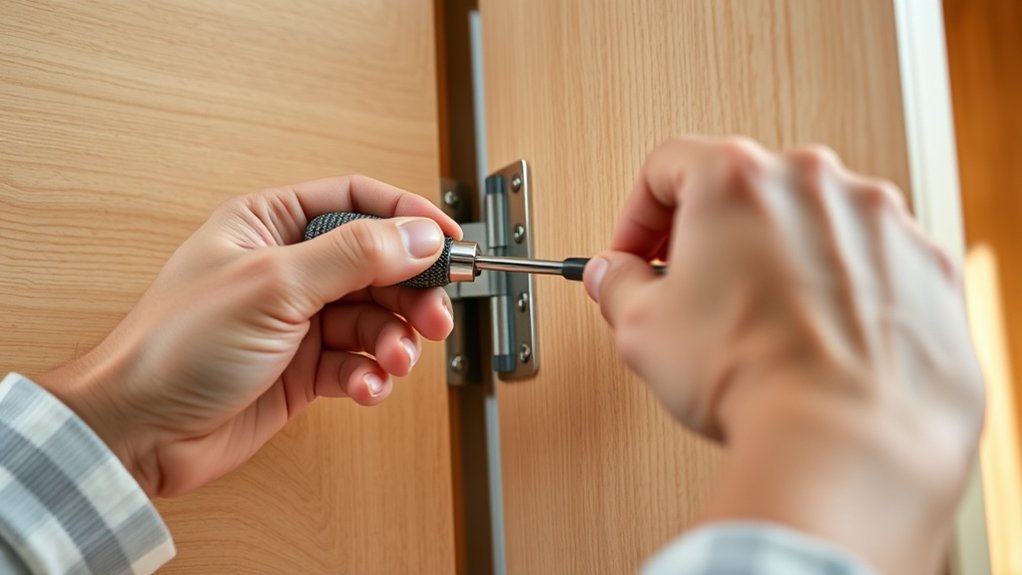
If your kitchen cabinet doors aren’t closing properly or look misaligned, adjusting kitchen cabinet hinges can often fix the issue quickly. You’ll want to start by identifying the type of hinge you have and locating the adjustment screws for height, side-to-side, and depth.
Making small, precise tweaks can restore smooth operation and a clean appearance. But before you jump in, it helps to understand the right approach for each hinge type to avoid damage.
How to Identify When Kitchen Cabinet Hinges Need Adjustment
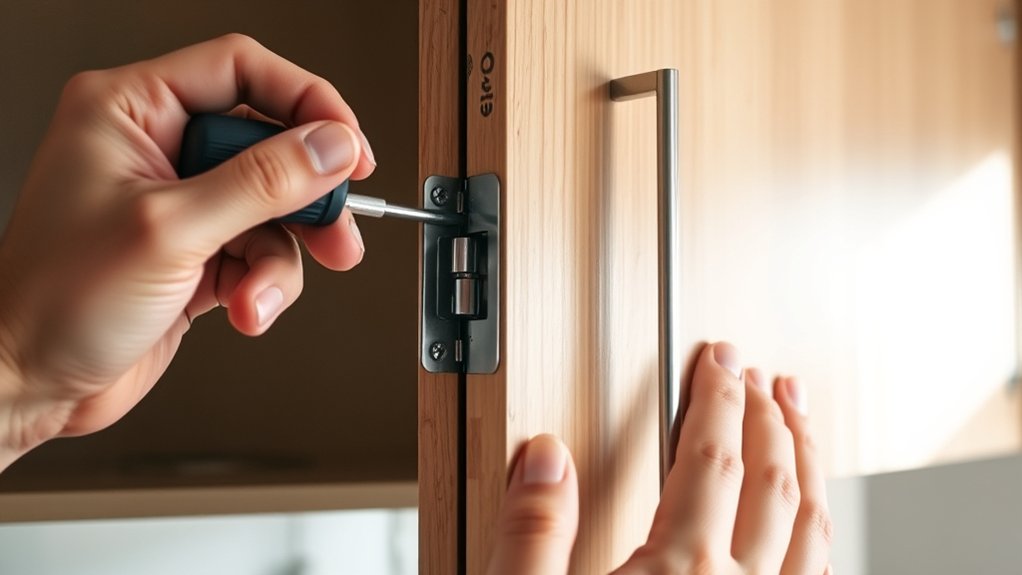
How can you tell when your kitchen cabinet hinges need adjustment? Start by checking if the cabinet doors don’t close properly or seem misaligned. If the doors don’t sit flush, magnetic alignment may be off, causing them to stick or not latch securely.
Next, inspect the hinges for signs of damage. Look closely for irreversible corrosion, which appears as rust that can’t be removed and weakens the hinge’s function. Corroded hinges often lead to sagging or uneven doors.
Also, notice any gaps between the door and frame or if the doors scrape against the cabinet body. These are clear indicators that the hinges aren’t properly adjusted. Finally, listen for unusual sounds, like creaking or grinding, which suggest the hinge mechanism isn’t operating smoothly.
What Tools You’ll Need to Adjust Kitchen Cabinet Hinges
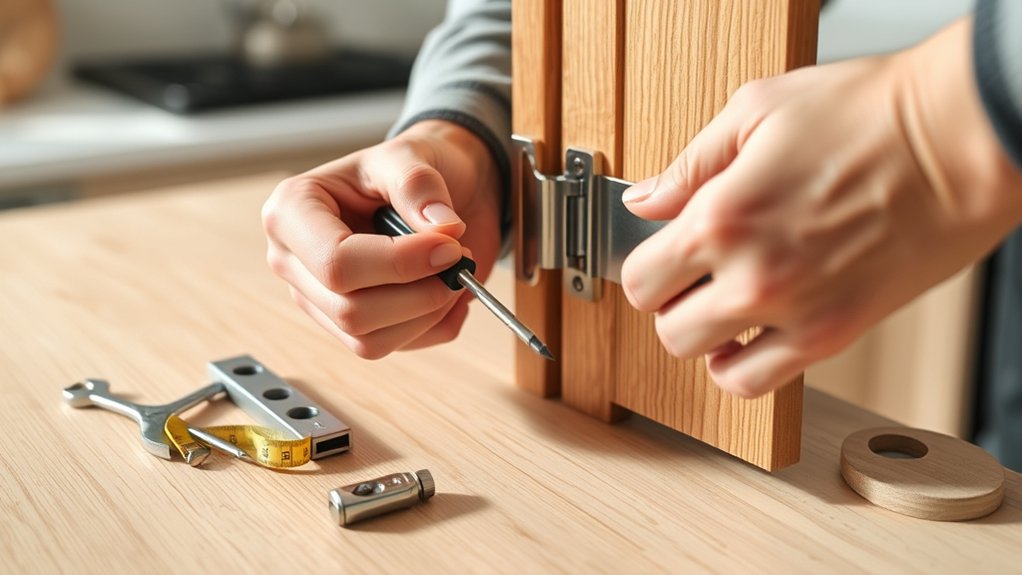
Noticing misaligned or sticking cabinet doors means it’s time to adjust the hinges to restore smooth operation. To do this effectively, gather a few essential tools first. You’ll need a Phillips screwdriver for loosening and tightening hinge screws, and a flathead screwdriver to assist with prying or minor adjustments.
Misaligned or sticking cabinet doors signal it’s time to adjust hinges using a Phillips and flathead screwdriver.
A small level is helpful to ensure careful door frames stay perfectly aligned during the process. Additionally, a flashlight can improve visibility inside cabinets.
For smooth hinge movement, keep hinge lubrication handy, either a silicone-based spray or a light machine oil. Avoid heavy oils that attract dust. Use a cloth or cotton swab to apply lubrication precisely without excess.
Lastly, consider wearing gloves to protect your hands while handling tools and cabinet edges. With these tools ready, you’ll work confidently and efficiently, ensuring your kitchen cabinets open and close smoothly without damaging the careful door frames.
Understanding and Adjusting Different Types of Kitchen Cabinet Hinges
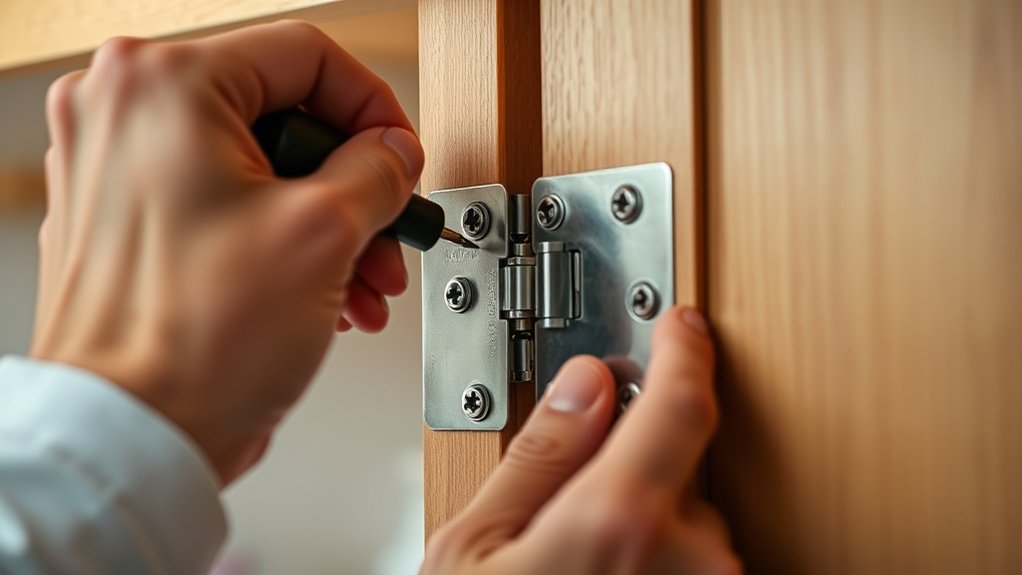
You’ll encounter several common types of kitchen cabinet hinges, each requiring specific tools for adjustment. Knowing which tool to use and how to make precise tweaks can fix alignment issues quickly.
Let’s walk through a step-by-step guide to adjust these hinges properly.
Common Hinge Types
Several common types of kitchen cabinet hinges require different adjustment methods, so identifying the hinge type is your first step. The most frequent are European hinges, which are concealed and allow for three-way adjustments.
Then, you have butt hinges, typically visible and simpler but less adjustable. If your cabinet doors include a hinge lazy Susan, it’s a specialized type designed for corner cabinets, offering smooth rotation and requiring unique alignment.
Don’t forget to check your cabinet handles, as their placement can affect door alignment and may need adjustment alongside hinges. Knowing your hinge type helps you target the right screws for height, depth, and side-to-side corrections.
This clarity ensures your doors close properly and align evenly with the cabinet frame, improving both function and appearance.
Tools Needed For Adjustment
What tools do you need to adjust your kitchen cabinet hinges correctly? Whether your cabinets feature carved wood doors or rustic barn doors, having the right tools makes the job easier and precise.
Most hinges require a Phillips head screwdriver for fine-tuning. A flathead screwdriver can help with some older models or specialty hinges. A drill with screwdriver bits speeds up the process but use it carefully to avoid stripping screws.
A flashlight or small lamp is useful to see inside dark cabinet corners.
| Tool | Purpose |
|---|---|
| Phillips Screwdriver | Adjust screws on most hinges |
| Flathead Screwdriver | Older or specialty hinges |
| Flashlight | Illuminate hard-to-see areas |
With these tools, you’re equipped to handle adjustments on various hinge types, including those on carved wood or barn doors.
Step-by-Step Adjustment Guide
How do you effectively adjust different types of kitchen cabinet hinges to guarantee smooth operation and proper alignment? Start by identifying the hinge type: concealed, overlay, or inset. Use a screwdriver to turn the depth screw, moving the door closer or further from the cabinet frame.
Next, adjust the side-to-side screw to align the door edges, ensuring no gaps near the refrigerator alignment area. Finally, tweak the height screw to level the door vertically, maintaining consistent countertop seating.
Open and close the door after each adjustment to check for smooth operation. Repeat these steps for all cabinet doors, focusing on uniform gaps and proper alignment with adjacent surfaces. Precise adjustments prevent door sagging and ensure your kitchen looks polished and functions perfectly.
When and How to Remove Cabinet Doors Safely
When is the right time to remove your kitchen cabinet doors? You’ll want to do this during hinge cosmetics repair, deep cleaning, or before adjusting or replacing hinges. Proper door removal prevents damage and ensures smooth reinstallation.
To remove cabinet doors safely, follow these steps:
Open the door fully and locate the hinge release lever or screws. Use a screwdriver or your fingers to disengage the hinge clip or unscrew hinges carefully. Support the door with one hand while detaching to avoid dropping or stressing the hinge.
Place the door on a flat, protected surface to prevent scratches or dents.
How to Adjust the Depth of Kitchen Cabinet Hinges
Although adjusting the depth of your kitchen cabinet hinges might seem tricky at first, it’s a straightforward process once you know where to focus. Start by locating the depth adjustment screw on the hinge, usually positioned closest to the cabinet frame.
Turning this screw clockwise will push the door inward, while turning it counterclockwise pulls the door outward. Make small adjustments, checking the door’s fit after each turn.
Proper depth adjustment ensures your cabinet doors close flush, avoiding gaps or rubbing. This tweak is especially useful during deck planning for kitchen renovations, where cabinetry must align perfectly with countertops and appliances.
Paying attention to hinge depth also helps you avoid costly mistakes, supporting budget considerations by reducing the need for replacement parts or professional help. Remember, precision here improves overall kitchen aesthetics and function without extra expense.
Keep adjustments minimal and steady for the best results.
How to Align Kitchen Cabinet Doors Horizontally for a Perfect Fit
Want to guarantee your kitchen cabinet doors line up perfectly side by side? Aligning them horizontally ensures a clean, cohesive look that complements current design trends. Start by loosening the screws on the hinge’s mounting plate slightly. Then, gently slide the door left or right to adjust the gap between doors. Keep checking the alignment as you go.
Here are key steps to follow:
- Use a tape measure or ruler to ensure even spacing.
- Adjust one door at a time to avoid throwing off the overall balance.
- Tighten screws once the desired position is achieved.
- Inspect alignment from multiple angles and lighting conditions.
This method provides practical topic ideas for maintaining your cabinets’ appearance and staying on trend. Proper horizontal alignment not only enhances aesthetics but also prevents door damage caused by uneven stress. With these simple adjustments, you’ll achieve a perfect fit that elevates your kitchen’s style and function.
How to Adjust the Vertical Position of Kitchen Cabinet Doors
How exactly do you raise or lower your kitchen cabinet doors to get a flawless vertical alignment? Start by opening the cabinet door fully. Locate the vertical adjustment screws, usually found on the mounting plate attached to the cabinet frame.
These screws control the up-and-down movement of the door. Loosen them slightly to allow movement, then gently lift or lower the door to the desired position. Once aligned, tighten the screws securely to hold the door in place.
While adjusting verticals, it’s a good idea to apply hinge lubrication to the moving parts. This ensures smooth operation and prevents squeaking or sticking over time.
Avoid forcing the door, as this can damage the hinges or mounting plate. Make small, incremental adjustments and check the alignment frequently. With patience and care, you’ll achieve perfect vertical positioning, enhancing both the look and function of your kitchen cabinets.
How to Fix Loose Kitchen Cabinet Hinges by Tightening Screws and Replacing Hardware
Why do your kitchen cabinet doors sag or feel loose over time? It’s often due to loose screws or worn-out hinge parts. To fix this, start by tightening any loose screws on the hinges using a screwdriver. If screws spin without tightening, the holes might be stripped.
Here’s what you should do next:
- Remove the hinge and inspect for damage.
- Replace stripped screws with slightly larger ones or use wood filler if holes are too worn.
- Consider hinge replacement if the hardware is bent, cracked, or corroded.
- Reattach the hinge securely and test the door’s movement.
Addressing loose screws promptly prevents further sagging and improves door alignment. When hinges show signs of wear, hinge replacement is the most reliable fix. By tightening screws or replacing hardware, you’ll restore your cabinet doors’ stability and smooth operation efficiently.
How to Troubleshoot Problems After Adjusting Kitchen Cabinet Hinges
What should you do if your cabinet doors still don’t close properly after adjusting the hinges? First, conduct a two-step inspection. Check hinge alignment to ensure screws haven’t loosened during adjustment. Use a screwdriver to tighten any loose screws, focusing on both the door side and cabinet frame side.
Next, perform a two-point test by gently pushing and pulling the door to identify any binding spots or uneven gaps.
If the door still sticks or gaps remain uneven, examine the cabinet door itself for warping or damage. Sometimes, hinge plates may be worn or misaligned, so consider swapping them with new ones to restore proper function.
Finally, verify that the screws are the correct size and type, as wrong hardware can cause recurring issues.
Tips to Keep Your Kitchen Cabinet Hinges Working Smoothly Longer
Regularly maintaining your kitchen cabinet hinges guarantees they operate smoothly and last longer. To keep them in top shape, you’ll want to perform simple upkeep tasks that prevent wear and tear. Start by cleaning hinges regularly to remove dust and grime, especially around paint finishes that can chip if neglected.
Lubricate moving parts with a light oil or silicone spray to reduce friction. Check for loose screws and tighten them promptly to avoid misalignment. Also, consider the impact of decorative pulls; ensure they don’t strain the hinges during use.
Here are four practical tips to extend hinge life:
- Clean hinges monthly with a damp cloth to prevent buildup.
- Apply lubricant every 3-6 months for smooth motion.
- Inspect and tighten screws after adjusting or installation.
- Avoid slamming doors, especially those with heavy decorative pulls, to minimize stress.
Following these steps will help your kitchen cabinet hinges function efficiently for years.
Frequently Asked Questions
Can I Replace Kitchen Cabinet Hinges With Soft-Close Hinges?
About 70% of homeowners upgrade to soft-close replacement hinges for quieter kitchens. You can replace your cabinet hinges with soft-close ones by carefully removing old hinges and following precise hinge installation steps for smooth, silent cabinet doors.
What Types of Cabinet Hinges Are Best for Heavy Cabinet Doors?
You should choose heavy-duty European or full-overlay hinges for heavy doors. These support weight well and offer stability.
If you want a soft close upgrade, look for compatible soft-close versions to reduce slamming and wear.
How Do I Prevent Hinges From Squeaking After Adjustment?
You’ll prevent squeaking by applying hinge lubrication like silicone spray or white lithium grease after adjustment.
Make sure to wipe off excess lubricant to avoid drips, ensuring smooth operation and effective squeak prevention every time.
Are There Eco-Friendly Materials for Kitchen Cabinet Hinges?
You can choose eco friendly hinges made from sustainable materials like bamboo, recycled metals, or FSC-certified wood. These options reduce environmental impact while maintaining durability and style in your kitchen cabinets. Look for certified products.
Can I Adjust Cabinet Hinges Without Removing the Cabinet Doors?
Yes, you can use a door removal free adjustment technique by loosening the screws on the hinges and moving the door slightly. This lets you fine-tune alignment without taking the cabinet doors off, saving time and effort.