Can You Get Sick Walking Barefoot on Cold Floor
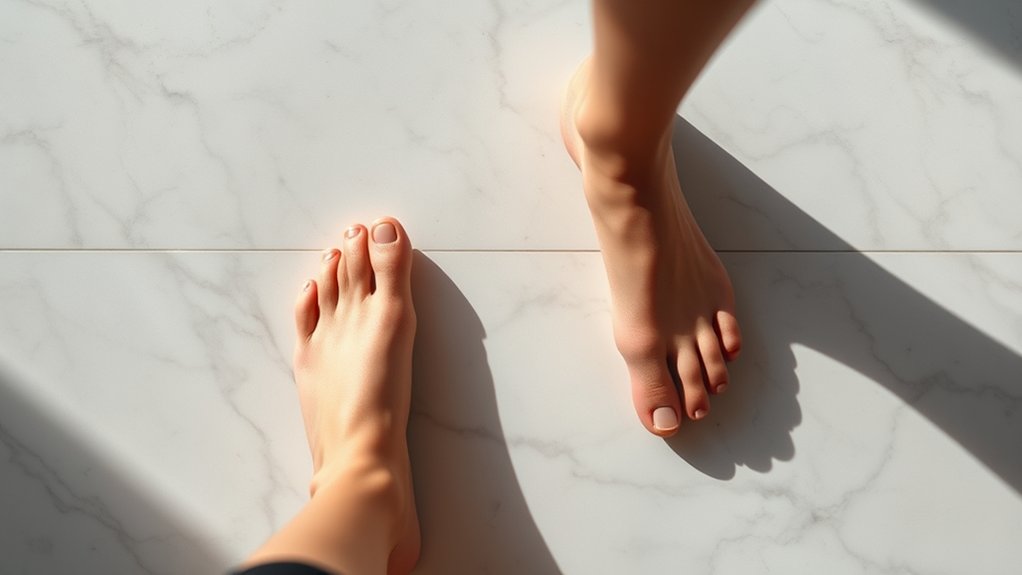
Stepping onto a cold floor barefoot is like inviting a chill that creeps through your skin, but can you get sick walking barefoot on cold floor? You might assume that cold feet weaken your defenses, yet scientific evidence shows that viruses, not temperature, drive infections.
Understanding how your body truly responds to cold surfaces reveals why the risk isn’t as straightforward as it seems. Factors such as virus exposure and immune system strength actually matter more for your health than the temperature of the floor beneath you.
Key Takeaways
- Walking barefoot on a cold floor does not directly cause illness, as viruses cause infections, not cold exposure.
- Cold floors can cause discomfort and localized vasoconstriction but do not significantly impair immune defenses systemically.
- Virus transmission risk from cold floors exists only if the floor is contaminated with viral particles acting as fomites.
- Barefoot contact with contaminated floors poses a higher risk in unsanitary environments with infected individuals nearby.
- Wearing socks or slippers and regular floor cleaning reduce discomfort and minimize potential virus transmission from floors.
Can Walking Barefoot on Cold Floors Cause Illness?
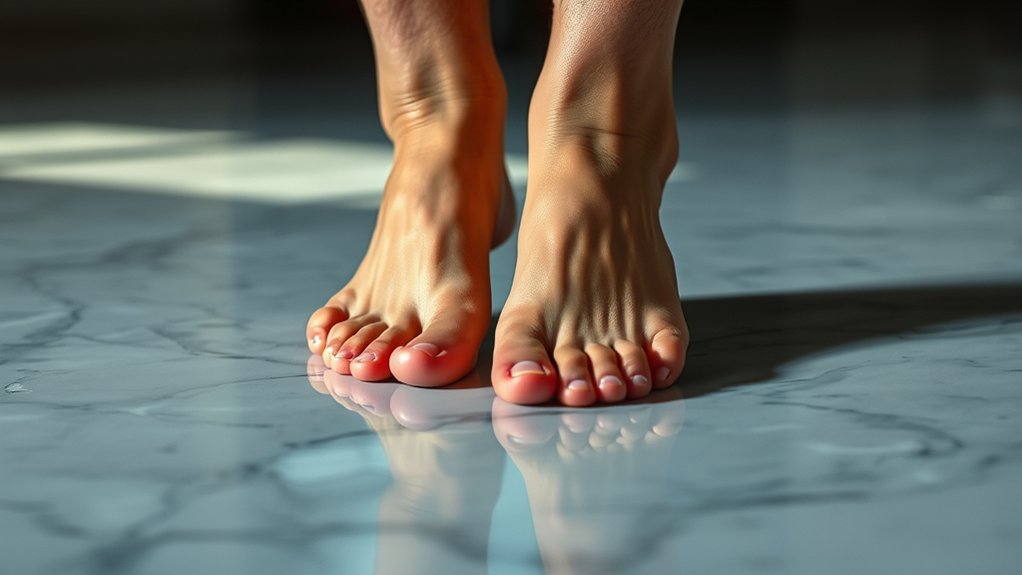
How likely are you to get sick from walking barefoot on cold floors? Scientific evidence shows that cold exposure alone does not directly cause illness. Illnesses like colds and flu result from viruses, not from being barefoot on chilly surfaces.
The common immune myths linking cold feet to catching a cold lack empirical support. While cold exposure can cause peripheral vasoconstriction, it does not impair your immune system enough to increase infection risk.
Pathogens require transmission through respiratory droplets or contact with contaminated surfaces, not simply cold feet. Therefore, walking barefoot on cold floors doesn’t increase your chances of getting sick.
Maintaining hygiene and avoiding viral exposure remain the primary preventive measures, not avoiding cold floors barefoot. This clarifies the misconception rooted in immune myths about cold exposure.
How Cold Floors Affect Body Temperature and Comfort
Why does walking barefoot on cold floors often feel uncomfortable? When your feet contact cold floors, heat rapidly transfers from your skin to the surface, causing a localized drop in skin temperature. This abrupt change triggers cold receptors in your skin, altering your temperature sensation and leading to discomfort.
The body responds by constricting blood vessels in your feet to conserve heat, which can reduce peripheral circulation. This physiological reaction impacts your overall body temperature regulation and comfort. Prolonged exposure to cold floors can intensify these effects, increasing discomfort and a sensation of coldness.
Understanding these mechanisms clarifies why cold floors affect your comfort impacts and body temperature, emphasizing the importance of protective footwear or insulation to maintain thermal balance and reduce discomfort when walking barefoot.
Can Cold Feet Lower Your Immune Defenses?
Could having cold feet actually weaken your immune system? Evidence suggests that localized cold exposure, such as cold feet, can cause vasoconstriction, reducing blood flow and potentially impairing immune cell circulation in that region.
However, this effect is typically minor and transient, unlikely to significantly increase your overall immune risk. Your core body temperature and systemic immune responses remain well-regulated unless exposed to prolonged cold stress.
| Factor | Effect on Immune System | Immune Risk Level |
|---|---|---|
| Mild Cold Feet | Local vasoconstriction | Low |
| Prolonged Cold Exposure | Reduced immune cell activity | Moderate |
| Core Hypothermia | Systemic immune suppression | High |
| Normal Foot Temperature | Optimal blood flow and immunity | Minimal |
When Walking Barefoot on Cold Floors Raises Virus Risk
Under what conditions does walking barefoot on cold floors increase your risk of viral infections? The primary barefoot risks arise when cold floors act as fomites, surfaces capable of harboring viruses. If the floor is contaminated with viral particles and you walk barefoot, viruses can adhere to microabrasions or moist skin on your feet, facilitating viral entry.
Additionally, exposure to cold floors may cause localized vasoconstriction, potentially impairing skin barrier function and immune cell activity, which can reduce resistance to viral invasion. However, direct transmission via cold floors is uncommon compared to respiratory routes.
The risk amplifies in environments with poor sanitation or where infected individuals frequently contact the floor. Therefore, barefoot contact with cold floors increases viral infection risk mainly when the surface is contaminated and your skin integrity is compromised.
How to Protect Yourself When Walking Barefoot on Cold Floors
How can you minimize the risk of viral infections when walking barefoot on cold floors? Managing cold exposure is essential, as it can reduce your immune response. Implementing effective footwear strategies is your best defense. Consider these evidence-based steps:
- Wear insulated slippers or socks to maintain foot temperature and protect skin integrity.
- Use mats or rugs in frequently walked areas to reduce direct contact with cold surfaces.
- Maintain indoor humidity and temperature to limit viral persistence on floors.
- Regularly clean floors with disinfectants proven to inactivate viruses, minimizing your exposure risk.
Frequently Asked Questions
Does Walking Barefoot on Cold Floors Affect Foot Skin Health?
Walking barefoot on cold floors can challenge your foot skin health, but it also offers cold exposure benefits that improve circulation.
Prioritize barefoot comfort by moisturizing regularly to prevent dryness and cracking, maintaining ideal skin integrity and resilience.
Can Cold Floors Cause Joint Pain or Stiffness?
Feeling joint pain from cold floors? While cold surfaces don’t directly cause joint pain, they can exacerbate existing stiffness or arthritis symptoms by constricting blood vessels and muscles. This increases discomfort in sensitive joints.
Is Walking Barefoot on Cold Floors Safe for Children?
You can safely let children walk barefoot on cold floors, as barefoot safety is supported by evidence showing no link to illness.
Cold floor myths often exaggerate risks; maintaining hygiene and warmth matters more than floor temperature.
How Does Barefoot Walking on Cold Surfaces Impact Circulation?
Ever wonder how cold exposure affects your body? Walking barefoot on cold surfaces causes vasoconstriction, reducing blood flow.
This circulation impact temporarily lowers peripheral temperature but doesn’t cause lasting harm if exposure is brief and controlled.
Are Certain Flooring Materials Colder Than Others When Barefoot?
Yes, you’ll feel a stronger cooling sensation on tile than carpet because tile has higher thermal conductivity. Carpet insulates, reducing heat loss from your feet, so it feels warmer compared to the cooler, more conductive tile surface.
Conclusion
Walking barefoot on a cold floor won’t summon illness like a storm, since viruses—not chilly toes—are the real culprits. While cold floors may pinch your skin and narrow blood vessels locally, your core temperature and immune defenses stay steady, guarding you within.
To keep discomfort and infection risk at bay, slip on slippers, maintain clean floors, and ensure cozy indoor warmth. In this way, you shield yourself with science, not superstition.
So, can you get sick walking barefoot on cold floor? The answer is no—illness comes from germs, not from cold feet.