Can You Do Bench Press on the Floor
Did you know that you can do bench press on the floor, and nearly 30% of lifters incorporate the floor press to reduce shoulder strain? If you’re looking for a way to build lockout strength and protect your joints, this variation might be worth trying.
It changes how you engage your muscles and limits your range of motion, which can be a game-changer for your routine. Understanding the proper technique and benefits can help you decide if it fits your training goals.
Key Takeaways
- Yes, the floor press is a bench press variation performed lying on the floor without a bench.
- Floor pressing uses a shorter range of motion, reducing shoulder stress compared to a traditional bench press.
- Proper setup involves lying with knees bent, feet planted, and elbows at about 45 degrees for joint safety.
- Controlled movements, manageable weights, collars, and a spotter or safety pins ensure safe floor pressing.
- Floor press emphasizes triceps and lockout strength, offering effective upper-body training with minimal equipment.
Is Floor Pressing Safe to Do?

Wondering if floor pressing is safe? Yes, it is a secure and effective exercise when you follow proper floor press safety guidelines. Unlike traditional bench pressing, the floor press limits your range of motion, reducing stress on your shoulders and lowering injury risk.
This makes it an excellent bench alternative, especially if you’re recovering from shoulder issues or want to focus on your triceps and chest without overextending. To stay safe, ensure you use controlled movements, keep a spotter nearby, and choose manageable weights that match your strength level.
How Does Floor Press Differ From the Bench Press?
When you switch from a bench press to a floor press, you’ll notice a shorter range of motion that targets your triceps more intensely. The muscle activation shifts because your elbows can’t drop below the floor, changing how your chest and shoulders engage.
Plus, the setup is simpler. You just need a flat surface instead of a bench, making it easier to focus on strength and control.
Range Of Motion
How much does the range of motion change between the floor press and the traditional bench press? When you switch to the floor press, your floor ROM naturally shortens because your elbows can’t drop below the floor.
This limited descent alters your setup angle, meaning your arms don’t move through the full arc they do on a bench. While the bench press allows a deeper stretch at the bottom, the floor press restricts that stretch, reducing shoulder stress and emphasizing lockout strength.
Understanding this shift in floor ROM helps you adjust your expectations and training goals. So, if you want to focus on triceps and lockout power while protecting your shoulders, the floor press’s unique setup angle and reduced range will work in your favor.
Muscle Activation Differences
The change in range of motion between the floor press and traditional bench press naturally affects which muscles get activated and how intensely. When you perform the floor press, floor mechanics limit your elbow’s descent, reducing shoulder involvement and placing more load on your triceps. This shift can help you build lockout strength and protect your shoulders.
Grip variations also play a crucial role; a narrower grip emphasizes the triceps even more, while a wider grip engages the chest slightly more, though still less than the bench press. Unlike the bench press, which fully stretches the pecs and shoulders, the floor press keeps tension focused on pressing power without the full stretch.
Understanding these muscle activation differences helps you tailor your training to your specific goals.
Equipment And Setup
Wondering what equipment you need to perform a floor press compared to a traditional bench press? Floor pressing simplifies your setup. You don’t need a bench. Just a barbell, dumbbells, or kettlebells and a sturdy floor.
This setup reduces equipment costs and space requirements. However, safety considerations are crucial since you lack the bench’s support. Use collars on the barbell and ensure a spotter or safety pins are available.
| Equipment | Floor Press |
|---|---|
| Bench | Not required |
| Barbell/Dumbbells | Essential |
| Safety Gear | Collars, spotter, safety pins |
What Are the Benefits of Floor Pressing?
Floor pressing can boost your triceps activation, helping you build stronger arms more efficiently. It also reduces stress on your shoulders, making it a safer option for heavy lifting.
Plus, it sharpens your lockout strength, which is essential for pushing through tough reps.
Improved Triceps Activation
Because your elbows stop at the floor during a floor press, you engage your triceps more intensely than in a traditional bench press. This improved triceps activation helps you build stronger, more defined arms and enhances your lockout strength, which is vital for pushing through sticking points in heavier lifts.
The floor press also encourages better floor press safety by limiting your range of motion, reducing strain on your joints while still challenging your muscles effectively. By focusing on this movement, you’ll develop triceps endurance and power, which translates into improved performance across various pressing exercises.
Incorporating the floor press into your routine not only diversifies your training but also targets the triceps in a way that traditional bench pressing can’t match, making it a valuable addition to your strength program.
Enhanced Shoulder Safety
How can you protect your shoulders while still pushing your strength limits? The floor press offers a smart solution by improving shoulder safety through its unique biomechanics.
Unlike the traditional bench press, the floor press limits your range of motion, reducing excessive shoulder extension and stress on the joint. This means you can train heavier loads without risking injury.
Understanding floor press biomechanics helps you control the movement, keeping your shoulders in a safer, more stable position. Plus, practicing good studio etiquette, like cleaning equipment and respecting others’ space, ensures a positive environment for everyone.
Increased Lockout Strength
Why does increasing your lockout strength matter in pressing movements? The lockout phase is where you fully extend your arms to complete the lift, and having strong lockout strength ensures you can finish presses with power and control.
The floor press specifically targets this phase by limiting your range of motion, forcing your triceps and shoulders to work harder during the lockout. By regularly incorporating the floor press into your routine, you build explosive strength right where many lifters struggle.
This increased lockout strength translates to improved performance in traditional bench presses and other pressing exercises. So, if you want to push past sticking points and lift heavier weights, the floor press is a smart tool to add to your training arsenal.
Which Muscles Does Floor Press Target?
Which muscles do you engage when you perform the floor press? Primarily, you target your chest muscles (pectoralis major), triceps, and anterior deltoids. Unlike the traditional bench press, the floor press limits your range of motion, putting extra emphasis on the lockout phase.
When comparing floor press vs. lever press, the floor press allows for greater triceps activation due to the paused bottom position, while the lever press often isolates the chest more consistently. However, be aware of common floor press pitfalls like relying too much on your shoulders or failing to maintain proper elbow positioning, which can reduce effectiveness and increase injury risk.
How Do You Perform a Floor Press Correctly?
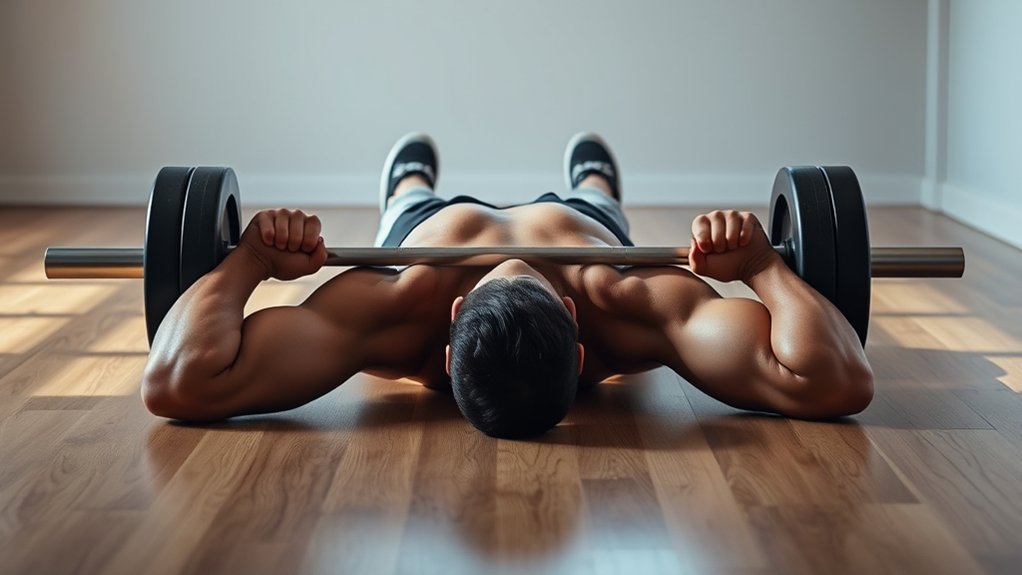
Mastering proper form is key to getting the most out of your floor press while preventing injury. Start by lying flat on the floor with your knees bent and feet planted firmly. Grip the barbell slightly wider than shoulder-width and keep your elbows tucked at about a 45-degree angle as you lower the bar until your upper arms touch the floor.
Press the bar back up by extending your arms fully while maintaining control. Pay attention to mobility considerations, especially shoulder flexibility, to avoid strain. If the floor press feels limiting or uncomfortable, explore floor press alternatives like dumbbell presses or push-ups to build similar strength.
Consistently focus on form, controlled movement, and breathing to maximize benefits safely and effectively.
What Equipment Do You Need for Floor Pressing?
Getting started with the floor press requires some essential equipment to guarantee safety and effectiveness. First, you’ll need a sturdy barbell or dumbbells, depending on your preference. A flat, non-slip surface is vital since the floor replaces the bench.
Don’t fall for common floor press misconceptions that suggest you need complex machines; simple, reliable gear works best. You’ll also want safety collars to secure weights and avoid accidents.
Many floor press myths imply you need bulky setups, but a basic power rack or spotter can suffice for safety. Finally, a padded mat helps cushion your back and elbows, making the exercise more comfortable.
With the right equipment, you can confidently perform the floor press and enjoy its unique strength benefits.
How Can You Progress Your Floor Press Safely?

Progressing your floor press safely means increasing challenge without risking injury. To master progression safely, you need a clear plan and attention to form. Here’s how you can do it:
- Start with light weights to perfect your technique and build confidence.
- Gradually increase weight in small increments to avoid overloading your muscles suddenly.
- Focus on controlled movements, maintaining steady tempo and proper elbow positioning to protect your joints.
- Incorporate rest days to let your muscles recover and prevent burnout.
Frequently Asked Questions
Can You Floor Press With Dumbbells Instead of a Barbell?
Yes, you can floor press with dumbbells. The dumbbell floor press benefits include increased range of motion, improved muscle balance, and joint safety.
You’ll build strength effectively while minimizing shoulder strain and boosting stability.
Is Floor Pressing Suitable for Beginners?
You don’t need a knight’s armor to try floor pressing. It’s great for beginners! Its floor press safety limits shoulder strain, making it beginner accessible.
You’ll build strength confidently while minimizing injury risk. Keep pushing!
How Often Should You Include Floor Presses in Your Workout?
You should include floor press variants 1-2 times weekly, adjusting the rep scheme to build strength or endurance. Mixing reps keeps workouts fresh and effective, helping you progress steadily without overtraining.
Stay consistent and motivated!
Can Floor Pressing Help Improve Bench Press Max?
Floor pressing can boost your bench max like a turbocharger boosts an engine. Its benefits include targeting triceps and improving lockout strength.
You can also use dumbbell alternatives to add variety and challenge muscle stability.
Are There Any Common Mistakes to Avoid During Floor Pressing?
Yes, common errors during floor pressing include flaring elbows too wide, not locking out fully, and neglecting scapular retraction. Avoid these mistakes during your sets to maximize strength gains and prevent injury. Keep your form tight!
Conclusion
Doing a floor press is like steering a ship through calm waters — it gives you control and safety while building strength. By mastering proper form and using the right equipment, you’ll reduce shoulder strain and focus on powerful lockouts.
Remember, progress comes with patience and consistency. So, embrace the floor press as a smart addition to your routine.
If you’re wondering, can you do bench press on the floor? The answer is yes, and incorporating the floor press can help your upper body strength sail steadily toward new horizons.