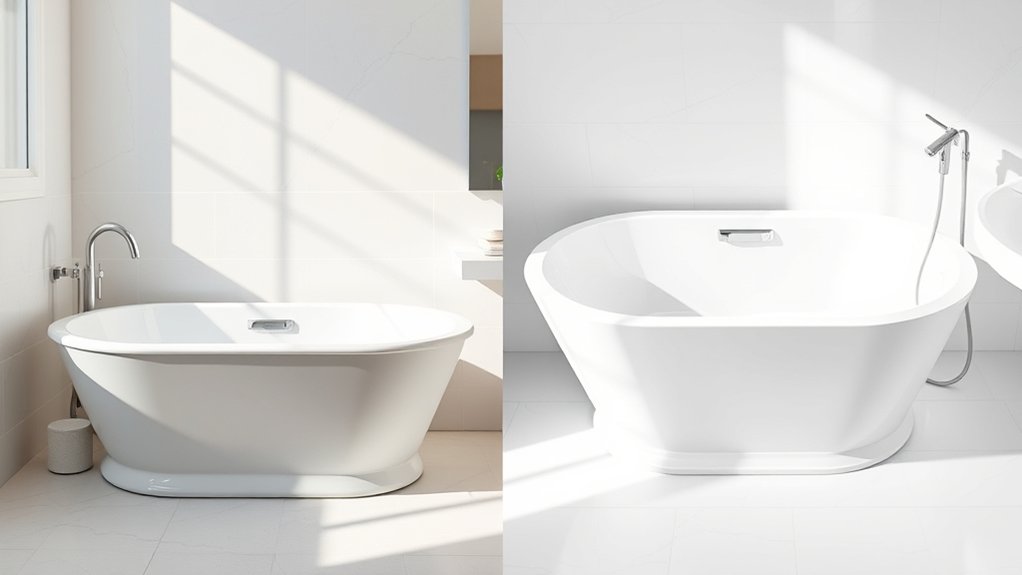
Is It Better to Reglaze or Replace a Bathtub
When deciding whether to reglaze or replace a bathtub, you need to weigh factors like its current condition, your budget, and what you want long-term.
Reglazing can give a quick, affordable facelift if the damage is minor, but replacement might be smarter if there’s deep wear or you’re aiming for an upgrade.
Understanding these details helps you make the best choice for your space and wallet.
Key Takeaways
- Reglazing is best for minor surface damage like stains or chips, offering a quick, affordable refresh without major bathroom disruption.
- Replacement is ideal for tubs with cracks, rust, structural issues, or when upgrading style, size, or materials for long-term durability.
- Reglazing typically costs $300 to $600 and lasts 5 to 10 years, while replacement costs $1,000 to $3,500 with a lifespan of 20+ years.
- Reglazing requires careful maintenance and non-abrasive cleaners to prolong finish life; new tubs offer more durable, low-maintenance surfaces.
- Home remodeling plans and desired bathroom design often determine whether reglazing or replacement is the better choice.
Which Bathtubs Can You Reglaze?
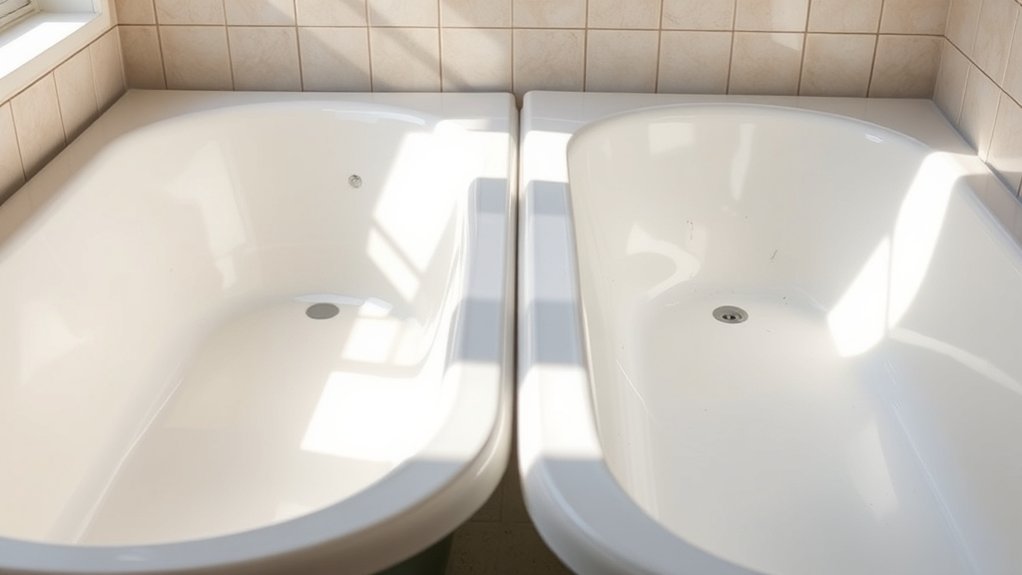
When deciding whether to reglaze your bathtub, it’s important to know which types are suitable for the process. Generally, tubs made of porcelain, enamel-coated cast iron, and fiberglass respond well to bath refinishing.
Reglazing works by applying a new coating that restores the surface, making these materials ideal candidates. However, tubs made from acrylic or plastic aren’t great for traditional reglazing, so you might want to explore glazing alternatives like specialized coatings or replacement options.
If your bathtub’s surface is intact but dull or stained, bath refinishing can be a cost-effective way to refresh it. Understanding the type of tub you have helps you choose the best approach, ensuring your refinishing efforts last longer and look better.
How Does Your Tub’s Condition Affect Your Choice?
How badly your bathtub shows wear and damage plays a big role in deciding whether to reglaze or replace it. If your tub has minor surface issues, reglazing aesthetics can restore its look effectively. However, more serious damage might signal replacement timing. Consider these factors:
- Surface chips and stains Suitable for reglazing to refresh appearance.
- Cracks or structural damage Often require replacement for safety.
- Rust or corrosion Can compromise the tub’s integrity, favoring replacement.
- Outdated style or size Might justify replacement for improved design.
When Should You Reglaze vs Replace Your Bathtub?
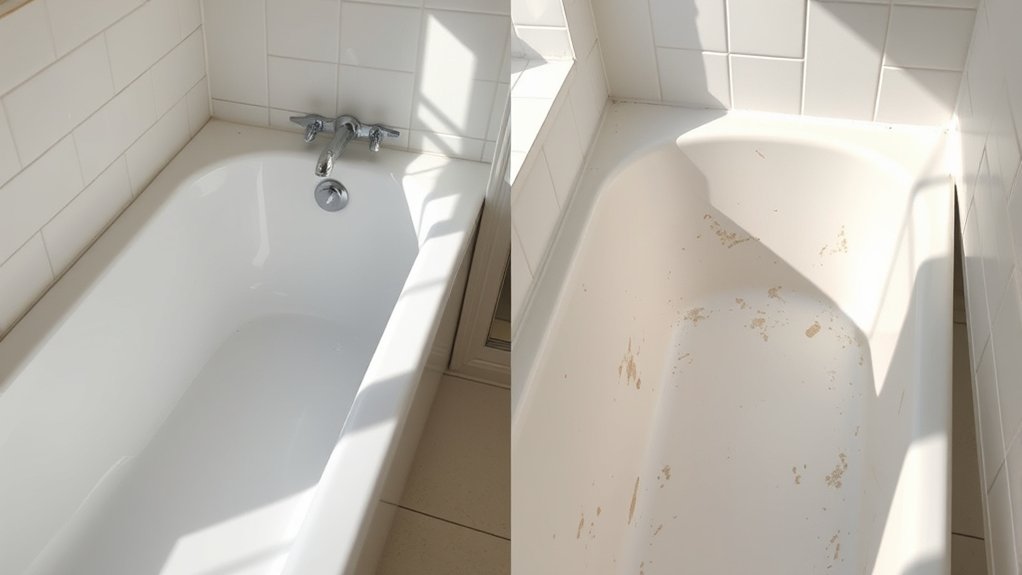
Your tub’s condition sets the stage for deciding whether to reglaze or replace it. If your bathtub has minor scratches, stains, or dullness, reglazing can refresh its look quickly and affordably. Reglazing works well if you want to avoid the hassle of a full bathroom renovation and keep your pet care routine uninterrupted by construction dust and noise.
However, if your tub has deep cracks, rust, or significant damage, replacement is the better choice for long-term durability. Also, if you’re planning a broader kitchen remodeling or bathroom upgrade, replacing your tub might fit better with your overall design goals.
In short, choose reglazing for surface-level issues and minimal disruption, but opt for replacement when structural problems or remodeling plans demand a fresh start.
Bathtub Reglazing vs Replacement Cost
Wondering which option fits your budget better, bathtub reglazing or replacement? Understanding the cost differences can help you make an informed choice without getting sidetracked by irrelevant topics. Reglazing typically costs much less than full replacement, but your policy on home improvements and resale value might influence your decision.
Here’s a quick cost comparison:
- Reglazing averages $300–$600, ideal for minor surface damage.
- Replacement ranges from $1,000–$3,500, including labor and materials.
- Reglazing requires less time and disruption, saving on indirect costs.
- Replacement might increase your home’s value, which could affect insurance policy considerations.
Knowing these facts helps you avoid irrelevant topics and focus on what truly matters for your bathtub upgrade.
How Long Does Bathtub Reglazing Take Compared to Replacement?
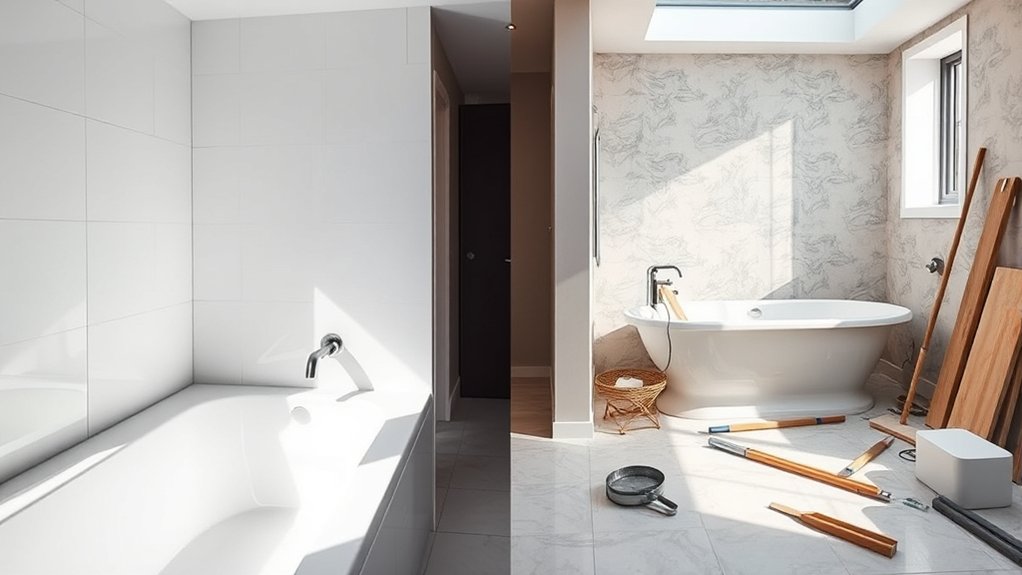
When considering a bathtub upgrade, you might ask how much time each option will take. Reglazing your bathtub typically takes one to two days, including surface preparation, applying the new finish, and drying time.
This process is much faster than replacement, which often requires several days to a week. Replacement involves removing the old tub, plumbing adjustments, installing the new tub, and often regrouting conversations about tile maintenance since adjacent tiles may need repair or replacement.
If your bathroom tiles require attention, replacement can extend the timeline significantly. Reglazing minimizes disruption, letting you resume use sooner. So, if time is a priority, reglazing offers a quicker solution, while replacement demands more time due to the complexity of installation and related tile maintenance tasks.
Pros and Cons of Bathtub Reglazing
You’ll find that bathtub reglazing is often more cost-efficient than a full replacement, but it may not last as long.
It can restore your tub’s appearance quickly, though durability varies depending on the materials used. Let’s take a closer look at the main pros and cons to help you decide.
Cost Efficiency
How much can you really save by reglazing your bathtub instead of replacing it? When budget constraints tighten, reglazing offers a cost-effective solution that can refresh your bathroom without the hefty price tag of a full replacement. It’s particularly handy when you want to stick to your space renovation plans without major upheaval.
Consider these cost efficiency points:
- Reglazing typically costs 70-80% less than replacing a tub.
- It reduces labor time, cutting expenses linked to demolition and installation.
- You avoid additional costs like plumbing adjustments or tile repairs.
- Reglazing minimizes bathroom downtime, saving you inconvenience and potential lodging costs.
If you want a budget-friendly update, reglazing can be a smart, practical choice.
Durability and Appearance
Bathtub reglazing offers a fresh, glossy finish that can make your old tub look almost new without the cost of replacement. However, you should weigh durability concerns carefully. Reglazed surfaces typically last 5 to 10 years, which is shorter than a brand-new tub’s lifespan.
The finish is prone to chipping or peeling if not properly maintained. On the bright side, reglazing restores the tub’s appearance quickly, saving you from the hassle of a full remodel. But keep in mind the appearance tradeoffs: while the tub looks smooth and shiny, reglazing can’t fix deep structural damage or severe cracks.
If your tub has significant wear, reglazing might only mask problems temporarily rather than provide a long-term solution.
Pros and Cons of Bathtub Replacement
Why consider replacing your tub instead of reglazing it? Replacing lets you fully update your bathroom, embracing current color trends and choosing a material texture that suits your style and needs. However, it comes with both benefits and drawbacks.
Replacing your tub allows a full bathroom update with modern colors and textures to match your style.
- Customization: Pick your ideal color and texture, aligning with the latest trends.
- Longevity: A new tub lasts longer than a reglazed one, resisting chips and stains.
- Cost: Replacement is pricier and involves more labor than reglazing.
- Time: Installation takes longer, sometimes requiring plumbing adjustments.
Replacing your bathtub offers a fresh start, but weigh the upfront cost and time against the lasting appeal and updated look you gain.
Styles and Materials to Upgrade When Replacing a Bathtub
What options do you have when it comes to upgrading the style and material of your tub? When replacing a bathtub, you can choose from acrylic, cast iron, fiberglass, or even stone resin. Each material offers different benefits and challenges.
Don’t let durability myths sway you; for example, acrylic tubs are often seen as less durable, but with proper maintenance tips, like avoiding harsh cleaners, they can last for years. Cast iron is heavy and long-lasting but requires strong floor support. Fiberglass is lightweight and budget-friendly but may scratch easily.
Consider styles too: freestanding tubs add elegance, while alcove tubs save space. By exploring these options, you tailor your bathroom’s look and function, ensuring a practical and stylish upgrade with materials that fit your lifestyle.
Deciding Based on Your Budget and Home Plans
How much you’re willing to spend and your long-term home plans play a big role in deciding whether to reglaze or replace your tub. Budget considerations often determine the best path forward, especially if you’re managing multiple remodeling projects.
Your budget and long-term home goals are key when choosing between reglazing or replacing your tub.
Your home remodeling plans can also impact the choice if you’re planning a full bathroom upgrade or just a quick refresh.
Consider these points:
- Reglazing costs less upfront, ideal for tight budgets.
- Replacing offers a fresh start, better if you plan to sell or remodel extensively.
- Reglazing suits short-term updates without major structural changes.
- Replacement fits long-term investments, aligning with comprehensive home remodeling plans.
Weighing these factors helps you choose the option that best fits your financial and renovation goals.
How Long Does Reglazing Last Compared to a New Bathtub?
You’ll find that reglazing a bathtub typically lasts around 5 to 10 years with proper care, while a new bathtub can easily last 20 years or more.
Reglazing is a cost-effective way to refresh your tub quickly, but it won’t match the longevity of a full replacement. Understanding these timelines can help you decide which option fits your needs best.
Reglazing Durability Timeline
Wondering how long reglazing will keep your bathtub looking fresh compared to installing a brand-new one? Reglazing can refresh your tub’s appearance, but its durability depends heavily on proper reglazing maintenance and the quality of materials used. Typically, reglazing aesthetics hold up well for several years if you care for the surface correctly.
Here’s what affects how long reglazing lasts:
- Surface preparation – Proper cleaning and sanding ensure strong adhesion.
- Quality of coating – Higher-grade finishes resist wear and chipping better.
- Frequency of use – Heavy use can reduce the lifespan of the finish.
- Maintenance habits – Using non-abrasive cleaners extends reglazing durability.
With good care, expect 5 to 10 years of lasting beauty before reglazing fades.
Lifespan of New Bathtubs
What makes new bathtubs stand out in terms of lifespan compared to reglazed ones? While reglazing or refinishing gives your tub a fresh look, it typically lasts 5-10 years. New bathtubs, however, can last 20+ years with proper care.
When weighing refinishing vs painting, remember that reglazing is more than a cosmetic fix; it’s a temporary solution, unlike full replacement. Also, new tubs reduce the need for non-bathroom repairs linked to aging fixtures.
| Aspect | Reglazed Tub | New Bathtub |
|---|---|---|
| Lifespan | 5-10 years | 20+ years |
| Surface Durability | Prone to chips & wear | Highly durable finish |
| Maintenance | Frequent touch-ups | Minimal upkeep |
| Cost | Lower upfront | Higher initial cost |
Frequently Asked Questions
Is Bathtub Reglazing Safe for Families With Small Children?
Yes, bathtub reglazing can be safe for families with small children if you choose child friendly coatings free from harmful chemicals. Ensure proper curing time to maintain bathtub safety and avoid exposing kids to fumes during application.
Can Bathtub Reglazing Be Done as a DIY Project?
You can reglaze a bathtub as a DIY project, but prioritize DIY safety by wearing protective gear and ensuring proper ventilation.
Materials sourcing is key. Get quality reglazing kits from reputable suppliers to achieve the best results.
Does Reglazing Affect the Bathtub’s Slip Resistance?
Yes, reglazing creates a glossy texture that can increase slip risk. You should add non-slip treatments or mats to keep your bathtub safe, especially if you want to avoid accidents after reglazing.
Are There Environmental Benefits to Reglazing Instead of Replacing?
Think of reglazing as giving your bathtub a second sunrise; it reduces environmental impact by avoiding waste and extends material longevity. This lets you save resources and energy while renewing your bathroom without a full replacement.
Will Reglazing Change the Bathtub’s Color Options?
Yes, reglazing offers various reglazing colorways, letting you refresh your tub’s look without replacing it.
Plus, it’s an eco-friendly option since you’re reusing the existing bathtub instead of discarding it.
Conclusion
So, if your tub looks like it survived a demolition derby, replacement’s your best friend. But if it’s just tired and a bit dull, reglazing lets you pretend it’s brand new without emptying your wallet—or your patience.
Remember, reglazing’s a quick fix, not a miracle cure, lasting about 5–10 years. Choose wisely, because whether you reglaze or replace, your tub deserves more than just a bubble bath—it deserves some common sense when deciding if it is better to reglaze or replace a bathtub.