What Do Bath Salts Do in the Bathtub
When you add bath salts to your bathtub, you’re not just enhancing the water; you’re introducing minerals like magnesium and calcium that support muscle relaxation and skin hydration. Bath salts work with warm water to improve circulation and reduce inflammation, providing a soothing experience.
Additionally, essential oils often included in bath salts can influence your mood and nervous system, adding a calming or invigorating effect. Understanding these effects can help you use bath salts more effectively.
But what specific benefits can you expect from different types of bath salts? Exploring these can guide you to choose the right salts for your needs.
Key Takeaways
- Bath salts dissolve in warm water, allowing minerals like magnesium to absorb through the skin for muscle relaxation and inflammation reduction.
- They release aromatic compounds that promote mental relaxation and elevate mood through aromatherapy effects.
- Bath salts help cleanse and tighten pores, removing oils and impurities for clearer, hydrated skin.
- Soaking in bath salts activates the parasympathetic nervous system, lowering cortisol and preparing the body for restful sleep.
- Proper temperature and soaking time maximize mineral absorption, improve circulation, and enhance detoxification benefits.
What Bath Salts Do: Benefits for Body and Mind
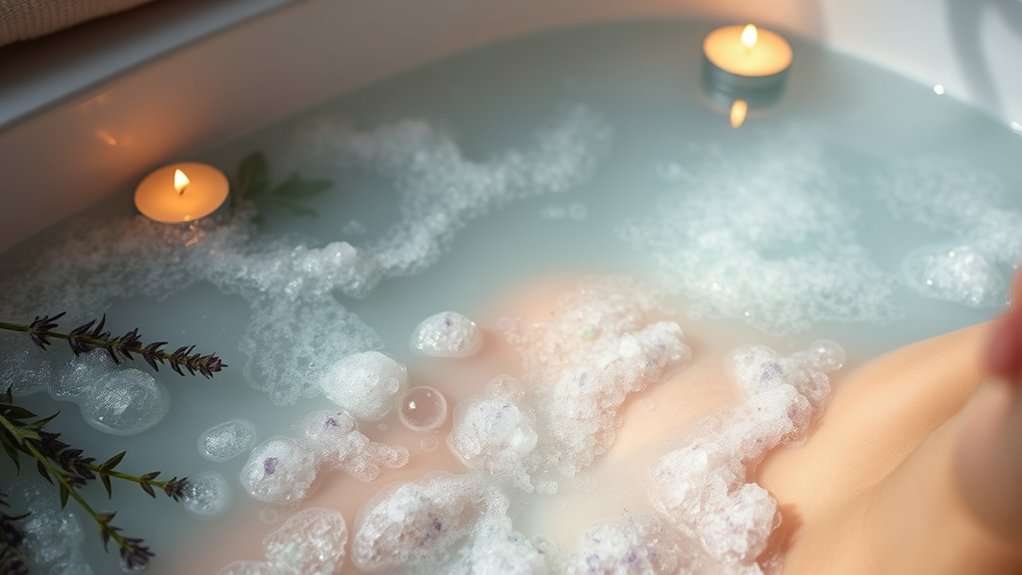
Bath salts provide therapeutic benefits that target both the body and mind through mineral absorption and aromatic compounds. When discussing salt types, you’ll encounter varieties like Epsom salts, sea salts, and Himalayan salts, each offering distinct mineral profiles such as magnesium, potassium, and calcium.
Evaluating bath additives involves understanding these minerals’ roles in supporting skin hydration, promoting detoxification, and enhancing mental clarity. Additionally, essential oils infused in bath salts release aromatic compounds that influence your nervous system, aiding relaxation and mood elevation.
How Bath Salts Soothe Muscle Pain and Relax You
How exactly do these mineral-rich salts alleviate muscle pain and promote relaxation? When you dissolve bath salts in warm water, minerals like magnesium and potassium penetrate your skin, triggering physiological responses that ease tension and soothe muscle discomfort. This process directly affects your nervous system, helping to calm your senses and reduce stress.
Here’s how bath salts work to soothe muscle pain and relax you:
- Magnesium aids in muscle relaxation by reducing inflammation.
- Warm water increases blood circulation, speeding recovery.
- Minerals help flush out toxins that cause soreness.
- The calming scent of certain salts enhances mental relaxation.
- Prolonged soaking promotes parasympathetic nervous system activation, lowering cortisol levels.
How Bath Salts Improve Skin Health
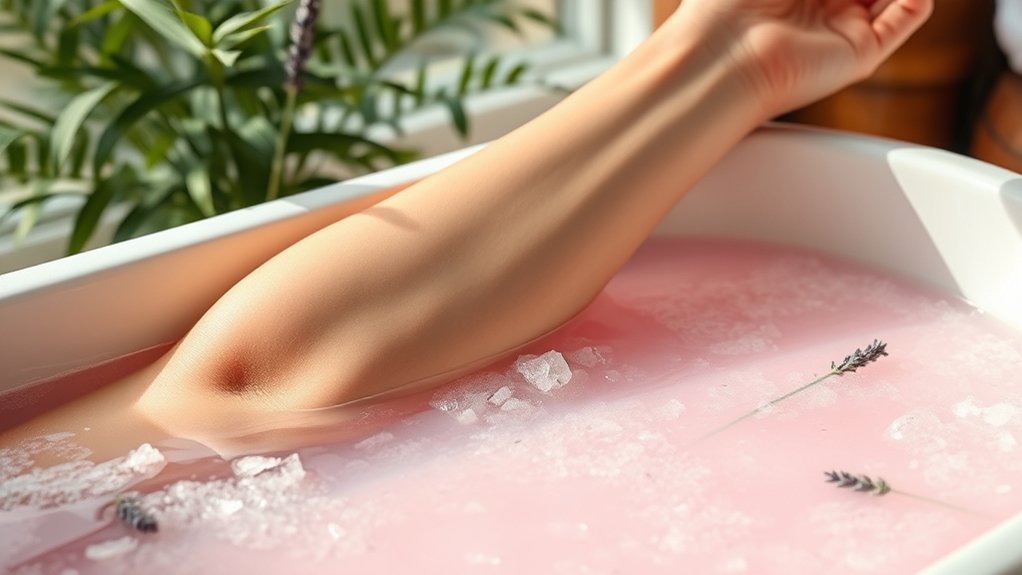
Why should you consider adding mineral-rich salts to your bathing routine for skin care? Bath salts contain essential minerals like magnesium, potassium, and calcium, which help enhance skin hydration by promoting moisture retention.
When dissolved in warm water, these salts facilitate better absorption of minerals into your skin, supporting optimal hydration levels. Additionally, bath salts contribute to pore tightening by removing excess oils and impurities, which can reduce the appearance of enlarged pores.
This cleansing action helps maintain clearer skin and minimizes potential breakouts. Regular use of bath salts can support your skin’s natural barrier function, improving texture and resilience.
How Bath Salts Boost Mental Relaxation
You’ll find that bath salts offer notable aromatherapy benefits, which help calm your mind. They also contribute to lowering stress hormones, promoting a state of relaxation.
Additionally, using bath salts can enhance your sleep quality by preparing your body for rest.
Aromatherapy Benefits Explained
What makes aromatherapy with bath salts so effective in promoting mental relaxation? When you dissolve bath salts infused with aromatherapy scents, the essential oil blends release volatile compounds that interact with your olfactory system, influencing brain regions tied to mood and relaxation.
This interaction facilitates a calm mental state, enhancing your overall bathing experience. Specifically, these aromatherapy benefits include:
- Activation of the limbic system, which regulates emotions
- Reduction of mental fatigue through sensory stimulation
- Enhancement of mood via neurotransmitter modulation
- Promotion of mindfulness by focusing attention on scent
- Improvement in sleep quality by preparing the mind for rest
Stress Hormone Reduction
How exactly do bath salts contribute to lowering stress hormone levels and enhancing mental relaxation? When you soak in a bath infused with bath salts, your body experiences a reduction in the stress response, primarily by influencing cortisol levels.
Cortisol, known as the primary stress hormone, regulates various bodily functions during stress. Bath salts, particularly those containing magnesium, promote cortisol reduction by facilitating muscle relaxation and calming the nervous system.
This biochemical effect helps decrease the physiological markers of stress, allowing your mind to enter a state of calm. Regular use of bath salts can modulate your body’s stress response, leading to sustained mental relaxation.
Enhanced Sleep Quality
Why does soaking in a bath with salts improve your sleep quality? Bath salts influence mental relaxation by modulating physiological processes tied to sleep science. When you soak, the minerals facilitate muscle relaxation and reduce cortisol levels, aligning your body with natural circadian cues. This process prepares your nervous system for restorative sleep.
Bath salts enhance sleep quality by:
- Lowering core body temperature post-bath, signaling your brain to initiate sleep
- Reducing stress hormone production, promoting mental calmness
- Supporting magnesium absorption, which aids neurotransmitter regulation
- Improving blood circulation, optimizing oxygen delivery to the brain
- Synchronizing circadian rhythms through thermal and sensory input
Which Bath Salt Types Are Best for You
Determining which bath salt type suits you depends on your specific needs and preferences. Various bath salt types offer distinct benefits, so aligning them with your personal preferences ensures optimal results. Below is a concise comparison to guide your selection:
| Bath Salt Type | Primary Benefit | Best For |
|---|---|---|
| Epsom Salt | Muscle relaxation | Sore muscles, stress |
| Dead Sea Salt | Skin detoxification | Dry or sensitive skin |
| Himalayan Salt | Mineral replenishment | General wellness |
Choose Epsom salts if you need muscle relief, Dead Sea salts for skin concerns, or Himalayan salts for overall mineral balance. Understanding these bath salt types helps you tailor your bath experience precisely to your needs.
How to Choose the Right Bath Salts
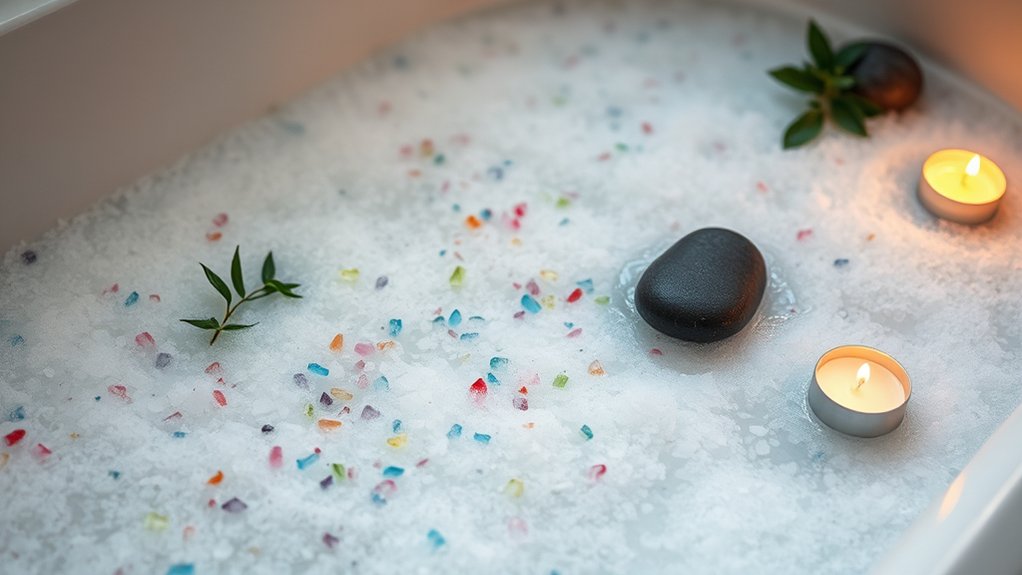
What factors should you consider when selecting bath salts to maximize their benefits? Choosing the right bath salts involves evaluating key elements that affect efficacy and personal preference. Focus on quality and compatibility to ensure optimal results.
Consider the following:
- Bath salt sourcing: Verify the origin to ensure purity and mineral content.
- Mineral composition: Select salts rich in minerals that address your specific needs.
- Fragrance pairing: Opt for scents that complement therapeutic goals without causing irritation.
- Skin sensitivity: Choose hypoallergenic options if you have delicate skin.
- Intended use: Match salts to desired outcomes, such as relaxation, detoxification, or muscle relief.
Tips to Get the Most From Bath Salts
To maximize the benefits of bath salts, you need to select the appropriate type based on your skin and health needs. Maintain the water temperature between 92°F and 100°F to ensure comfort without irritation.
Limit your soak to 15-20 minutes to optimize absorption and avoid skin dryness.
Choosing The Right Salt
Selecting the appropriate bath salt markedly influences the therapeutic benefits you experience. When choosing the right salt, consider the bath salt composition carefully, as mineral content dictates effects on skin and muscles.
For optimal results, evaluate these factors:
- Mineral variety: Magnesium for muscle relaxation, potassium for hydration
- Purity level: Avoid additives that may irritate sensitive skin
- Grain size: Fine grains dissolve faster; coarse salts offer exfoliation
- Source origin: Natural salts often contain beneficial trace elements
- Intended use: Detoxification, relaxation, or skin softening
Optimal Water Temperature
How warm should your bathwater be to maximize the benefits of bath salts? The ideal water temperature for using bath salts typically ranges between 92°F and 100°F (33°C to 38°C). This range ensures effective dissolution of salts, promoting mineral absorption and enhancing therapeutic effects without risking skin irritation or overheating.
Water hotter than 104°F (40°C) can cause excessive dryness and discomfort, reducing the efficacy of the salts. Conversely, water below 90°F (32°C) may not adequately activate the salts’ properties. To maintain the perfect bath temperature, use a reliable thermometer and adjust water accordingly.
This precise control helps you fully experience the intended benefits of your bath salts, supporting relaxation, skin hydration, and muscle relief efficiently and safely.
Soaking Duration Tips
Maintaining the optimal water temperature sets the stage for maximizing the effects of bath salts, but the length of time you spend soaking also plays a significant role. The ideal soaking duration typically ranges between 15 and 30 minutes to ensure effective absorption of minerals without causing skin irritation or dehydration.
You should monitor your bathwater temperature throughout, as prolonged exposure to hot water can negate benefits. To optimize your soaking duration, consider these tips:
- Limit sessions to 20 minutes for most skin types
- Adjust bathwater temperature to remain comfortably warm, around 37–39°C (98–102°F)
- Exit the bath immediately if you feel dizzy or overheated
- Hydrate before and after soaking to prevent dehydration
- Avoid daily soaking to allow skin recovery and maintain natural oils
Following these guidelines helps you get the most from your bath salts safely and efficiently.
Frequently Asked Questions
Can Bath Salts Be Used in a Shower Instead of a Bathtub?
You can’t use bath salts directly in a shower as bath alternatives because they require soaking in water to dissolve properly.
For shower use, consider bath oils or shower gels designed specifically for that purpose instead.
Are Bath Salts Safe for Children or Pregnant Women?
Like walking a tightrope, bath salts safety demands caution for children and pregnancy considerations. You shouldn’t use them without consulting a healthcare provider, as some ingredients might cause irritation or adverse effects during pregnancy or on sensitive skin.
How Long Should I Soak in a Bath With Bath Salts?
You should soak for 15 to 20 minutes during short bath rituals to maximize benefits without skin irritation.
Focus on the scent, as aromatherapy enhances relaxation and overall experience, supporting your well-being effectively.
Can Bath Salts Cause Allergic Reactions or Skin Irritation?
Yes, bath salts can cause allergic reactions and skin irritation, especially if you have sensitive skin or use bath salts in the shower where exposure concentrates.
Always patch-test and choose products with gentle, hypoallergenic ingredients to prevent problems.
How Should I Store Bath Salts to Keep Them Fresh?
You should store bath salts in an airtight container, away from heat and moisture, to maximize salt longevity and keep scent potency. Avoid direct sunlight to prevent degradation and maintain their effectiveness for longer periods.
Conclusion
Using bath salts can boost your well-being effectively—studies show that 94% of bath salt users report reduced muscle tension and improved skin hydration. By incorporating minerals like magnesium and essential oils, bath salts help relax muscles, soothe inflammation, and enhance mental calmness.
Remember to soak for 15–20 minutes at a mindful temperature to maximize benefits without irritation. Choosing the right type ensures you get targeted relief for both body and mind.
In conclusion, bath salts in the bathtub provide a simple yet powerful way to promote relaxation and improve overall health.