How Do I Kill Fruit Flies in the Kitchen
Like unwelcome guests at a dinner party, fruit flies in the kitchen can quickly become a nuisance if left unchecked. Fruit flies are persistent because they breed rapidly and are attracted to ripe or decaying fruits and other organic materials.
You might wonder how you can effectively eliminate fruit flies in the kitchen without resorting to harsh chemicals. Understanding their behavior and breeding habits is crucial to controlling their population.
Before you reach for sprays, consider simple, scientifically sound methods that target their life cycle and reduce their attraction to your space. These approaches can help you keep your kitchen free of fruit flies more safely and efficiently.
Identify Fruit Flies and Their Breeding Spots
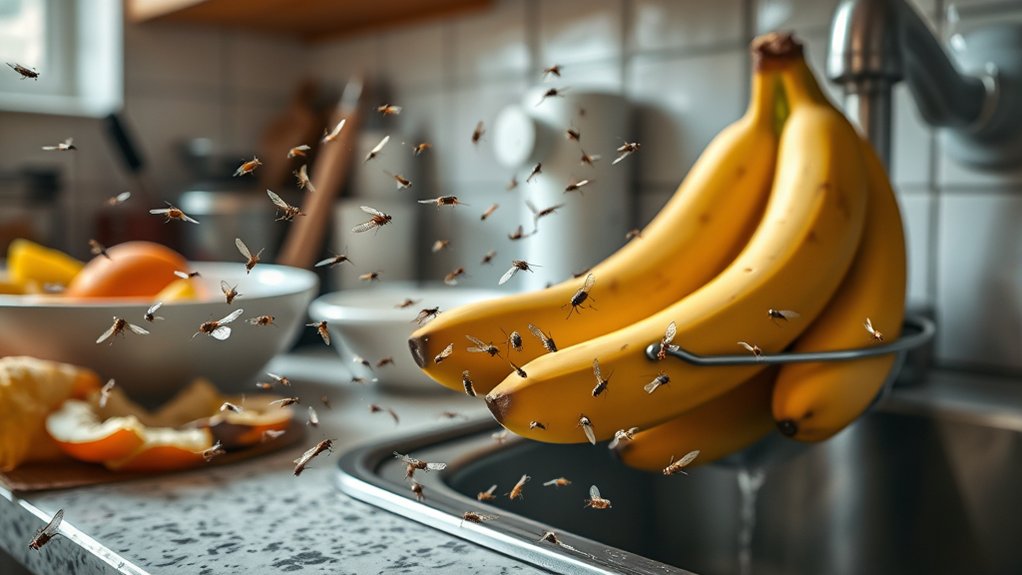
How can you accurately identify fruit flies and locate their breeding spots in your kitchen? First, recognize that fruit flies are small, about 3-4 mm long, with tan or brownish bodies and distinctive red eyes.
Their rapid life cycle stages from egg to larva, pupa, and adult occur within a week, making early detection crucial. When identifying breeding sites, focus on areas with fermenting organic matter: overripe fruits, vegetable scraps, drains, and garbage disposals.
Female fruit flies lay eggs in moist, decaying material, so check the undersides of fruit, moist residues on countertops, and inside trash bins. Larvae thrive in these nutrient-rich environments before maturing into adults.
Why Fruit Flies Invade Kitchens and How to Stop Them
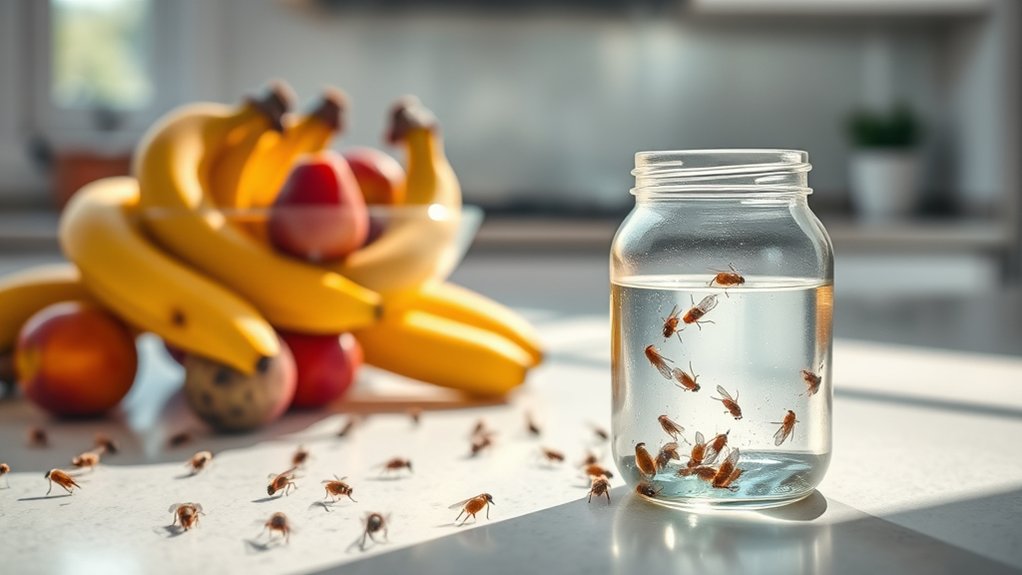
Now that you’ve identified fruit flies and located their breeding spots, it’s important to understand why these pests are attracted to your kitchen in the first place. Fruit fly ecology shows they thrive in environments rich in fermenting organic matter, which your household habits often inadvertently provide.
Overripe fruits, damp mops, and unclean drains create ideal breeding sites. To stop them, you need to disrupt these resources.
| Attractant | Source in Kitchen | Prevention Method |
|---|---|---|
| Fermenting Fruit | Overripe or rotting produce | Store fruit in sealed containers or refrigerate |
| Moist Organic Matter | Sink drains, sponges | Regularly clean and dry these areas |
| Food Residues | Trash bins, crumbs | Empty bins frequently and maintain cleanliness |
Kill Fruit Flies Quickly With Homemade Traps
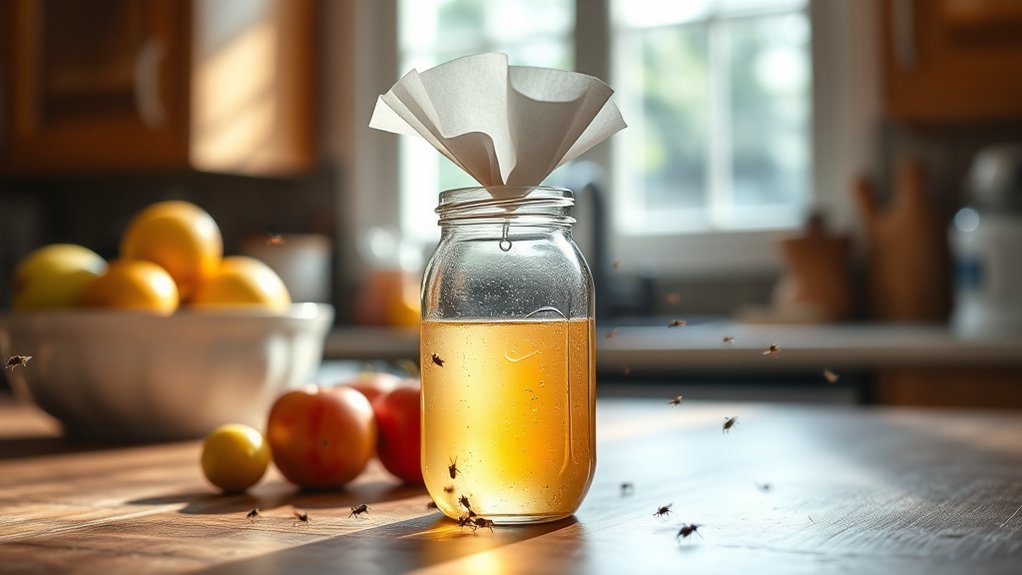
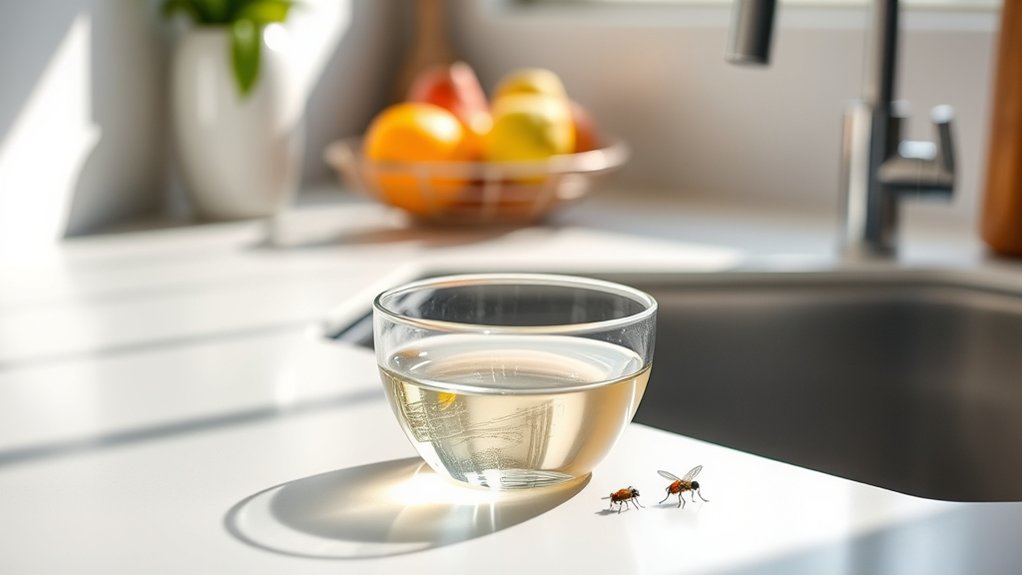
A highly effective way to reduce fruit fly populations swiftly is by deploying homemade traps that exploit their attraction to fermenting substances. You can create kill traps using simple ingredients like apple cider vinegar combined with a few drops of dish soap in a shallow container. The vinegar’s fermentation odor lures the fruit flies, while the soap reduces surface tension, causing the insects to sink and drown.
Another efficient option involves placing a piece of overripe fruit inside a jar covered with plastic wrap punctured with small holes. Flies enter seeking food but cannot escape. Position these traps near fruit bowls, trash bins, or drains, common breeding sites.
Consistent use of kill traps complements rigorous pantry hygiene, which involves promptly disposing of spoiled produce, sealing food containers, and regularly cleaning storage areas to eliminate potential breeding grounds. By integrating homemade traps with strict pantry hygiene, you can swiftly and effectively suppress fruit fly infestations in your kitchen environment.
Use Store-Bought Sprays Safely and Effectively
Effective management of fruit flies often involves using store-bought sprays designed specifically for flying insects. When selecting a spray, choose one labeled for fruit flies to ensure targeted efficacy without unnecessary chemical exposure.
For effective fruit fly control, select store-bought sprays labeled specifically for these pests to ensure safe, targeted results.
Apply the spray directly to areas where fruit flies congregate, such as near drains, garbage bins, or fruit bowls, following the manufacturer’s instructions carefully. Avoid over-spraying to minimize residue and inhalation risks.
Many sprays contain a minting fragrance, which helps mask odors that attract fruit flies, enhancing control effectiveness. While store-bought sprays provide quick knockdown, they should be integrated with other methods like DIY repellents for sustainable management.
Always use sprays in well-ventilated spaces and keep them away from food preparation surfaces. Store sprays securely, out of children’s reach. By combining precise application with safety precautions, you can effectively reduce fruit fly populations without compromising kitchen hygiene or your health.
Repel Fruit Flies Naturally in Your Kitchen
You can repel fruit flies naturally by using essential oils like peppermint, eucalyptus, or lemongrass, which disrupt their sensory receptors and deter them from your kitchen.
Additionally, setting up natural fruit fly traps with apple cider vinegar and a few drops of dish soap effectively attracts and captures these pests. These methods reduce fruit fly presence without relying on chemical sprays.
Essential Oils That Repel
Although fruit flies are notoriously persistent, certain essential oils disrupt their sensory receptors, making your kitchen an inhospitable environment. Essential oils like peppermint oil, citronella, and eucalyptus contain volatile compounds that interfere with the olfactory system of fruit flies, effectively deterring them.
Peppermint oil’s menthol component overwhelms their chemoreceptors, while citronella’s complex terpenes mask attractive food odors. Eucalyptus oil emits eucalyptol, which fruit flies find repellent.
To use these oils, dilute a few drops in water and spray the mixture around fruit fly hotspots, such as near fruit bowls or garbage bins. This method creates a natural chemical barrier without harmful residues.
Consistent application is key, as the oils evaporate quickly, maintaining an environment that fruit flies actively avoid.
Natural Fruit Fly Traps
Where do fruit flies gather most in your kitchen? They’re usually attracted to fermenting fruits, organic waste, and damp areas. To control them, you can create effective natural traps using simple ingredients like apple cider vinegar mixed with a few drops of dish soap.
The vinegar’s acetic acid mimics fermenting fruit, luring flies, while the soap breaks surface tension, causing them to drown. Place these traps near fruit bowls or trash bins where flies congregate.
Integrating natural traps into your kitchen redesign enhances pest control without chemicals, promoting a healthier environment. Additionally, sealing food and maintaining cleanliness reduces breeding sites.
Adopt Cleaning Habits That Prevent Fruit Fly Infestations
You should regularly dispose of rotting produce, as it serves as a primary breeding ground for fruit flies.
Clean kitchen drains and surfaces thoroughly to remove organic residues that attract these pests. Maintaining these habits disrupts the fruit fly life cycle and reduces infestation risk.
Regularly Dispose Rotting Produce
Why does disposing of rotting produce regularly play a pivotal role in controlling fruit fly populations? Rotting odor from decomposing fruits emits volatile compounds that attract fruit flies, providing ideal breeding grounds. By promptly removing such sources, you disrupt their reproductive cycle and reduce infestations.
Kitchen moguls emphasize this preventative measure to maintain hygiene and deter pests.
| Action | Effect on Fruit Flies |
|---|---|
| Immediate Disposal | Eliminates breeding sites |
| Sealed Trash Bins | Contain rotting odor |
| Frequent Inspection | Identifies early rot development |
Adopt a routine to inspect and discard overripe produce. This scientific approach minimizes volatile attractants, effectively controlling fruit fly populations before they proliferate.
Clean Drains And Surfaces
Removing rotting produce cuts off fruit flies’ main breeding grounds, but these pests also thrive in moist, organic residues found in kitchen drains and on surfaces. To prevent infestations, you must identify drains prone to organic buildup, such as sink and floor drains, and clean them thoroughly.
Use enzymatic drain cleaners or a mixture of baking soda and vinegar to break down residues, then flush with hot water. Equally important is to sanitize surfaces regularly with appropriate disinfectants to eliminate any food particles or moisture that attract flies.
Always dispose fruit waste promptly in sealed bags and avoid leaving scraps exposed. Finally, seal food containers tightly to reduce accessible nutrients. Adopting these habits reduces breeding sites, disrupts the fruit flies’ life cycle, and maintains a hygienic kitchen environment.
Prevent Fruit Flies From Coming Back for Good
How can you guarantee fruit flies don’t return once eliminated? The key lies in establishing rigorous preventive habits combined with continuous population surveillance. First, maintain strict sanitation by promptly disposing of overripe produce and regularly cleaning organic residues from surfaces and drains. Fruit flies breed rapidly in fermenting matter, so removing these breeding grounds disrupts their life cycle.
Next, implement population surveillance by using sticky traps or vinegar baits to monitor any resurgence early, allowing immediate intervention. Seal windows and doors effectively to restrict access, and store fruits and vegetables in sealed containers or the refrigerator. Regularly inspect compost bins and garbage areas, as these are common infestation points.
Know When to Call a Professional for Fruit Fly Control
When should you consider calling a professional for fruit fly control? If your efforts to eliminate fruit flies fail despite thorough cleaning and DIY traps, it’s time to recognize professional signs. Persistent infestations, especially when fruit flies reappear within days, indicate an underlying breeding source you might have missed.
Additionally, if you discover multiple entry points or suspect larvae hidden in plumbing or wall voids, a professional’s expertise becomes essential.
Before you call, discover pest control costs in your area to budget accordingly. Professionals use advanced detection tools and targeted insecticides not available to consumers, ensuring a precise eradication. They also provide follow-up inspections to prevent recurrence.
Calling a professional early can save time and prevent damage associated with unchecked infestations. Prioritize intervention when infestations escalate or affect food safety. By recognizing these signs and weighing costs, you make an informed decision to restore a healthy kitchen environment efficiently.
Frequently Asked Questions
Can Fruit Flies Spread Diseases to Humans?
Though fruit flies aren’t knights spreading plagues, they can carry pathogens, so can disease transmission occur? Yes, but the risk to humans remains low.
Still, maintaining cleanliness minimizes potential health hazards effectively.
Do Fruit Flies Bite or Sting?
You won’t get bitten or stung by fruit flies; they lack biting mouthparts. To monitor them, place traps near fruity aroma sources, ensuring precise trap placement for effective capture and control of their population.
Are Fruit Flies Attracted to Certain Types of Fruit More Than Others?
Yes, fruit flies prefer ripe fruit preferences like bananas and apples due to higher sugar content and moisture sources. They’re attracted to fermenting fruit because moisture and sugars provide ideal breeding and feeding conditions for them.
How Long Do Fruit Flies Live?
Fruit flies live about 8 to 10 days, a brief candle in your kitchen. Their fruit fly lifecycle thrives indoors, with rapid breeding habits, enabling multiple generations in weeks if conditions stay warm and food sources plentiful.
Can Fruit Flies Infest Other Parts of the Home Besides the Kitchen?
Yes, fruit flies can infest other parts of your home. Their habitats include damp areas, drains, and garbage bins, so non-kitchen infestations often occur in bathrooms, basements, or anywhere organic material accumulates and ferments.