Can a Bad Shower Cartridge Cause a Leak
If you’ve noticed water dripping from your shower even when it’s off, a bad shower cartridge might be the culprit. A bad shower cartridge can cause a leak by failing to properly regulate water flow and temperature. The cartridge seals off water channels, but when its seals wear out or mineral buildup accumulates, leaks can occur.
Understanding how these components fail and recognizing the signs of a faulty cartridge can help you decide whether you need a repair or a replacement. But how exactly does a bad shower cartridge lead to persistent leaks?
Key Takeaways
- A worn or damaged shower cartridge fails to seal water passages, causing leaks.
- Mineral buildup and debris on the cartridge can degrade its components, leading to leaks.
- Cracked or brittle internal O-rings and washers in the cartridge often result in water leakage.
- High water pressure and temperature changes can warp seals inside the cartridge, causing leaks.
- A faulty cartridge commonly causes water to drip even when the shower is turned off.
How a Shower Cartridge Controls Water Flow and Temperature
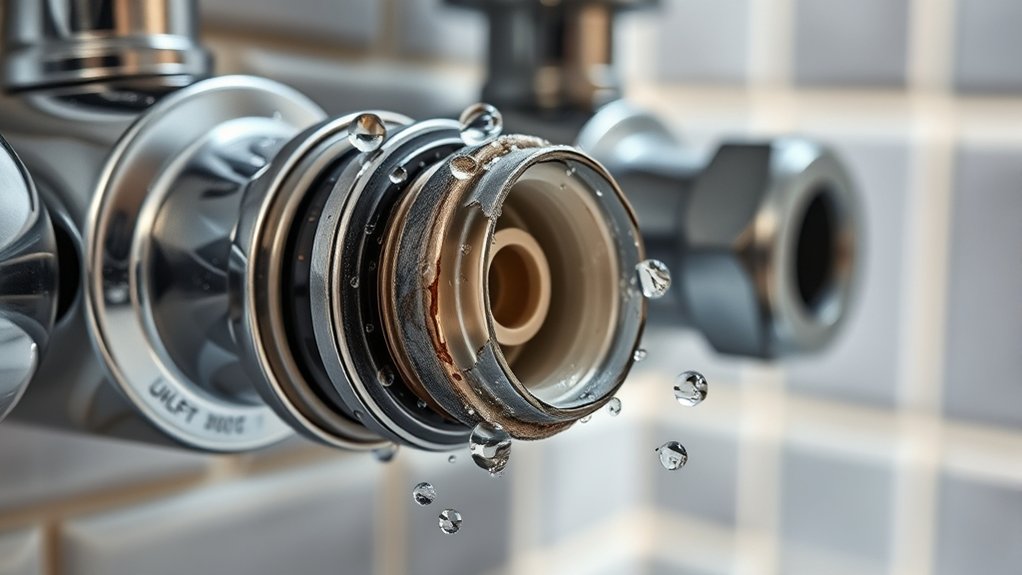
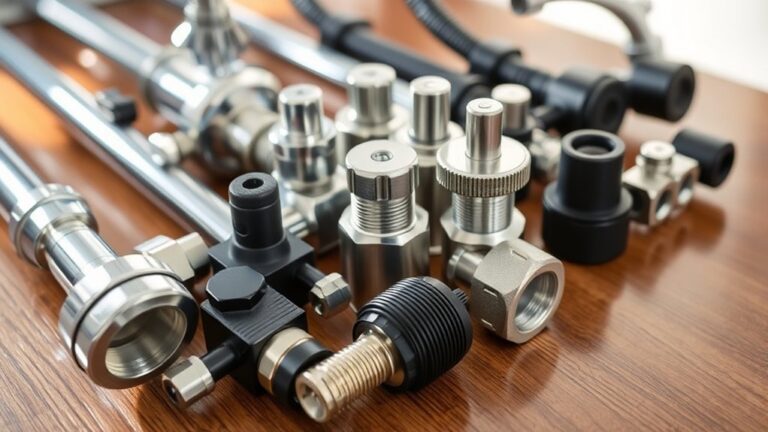
How exactly does a shower cartridge regulate both water flow and temperature? Inside the shower cartridge, the valve stem plays a pivotal role. When you turn the handle, the valve stem moves, adjusting the cartridge’s internal components to control water flow.
This precise movement allows the cartridge to blend hot and cold water accurately, providing effective temperature control. You’ll find that the cartridge’s design ensures a smooth, consistent flow by opening or closing pathways within the valve stem assembly.
This mechanism lets you dial in your preferred temperature while maintaining steady water pressure. Understanding this helps you appreciate how the shower cartridge balances comfort and function, making it the critical component that manages both water flow and temperature control in your shower system.
Why Does My Shower Cartridge Leak?
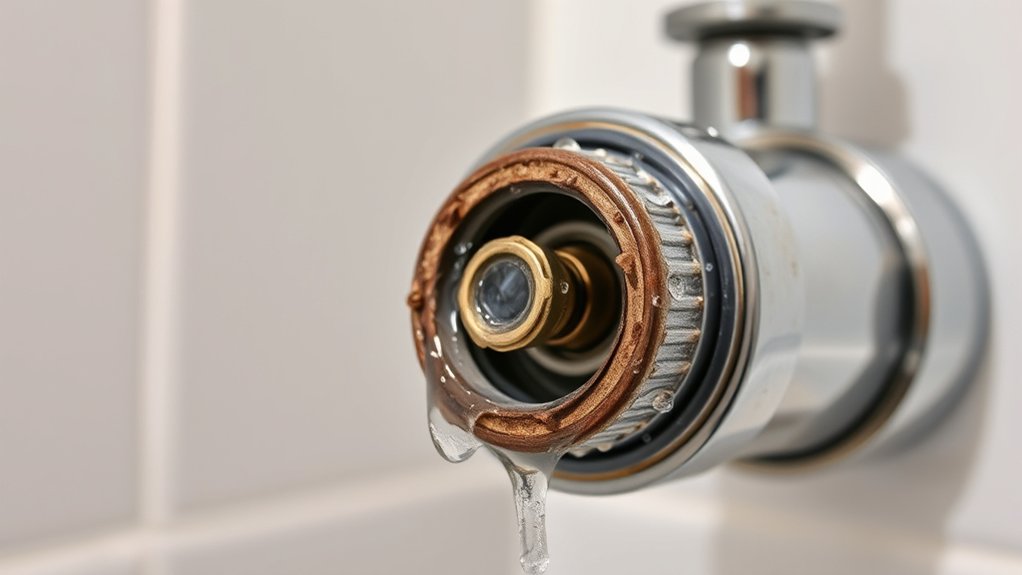
Why does your shower cartridge start leaking? A worn or damaged cartridge fails to seal water passages properly, allowing water to escape and cause leaks. Over time, mineral buildup or debris, similar to what you might find causing slow drainage in a bad kitchen plumbing system, can degrade cartridge components.
Additionally, continuous exposure to high water pressure or temperature fluctuations can warp seals, leading to leaks. If your cartridge’s internal O-rings or washers are cracked or brittle, they won’t maintain a tight seal.
Ignoring these issues can worsen leaks, increase water waste, and potentially damage your walls or flooring. Understanding these technical causes helps you pinpoint why your shower cartridge leaks and emphasizes the need for timely inspection and replacement to maintain efficient water control.
Signs Your Shower Cartridge Is Leaking
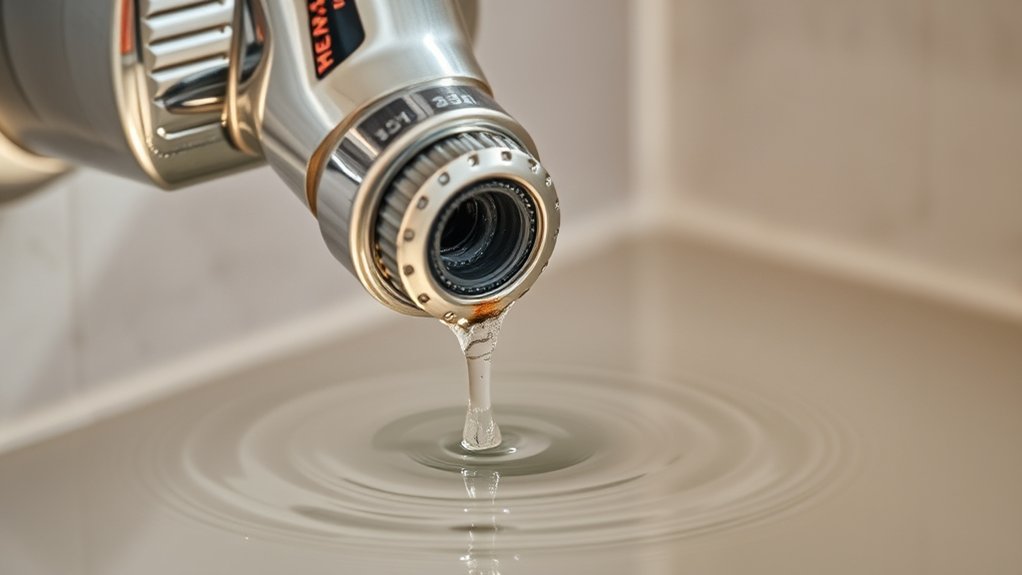
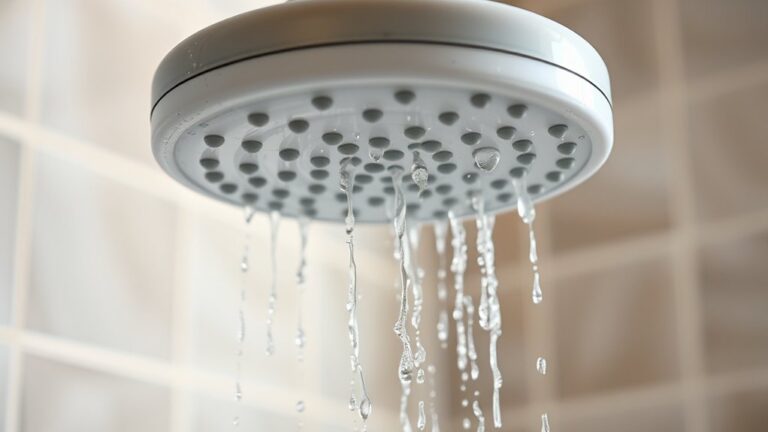
Recognizing the signs of a leaking shower cartridge helps you address the problem before it causes further damage. You might notice water dripping even when the shower is off, or a consistent decrease in water pressure.
These indicators often get overlooked because people tend to waffle ideas, attributing leaks to other plumbing issues. Avoid badgering topics that don’t directly relate to the cartridge itself. Check for water pooling around the shower handle or a musty smell, which signals moisture buildup.
Another clear sign is difficulty in controlling water temperature or flow, as a damaged cartridge disrupts normal function. Identifying these precise symptoms allows you to act swiftly and prevent costly repairs.
Don’t ignore subtle signs—they’re often the first alerts to a faulty cartridge.
How to Diagnose a Shower Cartridge Leak?
Wondering whether your shower cartridge is the source of a leak? Start by inspecting the area around your shower valve for sneaky leaks. Look closely for hidden water stains on walls or ceilings near the shower, as these often indicate slow, persistent leaks.
Next, turn off the water supply and remove the shower handle and trim to access the cartridge. Check for visible cracks, mineral buildup, or worn seals on the cartridge itself.
Use a dry cloth to wipe the cartridge area, then turn the water back on briefly to see if moisture reappears. If water pools or drips around the cartridge housing, you’ve likely pinpointed the leak.
Combining visual inspection with detecting hidden water stains helps you accurately diagnose a faulty shower cartridge before proceeding with repairs.
Fixing or Replacing a Leaking Shower Cartridge
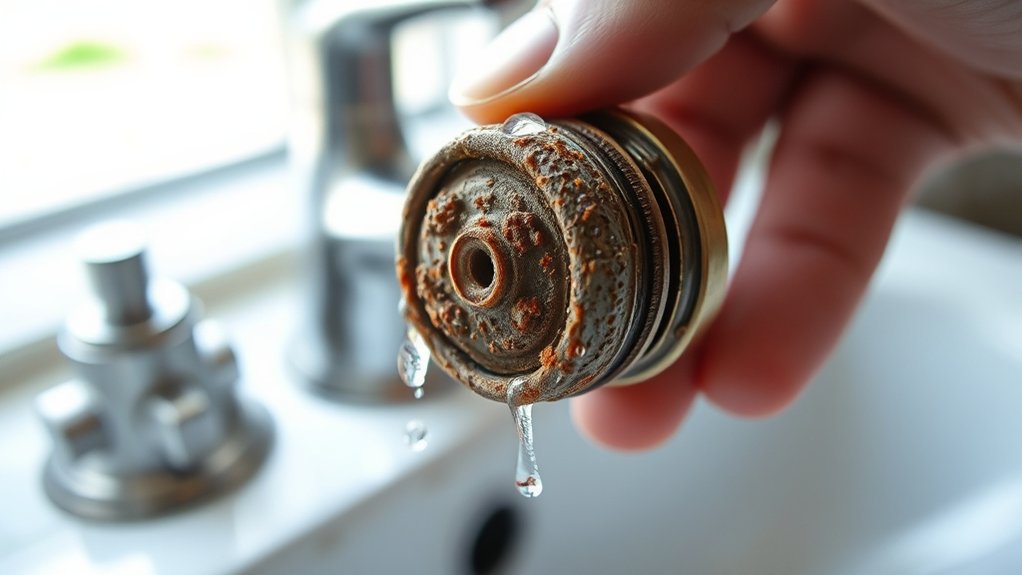
You’ll first need to inspect the cartridge for cracks, worn seals, or mineral buildup that could cause leaks. Once identified, follow a systematic process to remove the old cartridge, ensuring you turn off the water supply and carefully note the orientation.
Installing a new cartridge requires aligning it precisely and securing it to prevent future leaks.
Identifying Cartridge Damage
How can you tell if your shower cartridge is damaged and causing a leak? First, inspect the cartridge for visible signs of wear, such as cracks, corrosion, or mineral buildup, which compromise cartridge durability.
Manufacturing defects may also be responsible, so examine the cartridge surface for irregularities or poor molding. If water leaks persist despite tightening connections, the cartridge’s internal seals or valves might be compromised.
To confirm damage, remove the cartridge and test its movement; it should operate smoothly without resistance or looseness. Any stiffness or wobbling indicates internal wear or defects.
Identifying these issues early helps prevent further leaks and water damage. Keep in mind that even high-quality cartridges can fail over time due to wear or hidden manufacturing flaws.
Steps To Replace Cartridge
Replacing a leaking shower cartridge requires a systematic approach to ensure a proper seal and prevent future leaks. First, shut off the water supply to the shower. Remove the handle by unscrewing the retaining screw, then carefully take off the trim plate to expose the cartridge.
Use pliers or a cartridge puller to extract the faulty cartridge, noting its orientation for accurate replacement. Clean the valve body thoroughly to remove any debris or mineral buildup, which often causes common shower issues.
Insert the new cartridge aligned correctly, then reassemble the trim and handle. Finally, restore the water supply and test for leaks. Following these precise steps when replacing cartridge components helps resolve leaks efficiently, addressing one of the most common shower issues with minimal hassle.
How to Prevent Shower Cartridge Leaks
Why do shower cartridges start leaking in the first place? Usually, it’s due to wear on the internal seals or buildup of mineral deposits that compromise the cartridge’s integrity.
To prevent leaks, you need to regularly inspect and clean the cartridge area. When you know how to prevent shower cartridge leaks, you’ll extend its lifespan and maintain proper function.
Start by turning off the water supply and removing the handle to access the cartridge. Clean any visible debris with a soft brush and a vinegar solution to dissolve mineral buildup.
Lubricate the O-rings with plumber’s grease to keep seals flexible. Replace worn cartridges promptly. Proper installation with manufacturer-recommended parts also reduces the risk of leaks.
Regular maintenance is your best defense against shower cartridge failures.
Frequently Asked Questions
Can a Leaking Shower Cartridge Cause Water Damage to Walls?
Yes, a leaking shower cartridge can cause water damage to walls. You should prioritize shower maintenance and leak prevention to avoid mold, structural issues, and costly repairs. Promptly replacing faulty cartridges and sealing leaks effectively is essential.
Are All Shower Cartridges Universal or Do They Vary by Brand?
You shouldn’t assume all shower cartridges have universal compatibility. They vary by brand and model, so you’ll need to check specifications carefully to guarantee you select a cartridge that fits your shower valve precisely.
How Long Does a Typical Shower Cartridge Last Before Needing Replacement?
You’d think shower cartridges last forever, but their longevity typically spans 6 to 10 years. For precise replacement timing, monitor leaks or stiffness.
Timely swaps prevent costly damage and guarantee smooth water flow.
Can Mineral Buildup in Water Cause a Shower Cartridge to Fail?
Yes, mineral buildup can cause cartridge failure by restricting movement and damaging internal seals.
You’ll notice reduced water flow or leaks, so regular cleaning or water softening helps maintain optimal cartridge function and prevent failure.
Is It Safe to Use a Shower While the Cartridge Is Leaking?
You shouldn’t use the shower while the cartridge is leaking. Ignoring this risks water damage and worsens wear.
Prioritize timely cartridge replacement and regular shower maintenance to ensure safety and optimal function.