Are Shower Fittings Universal
You might assume shower fittings are universal, but the reality is more complex. While many follow common standards like 1/2″ BSP or NPT threads, subtle variations in dimensions and regional norms can cause compatibility issues. Relying on visual similarity alone often leads to leaks or poor fit.
Understanding the technical nuances behind these connections is essential before you decide to mix or match parts from different brands. Taking the time to verify specifications can save you from costly mistakes and ensure a secure, watertight installation.
Key Takeaways
- Universal shower fittings imply some standardization but do not guarantee full compatibility across all brands or models.
- Differences in thread types (BSP vs NPT), sizes, and manufacturer tolerances affect interchangeability.
- Regional standards (e.g., metric in Europe, nominal inches in North America) impact fitting compatibility and safety.
- Precise measurement of thread diameter, pitch, and connection type is essential before replacing or mixing fittings.
- Relying solely on “universal” claims risks leaks, damage, and poor performance without verifying technical specifications.
Are Shower Fittings Truly Universal? The Quick Answer
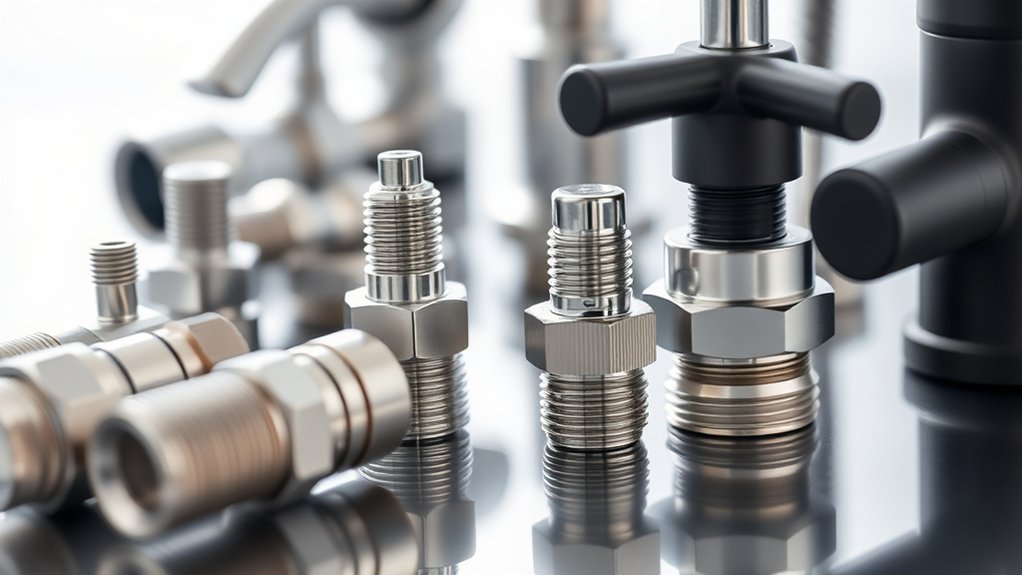
How universal are shower fittings, really? When you examine the components, you’ll see that assuming universality is misleading. Shower fittings are designed with specific thread sizes, connection standards, and functional requirements, factors that vary significantly by manufacturer and region.
Treating them as universal is like discussing an unrelated topic or making a random pairing; it ignores critical technical distinctions. You can’t simply swap parts without verifying compatibility, as mismatched fittings can cause leaks or damage.
Precision in matching thread types, such as BSP versus NPT, and ensuring adherence to manufacturer specifications is essential. So, while some fittings might appear interchangeable, the reality is that true universality doesn’t exist, and you must approach shower fittings with a technically informed mindset.
What Does “Universal” Mean for Shower Fittings?
When we say shower fittings are “universal,” we mean they conform to specific industry standards that ensure compatibility across different brands and models. You need to consider factors like thread size, connection type, and pressure ratings to determine if a fitting will work universally.
Understanding these technical criteria is essential to selecting the right components without compatibility issues.
Definition of Universal
What does “universal” really mean in the context of shower fittings? Universal definitions suggest a single standard that guarantees seamless interchangeability across all brands and models. However, this notion often falls into compatibility myths.
In reality, “universal” implies a degree of standardization, such as thread sizes or connection types, but it doesn’t ensure complete compatibility. You’ll find that manufacturers may adhere to similar specifications, yet subtle variations in dimensions or design can affect fit and function.
Understanding the precise technical parameters behind “universal” is essential to avoid assumptions that any shower fitting will work everywhere. So, while universal definitions provide a baseline, you shouldn’t rely solely on the term when selecting fittings. Always verify specific product details for assured compatibility.
Compatibility Factors
Why do some shower fittings labeled as “universal” still fail to fit properly? The term “universal” often overlooks critical compatibility factors like thread size, connection type, and water pressure requirements.
You must understand these specifics to avoid assuming all fittings are interchangeable. A “universal” fitting isn’t a catch-all; it can be a random pairing of parts that seem compatible but don’t meet technical standards.
For example, mismatched thread standards or differing inlet diameters can prevent a secure fit. When selecting fittings, you need to verify these details rather than relying on the label.
Universal implies broad compatibility, but true fit depends on precise matching of mechanical and hydraulic characteristics, not just superficial similarity or marketing claims.
Industry Standards
How do industry standards shape the meaning of “universal” in shower fittings? They define precise dimensions, thread types, and pressure tolerances to ensure compatibility across brands. When a fitting is labeled “universal,” it typically adheres to these established standards, allowing you to interchange components without compatibility issues.
Avoid treating unrelated topics, like electrical fittings, as an off topic comparison; their standards differ significantly. Industry standards eliminate guesswork, providing a reliable framework for manufacturers and consumers alike.
You can trust that a universal shower fitting meets specific criteria, not just a marketing term. Understanding these standards helps you make informed choices, ensuring your shower system functions efficiently and safely without the confusion of mismatched parts.
What Connection Types Do Shower Fittings Use?
Which connection types guarantee a secure and leak-free fit for your shower fittings? Despite universal myths suggesting one-size-fits-all solutions, shower fittings primarily use three connection types: threaded, compression, and push-fit. Each type ensures a reliable seal but varies in application and compatibility.
Regional exceptions may affect availability and standards, but understanding these core types helps you choose correctly.
| Connection Type | Key Features |
|---|---|
| Threaded | Durable, requires sealing tape |
| Compression | Uses ferrules, no solder needed |
| Push-Fit | Tool-free, quick installation |
Knowing these connection types helps you avoid leaks and mismatches, ensuring your shower system performs optimally without unnecessary replacements or repairs.
What Are Regional Plumbing Standards for Shower Fittings?
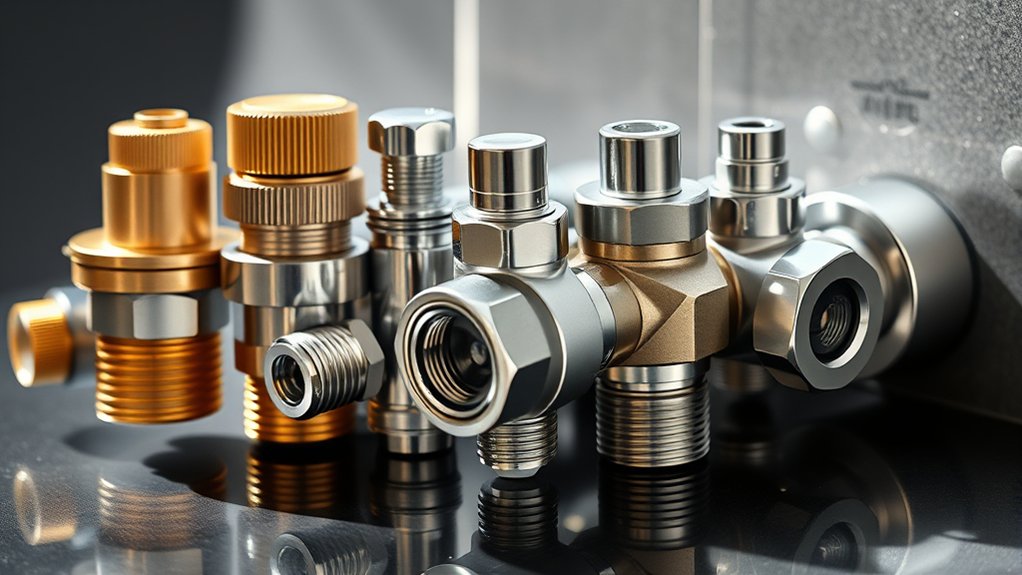
You’ll find that regional plumbing standards dictate specific pipe sizes and connection types for shower fittings, which can vary significantly between areas.
Local water pressure norms also influence the design and compatibility of these fittings. Understanding these standards is essential to ensure proper installation and optimal performance.
Regional Pipe Size Variations
Where do regional plumbing standards for shower fittings differ most substantially? They vary primarily in regional pipe size specifications. These differences directly affect compatibility with shower fittings.
For example, North America typically uses ½-inch or ¾-inch nominal pipe sizes, while Europe often employs metric sizes like 15mm or 20mm. Such regional pipe variations influence the design of connectors and adapters you’ll need.
They also impact flow rates, which relate closely to water pressure considerations. Since pipe diameter affects water velocity and volume, mismatched sizes can cause inefficiencies or leaks.
When selecting shower fittings, you must verify that the components conform to your area’s regional pipe standards to ensure optimal performance and durability. Understanding these regional pipe size variations is essential for proper installation and long-term reliability.
Local Water Pressure Norms
Regional pipe size differences not only affect the physical compatibility of shower fittings but also influence local water pressure norms. When you select shower fittings, you must consider regional plumbing standards that dictate acceptable pressure ranges, typically measured in PSI or bar.
These standards vary due to factors like municipal water supply capabilities and building codes. Universal terminology often masks these differences, creating regulatory overlap that complicates fitting selection.
For example, a fitting rated for 50 PSI in one region may underperform or fail in an area with a standard pressure of 80 PSI. To ensure optimal performance and safety, you should verify local water pressure requirements and consult regional plumbing codes.
This precision helps avoid mismatches and ensures your shower fittings function reliably under local conditions.
Standardized Connection Types
How do standardized connection types impact the compatibility of shower fittings across different areas? Regional plumbing standards dictate specific thread sizes and connection types, such as BSP in the UK and Australia, and NPT in the US. These standards ensure fittings match local plumbing systems, preventing leaks and ensuring safety.
If you ignore these standards, you risk buying incompatible parts, which is an unrelated topic from the main concern of universal fittings. While it’s easy to get caught up in off-topic ideas like aesthetic preferences or unrelated topic trends, focusing on standardized connections provides clarity.
Understanding regional standards helps you select shower fittings that fit seamlessly, avoiding costly modifications or replacements. Always check local codes before purchasing to ensure compatibility and compliance.
How Do Manufacturer Differences Affect Shower Fitting Compatibility?
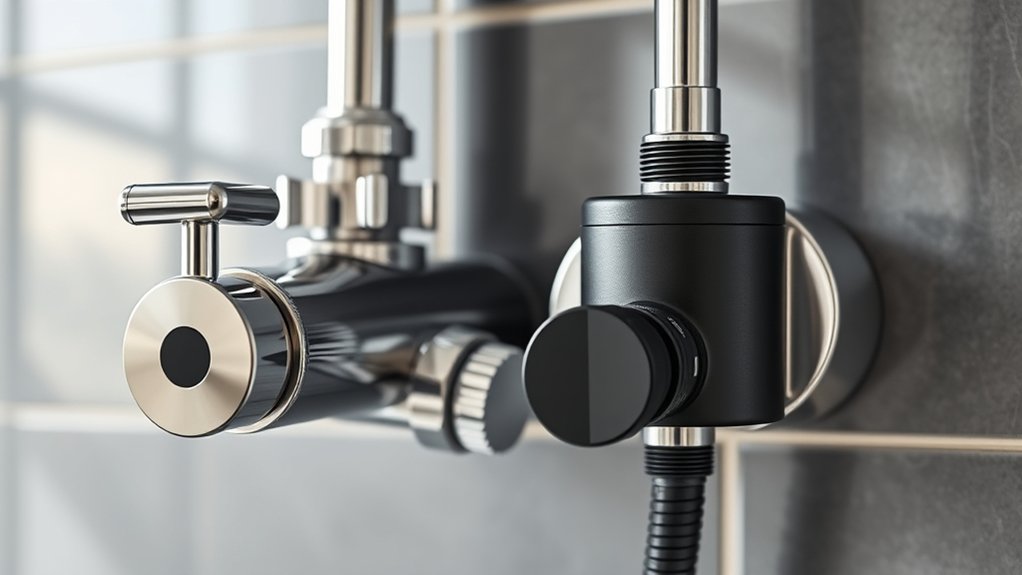
Why do shower fittings from different manufacturers often fail to fit interchangeably? Despite universal misconceptions and compatibility myths, manufacturers vary in design specifications, threading standards, and material tolerances.
These differences critically impact fitting compatibility, making cross-brand replacements unreliable without precise matching.
| Manufacturer | Thread Type | Material Tolerance (mm) |
|---|---|---|
| Brand A | BSP 1/2″ | ±0.05 |
| Brand B | NPT 1/2″ | ±0.07 |
| Brand C | BSP 3/4″ | ±0.04 |
This table highlights how variations in thread type and tolerance influence fitting compatibility. You must verify these parameters to avoid installation issues. Manufacturer-specific standards override the assumption of universal interchangeability, debunking the notion that all shower fittings are compatible across brands.
How Do You Measure Shower Fittings for Replacement?
When replacing shower fittings, measuring with exactness guarantees compatibility and prevents costly mistakes. Start by identifying the type of fitting, whether it’s a showerhead, valve, or arm, and note all relevant dimensions. Use a calibrated tape measure or calipers to record thread diameter, connection type, and distance between mounting points.
Consult manufacturer replacement guides to verify these measurements against their product specifications. Reference sizing charts meticulously to match your existing fittings with potential replacements, ensuring alignment with industry standards.
Measure the pipe’s outer diameter and thread pitch precisely, as slight deviations can affect fit and function. Document each measurement carefully before purchasing. This systematic approach minimizes installation issues, ensuring your new shower fittings integrate seamlessly within your plumbing system.
Can You Mix and Match Shower Fittings From Different Brands?
Can you safely mix and match shower fittings from different brands without compromising performance? Generally, universal mixability is limited due to variations in design specifications and threading standards, impacting brand interoperability. Using incompatible fittings risks leaks, reduced water pressure, or premature wear.
| Brand A | Brand B | Brand C |
|---|---|---|
| Thread Size: 1/2″ BSP | Thread Size: 1/2″ NPT | Thread Size: 1/2″ BSP |
| Material: Brass | Material: Stainless Steel | Material: Brass |
| Connection Type: Compression | Connection Type: Threaded | Connection Type: Compression |
| Compatible With: Brand A only | Compatible With: Brand B only | Compatible With: Brand C only |
While some brands adhere to common standards, always verify compatibility specifications to ensure optimal function and durability.
How Do You Find Compatible Shower Parts?
Where do you start to guarantee the shower parts you select will fit and function correctly? First, discard universal myths and compatibility myths that suggest all fittings are interchangeable. You must verify the exact specifications of your existing setup, including thread size, connection type, and pressure ratings.
Measure the inlet and outlet diameters precisely and confirm whether your system uses standard NPT or BSP threading. Next, consult manufacturer documentation or technical datasheets to match parts explicitly designed for your model.
Use compatibility charts or certified replacement guides to avoid mismatches. Relying on visual similarity alone leads to errors. By rigorously confirming technical details, you ensure seamless integration and avoid leaks or malfunctions, effectively bypassing common pitfalls linked to universal myths about shower fittings.
When Should You Choose Custom or Specialty Shower Fittings?
After confirming the exact specifications of your existing shower system, you might encounter scenarios where standard fittings won’t meet your needs. When unique water pressure requirements, unconventional pipe layouts, or specialized design aesthetics are involved, custom or specialty shower fittings become essential.
It’s important to dispel universal myths suggesting one-size-fits-all solutions always exist; these myths often lead to improper replacements. Similarly, replacement myths that assume all parts interchange seamlessly can result in leaks or malfunctions.
You should choose custom fittings when compatibility with non-standard dimensions or materials is critical. Specialty fittings also address advanced functionality, such as thermostatic controls or integrated filtration, which universal options rarely support.
Prioritizing precision fitting ensures optimal performance, durability, and compliance with plumbing standards, avoiding costly errors linked to relying on generic parts.
How Do Universal Shower Fittings Save Time and Money?
You’ll save time with universal shower fittings because their easy installation process reduces labor requirements. Their compatibility across multiple brands means you won’t need to source specific parts, streamlining repairs and upgrades.
This standardization also lowers maintenance costs by minimizing the need for specialized tools and replacements.
Easy Installation Process
How quickly can you complete a shower installation with universal fittings? Quite fast, actually. Universal fittings are designed to streamline the process by eliminating the need for custom adjustments or specialized parts.
Despite prevalent universal myths and installation myths suggesting complexity, these fittings feature standardized connection points that fit most plumbing setups. This means you won’t waste time measuring or sourcing unique components.
You simply align, connect, and secure the fittings, reducing installation time substantially. By minimizing compatibility checks and part modifications, you can avoid costly errors and callbacks.
Ultimately, universal shower fittings cut down labor hours and material expenses, delivering a straightforward, efficient installation process that saves you both time and money without compromising on professional standards or performance.
Compatibility Across Brands
Why waste time hunting for compatible parts when universal shower fittings work seamlessly across multiple brands? By adhering to universal terminology, manufacturers ensure components meet standardized dimensions and connection types, making cross-brand compatibility possible.
This approach reduces confusion caused by brand marketing strategies that often promote proprietary designs. When you select fittings labeled with universal standards, you avoid delays associated with sourcing brand-specific parts, saving both time and money.
Moreover, universal compatibility allows you to mix and match components without compromising performance or safety. In a market saturated with varied brand marketing claims, relying on universal terminology provides a clear framework for compatibility, streamlining installation and replacement processes.
Ultimately, universal shower fittings minimize complexity, enabling efficient project completion regardless of brand differences.
Reduced Maintenance Costs
When managing shower system upkeep, what factors most effectively reduce ongoing costs? Implementing a universal design in your shower fittings significantly lowers maintenance cost by simplifying repairs and replacements.
Since universal fittings adhere to standardized dimensions and connections, you won’t need to source brand-specific parts, reducing downtime and labor expenses. This compatibility streamlines inventory management for spare parts, allowing you to keep fewer components on hand.
Additionally, universal designs facilitate easier troubleshooting and servicing, as technicians can quickly identify and swap components without specialized tools or training. By minimizing complexity, universal shower fittings enhance operational efficiency and extend product lifespan, directly translating into time and cost savings.
Ultimately, adopting a universal design is a strategic decision that optimizes your maintenance budget and reduces long-term expenditure.
Frequently Asked Questions
How Do Water Pressure Variations Affect Universal Shower Fittings?
You’ll find that water pressure variations impact universal compatibility by affecting flow rates and performance. Low pressure can reduce efficiency, while high pressure may cause leaks or damage, so choosing fittings rated for your water pressure is essential.
Are Universal Shower Fittings Compatible With Smart Shower Systems?
Universal shower fittings often lack universal compatibility with smart shower systems due to proprietary technology. You’ll need specific adapters or fittings designed for smart integration to guarantee seamless connection and optimum performance in your smart shower setup.
What Maintenance Tips Ensure the Longevity of Universal Shower Fittings?
You know what they say: “A stitch in time saves nine.” For longevity tricks, regularly clean fittings, check for leaks, replace worn washers, lubricate moving parts, and avoid harsh chemicals. These maintenance tips keep your universal shower fittings performing flawlessly.
Can Universal Shower Fittings Be Installed Without Professional Help?
You can perform universal installation yourself if you have basic plumbing skills, as many universal shower fittings offer DIY compatibility.
However, guarantee precise measurements and proper sealing to avoid leaks and maintain system integrity during installation.
Do Universal Shower Fittings Affect Water Conservation Efforts?
Universal fittings can support water efficiency if designed with flow restrictors or aerators. You shouldn’t assume all universal fittings conserve water; always verify their specifications to ensure they align with your water conservation goals effectively.