Are Vinyl Shower Curtains Safe
You might assume vinyl shower curtains are harmless, but their composition can pose hidden health and environmental risks. Many vinyl shower curtains contain chemicals like phthalates, VOCs, or heavy metals that may off-gas or accumulate over time. Knowing what materials and certifications to look for can help you avoid these hazards.
Before you decide which curtain to buy, consider how these factors could affect your indoor air quality and overall safety. Understanding the potential risks associated with vinyl shower curtains is important for making a safer choice for your home.
Key Takeaways
- Vinyl shower curtains contain chemicals like phthalates, VOCs, and heavy metals, which can off-gas and pose respiratory and hormonal risks.
- Choosing vinyl curtains labeled “phthalate-free” or “low-VOC” and with safety certifications reduces exposure to harmful substances.
- Proper ventilation, regular cleaning, and drying of vinyl curtains help minimize mold growth and chemical off-gassing in bathrooms.
- Vinyl alternatives such as PEVA, EVA, or polyester offer safer, chlorine-free, and phthalate-free options with lower toxic risks.
- Environmental concerns exist with vinyl curtains due to persistence, chemical leaching, and limited recycling options, affecting their overall safety profile.
What Are Vinyl Shower Curtains Made Of?
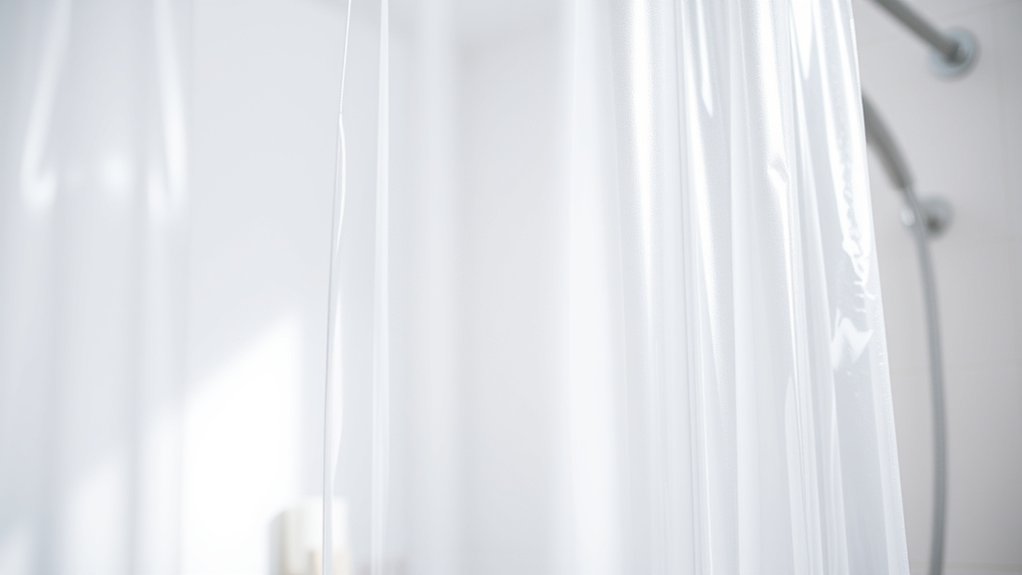
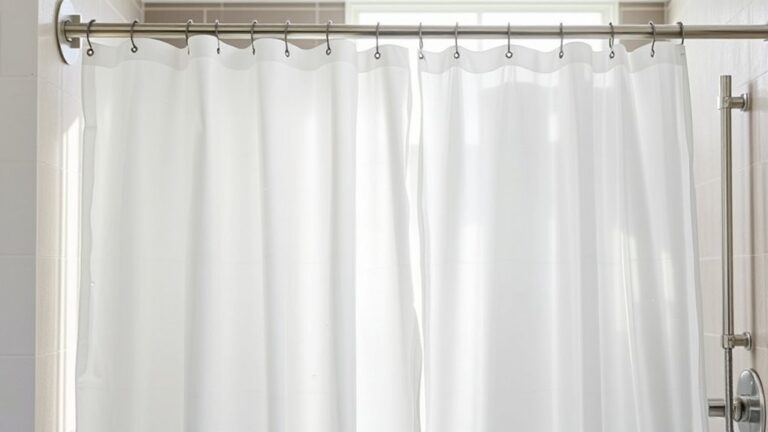
Vinyl shower curtains consist primarily of polyvinyl chloride (PVC), a synthetic plastic polymer widely used for its durability and water resistance. You’ll find that this material’s structure includes a significant chlorine content, derived from the polymerization of vinyl chloride monomers.
This chlorine content contributes to PVC’s resistance to moisture and microbial growth, making it ideal for curtain materials exposed to humid environments. During manufacturing, plasticizers are added to enhance flexibility, while stabilizers improve longevity.
The resulting vinyl fabric is smooth, waterproof, and easy to clean, which is why it’s commonly chosen for shower curtains. Understanding the chemical composition of vinyl curtains helps you appreciate their physical properties and performance in bathroom settings, without delving into potential health impacts.
Can Vinyl Shower Curtains Affect Your Health?
You should be aware that vinyl shower curtains contain chemicals like phthalates and volatile organic compounds (VOCs), which can off-gas into your bathroom environment. These substances have been linked to respiratory issues and hormone disruption in some studies.
Understanding these potential health risks helps you make informed choices about the materials you bring into your home.
Chemical Composition Concerns
How does the chemical makeup of shower curtains influence indoor air quality and health? Vinyl shower curtains are primarily made from polyvinyl chloride (PVC), which requires additives like plasticizers to remain flexible. These plasticizers, often phthalates, can slowly release into the air, affecting indoor air quality.
When you select shower accessories, choosing eco friendly options that minimize or eliminate harmful additives can reduce chemical exposure. Some manufacturers now produce vinyl curtains without phthalates or use alternative materials like polyethylene, which emit fewer volatile organic compounds (VOCs).
Understanding the chemical composition helps you make informed decisions about the products you bring into your home. By opting for eco friendly shower accessories, you can limit potential chemical emissions and support healthier indoor environments.
Potential Health Risks
Concerns about indoor air quality often extend to the materials used in household items, including shower curtains. Vinyl shower curtains can release volatile organic compounds (VOCs) and additives like phthalates, which may impact your respiratory health and hormone regulation.
Understanding these risks increases your consumer awareness, enabling informed choices that consider both personal health and environmental impact.
| Risk Factor | Potential Effect | Scientific Evidence |
|---|---|---|
| VOC Emissions | Respiratory irritation | Supported by indoor air studies |
| Phthalates | Endocrine disruption | Linked to hormone imbalance |
| Chemical Additives | Allergic reactions | Documented in dermatology cases |
| Environmental Impact | Persistence and bioaccumulation | Highlighted in ecological research |
| Consumer Awareness | Informed decision-making | Encourages safer product use |
Which Chemicals in Vinyl Shower Curtains Should You Watch Out For?
Which chemicals in vinyl shower curtains pose potential health risks? Vinyl chemistry involves polyvinyl chloride (PVC) combined with additives like plasticizers, stabilizers, and flame retardants. Among these, phthalates, a common class of plasticizers, are concerning because they can leach into the air and water, potentially disrupting endocrine function.
Additionally, lead and cadmium, sometimes used as stabilizers, carry toxicity risks, particularly with prolonged exposure. You should also watch for volatile organic compounds (VOCs) emitted from new curtains, which may cause respiratory irritation.
Understanding these chemical components is essential for curtain safety, as prolonged exposure to harmful substances can affect indoor air quality. By recognizing these chemicals, you can better assess the health implications of your vinyl shower curtain and make informed safety choices.
How to Spot Quality Vinyl Shower Curtains
You’ll want to start by examining the material composition to ensure the vinyl is free from harmful additives. Next, look for certifications and safety labels that confirm compliance with health and environmental standards.
Finally, assess the curtain’s thickness and durability, as these indicators often correlate with safer, longer-lasting products.
Material Composition Check
How can you determine if a vinyl shower curtain is made from high-quality materials? Start by examining its material composition. Quality vinyl curtains often use non toxic materials, avoiding harmful additives like phthalates or heavy metals that can off-gas volatile organic compounds (VOCs).
These VOCs negatively impact indoor air quality and pose health risks. Check product descriptions or labels for terms such as “phthalate-free” or “low-VOC.” Additionally, feel the curtain’s thickness and flexibility; premium vinyl tends to be thicker and more durable, indicating fewer plasticizers that degrade air quality.
Avoid curtains with a strong chemical odor, as this often signals lower-quality materials. By focusing on these factors, you can select a vinyl shower curtain that maintains safer indoor air quality and minimizes exposure to harmful substances.
Certifications and Safety Labels
Where can you find reliable indicators of a vinyl shower curtain’s safety? You should look for recognized vinyl certification marks and labeling standards. These labels confirm the product meets strict chemical and safety criteria, reducing exposure to harmful substances like phthalates and heavy metals.
Understanding these certifications helps you identify high-quality vinyl curtains.
| Certification Label | Description |
|---|---|
| CPSIA Compliant | Limits lead and phthalates in products |
| OEKO-TEX Standard 100 | Tests for harmful substances |
| UL Certification | Assesses product safety and performance |
| Prop 65 Warning | Indicates chemicals known to cause harm |
| ASTM Standards | Sets testing protocols for materials |
Always verify these labels to ensure your vinyl shower curtain meets current safety and environmental standards.
Thickness and Durability Indicators
What factors determine the quality of a vinyl shower curtain beyond certifications? Thickness considerations and durability indicators are key. A thicker curtain generally offers better resistance to tearing and wear, enhancing longevity.
To spot quality vinyl shower curtains, evaluate these aspects:
- Material thickness: Look for curtains with a thickness of at least 8 mils; thinner options may degrade faster.
- Edge reinforcement: Double-stitched or heat-sealed edges reduce fraying and extend curtain life.
- Weight and flexibility: Heavier curtains often indicate denser, more durable vinyl, while maintaining flexibility prevents cracking.
Environmental Concerns With Vinyl Shower Curtains
Although vinyl shower curtains offer durability and water resistance, they pose significant environmental concerns due to their chemical composition and disposal challenges. Vinyl, or polyvinyl chloride (PVC), contains additives like phthalates and heavy metals that can leach into the environment during production and degradation.
When you dispose of vinyl curtains, they often end up in landfills or incinerators, where toxic substances may be released, contributing to pollution and harming ecosystems. Recycling options remain limited due to the complex chemical makeup.
Understanding the environmental impact helps you make informed choices about product lifespan and disposal considerations. By recognizing these factors, you can better assess the trade-offs between convenience and ecological responsibility when selecting and discarding vinyl shower curtains.
How to Safely Use Vinyl Shower Curtains to Reduce Risks
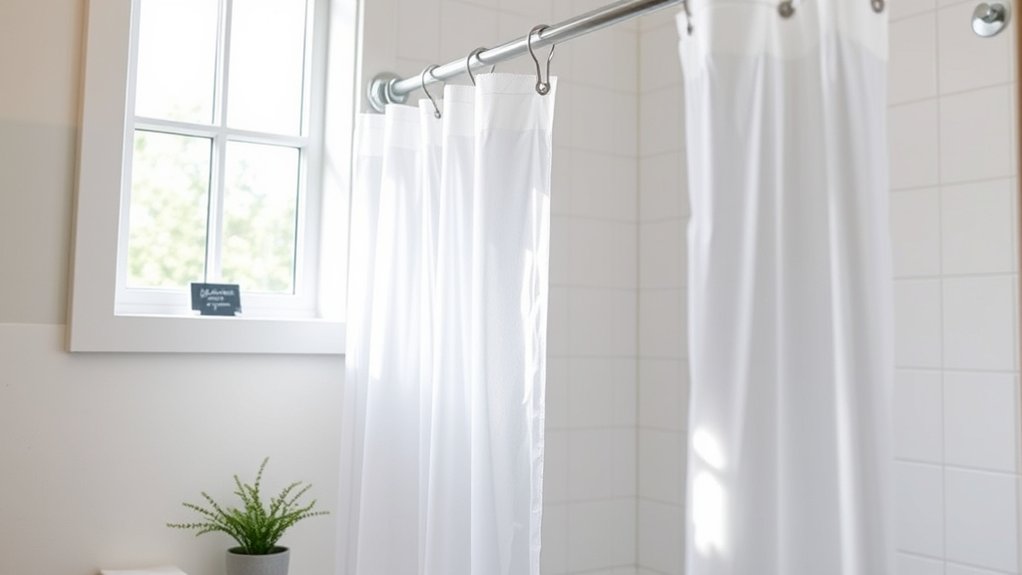
Understanding the environmental challenges posed by vinyl shower curtains highlights the importance of using them safely to minimize health and safety risks. To reduce exposure to potentially harmful chemicals and prevent mold growth, you should adopt effective drying methods and maintenance routines.
Proper ventilation in your bathroom is crucial to hinder mold development on and around the curtain. Additionally, you can:
- Regularly clean the curtain with mild soap and water to remove residues that promote mold.
- Ensure the curtain fully dries after each use by pulling it straight or hanging it in a well-ventilated area.
- Avoid prolonged contact between the curtain and hot water to reduce chemical off-gassing.
Safer Alternatives to Vinyl Shower Curtains
Material choice plays a critical role in reducing health and environmental risks associated with shower curtains. When selecting vinyl alternatives, you should consider materials like PEVA (polyethylene vinyl acetate), EVA (ethylene vinyl acetate), and polyester. These options are free from chlorine and phthalates, common in traditional vinyl, hence lowering toxic chemical exposure.
Eco friendly fabrics such as organic cotton or hemp, often treated with water-resistant coatings, provide biodegradable and sustainable solutions. Additionally, these materials tend to resist mold and mildew growth without harsh chemical additives.
How to Choose Safe and Durable Shower Curtains for Your Bathroom
Selecting a safe and durable shower curtain involves evaluating factors beyond just the material composition. You’ll want to ensure physical durability, chemical safety, and maintenance ease to ensure long-term use without harmful effects. Avoiding unrelated topics like mere aesthetics helps keep your focus on functional safety.
Key discussion ideas include:
- Material Testing: Verify if the curtain is free from phthalates, heavy metals, and VOCs through certifications or lab results.
- Fabric Strength: Assess tear resistance and water repellency to prevent mold and mildew development.
- Cleaning Requirements: Choose curtains that tolerate regular washing with non-toxic detergents to maintain hygiene and safety.
Where to Buy Non-Toxic Shower Curtains That Last
Where can you find shower curtains that combine non-toxic materials with long-lasting durability? Start by exploring specialty retailers focused on eco-friendly home products. These often offer curtains treated with non toxic coatings, which prevent mold and mildew without harmful chemicals.
Look for brands that provide detailed material safety data sheets confirming the absence of volatile organic compounds (VOCs) and phthalates. Some manufacturers incorporate advanced cleaning processes, such as hepa filtration during production, to minimize airborne contaminants and ensure product purity.
Online platforms with strict quality controls and certifications like OEKO-TEX or GREENGUARD are reliable sources. When purchasing, verify customer reviews addressing longevity and material performance.
Frequently Asked Questions
How Do Vinyl Shower Curtains Compare in Price to Fabric Ones?
You’d think vinyl shower curtains cost a fortune, but they’re usually cheaper than fabric ones. In a price comparison, vinyl offers better durability and longevity, making it a cost-effective choice despite fabric’s aesthetic appeal.
Can Vinyl Shower Curtains Be Recycled or Repurposed?
You can recycle vinyl shower curtains, but recycling options are limited due to PVC content.
For repurposing ideas, consider cutting them into waterproof mats or drop cloths, extending their functional life while reducing environmental impact.
Do Vinyl Curtains Mold or Mildew More Than Other Materials?
You might think vinyl curtains mold more, but they’re actually less porous, reducing mildew growth. Still, you’ll want to use proper ventilation strategies, like exhaust fans and drying, to keep any shower curtain mildew-free and hygienic.
How Long Does a Typical Vinyl Shower Curtain Last?
You can expect a typical vinyl shower curtain to last about one to three years, depending on durability concerns and VOC exposure. Proper ventilation and regular cleaning help maintain its lifespan by reducing chemical breakdown and material wear.
Are Vinyl Shower Curtains Easy to Clean and Maintain?
Cleaning vinyl shower curtains is like wiping a chalkboard: straightforward and efficient. Use mild soap and water, avoid harsh chemicals, and dry thoroughly.
Despite durability concerns, these cleaning tips keep them hygienic and long-lasting.