Are Shower Curtains Necessary
You might think a shower curtain is just a decorative touch, but a shower curtain is necessary because it plays an indispensable role in protecting your bathroom from water damage.
Without one, moisture can seep into walls, floors, and cabinets, causing costly repairs and mold growth.
Yet, some people prefer alternatives or even skip a curtain altogether.
Understanding when and why a shower curtain is necessary can save you time and money—so let’s explore what makes it an essential bathroom feature.
Key Takeaways
- Shower curtains prevent water from splashing outside the shower area, reducing the risk of water damage and slippery floors.
- Properly fitted curtains with mildew-resistant materials maintain hygiene and extend bathroom cleanliness.
- Skipping curtains can create a minimalist look but increases moisture-related risks like mold and water damage.
- Alternatives like glass doors or waterproof panels offer better water containment and easier maintenance.
- Choosing the right curtain involves considering material durability, size fit, water resistance, and style for effective use.
Why You Really Need a Shower Curtain
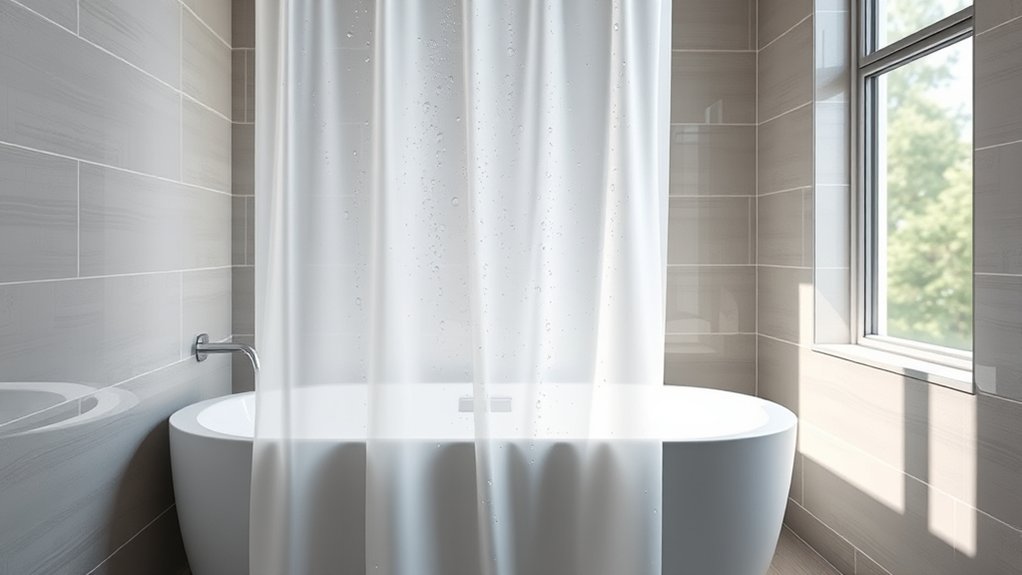
Why should you bother with a shower curtain? Simply put, it plays a vital role in water containment. Without a shower curtain, water splashes freely outside your shower or tub area, leading to slippery floors and potential water damage.
A properly installed shower curtain acts as a barrier, keeping water where it belongs. You’ll want one that fits your shower’s dimensions well, preventing gaps where water can escape.
Additionally, choosing a mildew-resistant material helps maintain hygiene and prolongs the curtain’s life. By investing in a quality shower curtain, you ensure your bathroom stays dry and safe, reducing cleaning time and the risk of costly repairs.
In short, a shower curtain is essential for effective water containment and overall bathroom maintenance.
Can You Skip a Shower Curtain? Pros and Cons Explained
Wondering if you can skip a shower curtain altogether? You can, but it comes with trade-offs. Without a curtain, water containment inefficiency becomes a real issue. Expect more splashes and potential water damage outside the shower area.
Some opt for shower curtain alternatives like glass panels or doors, which offer better water control while maintaining an open feel. Others use waterproof mats or strategically placed towels, but these are less reliable and require frequent maintenance.
Skipping a curtain might simplify cleaning and create a minimalist look, but you risk slippery floors and increased mold growth from excess moisture. Ultimately, if you choose to go without, be prepared to manage water carefully and consider how much effort you’re willing to invest in preventing water damage.
Choosing the Right Shower Curtain for Your Bathroom
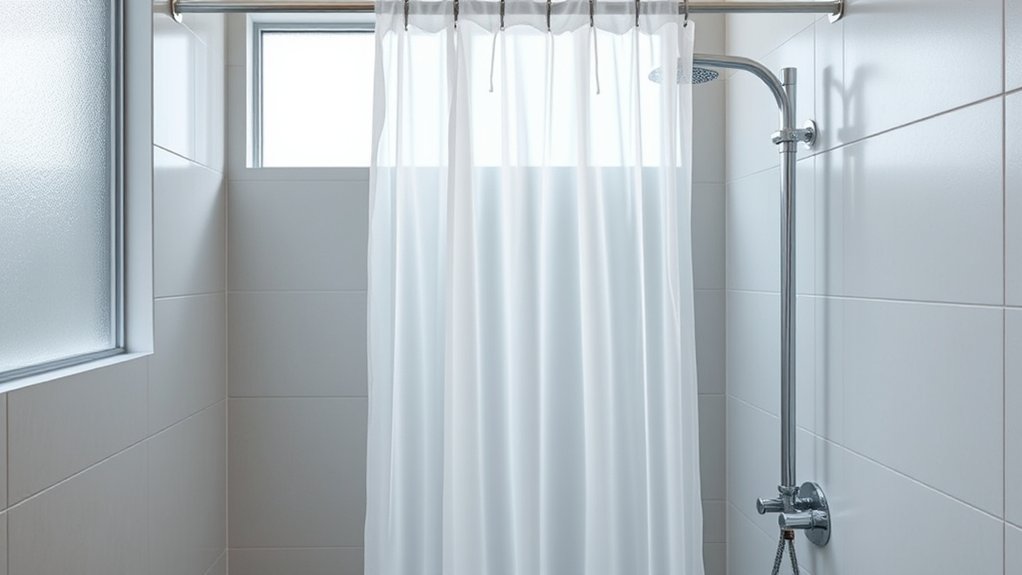
How do you pick the perfect shower curtain for your bathroom? Start by considering two word ideas like material quality and color scheme. Choose a durable fabric or vinyl that resists mold and mildew.
Next, think about size fit to ensure it covers your shower area without gaps. Proper length prevents water from escaping, while width accommodates your space.
Two word ideas such as style preference and maintenance ease also matter. Select a design that complements your bathroom décor and is easy to clean.
Don’t forget functionality aspects like water resistance and quick drying. Finally, consider hardware compatibility to match hooks and rods.
How Shower Curtains Prevent Water Damage
You rely on your shower curtain to keep water inside the tub or shower area, preventing it from splashing onto your bathroom floor. A well-fitting curtain acts as a barrier, protecting walls, cabinets, and flooring from moisture that can cause damage over time.
Water Containment Efficiency
Why does water often escape your shower area, causing slippery floors and potential damage? The key lies in effective water containment. Shower curtains play a crucial role in leakage mitigation by forming a barrier that keeps water inside the shower space.
To maximize water containment efficiency, consider these factors:
- Proper Curtain Length: Ensure the curtain reaches inside the tub or shower base to prevent water from dripping outside.
- Secure Placement: Position the curtain so it fully covers the shower opening, avoiding gaps where water can leak.
- Material Choice: Use water-resistant or waterproof materials that repel water, reducing seepage through the fabric.
Protecting Bathroom Surfaces
Where does water go once it escapes your shower? Without a proper barrier, it seeps onto bathroom surfaces, causing damage over time. Shower curtains made from waterproof fabrics act as your first line of defense, effectively containing water within the shower area.
These fabrics prevent moisture from reaching walls, floors, and cabinetry, which helps you avoid costly repairs. Additionally, by keeping surfaces dry, shower curtains play a crucial role in mold prevention. Mold thrives in damp environments, so stopping water from spreading reduces its growth dramatically.
To maximize protection, choose curtains with tightly sealed hems and durable waterproof coatings. Regularly inspect and clean your curtain to maintain its effectiveness. By doing this, you safeguard your bathroom’s structure and keep it hygienic, preventing water damage before it starts.
Shower Curtain Alternatives: Stylish and Practical Options
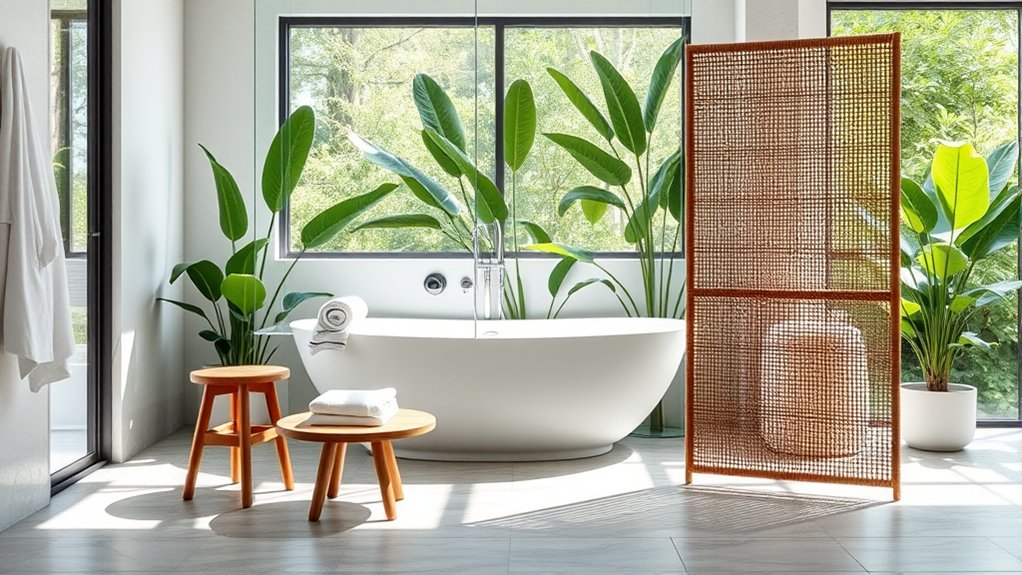
You can replace traditional shower curtains with glass shower doors that offer durability and a sleek look. Waterproof shower screens provide a practical barrier against water while staying easy to clean.
Decorative shower panels add style and protect your bathroom walls from moisture, combining function with design.
Glass Shower Door Benefits
How can upgrading to a glass shower door transform your bathroom experience? It offers a sleek alternative to shower curtains, enhancing both function and style. Glass doors improve door aesthetics by creating a clean, modern look that complements any decor.
Plus, they provide superior glass safety, using tempered glass that resists shattering and reduces injury risk.
Consider these benefits:
- Enhanced Durability: Unlike curtains, glass doors withstand moisture without warping or mold buildup.
- Easy Maintenance: Their smooth surface wipes clean effortlessly, preventing soap scum accumulation.
- Space Optimization: Sliding or hinged designs fit various layouts, maximizing bathroom space efficiently.
Switching to a glass shower door elevates your bathroom’s appeal while offering practical, long-lasting use.
Waterproof Shower Screens
Why settle for traditional shower curtains when waterproof shower screens offer a sleek, practical alternative? These screens provide a clear barrier that keeps water contained while enhancing your bathroom’s modern look.
Waterproof screens are typically made of tempered glass or acrylic, ensuring durability and easy cleaning. Don’t let installation myths hold you back; many believe waterproof screens require complex fitting or professional help, but with straightforward instructions and basic tools, you can install them yourself.
They fit various shower sizes and styles, making them versatile. Unlike fabric curtains, these screens don’t harbor mold or mildew, promoting a hygienic environment.
Choosing waterproof screens means you get a low-maintenance, stylish option that efficiently prevents water spillage without sacrificing your bathroom’s aesthetic appeal.
Decorative Shower Panels
While waterproof shower screens offer durability and a modern look, decorative shower panels bring both style and practicality to your bathroom space. These panels serve as excellent shower curtain alternatives, enhancing water containment while adding visual interest.
You’ll find decorative panels available in materials like acrylic, tempered glass, or waterproof PVC, each designed to prevent water spillage effectively.
Consider these benefits when choosing decorative panels:
- Customization: Choose colors, patterns, or textures that complement your bathroom décor.
- Easy Maintenance: Smooth surfaces resist mold and mildew buildup, simplifying cleaning.
- Space Efficiency: Slim profiles fit well in small bathrooms without cluttering the area.
How to Clean and Maintain Your Shower Curtain for Longevity
Regularly cleaning and maintaining your shower curtain can considerably extend its lifespan and keep your bathroom fresh. Start by establishing cleaning routines: wash fabric curtains every month and wipe down vinyl or plastic ones weekly.
Use a gentle detergent or a mixture of vinegar and baking soda to remove soap scum and grime effectively. Always allow your curtain to dry fully after use to prevent mildew buildup. Keep the bathroom well-ventilated and use a squeegee to remove excess water.
For stubborn mildew, soak the curtain in a bleach solution or use a mildew-resistant spray. Replace shower curtain liners periodically for added protection. By following these steps, you’ll maintain a clean, durable shower curtain that enhances your bathroom’s hygiene and appearance for years to come.
Frequently Asked Questions
What Materials Are Shower Curtains Typically Made From?
Shower curtain materials typically include vinyl, polyester, and PEVA, which resist bathroom humidity well. You’ll want waterproof, mildew-resistant fabrics to keep your bathroom dry and fresh.
This ensures durability and easy maintenance in humid conditions.
How Do Shower Curtains Impact Bathroom Humidity Levels?
You’ll find that shower curtains reduce bathroom humidity by up to 30%, aiding humidity management. Choosing safe, mold-resistant materials guarantees effective moisture control and improves material safety, preventing mildew buildup and protecting your bathroom environment efficiently.
Can Shower Curtains Cause Mold or Mildew Buildup?
Yes, shower curtains can cause mold or mildew buildup if they trap moisture. You should focus on mold prevention by improving moisture control.
Keep curtains dry, clean regularly, and ensure proper ventilation to stop mold growth effectively.
Are There Eco-Friendly Shower Curtain Options Available?
Think of eco-friendly shower curtains as a green shield for your bathroom. You’ll find durable alternatives made from eco-friendly materials like organic cotton or recycled polyester that resist mold and last longer, saving you money and the planet.
How Often Should You Replace a Shower Curtain?
You should replace your shower curtain every 6 to 12 months, balancing old vs new wear. Consider cost vs replacement frequency.
Invest in durable, eco-friendly options to save money and reduce waste over time.