Are Shower Curtains Machine Washable
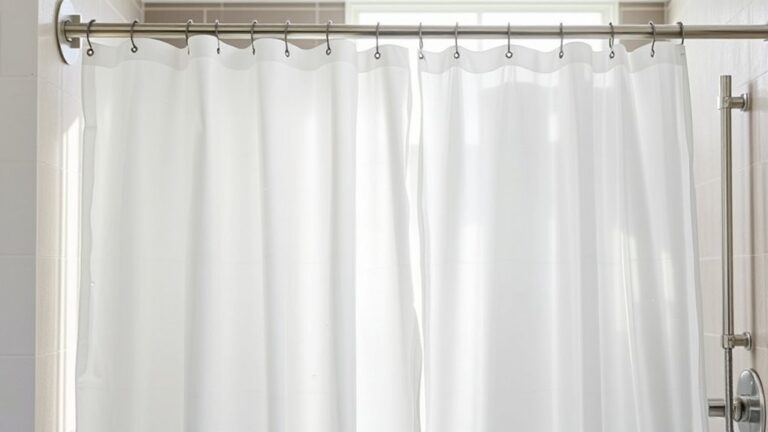
You might wonder if your shower curtain is machine washable to tackle mildew and buildup. While many curtains made from polyester or cotton blends handle gentle cycles well, others like vinyl need more care.
Knowing when to wash and how to protect your curtain during the process can save you time and prevent damage. But what about those materials that aren’t so straightforward?
Key Takeaways
- Polyester and cotton blend shower curtains are generally safe for machine washing on gentle cycles with mild detergents.
- Vinyl and PEVA curtains may be machine washable on delicate cycles, but always check the care label first.
- Avoid machine washing delicate materials, curtains with metal grommets, glued embellishments, or heavy mold and mildew.
- Remove hooks and wash curtains with towels on a gentle, cold-water cycle to prevent damage and wrinkling.
- Hang curtains to air dry fully after washing, avoiding high dryer heat to maintain material integrity.
Materials That Are Machine Washable for Shower Curtains
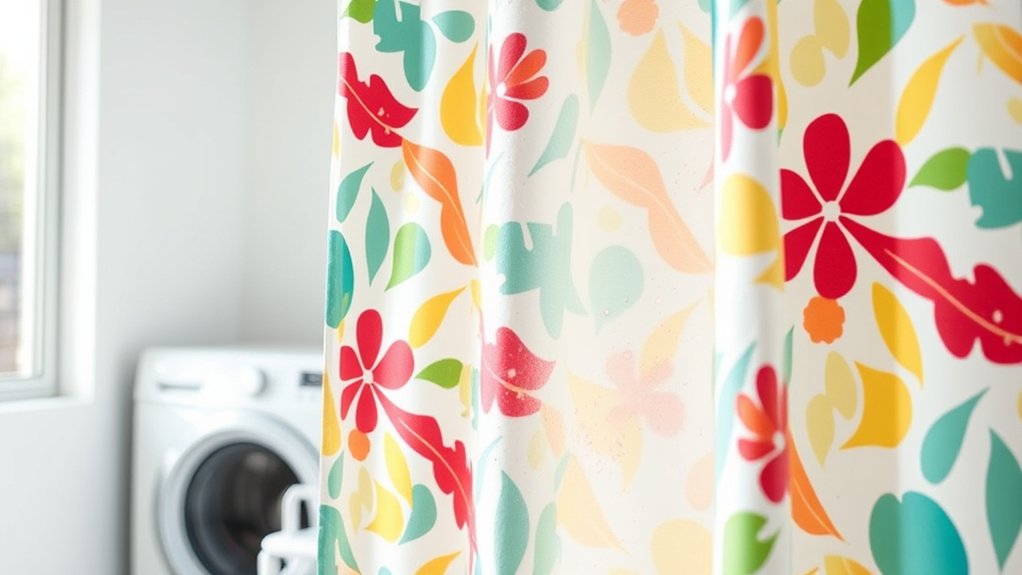
Many common shower curtain materials are machine washable, making it easy to keep your bathroom fresh and clean. Fabrics like polyester and cotton blends fall under materials that are safe for machine washing.
Many shower curtains, including polyester and cotton blends, are machine washable for easy cleaning.
These fabrics tolerate gentle cycles and mild detergents well, so you can remove soap scum and mildew without hassle. Vinyl and PEVA curtains, often thought to be not relevant for machine washing, can sometimes be washed on a delicate cycle. Check the label to be sure.
When you focus on proper shower curtain care, you extend the curtain’s lifespan and maintain hygiene. Avoid harsh chemicals or high heat, as these can damage the fabric or cause shrinkage.
Understanding materials that are machine washable helps you efficiently decide when and how to clean your shower curtain.
When to Avoid Machine Washing Your Shower Curtain
How do you know when machine washing your shower curtain isn’t the best choice? You should avoid machine washing when your curtain is made of delicate materials like silk, velvet, or certain plastics that can warp or tear in the wash.
Also, if your shower curtain has intricate decorations, metal grommets, or glued-on embellishments, machine washing might cause damage. When to avoid machine washing also includes heavily soiled curtains with mold or mildew that require specialized cleaning methods.
If the care label warns against machine washing or suggests hand washing only, it’s best to follow that advice to prevent damage. Knowing materials that are sensitive to machine washing helps you preserve your shower curtain’s lifespan and keeps it looking its best.
How to Machine Wash Your Shower Curtain Without Damaging It
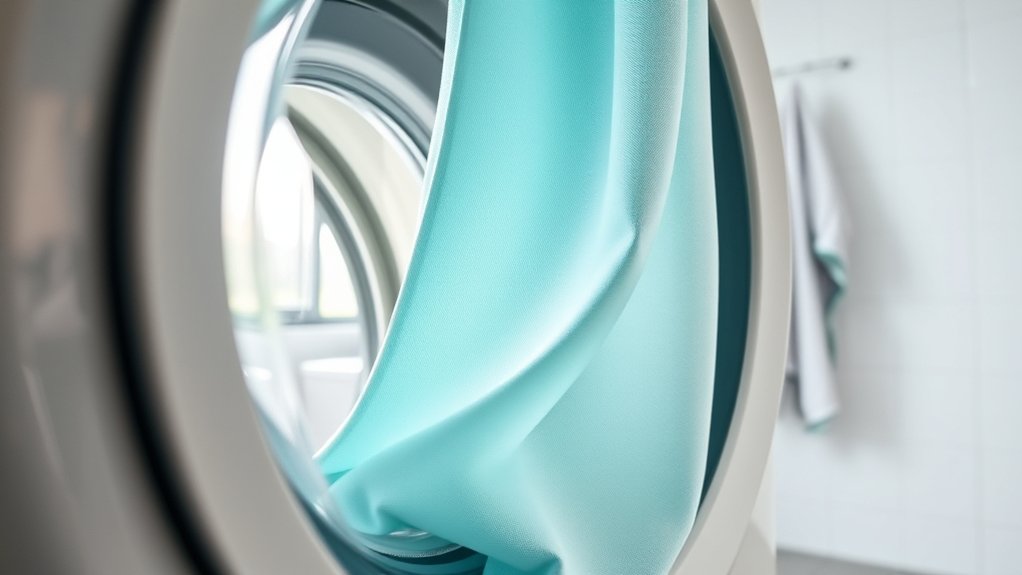
If your shower curtain is suitable for machine washing, you can clean it effectively without causing damage by following a few simple steps. First, remove any hooks and shake off excess debris.
For machine-washable shower curtains, remove hooks and shake off debris before cleaning to avoid damage.
Add your curtain to the washing machine with a few towels to prevent it from wrinkling or tearing. Use a gentle cycle with cold water and mild detergent to protect the fabric.
Avoid bleach unless the care label specifically allows it. After washing, hang your curtain immediately to air dry, which helps maintain its shape and prevents mildew.
These curtain care discussion ideas ensure you keep your shower curtain fresh without harm. By following these guidelines, you’ll extend your curtain’s life while keeping it clean and hygienic.
Tips to Keep Shower Curtains Cleaner Longer Between Washes
Wondering how to keep your shower curtain cleaner longer between washes? Applying a few practical tips to cover daily care can reduce buildup and extend the time between machine washes, preserving your washer durability by avoiding over-frequent cycles. Here’s what you can do:
Always spread out the curtain fully after use to air dry and prevent mildew. Use a daily shower spray to inhibit soap scum and mold growth. Wipe down the curtain with a damp cloth weekly.
Keep the bathroom ventilated to reduce moisture accumulation. Avoid using harsh cleaners that can degrade the curtain material prematurely.
Drying and Maintaining Machine-Washed Shower Curtains
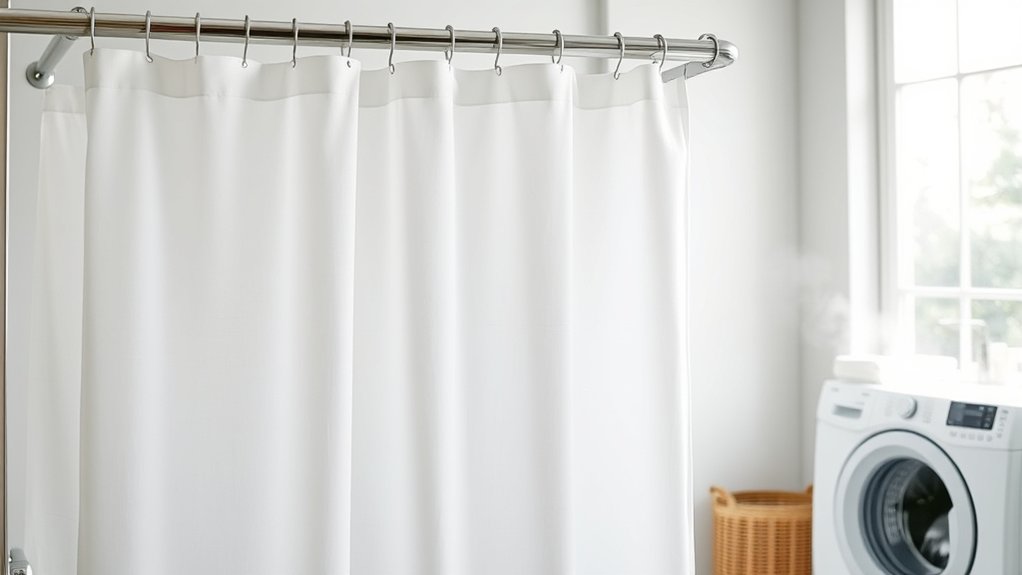
After machine washing your shower curtain, proper drying and maintenance help keep it in good condition and prevent mildew from returning. Start by hanging your curtain fully extended to air dry; avoid using high heat in the dryer, which can damage materials and reduce shower curtain durability.
Make sure the bathroom is well-ventilated to speed drying and prevent moisture buildup. Maintain your curtain by wiping it down regularly and ensuring it stays spread out after showers to dry evenly.
Adjust your washing frequency maintenance based on how often you use the shower and the bathroom’s humidity levels. By combining thorough drying with consistent upkeep, you’ll extend the life of your shower curtain and keep it looking fresh longer.
Frequently Asked Questions
Can Fabric Shower Curtains Be Bleached Safely?
You can bleach some fabric shower curtains safely, but 60% of fabrics risk damage. Always check fabric care labels first.
Use diluted bleach for stain removal, then rinse thoroughly to keep your curtain in good shape.
Are There Eco-Friendly Alternatives to Traditional Shower Curtains?
You can choose eco friendly alternatives like organic cotton or hemp shower curtains, which reduce chemical use.
When fabric curtain bleaching is necessary, these materials handle it better, letting you keep your bathroom fresh and sustainable.
How Often Should Shower Curtains Be Replaced Entirely?
You’ll want to ensure replacing shower curtains every 6 to 12 months to keep mildew at bay. Regular replacement frequency ensures a fresh, clean bathroom vibe, preventing stubborn stains and maintaining a healthy, pleasant space.
Do Shower Curtain Liners Need Special Cleaning Methods?
You don’t need special liner cleaning methods; just follow regular shower curtain care by machine washing liners on a gentle cycle or wiping them with vinegar and water.
This keeps mold and mildew at bay effectively.
Can Shower Curtains Cause Mold Growth in Bathrooms?
Just like a Victorian parlor trapped in fog, your shower curtain can encourage mold growth by trapping bathroom humidity.
You should regularly clean and air out the space to prevent moisture buildup and keep mold at bay.