Are Cloth Shower Curtains Better Than Plastic
It’s no coincidence that many people debate whether cloth shower curtains are better than plastic ones, especially when choosing for both style and function. You might assume plastic is easier to manage, but cloth often offers richer textures and longer durability if cared for properly.
Before you decide, consider the differences in cleaning, environmental impact, and cost—factors that might change your perspective on what really works best in your bathroom. Understanding these aspects can help you make a more informed choice between cloth and plastic shower curtains.
Key Takeaways
- Cloth shower curtains offer a softer texture, richer designs, and a more elegant appearance than plastic curtains.
- Plastic curtains are lightweight, waterproof, and easier to clean with quick wipe-downs.
- Cloth curtains generally last longer with proper care but require regular washing to prevent mold.
- Plastic curtains degrade faster, release harmful chemicals, and contribute to microplastic pollution.
- Climate and ventilation affect mold risk, influencing whether cloth or plastic curtains are more practical.
Key Differences Between Cloth and Plastic Shower Curtains
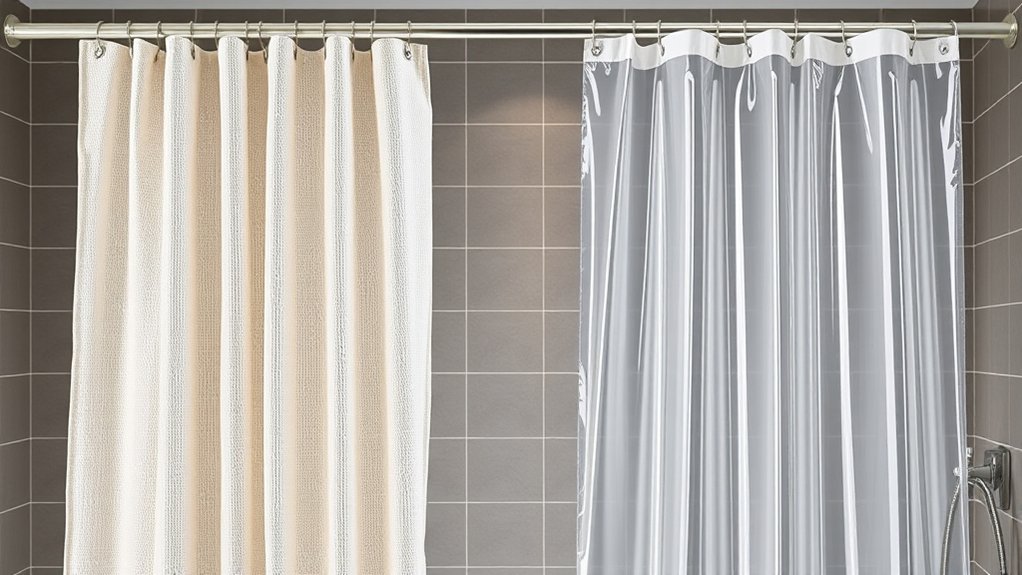
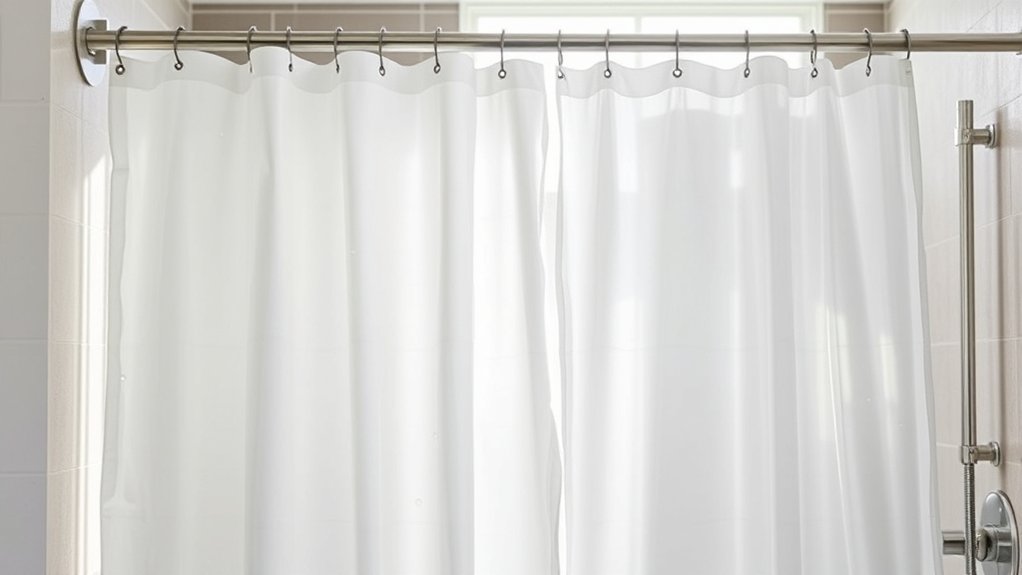
How do cloth and plastic shower curtains differ in everyday use? First, cloth curtains offer a richer variety of color options and patterns, allowing you to customize your bathroom’s look more easily. Their fabric texture feels softer and more luxurious, creating a cozy atmosphere.
In contrast, plastic curtains usually come in simpler designs and have a smooth, sometimes slick texture. Cloth curtains tend to drape better, giving a more elegant appearance. Plastic curtains, however, are lightweight and often waterproof without additional treatments.
You’ll also notice that cloth curtains require more care to maintain their fabric texture and vibrant colors, while plastic ones can be wiped clean quickly. Understanding these differences helps you pick a curtain that suits both your style and daily needs.
Which Lasts Longer: Cloth or Plastic Shower Curtains?
You’ll find that cloth and plastic shower curtains differ considerably in durability and care requirements. Cloth curtains often last longer with proper washing, while plastic ones may crack or mold over time.
Considering how you maintain them and their environmental impact can help you decide which option suits your needs best.
Durability Comparison
When considering which shower curtain lasts longer, cloth and plastic each have distinct advantages and drawbacks. Cloth curtains, often made from durable materials like polyester or cotton blends, tend to resist tearing and wear better over time. However, their lifespan depends on fabric quality and water resistance treatments.
Plastic curtains, typically crafted from vinyl or PEVA, offer good water resistance but can crack or discolor with prolonged exposure to heat and cleaning agents. When evaluating durability materials, cloth usually provides a sturdier feel, while plastic is more prone to damage yet easier to replace.
Some manufacturers back their products with longevity warranties, giving you added confidence in your investment. Ultimately, selecting the right curtain depends on balancing these durability factors with your specific bathroom environment and usage.
Maintenance and Care
Understanding the durability differences between cloth and plastic shower curtains helps highlight the importance of proper maintenance and care in extending their lifespan. Cloth curtains require more attention but generally last longer, balancing durability vs affordability.
Plastic curtains are affordable but prone to cracking and odor buildup if not cleaned regularly.
Here are three maintenance tips to help you choose and care for your curtain:
- Wash cloth curtains regularly in cold water to prevent mold and maintain visibility.
- Wipe plastic curtains weekly with a mild cleaner to control odor and prevent mildew.
- Always hang curtains to dry fully, avoiding prolonged dampness that reduces durability.
Environmental Impact
Both cloth and plastic shower curtains impact the environment differently, largely due to their lifespan and disposal methods. Cloth curtains generally last longer and can be washed and reused multiple times, reducing waste.
Plastic curtains, often made from PVC, tend to degrade faster and release harmful chemicals during disposal. When plastic breaks down, it contributes to microplastic pollution, which harms ecosystems and is difficult to manage under current environmental policies.
You should consider that many regions are tightening regulations on plastic products to reduce pollution. Choosing a durable cloth curtain means less frequent replacement and lower environmental burden.
In contrast, plastic curtains often end up in landfills or incinerators, posing greater risks. Being mindful of these factors helps you make an eco-friendlier choice that aligns with evolving environmental policy.
Which Is Easier to Clean: Cloth or Plastic Curtains?
You’ll likely clean plastic curtains more often since they attract soap scum and mildew quickly, but stains usually wipe off with minimal effort.
Cloth curtains need less frequent washing, but tough stains can require more intensive treatment. Understanding these differences helps you pick the curtain that fits your cleaning routine best.
Cleaning Frequency Comparison
How often should you clean your shower curtain to keep it fresh and mold-free? Cleaning frequency varies between cloth and plastic curtains, influenced by material properties and usage.
Cloth curtains, often marketed with greenwashing myths suggesting they need less upkeep, actually require regular washing to maintain dye safety and prevent mildew. Plastic curtains, while easier to wipe down, can accumulate soap scum and mold faster.
Consider these cleaning intervals:
- Cloth Curtains: Wash every 1-2 months in cold water to preserve dye safety and fabric integrity.
- Plastic Curtains: Wipe weekly or machine wash monthly to prevent mold buildup.
- Both: Regular ventilation after showers reduces cleaning needs.
Sticking to these schedules helps you avoid frequent deep cleans and keeps your bathroom healthier.
Stain Removal Ease
Knowing when and how often to clean your shower curtain sets the stage for tackling stains effectively. When it comes to stain removal ease, plastic curtains generally offer better stain resistance than cloth.
Plastic resists water and soap scum buildup, making it easier for you to wipe away stains with simple cleaning solutions. Cloth curtains, however, absorb moisture and stains more readily, requiring more intensive stain removal techniques like pre-soaking or using stain removers before laundering.
While cloth curtains can be machine-washed, stubborn stains may persist if you don’t treat them promptly. Plastic curtains need less frequent deep cleaning but can develop mildew if neglected.
What’s the Environmental Impact of Cloth vs. Plastic Curtains?

Although both cloth and plastic shower curtains serve the same purpose, their environmental impacts differ substantially. When choosing between them, you should consider these factors:
- Fabric Sourcing: Cloth curtains often use natural fibers like cotton or linen, which can be sustainable if sourced responsibly. Checking the environmental policy of manufacturers helps ensure eco-friendly production.
- Production Footprint: Plastic curtains, usually made from PVC or vinyl, involve energy-intensive processes and release harmful chemicals. Cloth curtains generally require less harmful processing but may need more water and energy during textile production.
- End-of-Life Disposal: Plastic curtains contribute to landfill waste and microplastic pollution since they aren’t biodegradable. Cloth curtains are often biodegradable or recyclable, reducing long-term environmental harm.
Understanding these points can help you make an environmentally conscious choice.
Styles and Designs: Cloth vs. Plastic Shower Curtains Compared
Choosing between cloth and plastic shower curtains involves more than just environmental considerations; the styles and designs available also play a significant role in your decision. Cloth curtains offer a richer texture and a wider variety of patterns, colors, and fabrics, allowing you to easily match your bathroom decor.
However, styles vs. cleanliness is a key factor. Cloth curtains often require more upkeep to stay fresh and stain-free. Plastic curtains, while limited in texture and design, provide superior water resistance and are easier to wipe clean, making maintenance simpler.
If you prioritize aesthetics, cloth gives you more options, but if low maintenance is your goal, plastic might suit you better. Balancing texture vs. maintenance helps you choose a curtain that fits your lifestyle and bathroom style perfectly.
Which Shower Curtain Is More Cost-Effective Over Time?

How much you spend on a shower curtain over time depends on factors like durability, cleaning frequency, and replacement needs. When comparing cloth and plastic curtains, consider the full cost lifecycle, including initial purchase, upkeep, and eventual disposal. Material sourcing also impacts cost and environmental footprint.
Spending on shower curtains varies with durability, cleaning, replacement, and environmental impact throughout their lifecycle.
Here’s what to focus on:
- Durability: Cloth curtains often last longer, reducing how often you replace them.
- Maintenance: Plastic curtains can be wiped clean quickly but may need frequent replacement due to mold buildup.
- Initial and Replacement Costs: Plastic curtains tend to be cheaper upfront but may cost more over time from repeated purchases.
Is a Cloth Shower Curtain Right for Your Bathroom?
What makes a cloth shower curtain the right choice for your bathroom depends on your priorities and habits. Consider climate considerations first: in humid climates, cloth curtains may require more frequent washing to avoid mold.
Also, think about fabric sourcing; natural fabrics like organic cotton can be eco-friendly but might need waterproof liners. Your bathroom’s ventilation and cleaning routine influence your choice.
| Factor | Cloth Curtain | Plastic Curtain |
|---|---|---|
| Durability | Moderate; depends on fabric quality | High; resistant to water damage |
| Maintenance | Requires regular washing | Easy to wipe clean |
| Environmental Impact | Lower if fabric sourcing is ethical | Higher due to plastic materials |
Evaluate your bathroom’s conditions to decide if cloth fits your needs.
Frequently Asked Questions
Can Cloth Shower Curtains Mold or Mildew More Easily Than Plastic?
Yes, cloth shower curtains can have a higher mold risk if you don’t manage moisture control properly. You’ll need to wash and dry them regularly to prevent mildew, unlike plastic curtains, which dry faster and resist mold better.
Are Cloth Shower Curtains Machine Washable?
Yes, you can machine wash cloth shower curtains for easy cloth care. Use gentle cycles and mild detergent to protect fabric fibers.
For stubborn stains, pre-treat with stain removal solutions before washing to keep your curtain fresh and clean.
Do Cloth Curtains Require a Liner for Water Protection?
Of course, you can shower without a liner, but unless you enjoy soggy floors and mildew parties, cloth liners are your best friends for water protection and mildew resistance.
They are practical, protective, and far less dramatic than a flood cleanup.
How Do Cloth and Plastic Curtains Affect Bathroom Humidity?
You’ll find plastic curtains limit moisture control, trapping humidity and increasing your bathroom’s climate impact.
Cloth curtains, especially with liners, allow better airflow, reducing dampness and helping you manage humidity more effectively for a healthier space.
Can Cloth Shower Curtains Be Customized or Personalized?
You can customize cloth shower curtains with various custom options, like prints, colors, and embroidery. Their material aesthetics allow you to match your bathroom’s style uniquely, offering both practical function and personalized design.