Are Linear Shower Drains Better
If you’ve noticed how a sleek linear shower drain seamlessly integrates into a modern bathroom floor, you’re seeing more than just style—it’s about function too.
Linear shower drains offer uniform water flow and flexible placement that traditional point drains can’t match.
But are linear shower drains truly better for every project? Understanding their advantages and potential challenges can help you decide if they’re the right fit for your space and budget.
Key Takeaways
- Linear shower drains provide modern aesthetics with sleek, continuous flooring and improved tile pattern integration compared to traditional point drains.
- They offer superior drainage performance with a uniform slope and higher water capacity, reducing pooling and clogging risks.
- Linear drains simplify cleaning and maintenance through accessible grates and flat channels, though longer grates may accumulate more debris.
- Installation of linear drains requires precise floor slope and waterproofing, often increasing complexity and upfront costs versus point drains.
- Despite higher initial expenses, linear drains can enhance bathroom value and design flexibility, balancing aesthetics and functionality effectively.
What Are Linear Shower Drains and How Do They Work?
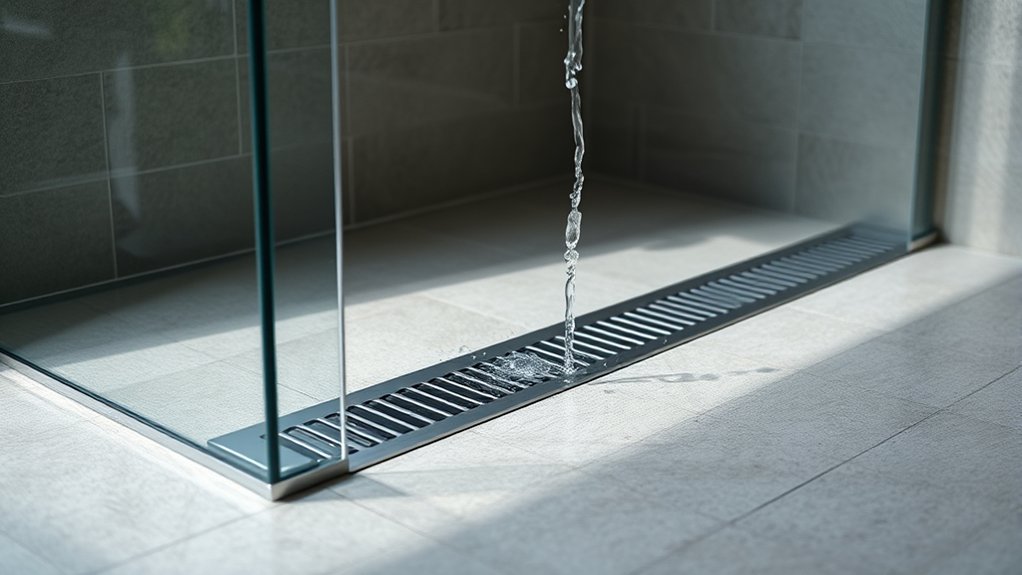
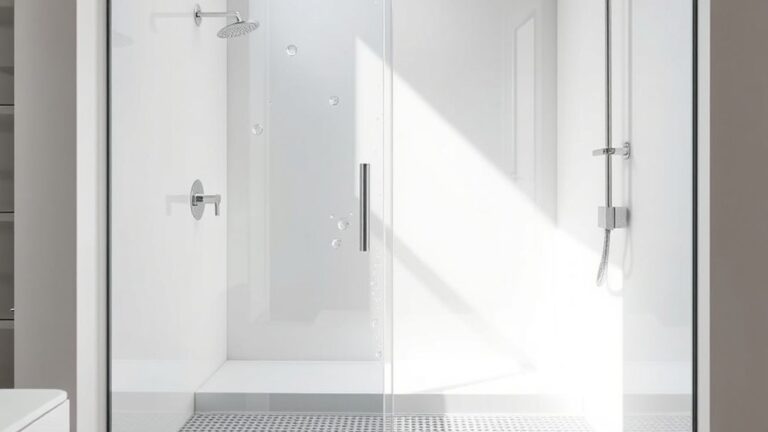
How do linear shower drains differ from traditional drains? Unlike point drains, linear shower drains extend along one edge of the shower floor, allowing water to flow into a long, narrow channel. This design supports a single slope in the floor, simplifying installation and enhancing linear aesthetics by creating a sleek, minimalist look.
You’ll appreciate how the elongated drain integrates seamlessly with tile patterns, improving both function and style. To maintain optimal performance, follow maintenance tips like regularly removing debris from the grate and flushing the drain with water to prevent buildup.
The linear shape also facilitates easier cleaning compared to traditional drains, reducing clogs and odors. Overall, linear shower drains combine efficient water drainage with modern design, offering both practical and visual advantages.
What Are Traditional Point Shower Drains?
You’ll find traditional point shower drains typically placed at a single low spot in the shower floor, designed to funnel water efficiently to one location. Their installation involves precise sloping of the floor to ensure proper drainage and avoid pooling.
Understanding their design, placement, and drainage efficiency is key to comparing them with linear drains.
Design and Placement
Where exactly do traditional point shower drains fit into your bathroom’s drainage system? These drains typically occupy the lowest point in the shower floor, channeling water directly down a centralized outlet.
When planning your shower, consider these critical design considerations:
- Floor slope: The shower floor must slope uniformly toward the drain to prevent water pooling.
- Placement: Positioning the drain centrally or offset depends on shower size and tile layout.
- Budget constraints: Traditional point drains often cost less upfront but may require more complex floor grading.
Drainage Efficiency
Why do traditional point shower drains remain a common choice despite emerging alternatives? Their compact design and straightforward installation make them appealing, especially when design considerations prioritize minimal floor disruption. However, their centralized location can limit drainage efficiency, requiring careful floor slope planning.
| Feature | Traditional Point Drains | Consideration |
|---|---|---|
| Drainage Area | Small, centralized | Requires precise floor slope |
| Noise Concerns | Can be louder due to water fall | Often needs sound insulation |
| Design Flexibility | Limited to one location | Constraints in modern layouts |
You’ll need to balance these factors, especially noise concerns and drainage efficiency, when deciding if traditional point drains suit your project’s requirements.
Installation Process
Understanding the installation process of traditional point shower drains helps clarify their continued use despite drainage limitations. These drains focus water flow toward a central outlet, requiring specific floor slopes and waterproofing techniques to function properly. Their design relevance lies in simplicity, often fitting smaller spaces and straightforward layouts.
When installing, you’ll typically:
- Create a precise, multi-directional slope directing water to the drain’s center.
- Integrate waterproof membranes carefully to prevent leakage.
- Connect to standard plumbing without complex modifications, helping control budget impact.
While installation demands accurate sloping and sealing, the straightforward plumbing reduces labor costs. This process explains why traditional point drains remain popular where design constraints and budget considerations dominate decisions.
How Do Linear Shower Drains Compare to Point Drains?
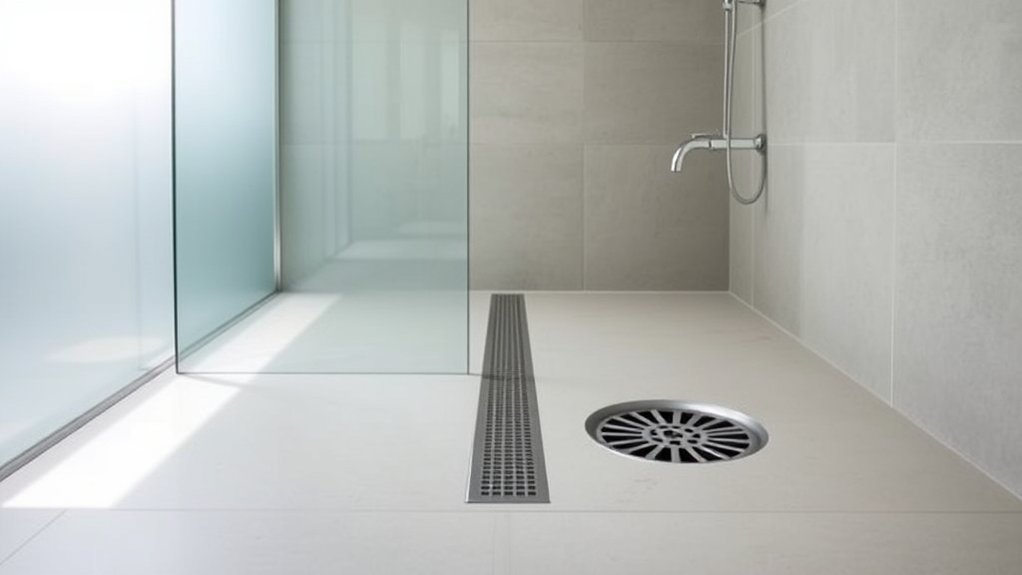
How do linear shower drains differ from traditional point drains in terms of design and functionality? Linear drains extend along one edge of the shower floor, allowing water to flow uniformly toward a single, elongated outlet. In contrast, point drains concentrate water flow toward a central, circular outlet.
These style contrasts impact not only aesthetics but also drainage efficiency and floor slope requirements. Linear drains typically require a single slope in one direction, simplifying installation and increasing design flexibility.
Regarding material options, both drain types offer stainless steel, brass, and plastic, but linear drains often feature more customizable grates and finishes to complement modern bathroom designs. Understanding these differences helps you select the drain that best suits your project’s technical needs and visual preferences.
Key Benefits of Linear Shower Drains
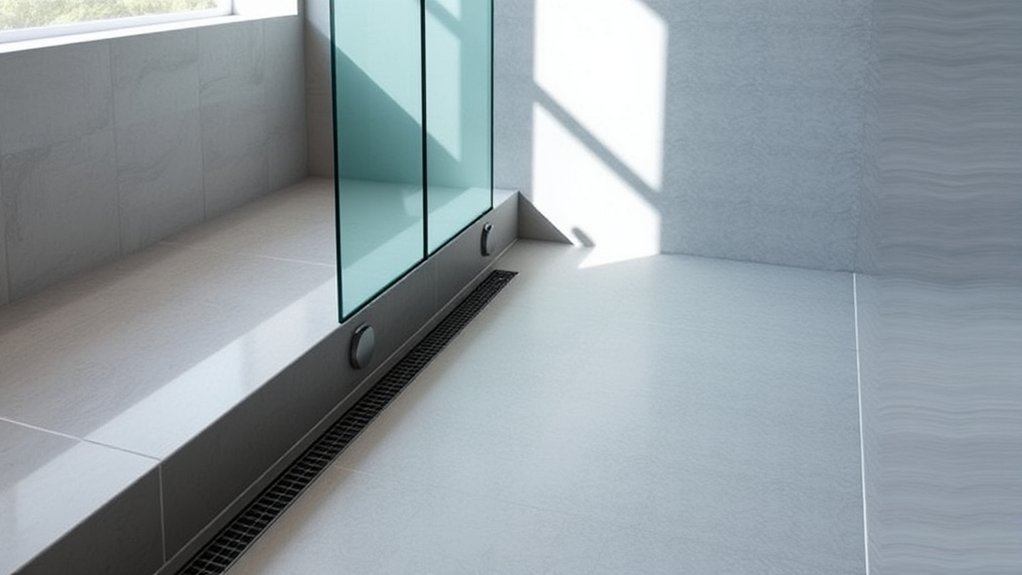
You’ll find that linear shower drains provide improved water drainage by allowing a larger surface area for water flow. They also enhance bathroom aesthetics with sleek, modern designs that integrate seamlessly into your flooring.
Plus, their elongated shape simplifies cleaning, reducing maintenance time and effort.
Improved Water Drainage
Why do linear shower drains outperform traditional drains in managing water flow? Their design optimizes water removal, preventing pooling and ensuring efficient drainage.
Here’s how they improve water drainage:
- Uniform Slope: Linear drains allow for a single directional slope, enhancing consistent water flow and reducing installation complexity, especially when working with complex tile patterns.
- High Capacity: The elongated drain channel handles larger volumes of water quickly, maintaining effective drainage even during high water temperature showers when water flow can be heavier.
- Reduced Clogging: Their broad surface area and minimal grate openings minimize debris accumulation, maintaining unobstructed water passage and reducing maintenance needs.
Enhanced Bathroom Aesthetics
Beyond their superior water drainage capabilities, linear shower drains also markedly elevate the visual appeal of your bathroom. By aligning with modern design basics, these drains offer a sleek, minimalist look that seamlessly integrates with various tile patterns and materials.
Their linear form allows for continuous flooring, eliminating the need for multiple drain points and grout lines, which enhances the overall aesthetic coherence. When considering budget considerations, linear drains may initially cost more but can increase your bathroom’s value by contributing to a high-end, customized appearance.
Additionally, their versatility in placement supports creative layouts, giving your bathroom a sophisticated, streamlined look. Choosing a linear shower drain means combining functionality with style, making your bathroom both efficient and visually striking.
Simplified Cleaning Process
How does a linear shower drain simplify the cleaning process compared to traditional drains? Linear drains offer streamlined cleaning maintenance, reducing cleaning frequency and effort. Their elongated, narrow design minimizes debris accumulation and allows easier access for routine upkeep.
- Accessible Grate Design: The removable grate provides straightforward access to the drain channel, making debris removal quick and efficient.
- Reduced Clogging: Linear drains’ design reduces water pooling, which lowers buildup and the need for frequent cleaning.
- Smooth Drain Channel: The flat, linear drain channel lacks nooks common in traditional drains, preventing grime buildup and simplifying washing.
Common Drawbacks of Linear Shower Drains
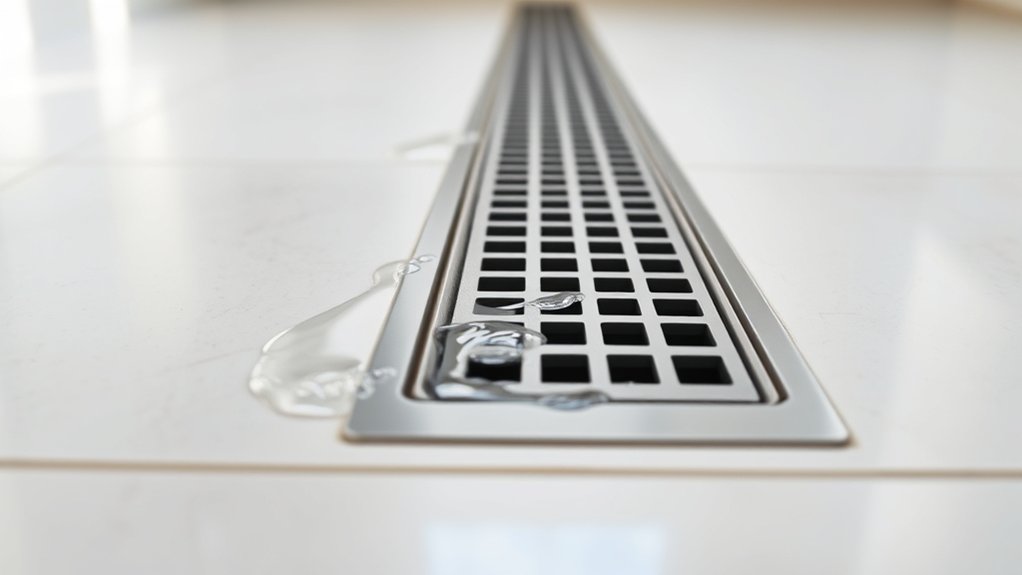
What challenges might you encounter with linear shower drains? Budgeting aesthetics can be tricky since these drains often cost more than traditional options and require precise design to blend seamlessly with your bathroom.
Maintenance durability is another concern; while linear drains simplify cleaning, their longer grates can accumulate debris unevenly, demanding more frequent attention.
| Drawback | Description | Impact |
|---|---|---|
| Cost | Higher initial price than point drains | Budget constraints |
| Design Complexity | Requires precise slope and layout | Aesthetic integration |
| Debris Accumulation | Longer grate collects more debris | Increased maintenance |
| Durability Issues | Potential for wear along extended edges | Reduced lifespan |
Understanding these limitations helps you make an informed decision about linear shower drains.
Installation Factors That Affect Linear Shower Drain Performance
When installing a linear shower drain, several critical factors directly influence its performance and longevity. You need to balance design considerations with budget constraints to optimize functionality.
- Slope Accuracy: Ensure the shower floor slopes uniformly toward the drain. Incorrect slope can cause water pooling or slow drainage, compromising the system’s efficiency.
- Waterproofing Integrity: Proper sealing around the drain prevents leaks. Use compatible membranes and adhesives to maintain waterproofing over time.
- Drain Placement and Size: Position the drain to accommodate water flow patterns and shower size. Oversized drains can increase costs unnecessarily, while undersized ones impair drainage.
How to Choose the Right Shower Drain Based on Design and Budget
Why prioritize certain features over others when selecting a shower drain? You need to balance design trends with material costs to match both aesthetic goals and budget constraints. Linear shower drains provide sleek, modern looks favored in contemporary design trends, but they often come with higher material costs due to specialized components.
Traditional center drains may lower upfront expenses but might limit your design flexibility. Evaluate the drain’s material durability. Stainless steel offers longevity and corrosion resistance but at a premium. Also, consider installation complexity, as intricate designs can increase labor costs.
Frequently Asked Questions
Are Linear Shower Drains Easier to Clean Than Point Drains?
Yes, linear shower drains offer better cleaning accessibility due to their larger surface area and removable grates. However, you might face installation challenges like precise sloping and waterproofing, which require careful planning and skill.
Can Linear Drains Be Used in Outdoor Shower Installations?
Like a chameleon, linear drains adapt well to outdoor shower setups. You’ll guarantee proper waterproofing considerations for outdoor showers, but their outdoor suitability makes them ideal for efficient drainage and sleek design in external environments.
What Materials Are Linear Shower Drains Typically Made From?
You’ll find linear shower drains typically made from stainless steel offering metal durability, while some feature ceramic aesthetics to blend seamlessly with tile. These materials ensure strength, corrosion resistance, and a sleek, modern appearance for your shower.
Do Linear Drains Require Special Waterproofing Methods?
Yes, linear drains require specific waterproofing methods to ensure proper sealing. You’ll need waterproof membranes compatible with linear drains to prevent leaks and maintain durability.
Focus on precise integration with the drain’s channel and substrate.
How Do Linear Drains Affect Bathroom Resale Value?
Think of linear drainage as a sleek bridge enhancing your bathroom’s flow; it elevates resale value by showcasing modern design and efficient water management. This appeals to buyers seeking both style and functionality in their home investment.