Are Marble Shower Floors Slippery
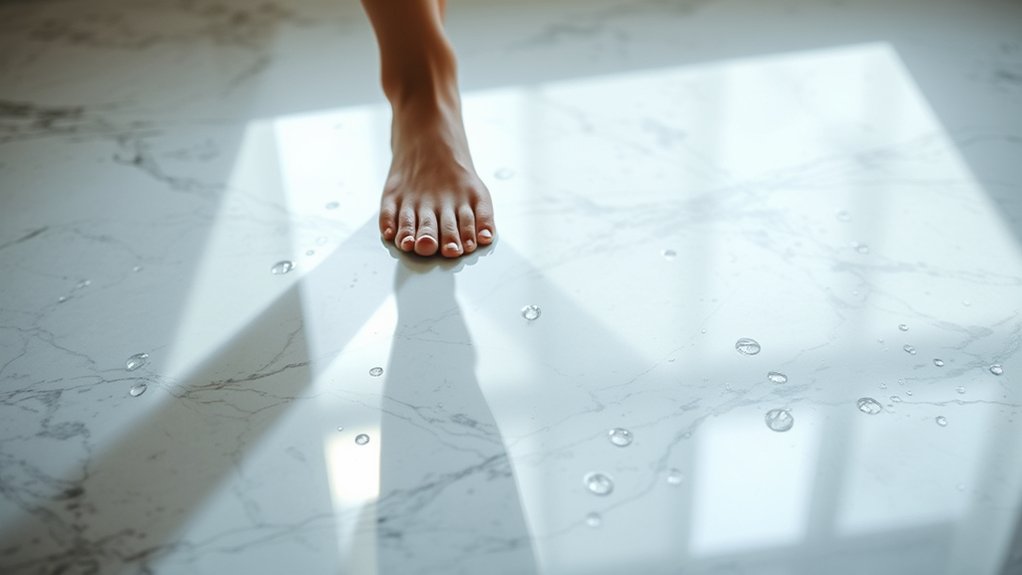
If you’ve ever stepped onto a polished marble shower floor and nearly slipped, you’ve encountered a common issue with marble shower floors being slippery.
Marble’s surface texture, moisture levels, and finish type all play essential roles in its slip resistance.
Understanding these factors can help you assess whether marble is suitable for your shower and how to enhance its safety.
Let’s explore what influences marble’s traction and how you can address potential risks.
Key Takeaways
- Polished marble shower floors are slippery when wet due to their smooth, low-friction surface.
- Honed or matte finishes improve slip resistance by adding micro-textures for better grip.
- Moisture combined with soap or shampoo significantly increases slipperiness on marble floors.
- Proper sealing and anti-slip treatments enhance traction and reduce slip risk on marble surfaces.
- Textured patterns, grout lines, or non-slip coatings further improve safety on marble shower floors.
Slip Resistance of Marble Shower Floors
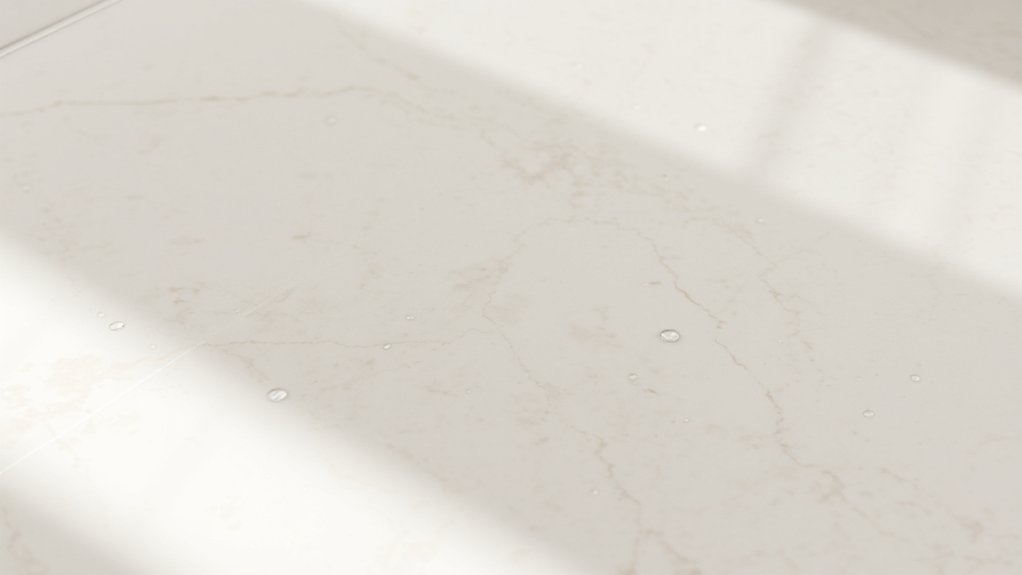
How slippery are marble shower floors in practical use? You’ll find that marble grip varies considerably based on its finish and surface texture. Polished marble, common in showers, offers a smooth surface that reduces friction, increasing slip risk when wet.
Conversely, honed or textured marble enhances grip by creating micro-abrasions that improve traction. You must consider that even slight water presence can drastically lower the coefficient of friction, affecting marble’s slip resistance.
While marble is aesthetically pleasing, it inherently possesses lower slip resistance compared to rougher materials. Consequently, evaluating the marble grip in your shower involves understanding its finish type and its interaction with water.
To minimize slip risk, you should prioritize finishes designed for traction rather than purely for appearance.
Key Factors That Affect Marble’s Slip Resistance
Understanding the slip resistance of marble shower floors requires analyzing several key factors that influence traction. First, the surface texture significantly affects slip resistance; smoother surfaces typically reduce grip, while textured ones improve it.
Second, moisture presence combined with soap or shampoo residues can drastically lower slip resistance by creating a lubricating film. Third, the inherent porosity of the marble affects water absorption, impacting how slippery the surface becomes when wet.
Fourth, the geometric pattern and grout lines can enhance traction by interrupting smoothness. Finally, marble finishes play a crucial role, as certain finishes alter surface friction properties.
How Marble Finishes Impact Shower Floor Safety
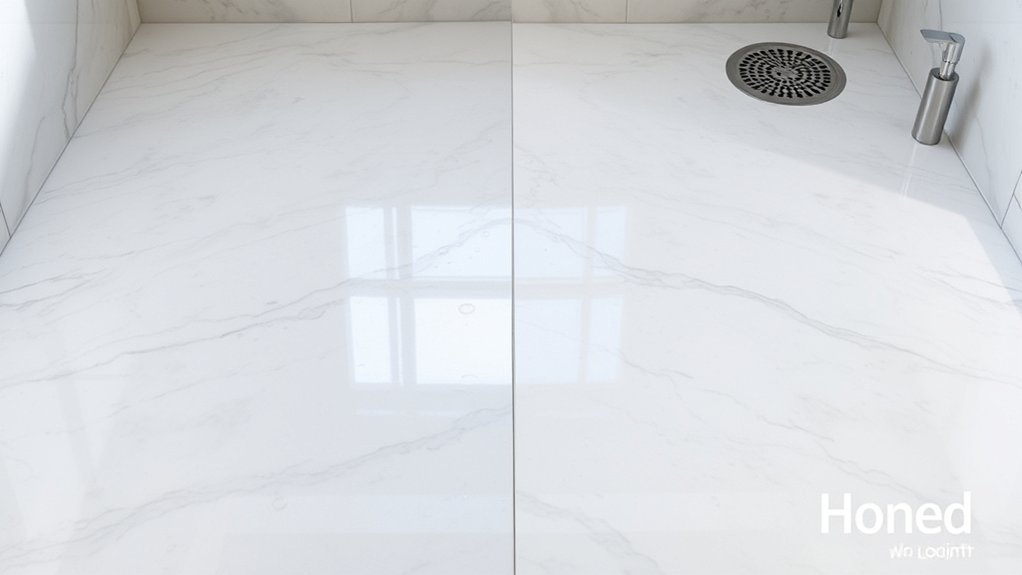
Although marble’s natural beauty enhances any shower, the type of finish you choose directly affects floor safety by altering surface friction. Marble polishing produces a glossy, smooth surface that minimizes traction, increasing slipperiness when wet.
Conversely, honed or matte finishes reduce reflectivity and introduce micro-textures, improving grip and slip resistance. You should also consider color variation, since darker marbles with increased veining may mask water spots, subtly influencing perception of slipperiness.
However, color variation doesn’t significantly impact actual traction. When prioritizing safety, avoid high-gloss marble polishing on shower floors. Instead, select finishes engineered to balance aesthetics with functional slip resistance.
Understanding how finishing techniques affect surface friction helps you make informed choices to enhance shower floor safety without compromising marble’s visual appeal.
How Marble Shower Floors Compare to Other Materials
When you compare marble shower floors to ceramic tiles, you’ll notice differences in slip resistance that impact safety. Marble’s natural texture can offer less grip than some textured ceramics, especially when wet.
Additionally, how you maintain each material directly affects its surface traction over time.
Marble Versus Ceramic Tiles
How does marble stack up against ceramic tiles in shower flooring? Both materials offer aesthetic appeal and durability, but marble presents a slippery paradox. Its polished surface enhances elegance but increases slip potential when wet.
Ceramic tiles, typically glazed, vary widely in texture, allowing better slip control. Marble’s natural porosity heightens moisture risk, demanding thorough sealing to prevent water infiltration and surface degradation.
Ceramic tiles resist moisture more effectively due to their dense, less porous composition. In maintenance, marble requires more frequent sealing and careful cleaning to preserve integrity, whereas ceramic tiles tolerate harsher cleaners and less upkeep.
Choosing between marble and ceramic means balancing marble’s luxurious appearance with its moisture vulnerability and slip concerns, against ceramic’s practical resilience and typically safer wet traction.
Slip Resistance Comparison
What sets marble shower floors apart in slip resistance compared to other common materials? Marble typically offers a lower coefficient of friction than textured ceramic or natural stone tiles, increasing slip risk when wet.
Unlike porcelain or textured vinyl, marble’s polished surface can become especially slippery without proper treatment. However, marble’s inherent variability means slip resistance can fluctuate based on finish and surface porosity.
When evaluating alternatives like granite or engineered stone, you’ll find they often provide superior traction due to rougher textures or matte finishes. Understanding these differences helps you anticipate slip risk accurately.
While maintenance impact is critical, here you focus on intrinsic material properties affecting slip resistance. Marble demands careful consideration for safety relative to other materials, balancing aesthetics with functional slip performance in wet environments.
Maintenance Impact on Safety
Why does maintenance play a pivotal role in the safety performance of marble shower floors compared to other materials? The maintenance impact directly influences slip risk by altering surface texture and cleanliness. Marble’s polished surface can become dangerously slick if soap scum or water deposits accumulate, unlike textured materials that retain grip despite minor residue. You must consider:
- Regular sealing to prevent water absorption and surface degradation
- Frequent cleaning to remove slippery residues
- Avoiding harsh chemicals that erode surface finish
- Timely repair of chips or cracks affecting traction
- Using appropriate non-slip treatments designed for marble
Compared to other materials, marble demands meticulous upkeep to maintain a safe level of slip resistance. Neglecting maintenance amplifies slip risk, underscoring the critical nature of ongoing care for marble shower floors.
Easy DIY Tips to Boost Traction on Marble Floors
You can enhance traction on marble floors by applying specialized non-slip coatings designed to increase surface grip without compromising appearance. Alternatively, creating subtle textured patterns through etching or abrasive techniques can provide mechanical resistance underfoot.
Both methods require careful selection and application to maintain marble’s integrity while improving safety.
Non-Slip Coating Options
Applying a non-slip coating is one of the most effective methods to enhance traction on marble shower floors without compromising their aesthetic appeal. These coatings improve slip resistance by creating a subtle, transparent barrier that maintains the integrity of marble finishes.
When selecting a non-slip product, consider chemical compatibility, durability, and ease of application.
Here are five DIY-friendly non-slip coating options:
- Anti-slip epoxy coatings designed for natural stone
- Clear polyurethane sealers with added grit
- Silane-based penetrating treatments enhancing surface texture
- Polyurethane-acrylic blends offering long-lasting protection
- Water-based non-slip sprays preserving marble’s sheen
Each option balances safety and appearance, allowing you to boost slip resistance while maintaining your marble’s luxurious look.
Textured Surface Techniques
How can you effectively increase traction on marble shower floors without altering their elegant appearance? Employing textured surface techniques provides a practical solution. You can create subtle patterns or grooves using etching tools or non-invasive abrasives, aligning with current texture trends that emphasize tactile variety without compromising smoothness.
This method enhances grip by increasing surface friction while maintaining the marble’s natural luster. Additionally, integrating complementary color palettes in texturized grout or inlays can visually break up flat surfaces, aiding in depth perception and safety.
When applying these techniques, ensure uniformity to avoid uneven wear or water pooling. By precisely balancing texture and aesthetics, you boost traction effectively, preserving the marble’s sophistication and functionality without resorting to overt coatings or coverings.
Top Anti-Slip Treatments for Marble Floors
What methods effectively reduce slipperiness on marble shower floors? To address marble safety factors, you need targeted treatments that enhance traction without compromising aesthetics. Consider these top anti-slip solutions:
Anti-slip coatings: Apply transparent, chemical-based coatings that increase surface friction.
Etching treatments: Use acid etching to create micro-textures, improving grip.
Non-slip mats or decals: Place discreet, removable mats designed for wet environments.
Nano-sealants: Employ penetrating sealants that alter surface tension at a microscopic level.
Traction-enhancing additives: Integrate additives into sealants or coatings for additional grip.
Each method impacts marble’s slip resistance differently and complements blog subtopic ideas focused on safety and maintenance. Balancing effectiveness and appearance is crucial when selecting the right treatment for your marble shower floor.
Maintaining Marble Floors to Keep Traction
After selecting the appropriate anti-slip treatment, maintaining your marble shower floor properly ensures its traction properties remain effective over time. Regular cleaning using pH-neutral, non-abrasive products prevents surface degradation that could increase slip risk.
Avoid harsh chemicals or acidic cleaners that erode the stone’s texture, compromising traction goals. Periodically inspect the surface for wear or damage, as micro-scratches and etching reduce friction.
Reapplying anti-slip coatings or sealants as specified by the manufacturer restores protective layers critical for slip resistance. Additionally, control moisture levels by using proper drainage and ventilation to minimize slippery conditions caused by standing water.
Frequently Asked Questions
How Much Does It Cost to Install a Marble Shower Floor?
You’ll typically spend $1,000 to $3,000 installing a marble shower floor. Consider slip resistance treatments and ongoing maintenance costs, as these factors impact durability and safety, ensuring your investment remains both functional and visually appealing.
Can Marble Shower Floors Increase Home Resale Value?
You’ll practically skyrocket your home’s appeal with marble aesthetics, directly boosting resale impact. This luxurious surface signals premium quality, enticing buyers who value elegance and durability.
It makes your property stand out in a competitive market.
Are Marble Shower Floors Prone to Staining From Soap or Shampoo?
Yes, marble shower floors have a staining risk from soap or shampoo residue due to their porous nature. You shouldn’t ignore this slippery concern; regular sealing and prompt cleaning reduce staining and maintain slip resistance effectively.
How Long Does Marble Shower Flooring Typically Last?
Like a well-oiled machine, your marble shower flooring can last 20-30 years if you address slippery concerns promptly and maintain a rigorous maintenance routine. This includes sealing and cleaning with pH-neutral products to preserve integrity.
Is Professional Installation Required for Marble Shower Floors?
You should opt for professional installation due to strict installation requirements and to minimize slippery risk. Experts ensure proper sealing and slope, reducing hazards and preserving marble’s durability, which DIY methods often can’t guarantee effectively.