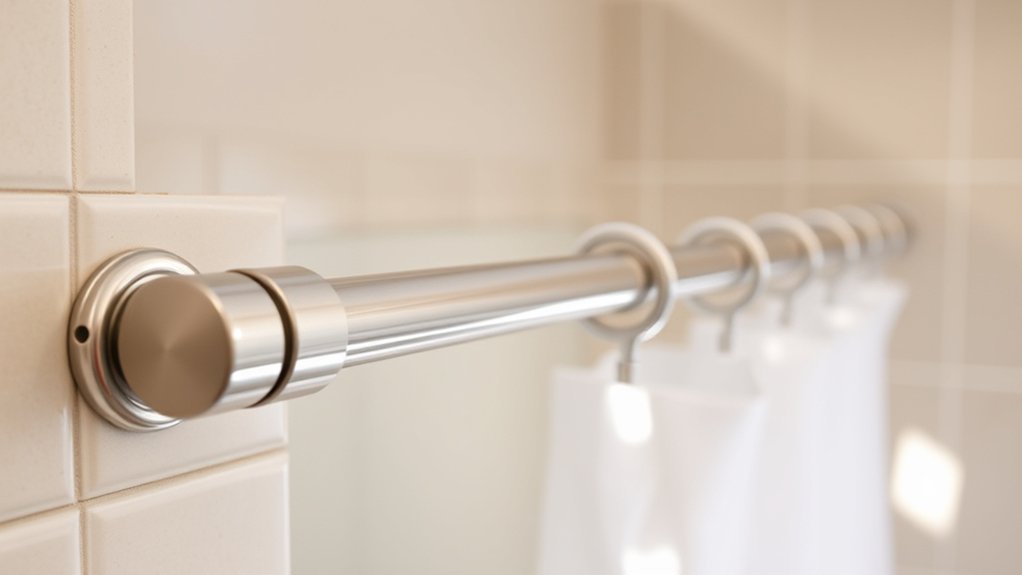
Are Tension Shower Rods Any Good
If you’re looking for a quick, tool-free way to hang your shower curtain, tension shower rods seem like a practical choice. Tension shower rods avoid drilling and hold up through spring pressure, making installation easy and damage-free. But you might wonder how well they actually stand up to daily use.
Before you decide, it’s important to weigh their convenience against potential stability and durability concerns. Let’s explore what makes them work—and when they might fall short. This way, you can make an informed choice for your bathroom setup.
Key Takeaways
- Tension shower rods offer quick, tool-free installation without wall damage, making them convenient for most households.
- They rely on spring tension and rubber end caps to stay secure but can slip on uneven or moist surfaces.
- Quality materials like stainless steel or aluminum improve durability and rust resistance for longer-lasting use.
- Adjustable length fits various spaces, but heavy curtains may cause sagging or reduce stability.
- Regular maintenance, including tension checks and surface cleaning, helps maintain grip and extends rod lifespan.
What Are Tension Shower Rods and How Do They Work?
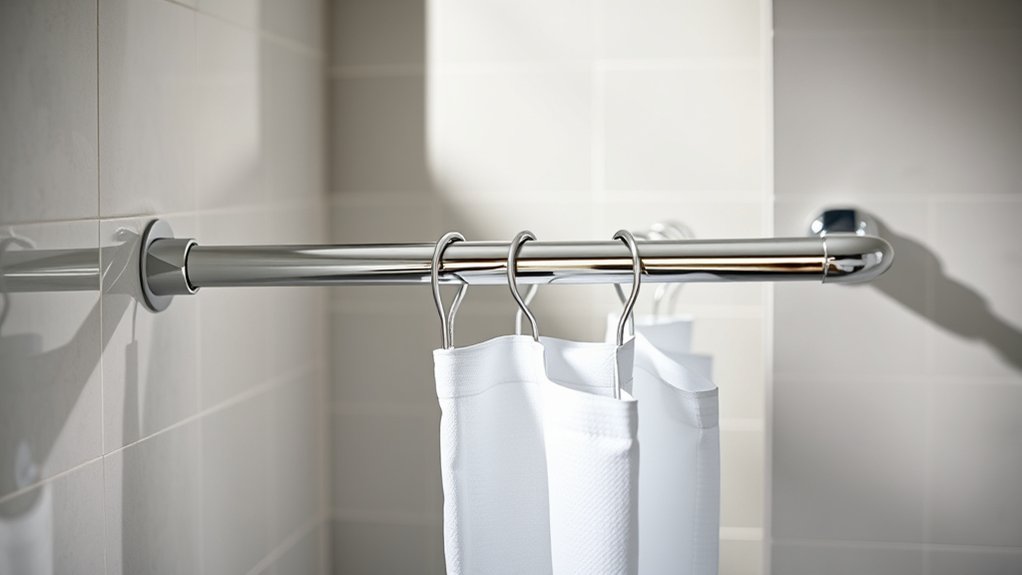
How exactly do tension shower rods work, and why might they be a good choice for your bathroom? These rods rely on spring-loaded tension to stay securely in place between two walls, eliminating the need for permanent fixtures or drilling.
You simply twist or extend the rod to fit snugly, much like adjusting precise equipment used in space travel. This ease of installation mirrors the precision and care found in culinary arts, where every tool has a specific, efficient role.
Tension rods offer flexibility, letting you reposition or remove them without damage. They’re ideal if you want a quick, no-hassle solution to hang your shower curtain or store lightweight items.
Their design balances practicality with convenience, making them a reliable choice for many homeowners.
What Are the Pros and Common Drawbacks of Tension Shower Rods?
Why choose tension shower rods over traditional fixed rods? They offer easy installation without the need for wall anchors, glue vs screws debates, or drilling holes. This makes them ideal for renters or anyone wanting a damage-free solution. However, they come with some drawbacks you should consider.
Here are the pros and common drawbacks:
- No drilling or wall anchors needed, preserving your walls
- Quick and tool-free setup, unlike screws installation
- Adjustable length fits various spaces
- Can slip if not properly tensioned or on uneven surfaces
- Less sturdy than screwed-in rods, limiting heavy curtain use
Understanding these points helps you decide if a tension rod suits your bathroom needs without compromising wall integrity or effort.
How Durable Are Tension Shower Rods Over Time?

When it comes to durability, tension shower rods can hold up well if you choose quality materials and install them correctly. The tension durability largely depends on how well the rod maintains its grip and resists rust or corrosion over time.
If the rod’s mechanism weakens or the surface where it presses gets damaged, its rod lifespan will shorten, leading to slipping or falling. You’ll want to regularly check the tension and adjust it to ensure it stays secure.
While tension rods aren’t as permanent as fixed rods, their lifespan is generally sufficient for most households when properly cared for. In short, with the right attention, you can expect decent tension durability that supports daily use without frequent replacements.
Which Materials and Designs Work Best for Tension Shower Rods?
You’ll want to choose tension shower rods made from materials like stainless steel or aluminum for better rust resistance and durability. Look for designs with reinforced ends and adjustable tension to guarantee a secure fit. These features help your rod stay sturdy and last longer in a humid bathroom environment.
Common Materials Overview
Materials play a pivotal role in determining the durability and functionality of tension shower rods. Choosing the right material affects both your budget options and installation complexity. Here’s a quick overview to help you decide:
- Aluminum: Lightweight, rust-resistant, and easy to install; great for budget options.
- Stainless Steel: Highly durable and corrosion-resistant but often pricier and slightly heavier.
- Plastic: Very affordable and simple to install but less durable over time.
- Chrome-plated Steel: Offers a shiny finish and moderate durability. Installation can be a bit tricky due to weight.
- Brass: Strong, rust-resistant, and stylish but comes with a higher price tag and more complex installation.
Knowing these materials helps you pick a tension shower rod that fits your needs without surprises.
Durable Design Features
A tension shower rod’s durability hinges on both the material choice and its design features, ensuring it holds up under daily use without slipping or bending. When considering design considerations, look for rods with rubber or silicone end caps; these prevent slipping and protect your walls.
Telescoping rods with secure locking mechanisms offer easy installation and stable tension. Strong metals like stainless steel or aluminum provide a sturdy frame that resists warping.
Incorporating two word discussion ideas such as “spring tension” and “wall grip” can help you focus on critical durability aspects. Avoid rods made entirely of plastic, as they often lack strength.
Rust Resistance Benefits
Choosing a tension shower rod that stands up to moisture starts with understanding rust resistance benefits. You want a rod with low rust potential and high corrosion resistance to ensure longevity in your damp bathroom. Materials and designs vary, but some clearly outperform others.
Look for these key features when selecting your rod:
- Stainless steel construction for excellent corrosion resistance
- Aluminum rods that resist rust and stay lightweight
- Powder-coated finishes that add a protective barrier
- Plastic or nylon end caps to prevent water exposure at contact points
- Sealed joints or welds to minimize moisture intrusion and rust formation
How Do You Choose the Right Tension Shower Rod?
To choose the right tension shower rod, start by measuring your space accurately to guarantee a perfect fit.
Next, consider the material and finish for durability and style that match your bathroom.
Finally, evaluate the rod’s weight capacity and tension to make sure it holds your shower curtain securely without slipping.
Measure Your Space Accurately
How do you guarantee your tension shower rod fits perfectly? It all starts with measure accuracy. Before buying, use a reliable tape measure to get exact dimensions of your shower space.
Measure the width at several points since walls may not be perfectly parallel. Note your measurements clearly to avoid errors. This precision helps minimize installation tweaks later on.
Keep these tips in mind when measuring:
- Measure from wall to wall at the top, middle, and bottom
- Record the shortest measurement for a snug fit
- Check for any obstructions like soap dishes or tiles
- Allow a small gap for easy rod adjustment
- Double-check measurements before purchasing
Consider Material And Finish
What makes one tension shower rod better suited for your bathroom than another? It often comes down to material and finish. You want a rod made from rust-resistant materials like stainless steel or aluminum to ensure durability in a humid environment.
The finish should complement your bathroom’s style. Chrome offers a sleek, modern look, while brushed nickel blends well with traditional decor. Pay attention to features like disappearing hardware that keeps mounting components hidden for a cleaner appearance.
Adjustable brackets also matter; they allow you to customize the rod’s fit while maintaining a secure hold. Choosing the right combination of material, finish, and hardware ensures your tension shower rod not only lasts but looks great without compromising functionality.
Evaluate Weight And Tension
When selecting a tension shower rod, why does weight capacity and tension strength matter? You want a rod that holds your curtain securely without slipping or bending under pressure. Choosing the right tension shower rod means balancing durability and ease of installation. Consider these points:
- Check the rod’s weight capacity to ensure it supports your curtain and any additional accessories.
- Look for rods with adjustable tension mechanisms for a snug fit.
- Use installation tips like cleaning surfaces before mounting to improve grip.
- Avoid rods that rely solely on friction if your walls are uneven or textured.
- Consider rods with rubberized ends to prevent slipping and protect walls.
How to Install and Maintain Tension Shower Rods
Wondering if you can install a tension shower rod without professional help? You absolutely can, as long as you avoid common installation mistakes that reduce tension rod longevity.
First, measure your space accurately to ensure a snug fit. Then, adjust the rod length and twist it into place between walls, making sure it’s level and firmly secured.
To keep your tension rod working well, clean it regularly and check for any loosening over time. Here’s a quick guide:
| Step | Tip |
|---|---|
| Measure Space | Use a tape measure |
| Adjust Length | Extend rod slightly longer |
| Secure Rod | Twist until tight |
| Maintain Rod | Clean and check tension |
Following these steps helps you avoid slip-offs and extends your rod’s lifespan.
When Should You Skip Tension Shower Rods and Try Alternatives?
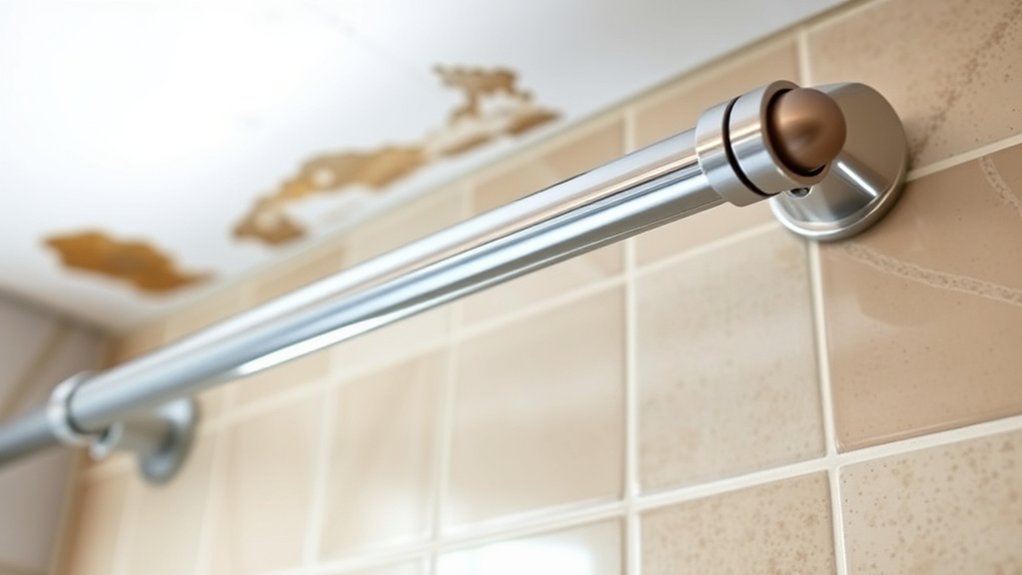
How do you know if a tension shower rod isn’t the right fit for your bathroom? You might want to skip it when your space or needs don’t align with its limitations. Consider alternatives if you encounter:
- Uneven walls that prevent secure pressure fitting
- Heavy curtains or liners causing sagging or slipping
- Moisture-prone surfaces that reduce grip reliability
- Need for permanent, sturdy fixtures rather than temporary ones
- Desire for specific aesthetic designs tension rods can’t provide
Exploring two word discussion ideas like “durability concerns” or “installation complexity” can guide you. Avoid unrelated topics such as general bathroom décor or plumbing upgrades here. Instead, focus on practical reasons to choose alternatives, ensuring your shower setup remains safe and functional without compromise.
Troubleshooting Common Issues With Tension Shower Rods
Why does your tension shower rod keep slipping or sagging? It usually comes down to improper installation or uneven surfaces. First, check if the rod’s rubber ends are clean and firmly pressed against smooth, flat walls. If not, clean the surfaces and reposition the rod.
For quirky aesthetics, consider rods with adjustable tension or decorative end caps to improve grip and style. Another common issue is weight overload. Avoid heavy curtains or accessories.
If the rod still shifts, try adding non-slip pads or using two word discussion ideas like “surface texture” and “pressure adjustment” when seeking solutions online or with experts. Regularly inspect and tighten your rod to maintain stability and enjoy a hassle-free shower setup.
Frequently Asked Questions
Can Tension Shower Rods Support Heavy Shower Curtains?
You can use tension shower rods for heavy curtains, but you’ll need to assure proper weight distribution. If the weight is uneven or too much, the rod might slip, so choose a sturdy rod and install it carefully.
Are Tension Rods Safe for Rental Bathrooms?
Yes, tension rods are safe for rental bathrooms when installed properly. They avoid wall damage, aligning with rental bathroom considerations.
Just ensure the rod fits securely and supports your curtain’s weight to maintain tension rod safety.
Do Tension Shower Rods Work Well in High-Humidity Areas?
You’ll find tension shower rods hold firm like a captain steering through humidity storms, but their weight capacity matters. In high-humidity areas, choose rust-resistant materials to ensure strong performance and long-lasting support without slipping.
Can Tension Rods Be Used for Double Shower Curtains?
Yes, you can use tension rods for a double curtain setup, but you’ll want to guarantee the installation height is precise. The rod should be sturdy enough to support both curtains without slipping or sagging over time.
How Do Tension Rods Affect Bathroom Wall Paint or Tiles?
You won’t damage bathroom finishes if you install tension rods carefully; they minimize installation strain by relying on pressure, not screws.
Just guarantee walls and tiles are clean and dry before mounting to prevent slipping or marks.