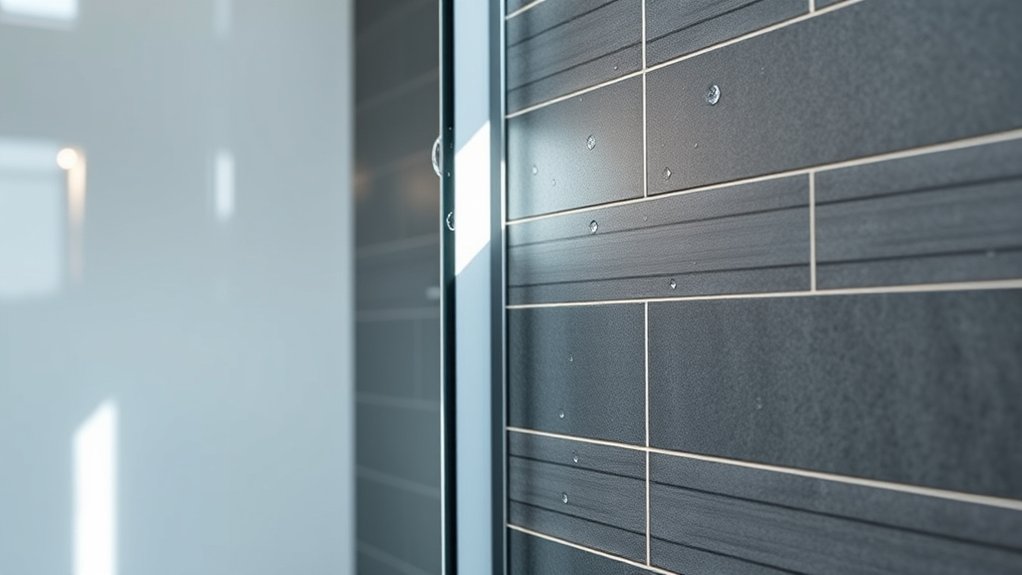
Are Shower Panels Better Than Tiles
When you’re updating your bathroom, deciding if shower panels are better than tiles can feel like a balancing act between style and practicality. Shower panels offer sleek, seamless surfaces that cut down on maintenance, while tiles bring timeless texture and endless design options.
Each option has its strengths depending on your space and lifestyle. Understanding how they compare in durability, installation, and upkeep can help you decide which fits your vision best.
Key Takeaways
- Shower panels offer faster, easier installation and lower maintenance compared to tiles, making them ideal for quick bathroom updates.
- Tiles provide greater design flexibility with varied colors, textures, and patterns for a timeless, customizable aesthetic.
- Shower panels have sleek, seamless surfaces that resist mold and simplify cleaning, while tiles require regular grout sealing and cleaning.
- Tiles generally offer superior long-term durability but may involve higher labor and maintenance costs due to grout upkeep.
- Budget-conscious projects benefit from shower panels’ affordability, whereas tiles can be more expensive but add lasting style and value.
What Are Shower Panels?
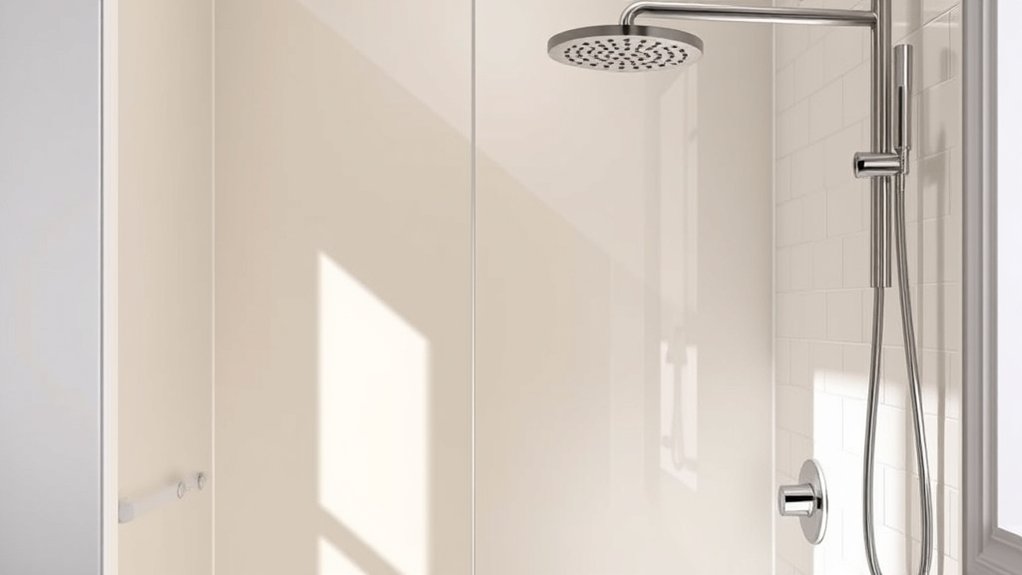
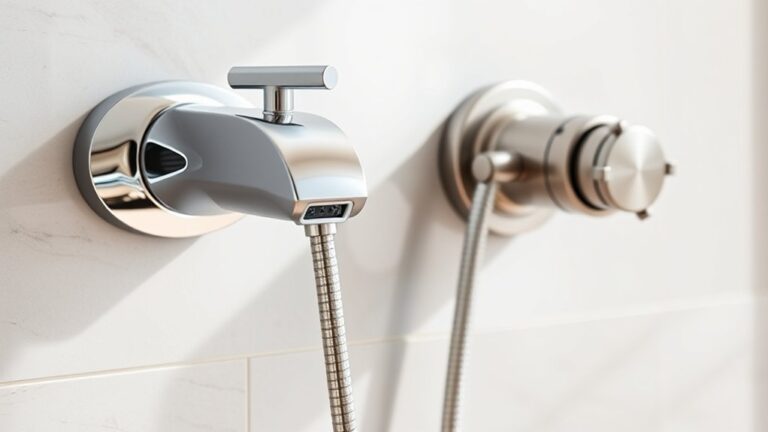
What exactly are shower panels, and why might you consider them over traditional tiles? Shower panels are large, waterproof sheets designed to cover your shower walls seamlessly. Unlike random panels with inconsistent patterns, these often come in uniform designs featuring sleek, glossy finishes that instantly elevate your bathroom’s look.
You’ll appreciate how easy they are to install, with no grout lines to deal with, meaning less maintenance and no mold buildup. Their smooth surface not only makes cleaning a breeze but also offers a contemporary aesthetic that tiles sometimes struggle to achieve.
If you want a practical yet stylish solution, shower panels provide a streamlined, modern alternative that focuses on durability and visual appeal without the hassle of frequent upkeep.
Why Choose Tiles for Bathroom Walls?
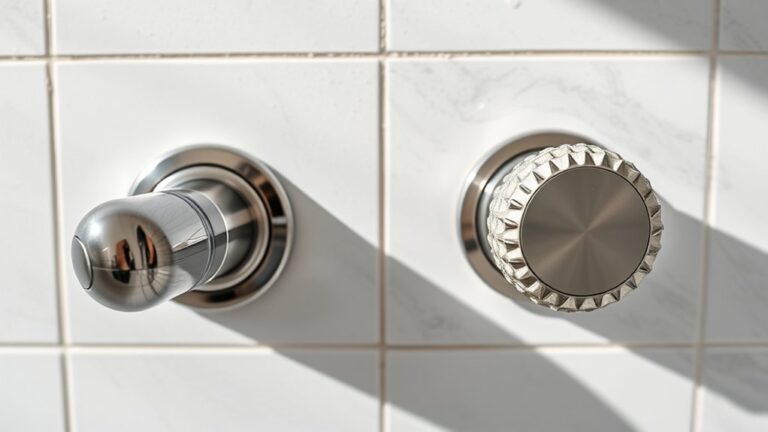
Why do so many homeowners still opt for tiles when renovating bathroom walls? Tiles offer unmatched durability and timeless style that can elevate your bathroom’s aesthetic. Their variety in color, texture, and size lets you create a look that’s uniquely yours.
Beyond beauty, tiles enhance bathroom acoustics by reducing echo and muffling sounds, making your space feel more serene. They also provide excellent bathroom heat resistance, withstanding temperature changes without warping or damage.
This means your walls stay intact through steamy showers and heated towel racks. Plus, tiles are easy to clean and maintain, resisting mold and mildew buildup. Choosing tiles means investing in a practical, long-lasting solution that balances function with refined design, making it a smart choice for your bathroom walls.
Pros and Cons of Shower Panels
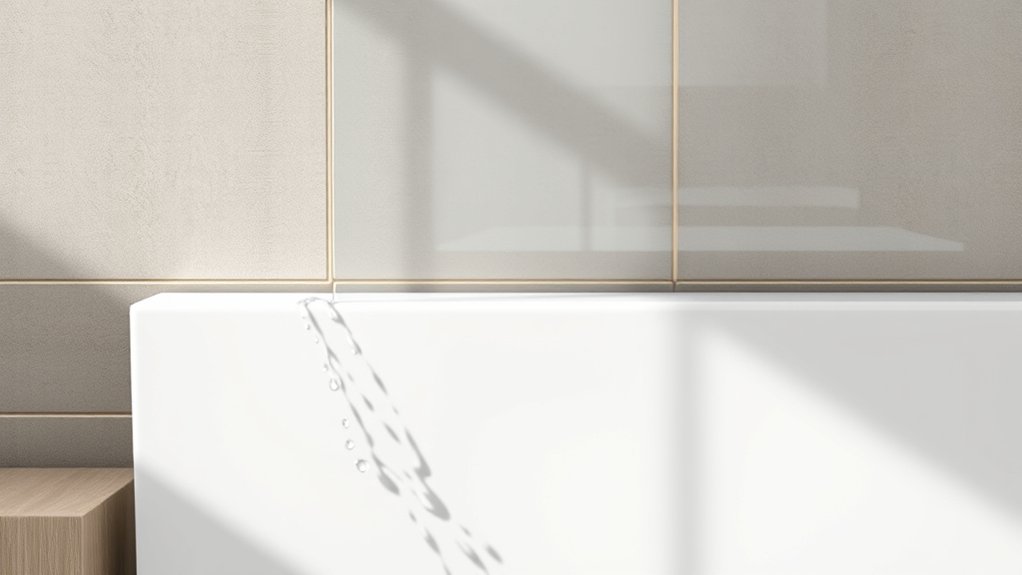
How do shower panels measure up when compared to traditional tiles? You’ll find they offer sleek, seamless surfaces that elevate your bathroom’s aesthetic with minimal grout lines. Their stain resistance makes cleaning a breeze, perfect if you want to maintain a pristine look without constant scrubbing.
Installation is quicker, helping you sidestep budget pitfalls associated with extensive labor. However, you should consider durability. Panels can be prone to scratches or cracks if mishandled. Also, customization options might feel limited compared to the vast variety of tiles.
While panels streamline upkeep and modernize your space effortlessly, they might not offer the same timeless charm or long-term resilience. Weighing these pros and cons ensures you pick what aligns best with your style and practical needs.
Pros and Cons of Tiles
When you choose tiles, you get a durable surface that can handle daily wear but requires regular maintenance to keep grout looking fresh.
You’ll love the wide range of design options, from classic patterns to bold textures that elevate your shower’s style.
Keep in mind, though, that installation can be complex and time-consuming, often needing professional skill for the best results.
Durability And Maintenance
Durability plays a pivotal role in choosing between tiles and shower panels, especially in a wet environment like your bathroom. Tiles offer impressive longevity, resisting water and heat when properly sealed, yet durability concerns arise if grout cracks or tiles chip. These issues demand timely repair to prevent water seepage and mold growth.
Installation challenges with tiles are another consideration. They require meticulous surface preparation and expert fitting to ensure a waterproof, lasting finish. Maintenance involves regular grout cleaning and resealing, which can be time-consuming but keeps your bathroom looking pristine.
While tiles boast solid durability, their upkeep demands attention to detail. If you’re ready to invest effort into installation and maintenance, tiles can provide a resilient, elegant surface that withstands daily wear beautifully.
Design Versatility Options
What makes tiles a favorite choice for many homeowners is their exceptional design versatility. You can tailor your shower’s look to fit any style, thanks to the broad spectrum of colors, shapes, and textures available.
With tiles, you gain precise control over color coordination, enabling you to create harmonious or bold patterns that reflect your personal taste. Consider these key advantages:
- Wide range of colors and finishes for perfect color coordination
- Various shapes and sizes to achieve unique patterns
- Ability to mix textures for added depth and interest
- Easy integration with different design themes, from rustic to modern
- Flexibility to replace individual tiles without overhauling the entire surface
This design versatility lets you craft a truly customized shower space that suits your aesthetic and practical needs.
Installation Complexity Factors
How challenging will installing tiles in your shower be? Tiles demand precision and patience. Each piece must align perfectly to honor design ethics, ensuring durability and aesthetic harmony.
You’ll need to prepare the surface meticulously, apply mortar evenly, and grout carefully to prevent water damage. This process requires skill and time, unlike quicker shower panel installations.
However, tiles let you explore color psychology deeply; you can mix hues to evoke calm or energy, tailoring your space’s mood. Keep in mind, uneven installation may disrupt the visual flow and weaken the structure.
If you’re confident in your craftsmanship or willing to hire a pro, tiles offer a rewarding, customizable option, but their complexity might not suit every DIY enthusiast.
Installation: Shower Panels vs. Tiles
When you decide to upgrade your shower, the installation process can notably influence your experience and final look. Shower panels offer a streamlined setup, while wall tiles require more intricate work. Here’s what you can expect:
- Shower panels come pre-finished, reducing prep time.
- Wall tiles need careful surface preparation and waterproofing.
- Installing panels involves mounting large sheets, speeding up the process.
- Tiling demands precise layout, cutting, and grouting for a polished aesthetic.
- Panels minimize grout lines, offering a sleek, modern look with less maintenance.
Choosing shower panels means faster installation and fewer complications, ideal if you want a hassle-free upgrade. Wall tiles, although time-consuming, allow for more customization and classic charm. Your choice depends on your style preference and how hands-on you want to be with the installation.
Durability and Water Resistance Compared
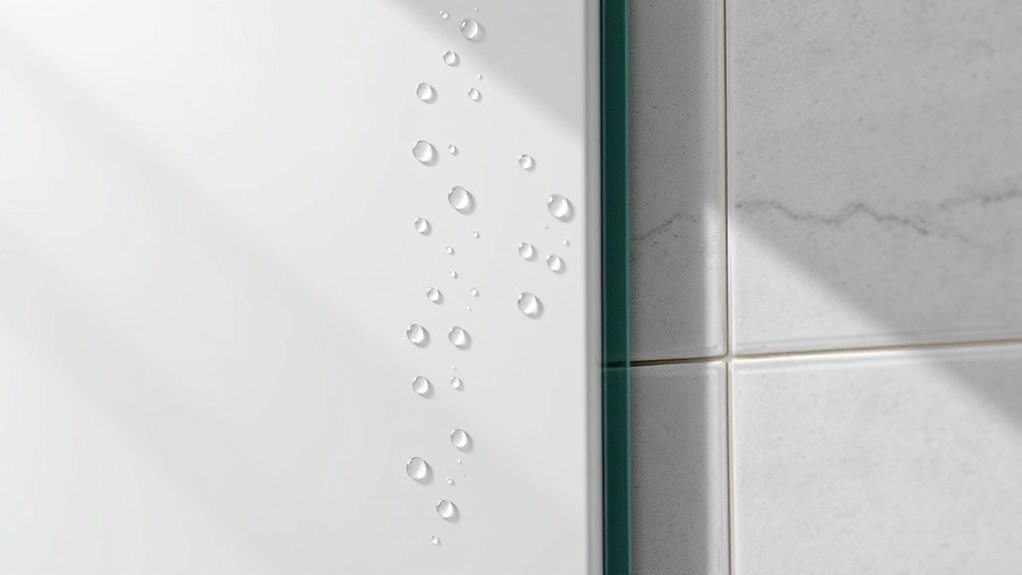
Why does durability matter so much in your shower’s surfaces? Because your shower faces constant moisture and wear, choosing materials that resist water damage and maintain beauty is key.
Shower panels excel with seamless, waterproof surfaces, while tiles offer proven toughness but can suffer from grout issues. Here’s a quick comparison:
| Feature | Shower Panels | Tiles |
|---|---|---|
| Water Resistance | High, no grout lines, waterproof | Moderate, grout can absorb water |
| Durability | Resistant to cracking, impact | Very durable, can chip or crack |
| Aesthetic Longevity | Maintains smooth, modern look | Classic, can stain or discolor |
With shower panels, you get sleek durability and water resistance, while tiles offer lasting strength but require more vigilance against moisture.
Maintenance: Shower Panels vs. Tiles
Durability and water resistance set the foundation, but maintaining your shower’s appearance and functionality over time depends heavily on upkeep. When comparing shower panels and tiles, you’ll find that maintenance myths often cloud two word discussion ideas like “cleaning ease.”
Shower panels typically require less scrubbing and no grout sealing, while tiles demand regular grout care to avoid mold.
Shower panels need minimal scrubbing and no grout sealing, unlike tiles which require ongoing grout maintenance.
Consider these practical points:
- Wipe shower panels with a mild detergent to prevent soap scum.
- Scrub tile grout weekly to maintain brightness and hygiene.
- Inspect panels for scratches or cracks; repairs are usually simple.
- Seal tile grout every six months to a year for protection.
- Avoid abrasive cleaners on both surfaces to preserve finish.
Understanding these nuances helps you choose a low-maintenance, stylish option that fits your lifestyle.
Design Flexibility: Matching Tile Styles With Panels
How can you achieve a cohesive bathroom look while balancing style and functionality? Design feasibility plays a key role when matching tile styles with shower panels.
Panels offer sleek surfaces that complement tiles without overpowering them, enabling striking aesthetic pairing. You can mix textures and colors, creating visual interest and harmony.
| Tile Style | Panel Finish | Design Feasibility |
|---|---|---|
| Matte Porcelain | Glossy Acrylic | High contrast, modern appeal |
| Subway Tiles | Textured Panels | Subtle depth, balanced texture |
| Natural Stone | Matte Laminate | Earthy tones, seamless integration |
Cost Comparison: Shower Panels vs. Tiles
When weighing shower panels against tiles, you’ll want to contemplate both upfront installation expenses and ongoing maintenance costs. The price of materials can vary widely, impacting your overall budget and aesthetic choices.
Understanding these factors helps you make a practical decision without sacrificing style.
Initial Installation Expenses
What factors influence the initial installation expenses when choosing between shower panels and tiles? You’ll find costs vary based on materials, labor, and preparation. Shower panels often save you time, but tiles offer customization.
Consider these points:
- Material prices: tiles can be costly; panels usually more affordable
- Labor intensity: tile installation demands skilled labor, panels install faster
- Surface prep: tiles need waterproof seals and sometimes fresh paint around edges
- Custom cuts: tiles require precision cuts; panels come in ready sizes
- Wall condition: uneven walls may increase tile installation costs, panels adapt better
Ultimately, shower panels reduce upfront hassle and expense, while tiles offer an elegant, handcrafted look that might increase your initial investment. Your choice depends on balancing budget with your desired aesthetic.
Long-Term Maintenance Costs
Why does long-term maintenance matter as much as initial costs when choosing between shower panels and tiles? Because ongoing upkeep directly impacts durability and your budget over time.
Shower panels typically require less effort; their smooth surface resists mold and grime, cutting down on cleaning time and maintenance costs. Tiles, while visually appealing, demand regular grout sealing and can chip or crack, leading to costly repairs.
This two word discussion ideas: cleaning frequency and repair expense highlight how tiles might incur higher maintenance costs despite their classic charm. If you want a practical, low-maintenance solution that preserves a sleek look, shower panels often win.
But if you love intricate designs and don’t mind extra care, tiles can still be worth it. Consider your lifestyle carefully.
Material Price Variability
Understanding maintenance costs helps set realistic expectations, but the upfront material price can heavily influence your choice between shower panels and tiles. When considering material price variability, you’ll notice shower panels often present a more straightforward cost range, whereas tiles vary widely based on type and quality.
Here’s what you need to keep in mind:
- Shower panels typically cost less per square foot, offering budget-friendly options.
- Tiles range from economical ceramic to expensive natural stone, causing price swings.
- Installation labor for tiles usually increases total costs compared to panels.
- Custom design tiles can raise expenses, while panels often come pre-designed.
- Material price variability in tiles means you can tailor aesthetics but must plan carefully to avoid surprises.
Frequently Asked Questions
Can Shower Panels Be Easily Repaired if Damaged?
You can easily repair shower panels thanks to simple repair options, often involving quick patching or panel replacement. Their installation ease also means fixing damage won’t disrupt your bathroom’s sleek, aesthetic flow or practical use.
Are Shower Panels Eco-Friendly Compared to Tiles?
You’ll find shower panels eco-friendly due to their recyclable materials and reduced water usage during installation. Their long-term viability shines with low maintenance and durability, making them a practical, stylish choice for sustainable bathroom design.
Do Shower Panels Affect Bathroom Resale Value?
You might be surprised. Shower panels can actually boost your bathroom’s resale value if they’re sleek and well-installed. Their modern, seamless look appeals to buyers seeking style and low maintenance, making your space both practical and beautiful.
Can I Install Shower Panels Over Existing Tiles?
Yes, you can install shower panels over tile panels, but ensure the surface is clean and flat. While installation feasibility is high, watch for durability concerns like moisture trapping, which might affect long-term performance and aesthetics.
How Do Shower Panels Impact Bathroom Ventilation?
Think of shower panels as a sleek shield that enhances shower ventilation by preventing moisture buildup. They streamline moisture management, reducing mold risks and keeping your bathroom’s atmosphere fresh and clean.
Additionally, they maintain a visually stunning look with minimal effort.