Are Cloth Shower Curtains Waterproof
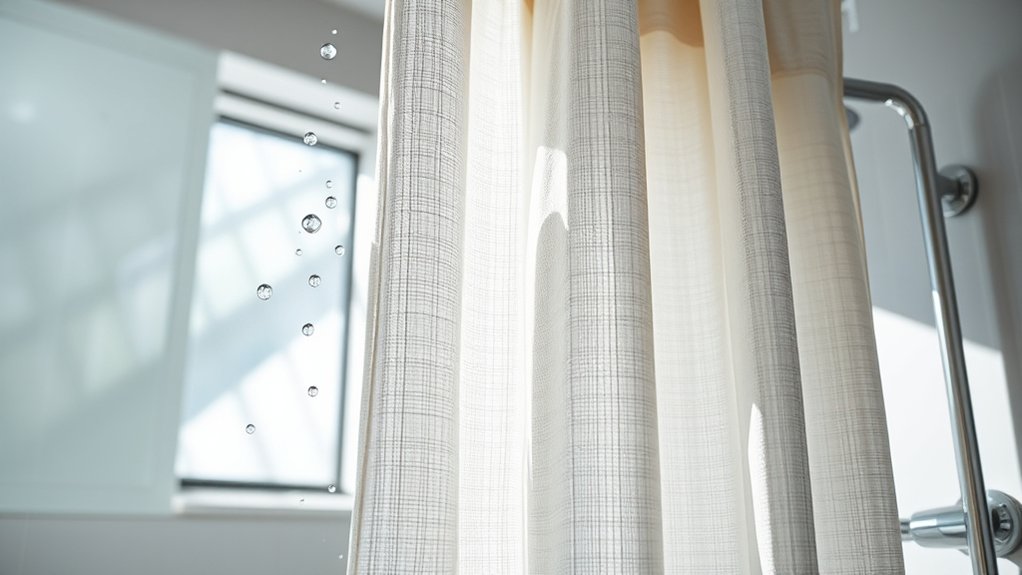
You might assume cloth shower curtains are waterproof like plastic ones, but that’s not usually the case.
Most natural fabrics absorb moisture, which can lead to dampness and mildew over time.
However, certain treatments and liners can change how these curtains perform in wet environments.
Understanding the materials and protections involved is key before choosing cloth for your bathroom setup.
Key Takeaways
- Cloth shower curtains are generally not waterproof and allow water to penetrate due to microscopic gaps in the fabric fibers.
- Untreated cloth curtains absorb moisture, which can lead to dampness, mildew, and mold growth over time.
- Waterproof coatings like polyurethane or silicone can be applied to cloth to create a water-repellent barrier.
- Using a waterproof liner behind a cloth curtain significantly improves water resistance and protects the fabric.
- Proper ventilation and drying practices help maintain cloth curtains and reduce water damage despite their natural permeability.
Are Cloth Shower Curtains Naturally Waterproof?
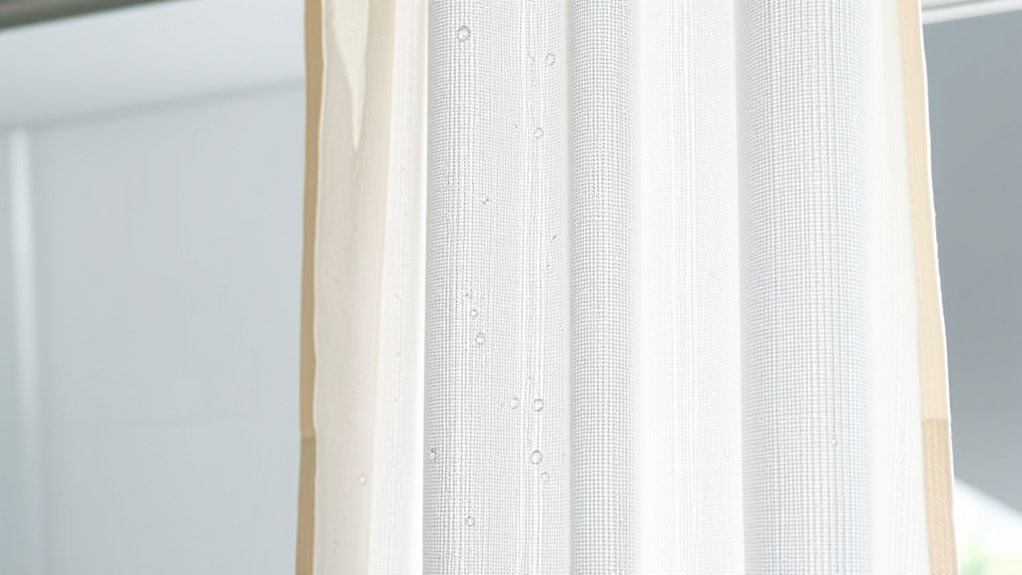
Do cloth shower curtains naturally repel water? Typically, they don’t. Most cloth materials have inherent fabric permeability, allowing cloth moisture to pass through unless treated.
The fibers in cotton, linen, or polyester create microscopic gaps that permit water vapor and liquid to penetrate. This permeability means untreated cloth curtains absorb moisture rather than repel it, leading to dampness and potential mildew growth.
If you want effective water resistance, you must apply a waterproof coating or use a tightly woven synthetic fabric designed to reduce permeability. Otherwise, relying on natural cloth alone won’t prevent water from passing through.
Understanding fabric permeability and cloth moisture behavior clarifies why cloth curtains need additional waterproofing to function properly in a shower environment.
How Cloth Shower Curtains Compare to Plastic Ones
Since untreated cloth shower curtains allow moisture to pass through, comparing them to plastic alternatives highlights distinct differences in water resistance and maintenance. Plastic curtains excel in water repellency, forming a solid barrier that prevents water escape, while cloth fabrics absorb moisture unless treated.
When you contrast fabrics, cloth offers superior breathability and aesthetic variety but requires more frequent washing to prevent mold and mildew. Plastic curtains, often cheaper upfront, provide cost effectiveness through durability and low maintenance.
However, plastic lacks the environmental benefits and texture of cloth. Your choice depends on balancing water resistance against breathability and upkeep. Understanding these distinctions ensures you select the curtain type that aligns with your practical needs and budget constraints without compromising bathroom functionality.
How Waterproof Coatings and Liners Work on Cloth Curtains
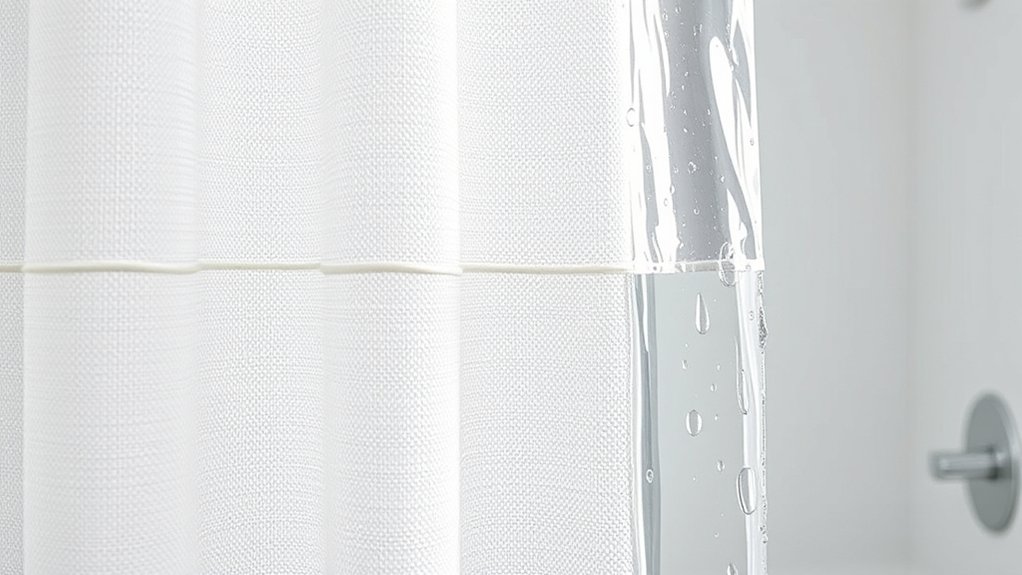
How exactly do waterproof coatings and liners enhance the functionality of cloth shower curtains? Coating science applies hydrophobic materials such as polyurethane or silicone directly onto the fabric surface. This creates a barrier that repels water, preventing absorption while maintaining breathability. The coating’s effectiveness depends on uniform application and durability against wear.
Liner effects complement coatings by providing an additional waterproof layer behind the curtain. Liners, often made from vinyl or PEVA, physically block water from reaching the cloth. This dual system reduces moisture penetration and extends the curtain’s lifespan.
Together, coatings and liners balance water resistance with fabric flexibility, ensuring your cloth shower curtain performs well in humid environments without sacrificing aesthetic appeal or texture. Understanding this synergy helps you optimize curtain maintenance and longevity.
How to Protect Cloth Shower Curtains From Water Damage
Where should you start when aiming to protect your cloth shower curtains from water damage? Focus on implementing effective waterproof techniques and moisture management strategies. Begin by treating the fabric with a water-repellent spray to create a protective barrier.
Next, ensure proper ventilation in your bathroom to reduce humidity and prevent mold growth. Regularly wash and dry the curtain to remove soap residue and maintain fabric integrity.
Always keep the curtain fully extended after showering to allow complete drying. Finally, consider using a waterproof liner as an additional shield to minimize direct water exposure.
Following these steps will significantly extend the life of your cloth shower curtain while maintaining its aesthetic and functional qualities.
- Apply water-repellent spray
- Maintain bathroom ventilation
- Wash and dry regularly
- Keep curtain fully extended
- Use a waterproof liner
Best Cloth Shower Curtains That Combine Style and Water Resistance
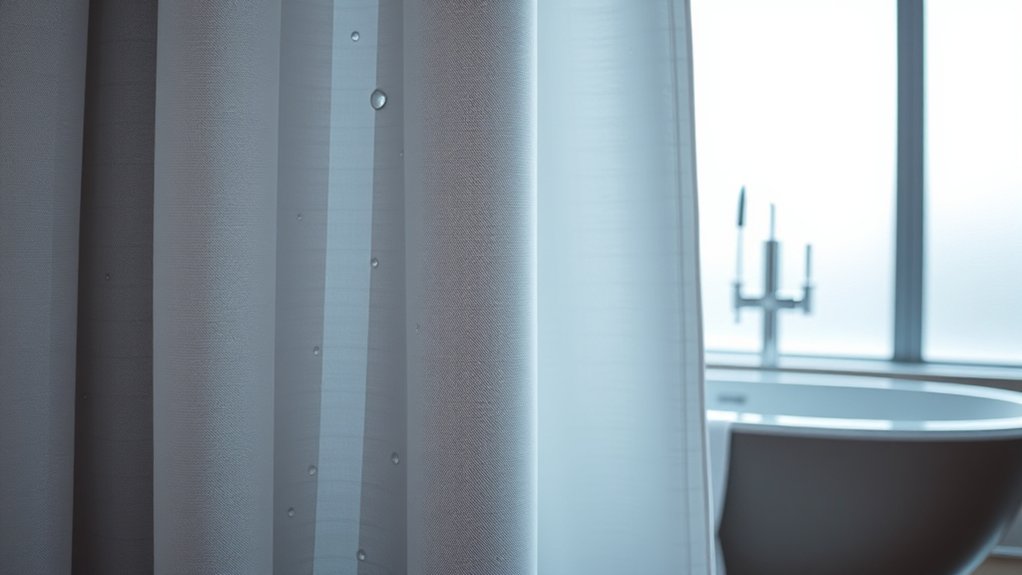
What makes a cloth shower curtain both stylish and water-resistant? The best fabric choices combine durability, quick-drying properties, and effective water resistance without sacrificing aesthetic appeal.
Look for materials like polyester or polyester-cotton blends treated with a water-repellent finish. These fabrics resist moisture absorption, preventing mold and mildew while maintaining fabric texture and design integrity.
Additionally, advanced coatings such as polyurethane or silicone enhance water resistance without adding stiffness. When selecting a curtain, prioritize tightly woven fabrics with hydrophobic treatments to ensure optimal performance.
This balance lets you enjoy a visually appealing curtain that withstands daily shower moisture. By choosing the right material and treatment, you’ll get a cloth shower curtain that’s both functional and stylish, solving common issues with water damage effectively.
Frequently Asked Questions
Can Cloth Shower Curtains Be Machine Washed Regularly?
You can machine wash cloth shower curtains regularly, but don’t overdo it. Like tuning an engine, proper cloth care and balanced washing frequency preserve fabric integrity, prevent mold, and extend your curtain’s lifespan effectively and practically.
Do Cloth Shower Curtains Cause Mold or Mildew Buildup?
Yes, cloth shower curtains can cause mold buildup if moisture lingers. To prevent mildew growth, ensure proper ventilation and regular washing.
This two word discussion, moisture control, fabric care, helps you maintain a hygienic bathroom environment effectively.
What Is the Average Lifespan of a Cloth Shower Curtain?
You can expect cloth curtain longevity to range from 1 to 3 years, depending on fabric care routines like regular washing, thorough drying, and avoiding harsh chemicals. These practices help maintain durability and prevent mold or mildew buildup effectively.
Are Cloth Shower Curtains Eco-Friendly Compared to Plastic Ones?
You won’t find a greener hero than cloth curtains; as eco-friendly alternatives, they outlast plastic with superior fabric durability. These fabrics reduce landfill waste and chemical runoff, making your bathroom both sustainable and practical without sacrificing style.
How Do Cloth Shower Curtains Affect Bathroom Ventilation?
Cloth shower curtains improve bathroom ventilation by allowing air to pass through their fibers, enhancing moisture management. You’ll notice reduced condensation and quicker drying times compared to impermeable plastic curtains, promoting a healthier bathroom environment.