Are Your Pores Open After a Shower
You might have heard that your pores open after a shower, but the truth is more complex. Pores don’t actually open or close like doors; instead, warm water and steam temporarily soften your skin and loosen debris inside the pores.
This effect can make your skin feel cleaner, but it doesn’t permanently change pore size. Understanding what really happens can help you care for your skin more effectively—so what should you know about managing your pores post-shower?
Key Takeaways
- Pores do not physically open or close; they lack muscles to change size actively.
- Warm water and steam soften skin and increase pliability but do not open pores.
- Pores may appear less noticeable after a shower due to skin hydration and softness.
- Oil buildup and skin elasticity affect pore size appearance, not shower temperature.
- Cleansing after a shower removes debris but does not permanently alter pore size.
How Showering Affects Your Pores
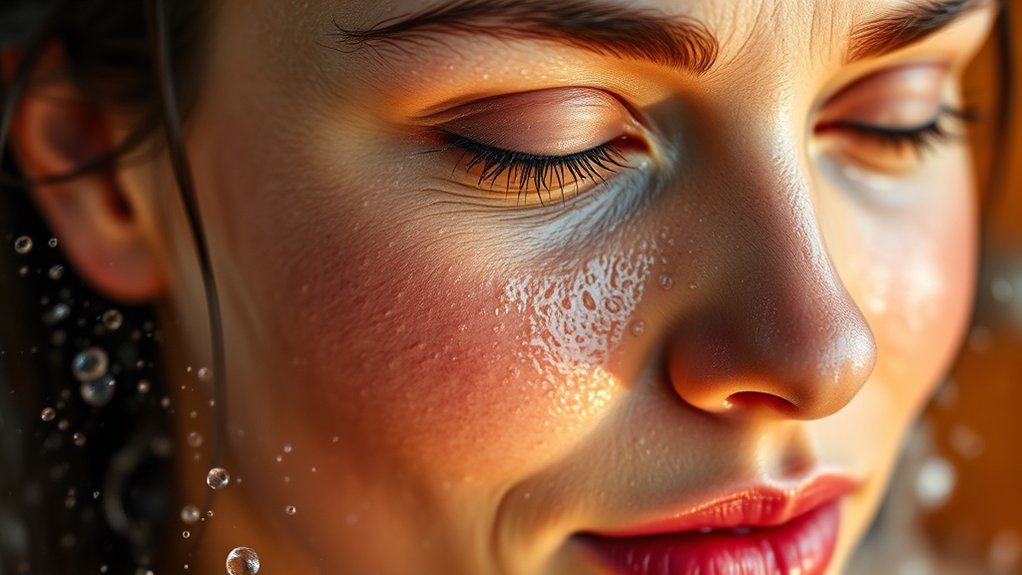
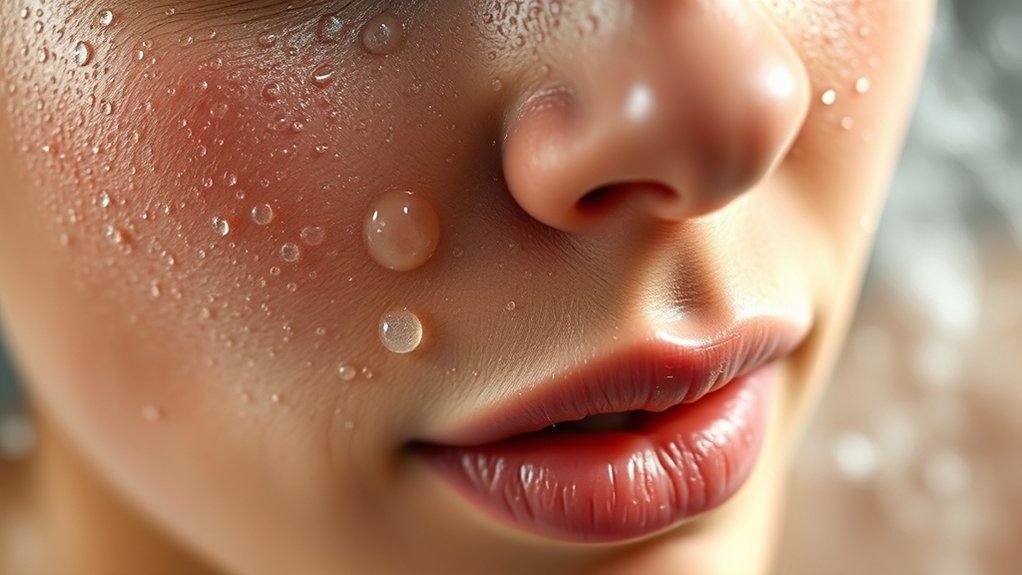
How exactly does showering impact your pores? When you shower, warm water and steam temporarily soften the outer layer of your skin, making it more pliable. This softening may give the impression that your pores are “opening,” but pores themselves don’t physically open or close.
Instead, the warmth helps loosen dirt and sebum trapped inside pores, facilitating their removal during cleansing. Using soft skincare products after showering enhances this effect by gently removing impurities without irritating your skin.
However, you should watch for fragrance alerts on skincare labels, as some scented ingredients can cause sensitivity, especially on freshly showered skin. By choosing appropriate products, you optimize pore cleansing while maintaining skin health and avoiding unnecessary irritation.
Do Pores Really Open and Close?
While warm water and steam can soften your skin and help clear out impurities, the idea that pores actually open and close is a common misconception. Pores don’t have muscles to contract or expand; instead, their size appears to change due to factors like oil buildup or skin elasticity.
Understanding this helps debunk common pore myths and clarifies shower facts.
| Pore Myth | Scientific Fact | Shower Fact |
|---|---|---|
| Pores open and close | Pores lack muscles to open/close | Warm water softens skin, not pores |
| Cold water closes pores | Temperature doesn’t change pore size | Cold water may tighten skin slightly |
| Pore size changes daily | Changes are temporary, not actual size | Cleansing removes debris, not opens pores |
Knowing this helps you approach skincare more effectively.
How Warm Shower Water and Steam Affect Your Skin

What impact does warm shower water and steam have on your skin’s condition? Warm steam increases the temperature of your skin, causing blood vessels to dilate and temporarily making your skin feel softer. This elevated temperature enhances skin hydration by allowing moisture to penetrate more effectively into the upper layers of your epidermis.
However, prolonged exposure to warm water can strip natural oils, leading to dryness if not managed properly. The warm steam also helps loosen dirt and sebum in your pores, facilitating cleansing.
Despite these effects, your pores don’t physically open or close; instead, warm steam improves skin pliability and hydration, which can temporarily make pores appear less noticeable. Proper post-shower moisturizing is essential to maintain this hydration and protect your skin barrier.
Busting Common Myths About Pores and Showers
Many people believe that pores physically open and close with temperature changes during a shower, but this isn’t accurate. The myth vs science reveals that pores lack muscles to open or close actively.
Instead, pores remain at a consistent size, though they can appear larger when filled with oil, dirt, or dead skin. Warm water and steam can soften the skin and loosen debris, making pores seem more noticeable, but they don’t actually “open.”
Understanding these pore myths helps you avoid misconceptions about your skincare routine. So, when you step out of a warm shower, remember your pores haven’t changed structurally; they’re just temporarily more accessible for cleansing, not physically altered by temperature shifts.
Best Skincare Steps After Showering to Care for Pores
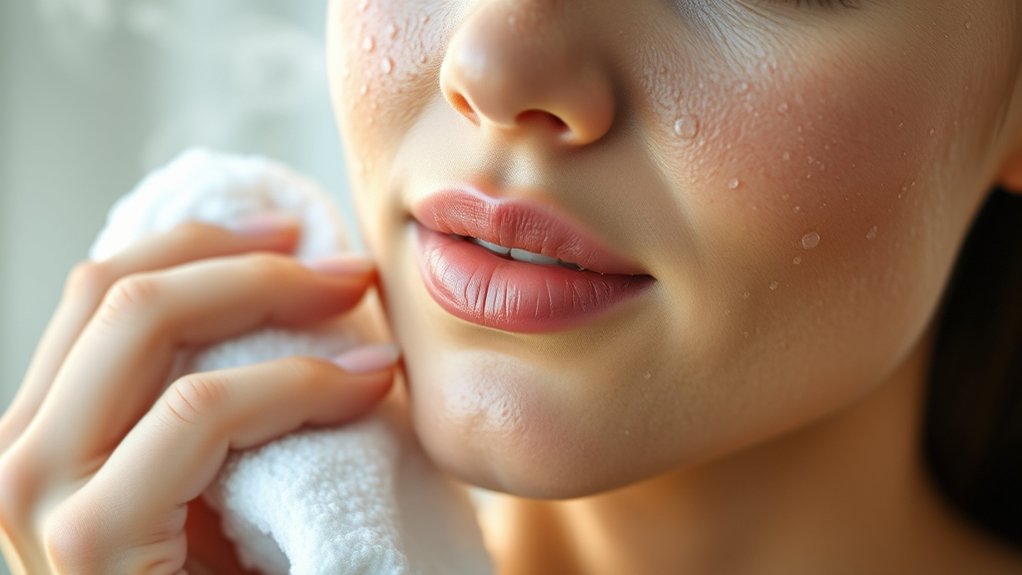
After showering, you should gently cleanse your skin to remove residual oils and impurities without disrupting the natural barrier.
Applying a suitable moisturizer immediately helps seal the pores and maintain hydration. These steps optimize pore care and support overall skin health.
Cleansing Techniques Post-Shower
How should you approach cleansing your skin immediately following a shower to maintain optimal pore health? After showering, your pores are more receptive due to increased warmth and moisture.
Effective pore cleansing starts with gently patting your skin dry using a clean towel. Avoid vigorous rubbing, which can irritate pores. Next, apply a mild, pH-balanced cleanser designed for your skin type to remove residual oils and impurities loosened during the shower.
Use lukewarm water to rinse, as hot water can exacerbate pore sensitivity. Incorporating exfoliation two to three times a week in your post-shower routines helps prevent clogged pores by removing dead skin cells.
Moisturizing To Seal Pores
Why is moisturizing essential immediately after showering to care for your pores? When you shower, warm water temporarily increases your skin’s permeability, enhancing pore hydration but also risking moisture loss as your skin cools. Moisturizing seals this hydration in, forming a protective barrier that prevents transepidermal water loss.
By applying a moisturizer right after showering, you stabilize the skin’s moisture balance and support the integrity of your pores. This step helps maintain optimal pore size and function, reducing the likelihood of clogging or irritation. Choosing a moisturizer with humectants and occlusives ensures effective pore hydration and sealing.
Therefore, moisturizing isn’t just about softness; it’s a critical step to preserve your skin’s barrier and keep your pores healthy after a shower.
Tips to Keep Your Pores Healthy Every Day
You should clean your pores daily to remove dirt and excess oils that can cause blockages.
Keeping your skin well-hydrated supports its natural barrier and prevents pore irritation.
Additionally, applying sunscreen protects pores from damage caused by UV exposure.
Daily Pore Care
Maintaining healthy pores requires consistent daily care that balances cleansing and hydration. You should avoid harsh scrubbing, which can damage skin and disrupt pore health.
Remember, steam mist myths suggest pores open and close like doors, but pores simply expand slightly with warmth. Instead, use gentle cleansers and exfoliate 2-3 times weekly to remove debris without irritation.
| Step | Action | Benefit |
|---|---|---|
| Morning Cleanse | Use mild, pH-balanced cleanser | Removes overnight oils |
| Exfoliate | Apply chemical exfoliant (BHA/AHA) | Clears dead skin cells |
| Avoid Overwashing | Limit washing to twice daily | Prevents dryness |
| Avoid Steam | Skip excessive steam exposure | Prevents irritation |
| Use Non-comedogenic Products | Choose pore-safe skincare | Reduces clogging |
Daily diligence sustains pore integrity and prevents buildup.
Hydration and Protection
Balancing pore health goes beyond cleansing and exfoliation. Hydration and protection play essential roles in preserving skin barrier function and preventing pore congestion. Understanding hydration science helps you maintain optimal moisture levels, which supports the skin’s natural elasticity and keeps pores from becoming clogged or enlarged.
Proper hydration also enhances pore physiology by promoting efficient sebum regulation and cellular turnover.
To keep your pores healthy every day, focus on:
- Applying non-comedogenic moisturizers that reinforce the skin barrier without blocking pores
- Using broad-spectrum sunscreen to protect skin from UV-induced damage that can impair pore function
- Incorporating antioxidants to reduce inflammation and oxidative stress affecting pore integrity
Frequently Asked Questions
Can Diet Impact the Size of Your Pores?
Yes, your diet impacts pore size by influencing skin health and inflammation. Consuming antioxidants, vitamins, and omega-3s can reduce pore enlargement.
High sugar and processed foods may worsen pore appearance through increased oil production and inflammation.
Do Genetics Determine How Visible Your Pores Are?
You can’t blame your pores’ visibility on bad luck alone. Genetics vs pores is a hereditary skin traits showdown. Your DNA scripts pore size and oil production, so your genes, not just skincare, largely determine how visible they appear.
How Does Aging Affect Pore Size and Appearance?
Aging changes reduce skin elasticity and collagen, causing your pores to lose structural support. This increases pore visibility, making them appear larger and more pronounced as your skin thins and sags over time.
Can Makeup Clog Pores Even After Showering?
Makeup clogging acts like sticky glue trapping dirt and oils, even after showering. Post shower residue can remain on your skin, so thorough cleansing is essential to prevent pore blockage, breakouts, and maintain healthy skin function.
Are There Specific Ingredients to Avoid for Pore Health?
You should avoid avoidant fragrances and pore clogging oils, as they can irritate your skin and block pores.
Opt for non-comedogenic, fragrance-free products to maintain pore health and minimize breakouts effectively.