Are Shower Loofahs Bad
You might not realize that your shower loofah can harbor bacteria and mold due to its moist, porous structure. Shower loofahs are popular for exfoliating and cleansing the skin, but they require proper care to remain safe.
While they effectively remove dead skin cells, improper maintenance can turn them into a breeding ground for germs. This increases the risk of irritation or infection.
Understanding how to use and maintain your loofah properly is essential before you decide if it’s a safe choice for your skincare routine. Regular cleaning and timely replacement can help keep your shower loofah hygienic.
Key Takeaways
- Shower loofahs effectively cleanse and exfoliate skin but require proper hygiene to avoid bacterial buildup.
- Excessive scrubbing with loofahs can irritate sensitive skin and worsen conditions like eczema.
- The warm, moist environment of showers promotes microbial growth in loofahs if not cleaned regularly.
- Regular cleaning, thorough drying, and replacing loofahs every 3-4 weeks reduce hygiene risks.
- Alternatives like konjac sponges or silicone scrubbers may be safer for sensitive or easily irritated skin.
How Shower Loofahs Clean and Exfoliate Your Skin
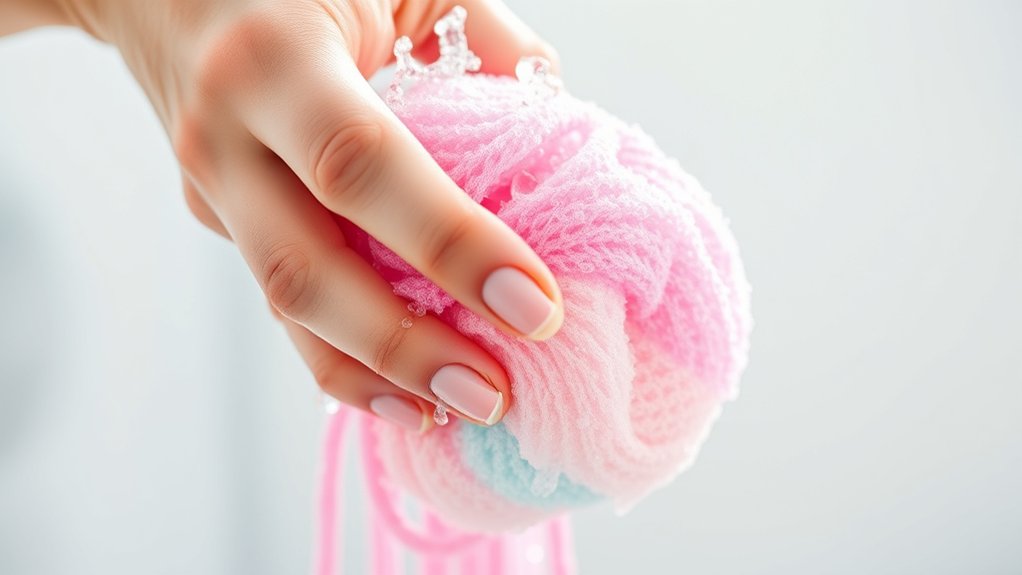
How exactly do shower loofahs clean and exfoliate your skin? Shower loofahs function by physically removing dead skin cells through gentle abrasion, promoting smoother skin. When you apply soap or body wash to a loofah, it creates a lather that helps lift dirt, oils, and impurities from your skin’s surface.
Are shower loofahs clean and exfoliate tools? Yes, they effectively cleanse while providing mechanical exfoliation, improving circulation and skin texture. However, it’s important to use them correctly and maintain hygiene to prevent bacterial buildup.
Can loofahs cause irritation? While exfoliation aids skin renewal, excessive scrubbing or using a loofah on sensitive skin may lead to mild irritation. Using a loofah gently and replacing it regularly ensures safe, effective cleansing and exfoliation.
Can Shower Loofahs Harm Your Skin or Cause Irritation?
Can using a shower loofah sometimes harm your skin or trigger irritation? Yes, loofah skin irritation can occur if you’re not careful. The texture that exfoliates can also damage sensitive skin or exacerbate conditions like eczema.
Using a shower loofah can irritate or damage sensitive skin, especially if you have eczema.
Additionally, hygiene concerns arise when loofahs retain moisture, providing an environment that can irritate skin further.
Here are key factors to consider:
- Over-exfoliation can disrupt your skin’s natural barrier, causing redness or sensitivity.
- Using a loofah too vigorously may lead to microtears on your skin.
- Infrequent cleaning or replacement increases hygiene concerns, contributing to irritation.
- Certain skin types are more prone to irritation from rough textures.
Being mindful of these points helps you avoid loofah-related skin issues.
Are Shower Loofahs Breeding Germs?
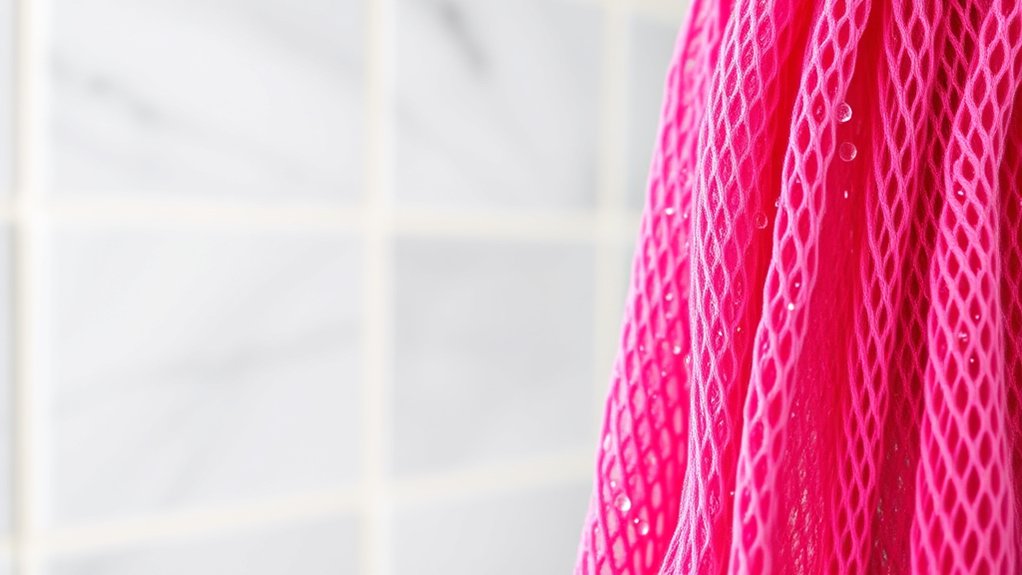
Why do shower loofahs often become breeding grounds for germs? The warm, moist environment in your shower creates ideal conditions for microbial growth on loofahs. Their porous structure traps water, soap residue, and dead skin cells, providing nutrients for bacteria and fungi.
Germ concerns arise because these microbes can multiply rapidly, potentially causing skin infections. Additionally, synthetic loofahs may experience fiber shedding, which not only reduces their effectiveness but can also harbor microbes within loose fibers.
Over time, this accumulation increases microbial load, elevating the risk of contamination. Since you use loofahs repeatedly without fully drying them, it’s no surprise they harbor germs. Understanding these factors helps explain why loofahs can be a source of unwanted bacteria and highlights the need for proper maintenance.
How to Clean Your Shower Loofah for Safety
When should you clean your shower loofah to minimize microbial buildup effectively? Experts recommend a consistent cleaning frequency of at least once a week.
Here’s how you can maintain your loofah safely:
- Rinse thoroughly after each use to remove soap and debris.
- Soak in a solution of diluted white vinegar or hydrogen peroxide for 5 minutes weekly.
- Dry completely in a well-ventilated area using proper storage tips. Avoid damp, enclosed spaces.
- Replace your loofah every 3-4 weeks to prevent bacterial colonization.
Following these steps reduces microbial growth and helps maintain hygiene. Proper cleaning frequency combined with appropriate storage tips ensures your loofah remains safe and effective for daily use.
Better Alternatives to Shower Loofahs
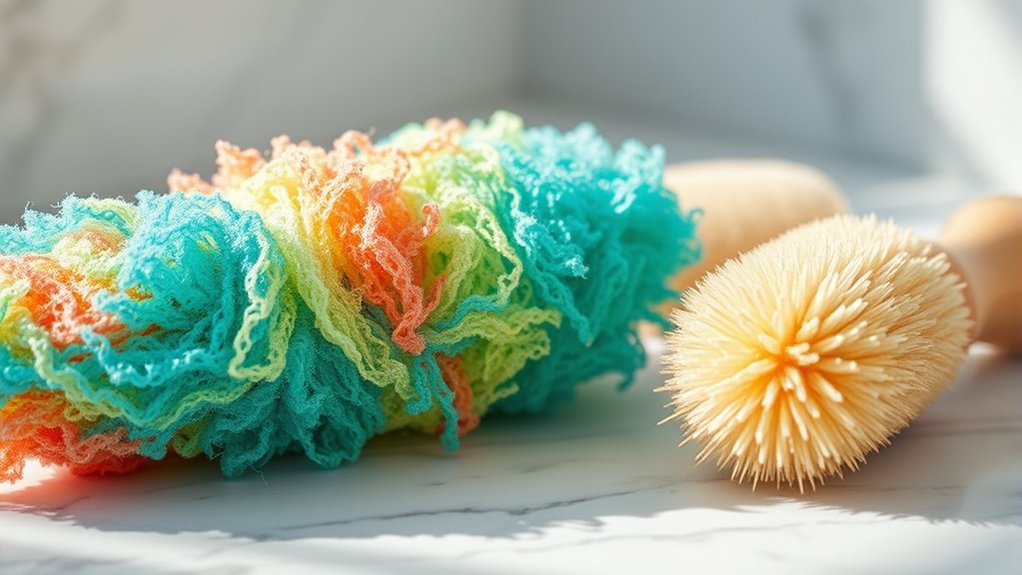
What options do you have if you want to avoid the potential hygiene risks of traditional shower loofahs? You can choose sustainable alternatives that provide effective soft exfoliation without harboring bacteria.
Natural konjac sponges, made from the konjac root, offer gentle exfoliation and biodegrade quickly, reducing environmental impact. Silicone scrubbers resist microbial growth due to their non-porous surface, making them hygienic and easy to clean.
Additionally, washcloths made from organic cotton or bamboo fibers provide controlled exfoliation and can be washed at high temperatures to eliminate germs. These options combine safety with environmental responsibility, offering you a practical way to maintain skin health while minimizing microbial risks associated with conventional loofahs.
Selecting such sustainable alternatives supports both your hygiene and ecological goals efficiently.
Frequently Asked Questions
How Often Should I Replace My Shower Loofah?
Think of your shower loofah as a pet; it needs care. You should replace it every 3-4 weeks and clean it frequently to prevent bacteria buildup.
Regularly replacing and cleaning keeps your skin healthy and safe.
Can Shower Loofahs Be Used on Sensitive Skin?
You can use shower loofahs on sensitive skin, but you should choose gentle materials to minimize irritation. Proper exfoliation benefits include removing dead skin, but overuse or rough scrubbing may cause sensitivity or inflammation.
Are Natural Loofahs Better Than Synthetic Ones?
You’ll find natural loofahs offer natural alternatives, promote eco friendly choices, and provide gentle exfoliation, while synthetic ones rely on plastics, risk bacterial buildup, and lack biodegradability.
Choosing natural loofahs supports sustainability and skin health effectively.
Do Shower Loofahs Help With Acne?
Loofahs don’t directly help with acne; poor loofah hygiene can worsen it by harboring bacteria. Avoid acne myths.
Regularly clean or replace your loofah to prevent skin irritation and breakouts effectively.
Can Children Safely Use Shower Loofahs?
Think of a gentle gardener tending delicate blooms: you can safely use shower loofahs for children, promoting exfoliation benefits. Always ensure proper hygiene to protect children’s safety and avoid skin irritation or bacterial buildup.