Are Flip Flops Good Shower Shoes
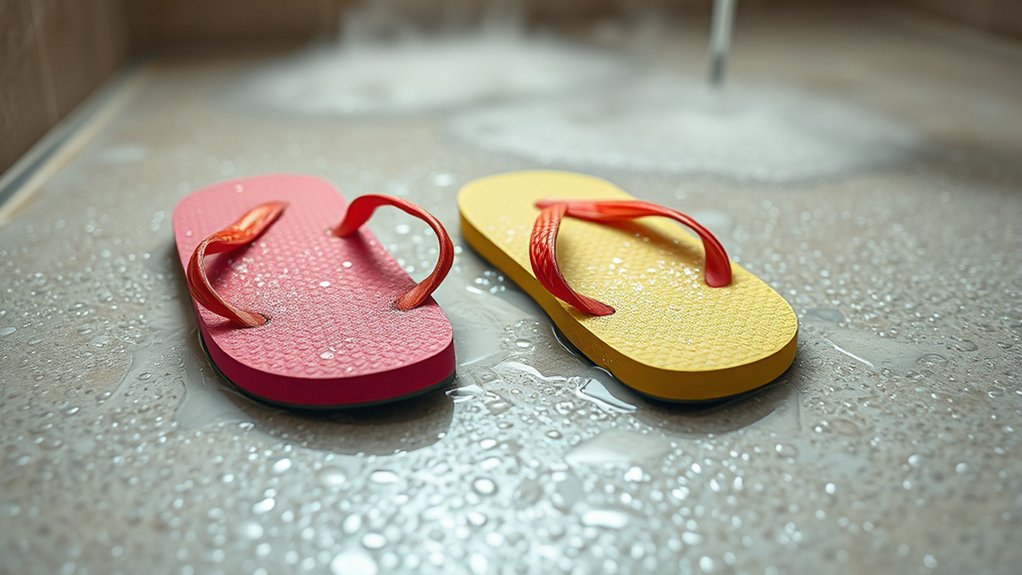
When you consider shower shoes, flip flops often come to mind for their convenience and quick-drying materials. Flip flops are popular shower shoes because they can shield your feet from bacteria and moisture in communal showers.
However, their fit and grip may not always provide the stability you need. Understanding the benefits and limitations of flip flops in wet environments is essential before deciding if they’re the right choice for your routine.
Key Takeaways
- Flip flops provide basic protection against bacteria and fungi in communal showers due to their open, easy-to-clean design.
- Water-resistant, quick-drying materials like rubber or EVA make flip flops suitable for wet environments.
- Their non-slip tread offers some grip, but limited traction may increase slip risk on soapy, wet surfaces.
- Flip flops often lack adequate foot support and stability for prolonged wear in wet areas.
- Durability can be compromised with constant water exposure, so consider material quality and construction for longevity.
What Makes a Shower Shoe Work?
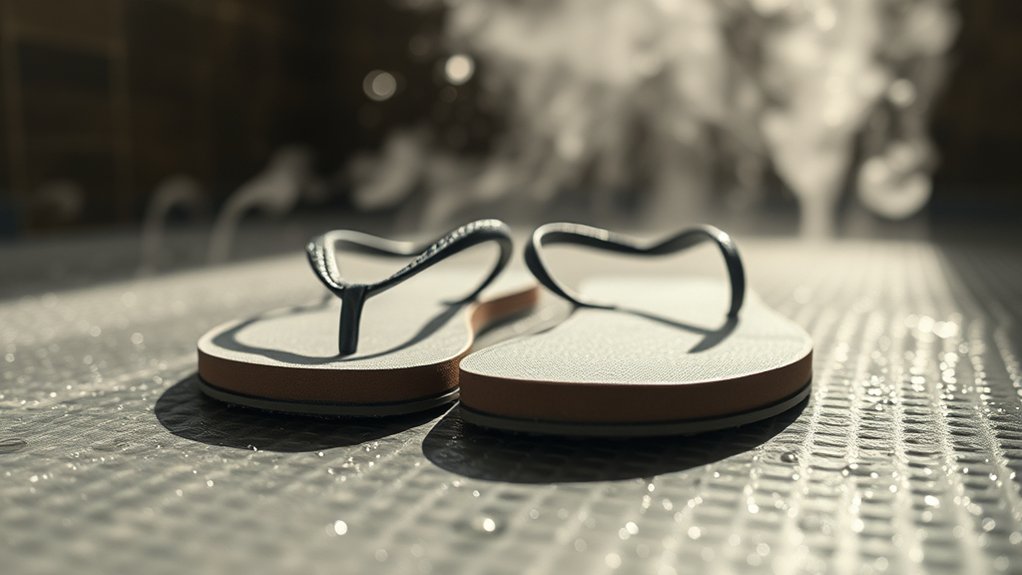
What key features determine the effectiveness of a shower shoe? You need to focus on material durability and adherence to cleanliness protocols. Durable materials resist degradation from constant exposure to water and cleaning agents, ensuring the shoe maintains its protective qualities over time.
You should choose materials like rubber or EVA, which provide longevity and structural integrity. Additionally, the shoe’s design must support thorough cleaning to comply with hygiene standards, preventing microbial growth.
You’ll find that non-porous materials and simple construction facilitate effective sanitation. Proper drainage and quick-drying properties also play critical roles in maintaining cleanliness.
Are Flip Flops a Good Choice for Shower Shoes?
When choosing flip flops as shower shoes, you need to ensure their ability to protect against bacteria and maintain hygiene. You should also evaluate if they provide adequate comfort and foot support during use.
Lastly, assess how well they hold up in consistently wet conditions to ensure durability.
Hygiene and Bacteria Protection
How effectively do flip flops protect you from bacteria and hygiene risks in communal showers? Flip flops create a physical barrier between your feet and contaminated surfaces, reducing bacteria exposure. However, their protective efficiency depends on the material and hygiene practices you follow.
Consider these factors:
- Non-porous materials like rubber prevent bacteria absorption better than fabric.
- Easy-to-clean flip flops allow you to maintain hygiene by frequent washing.
- Wearing them consistently minimizes direct contact with shared shower floors.
- Inspect for damage regularly, as cracks can harbor bacteria and reduce protection.
Comfort and Foot Support
While flip flops offer a barrier against bacteria in communal showers, their design often lacks adequate foot support and comfort for extended wear. You’ll notice that most flip flops provide minimal lateral support, which can lead to instability on wet surfaces.
This absence of side support increases the risk of ankle strain or slips. Additionally, flip flops typically offer limited arch comfort, failing to distribute weight evenly across your foot. Without proper arch support, your feet may tire quickly, causing discomfort during longer use.
If you plan to wear footwear in the shower for extended periods, consider options designed with enhanced lateral support and contoured footbeds that improve arch comfort. This ensures both protection from pathogens and maintains foot health during use.
Durability in Wet Conditions
Although flip flops are commonly used as shower shoes, their durability in consistently wet conditions can vary substantially depending on the materials and construction. When evaluating flip flops for shower use, consider these factors:
1. Material Quality
Opt for waterproof, quick-drying materials like EVA or rubber that withstand moisture without degrading.
2. Durability Testing Results
Check for products that have undergone durability testing in wet environments to ensure long-lasting performance.
3. Slip Resistance
Prioritize soles with textured patterns or specialized compounds to reduce slip hazards on wet surfaces.
4. Construction Integrity
Look for reinforced straps and secure sole attachment to prevent premature wear or detachment.
What Are the Pros of Using Flip Flops as Shower Shoes?
Why should you consider using flip flops as shower shoes? Flip flops provide essential protection against bacteria and fungi commonly found in communal showers. Their open design allows for excellent toe separation, which helps minimize moisture buildup and reduces the risk of fungal infections like athlete’s foot.
Additionally, flip flops are lightweight and easy to slip on and off, making them convenient for quick showers. The textured soles often found on flip flops offer slip resistance, enhancing safety on wet surfaces.
They are also easy to clean and dry rapidly, preventing prolonged dampness that could harbor pathogens. Overall, flip flops combine hygiene, convenience, and functional design, making them a practical choice for shower footwear in environments where foot protection is critical.
What Are the Cons of Flip Flops in Wet Showers?
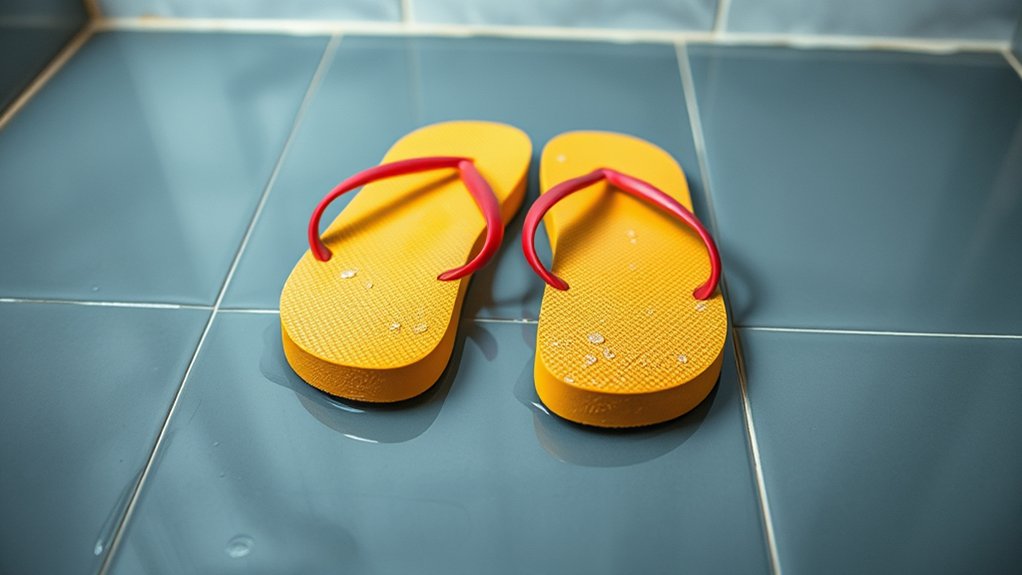
How effective are flip flops in preventing slips and injuries in wet shower environments? While they provide some protection, flip flops have notable drawbacks in these settings:
- Reduced slipper durability. Constant exposure to water can degrade materials quickly, shortening their lifespan.
- High water absorption. Some flip flops absorb water, making them heavier and uncomfortable.
- Limited grip. The sole’s traction often isn’t sufficient on wet, soapy surfaces, increasing slip risk.
- Poor foot support. Lack of arch support may lead to discomfort and instability during movement.
You should weigh these cons carefully before relying on flip flops as shower shoes, especially if safety and longevity are priorities.
Which Flip Flop Materials Work Best for Shower Use?
Considering the drawbacks of flip flops in wet shower environments, selecting the right material becomes key to maximizing safety and comfort. Hard plastic soles provide durability and water resistance but may lack sufficient grip on slippery surfaces. Rubber straps offer flexibility and enhanced traction, improving stability during use.
Leather options, while stylish, generally absorb water and degrade quickly, making them unsuitable for frequent shower exposure. Suede uppers are also not recommended due to their tendency to retain moisture and develop odors.
For shower use, prioritize flip flops with non-absorbent materials such as rubber or synthetic hard plastic combined with secure rubber straps. These materials reduce slipping risk, dry quickly, and maintain structural integrity, ensuring safer and more hygienic shower experiences.
How Do Flip Flops Compare to Other Shower Shoes?
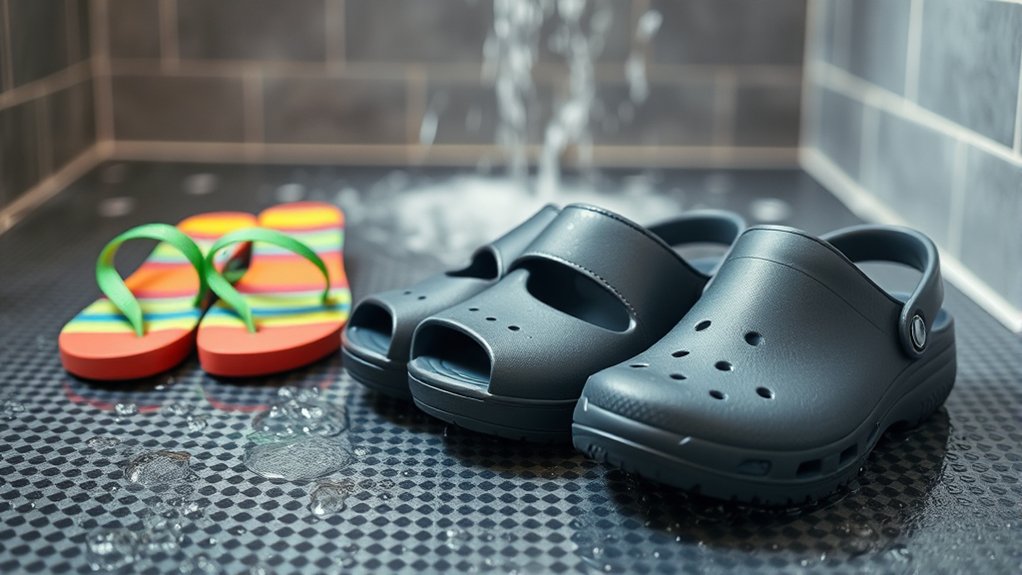
When evaluating shower footwear, you’ll notice flip flops offer a distinct balance of convenience and protection compared to alternatives like slides, water shoes, or shower sandals. Here’s how flip flops measure up:
- Ease of Use: Flip flops slip on and off quickly, unlike water shoes, which require more effort.
- Protection: They provide basic sole coverage but less toe protection than closed water shoes.
- Drying Time: Flip flops dry faster than water shoes but may retain moisture longer than open slides.
- Traction: Quality flip flops have decent grip, though dedicated shower sandals often feature enhanced anti-slip soles.
These points help you weigh topic ideas related to shower footwear choice, unrelated to other sections. Overall, flip flops blend simplicity with adequate protection, making them a practical shower shoe option.
How to Keep Your Flip Flops Clean and Durable
Why should you prioritize cleaning and maintaining your flip flops regularly? Regular care routines prevent microbial growth and material degradation, extending durability and hygiene. Material testing shows that buildup from dirt and sweat accelerates wear and reduces grip.
Implement the following maintenance steps:
| Step | Frequency | Purpose |
|---|---|---|
| Rinse with water | After each use | Remove surface contaminants |
| Clean with mild soap | Weekly | Eliminate bacteria and oils |
| Air dry | After cleaning | Prevent mold and odor |
| Inspect for damage | Monthly | Identify wear and tear early |
How to Pick the Right Shower Shoes for You
How do you determine which shower shoes best meet your needs? Start by assessing your shower footwear habits, then consider these discussion ideas:
- Material: Choose water-resistant, quick-drying materials like rubber or EVA to prevent fungal growth.
- Grip: Ensure the soles have non-slip tread to reduce the risk of slips on wet surfaces.
- Fit: Select shoes that fit snugly without being tight to avoid blisters or discomfort.
- Hygiene: Opt for easily cleanable designs to maintain optimal foot health.
Frequently Asked Questions
Can Flip Flops Cause Foot Odor After Shower Use?
Don’t jump the gun. Flip flops can cause foot odor if worn wet after showering in communal showers. Moisture traps bacteria, leading to odor.
Always dry your feet and flip flops thoroughly to prevent this issue.
Are Flip Flops Safe for Communal Gym Showers?
You can use flip flops in communal gym showers if their shower shoe design offers slip resistance and the material durability withstands moisture. However, ensure they dry quickly to prevent bacterial growth and maintain hygiene.
How Often Should Flip Flops Be Replaced as Shower Shoes?
You should replace your flip flops every 3 to 6 months, depending on wear and hygiene habits.
Old footwear can harbor bacteria, so regular replacement guarantees better protection and maintains proper hygiene in communal shower environments.
Do Flip Flops Provide Enough Arch Support for Daily Shower Use?
You won’t find flip flops offering mountaintop arch support; their minimal design lacks sufficient arch support for daily shower use. Focus on two-word discussion ideas like “foot stability” and “pressure distribution” for better footwear choices.
Can Wearing Flip Flops in the Shower Prevent Athlete’s Foot?
Wearing flip flops as shower shoes can reduce your risk of athlete’s foot by preventing direct contact with contaminated surfaces. However, they don’t guarantee full protection, so maintain proper hygiene and dry your feet thoroughly.