Are You Supposed to Shower With the Fan on
Much like a thermostat regulates temperature, your bathroom fan plays an essential role in managing moisture levels during a shower. Are you supposed to shower with the fan on? This question often comes up as people wonder if turning it on is truly necessary or just a recommended habit.
Understanding the fan’s function in controlling humidity and preventing damage can change how you approach ventilation. Before you decide to skip it next time, consider what happens when that fan stays off.
Key Takeaways
- Showering with the fan on controls moisture and prevents mold by rapidly expelling humid air.
- Turn the fan on before starting the shower and keep it running during and 15-20 minutes after.
- Proper ventilation reduces condensation, protects walls, ceilings, and maintains indoor air quality.
- Fans with adequate airflow (CFM) and low noise ratings maximize moisture removal and comfort.
- If ventilation is limited, use alternatives like opening a window or a portable dehumidifier.
Should You Shower With the Bathroom Fan On?
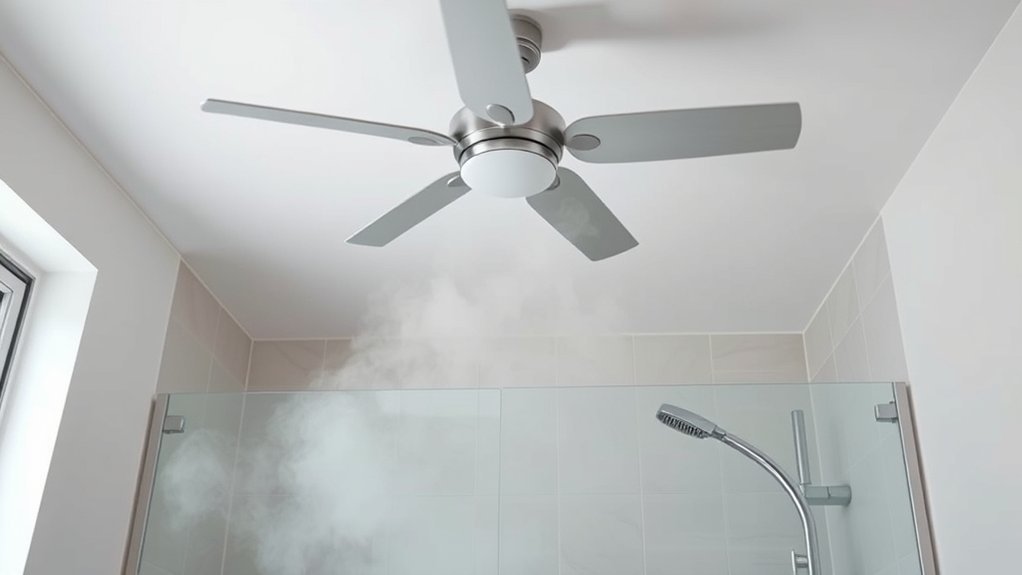
Why should you turn on the bathroom fan while showering? Activating the fan helps control humidity levels by expelling moist air, which prevents condensation on surfaces. This reduces the risk of mold growth, a common issue in damp environments.
Ignoring this step is not an irrelevant topic or unrelated concept; rather, it directly impacts indoor air quality and structural integrity. You might think ventilation is only necessary after showering, but running the fan during your shower actively manages moisture accumulation as it occurs.
Why Bathroom Fans Are Essential During Showers
You need to run your bathroom fan during showers to control excess moisture that accumulates quickly. This moisture creates an ideal environment for mold growth, which can damage surfaces and affect air quality.
Using the fan helps ventilate humid air, reducing these risks effectively.
Preventing Mold Growth
How does moisture from your shower contribute to mold growth? When you shower, warm water vapor saturates the air, creating a damp environment ideal for mold spores to thrive. Mold develops on walls, ceilings, and grout where moisture lingers.
Using a bathroom fan equipped with moisture sensors helps combat this by automatically activating when humidity rises, efficiently reducing dampness. Although fan noise might initially seem bothersome, modern systems minimize sound while maintaining airflow.
Running the fan during and after your shower accelerates moisture removal, preventing the persistent wetness mold needs to grow. By consistently managing humidity levels with your fan, you considerably reduce mold risk, protecting your bathroom’s structural integrity and your health.
Reducing Excess Moisture
When does moisture become a problem in your bathroom? Excess moisture accumulates during showers, increasing the risk of irreversible water damage to walls and fixtures.
Using a bathroom fan helps you control this moisture effectively. Here’s why fans are essential:
- They rapidly expel humid air, reducing condensation on surfaces.
- They prevent irreversible water damage by maintaining dry air levels.
- They minimize mold and mildew growth caused by lingering moisture.
- Noise considerations have improved with modern fans, allowing you to run them without disruption.
How the Bathroom Fan Controls Moisture and Humidity During Showers
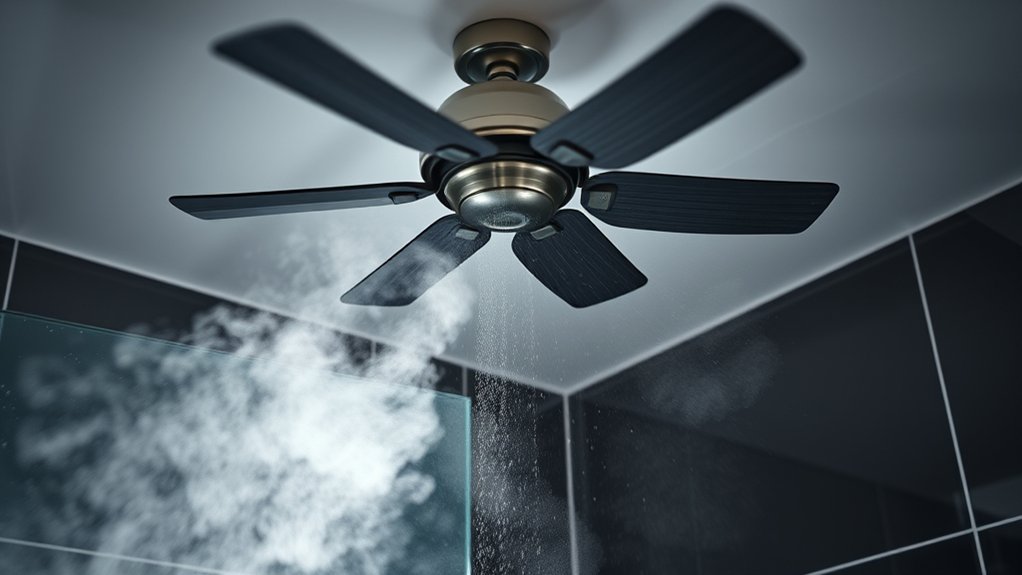
When you turn on the bathroom fan during a shower, it efficiently removes excess moisture from the air, reducing humidity levels. This process helps prevent mold growth by limiting the damp environment mold needs to thrive.
Additionally, the fan maintains better air quality by expelling airborne particles and odors generated during your shower.
Moisture Removal Efficiency
Why does running your bathroom fan during a shower matter? Effective moisture management hinges on maintaining optimal humidity metrics to prevent excessive dampness. Your bathroom fan actively removes moist air, controlling humidity spikes that occur during showers.
Here’s how moisture removal efficiency works:
- Air Exchange Rate: The fan replaces humid air with drier air, reducing relative humidity quickly.
- Volume Capacity: Fans rated by CFM (cubic feet per minute) determine how much moisture they can expel.
- Placement and Coverage: Proper fan positioning ensures uniform moisture extraction across the shower area.
- Operational Duration: Running the fan during and after your shower maximizes moisture removal efficiency.
Preventing Mold Growth
How does running your bathroom fan during showers help prevent mold growth? By actively expelling moist air, the fan reduces humidity levels, limiting the environment mold needs to thrive. Without this control, excess moisture accumulates on surfaces, fostering mold colonies.
Avoiding irrelevant tangents and unrelated topics, focus solely on moisture control’s role in mold prevention.
| Factor | Without Fan | With Fan |
|---|---|---|
| Relative Humidity (%) | 70-90 | 40-50 |
| Moisture on Surfaces | High condensation | Minimal condensation |
| Mold Growth Risk | High | Low |
| Air Circulation | Poor | Enhanced |
Using the fan ensures consistent moisture removal, directly controlling conditions that cause mold growth and maintaining a healthier bathroom.
Maintaining Air Quality
What role does your bathroom fan play in maintaining air quality during showers? It actively controls moisture and humidity, preventing stagnant air that can degrade indoor air quality. When you shower, warm water vapor increases humidity, which your fan expels to avoid excessive moisture buildup. This process mimics how you maintain refrigerator temperatures to keep food fresh after grocery shopping; both require precise environmental control.
Here’s how your bathroom fan helps:
- Removes excess water vapor rapidly
- Reduces growth of airborne bacteria and mold spores
- Maintains balanced humidity levels to improve air freshness
- Prevents condensation on surfaces, preserving structural integrity
Using your bathroom fan during showers ensures a healthier environment by managing moisture similar to temperature control in refrigeration.
What Happens If You Leave the Bathroom Fan Off During Showers
Leaving the bathroom fan off during showers allows moisture to accumulate rapidly on walls, ceilings, and fixtures. This excess humidity creates an environment conducive to mold growth and mildew formation, both of which compromise indoor air quality and structural integrity.
Leaving the bathroom fan off during showers fosters moisture buildup, encouraging mold and mildew that harm air quality and structure.
Without proper ventilation, water vapor condenses on surfaces, leading to water damage such as peeling paint, warped wood, and weakened drywall. Over time, these two-word ideas, “water damage,” translate into costly repairs and health risks from allergens.
Additionally, stagnant moisture promotes bacterial proliferation, further degrading your bathroom’s hygiene. By neglecting to run the fan, you disrupt the moisture equilibrium, allowing condensation to persist long after your shower ends.
This persistent dampness deteriorates materials and fosters microbial growth, highlighting the essential role of ventilation in maintaining a safe, dry bathroom environment.
Can You Shower Safely Without the Bathroom Fan Running?
You can shower without the bathroom fan running, but you risk excess moisture buildup that promotes mold and mildew growth. Without proper ventilation, humidity levels rise, potentially damaging walls and fixtures over time.
To mitigate this, consider alternative ventilation methods like opening a window or using a portable dehumidifier.
Moisture Buildup Risks
How does moisture accumulate when you shower without the bathroom fan running? When you skip turning on the fan, steam lingers longer, raising humidity levels. Over time, this trapped moisture can lead to several risks:
- Mold and mildew growth on walls, ceilings, and grout.
- Structural damage due to wood rot or weakened drywall.
- Increased condensation on mirrors and fixtures, accelerating wear.
- Persistent dampness creating an unhealthy environment.
While some avoid the fan due to noise considerations or personal shower etiquette preferences, the absence of ventilation significantly heightens moisture buildup risks. You might think airing out the room later helps, but it’s often insufficient for rapid moisture removal.
To maintain a safe, clean bathroom environment, it’s scientifically advisable to use the fan during and shortly after showering.
Alternative Ventilation Methods
When considering alternatives to running the bathroom fan during your shower, several effective ventilation methods can help control moisture levels. You can open a window or door to create cross-ventilation, which facilitates air exchange and reduces humidity.
Using a dehumidifier nearby also assists in maintaining optimal humidity control by extracting excess moisture from the air. Adjusting your shower timing by taking shorter showers or showering during less humid times of the day can further minimize moisture buildup.
Additionally, installing an air purifier with a humidity sensor can automate ventilation based on real-time humidity levels. While these methods provide alternatives, they may not match the efficiency of a dedicated bathroom fan.
Therefore, combining multiple strategies often yields the best results in preventing mold and maintaining air quality.
When Should You Turn the Bathroom Fan On and Off During Your Shower?
At what point during your shower should the bathroom fan be activated to maximize moisture control? To achieve optimal humidity control and energy efficiency, follow these steps:
- Turn the fan on right before you start showering. This preemptively manages rising moisture.
- Keep the fan running throughout your shower to continuously expel humid air.
- After finishing, leave the fan on for 15-20 minutes to remove residual humidity.
- Finally, turn off the fan once moisture levels normalize, preventing unnecessary energy use.
This timing strategy efficiently reduces condensation, minimizes mold growth, and conserves energy by avoiding prolonged fan operation. Consistent use aligned with these steps ensures your bathroom maintains a healthier, drier environment.
Choosing a Bathroom Fan for Proper Ventilation
Selecting the right bathroom fan plays a crucial role in maintaining effective ventilation and reducing moisture buildup. You need a fan with adequate airflow capacity, measured in cubic feet per minute (CFM), to match your bathroom’s size.
Undersized fans fail to remove humidity efficiently, while oversized units can cause disproportionate noise and unnecessary energy waste. Look for fans with a high Noise Reduction Rating (sones) to avoid disruptive sounds.
Additionally, consider energy-efficient models with Energy Star certification, as they minimize power consumption without sacrificing performance. Proper duct sizing and installation also enhance ventilation efficiency.
Maintaining Your Bathroom Fan for Best Performance
How often should you maintain your bathroom fan to ensure it functions optimally? Regular maintenance is essential for effective ventilation and longevity. Here are four maintenance tips to keep your fan running efficiently:
- Clean the fan cover and blades every 3-6 months to remove dust and debris that impair airflow.
- Inspect and tighten any loose screws or mounting brackets to prevent vibration and noise.
- Check the vent duct annually for blockages or mold growth, which reduce exhaust performance.
- Replace the fan motor or components if you notice unusual sounds or reduced suction.
These discussion ideas emphasize proactive care. Following these maintenance tips not only improves air quality but also maximizes energy efficiency and reduces wear, ensuring your bathroom fan performs at its best.
Debunking Common Myths About Showering With the Bathroom Fan On
Why should you turn on the bathroom fan while showering? It’s a common question surrounded by many DIY myths. Let’s dive in some myth busting to clarify.
One widespread misconception is that running the fan wastes energy or overdries the air. In reality, the fan removes excess humidity, preventing mold and mildew growth, which can damage your bathroom’s structure and air quality.
Another myth suggests the fan won’t make a noticeable difference during a short shower. Scientifically, even brief use helps maintain proper ventilation.
Some believe opening a window alone suffices, but that often fails to remove all moisture effectively. By debunking these myths, you can confidently use your bathroom fan to improve ventilation and maintain a healthier environment.
How the Fan Protects Bathroom Walls and Ceilings
A bathroom fan actively removes moisture-laden air that accumulates on walls and ceilings during showers. Without proper ventilation, excess humidity can damage surfaces and compromise bathroom electrical systems.
Here’s how the fan protects your bathroom:
- It reduces condensation, preventing paint and wallpaper from peeling.
- It limits mold and mildew growth, safeguarding structural integrity.
- It protects bathroom electrical components by keeping humidity levels in check.
- Advanced fans with humidity sensors automatically adjust airflow, ensuring optimal moisture control.
Frequently Asked Questions
Can Using a Bathroom Fan Reduce Bathroom Odors?
Yes, using a bathroom fan during shower ventilation effectively reduces humidity, preventing mold and mildew growth. It also enhances odor mitigation by expelling unpleasant smells, improving air quality and maintaining a fresher bathroom environment.
Does Running the Fan Increase Electricity Bills Significantly?
You won’t see a significant increase in bathroom exhaust costs by running the shower fan. Shower fan energy consumption is low, so using it during showers efficiently manages humidity without substantially raising your electricity bills.
Are There Health Risks From Inhaling Bathroom Fan Air?
Like breathing through a slightly dusty filter, inhalation exposure to bathroom fan air might carry minimal health risks if the fan’s dirty or moldy.
Regular cleaning prevents contaminants, ensuring your air remains safe and healthy during showers.
How Loud Should a Bathroom Fan Be During Operation?
Your bathroom fan should produce minimal noise, ideally under 1.0 sones, to avoid overpowering shower noise. Proper fan placement near the shower ensures effective ventilation without excessive sound, maintaining comfort and reducing humidity efficiently.
Can Bathroom Fans Prevent Mold Growth Outside the Shower Area?
Yes, bathroom fans help prevent mold outside the shower by controlling humidity levels. Proper exhaust placement ensures efficient moisture removal, reducing dampness and inhibiting mold growth beyond the shower area for a healthier environment.