Are Plastic Shower Heads Bad
Did you know that over 60% of shower heads sold today contain some form of plastic? Plastic shower heads are popular due to their affordability and resistance to corrosion. However, concerns about chemical leaching and durability persist.
Understanding the materials used and how they interact with water and skin is essential before making a choice. Let’s explore what sets plastic shower heads apart and when they might be the right—or wrong—option for you.
Key Takeaways
- Plastic shower heads are generally safe if made from high-grade, BPA-free plastics that minimize chemical leaching and skin risks.
- Lower-quality plastics may leach harmful chemicals and support microbial growth due to porosity and material degradation.
- Plastic heads are lightweight and corrosion-resistant but less durable than metal, often leading to shorter lifespan and potential breakage.
- Environmental concerns include plastic waste accumulation and recycling challenges due to composite materials and limited biodegradability.
- Plastic shower heads suit budget or temporary use but metal options provide better durability, corrosion resistance, and long-term value.
What Plastic Shower Heads Are Made Of
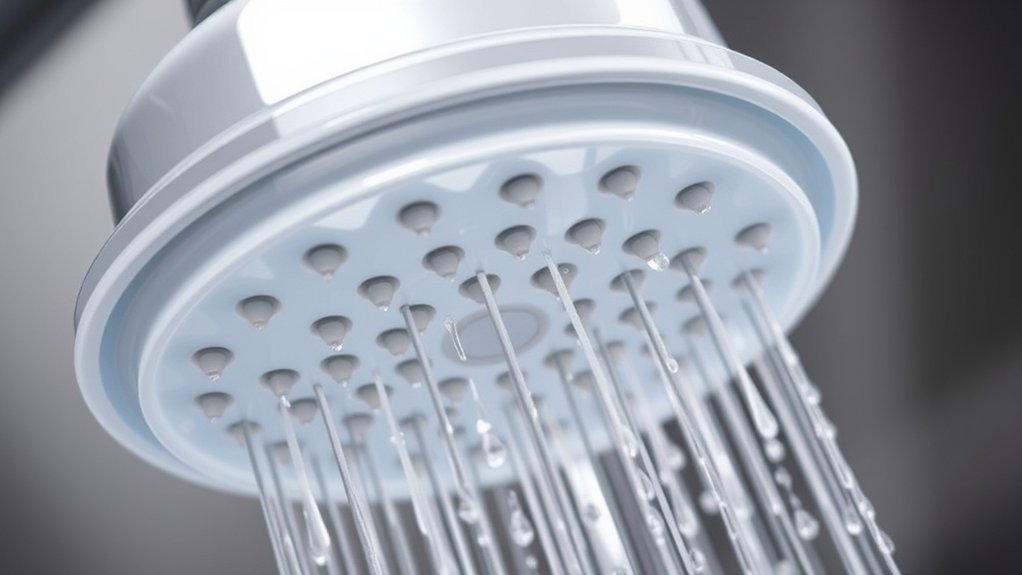
What materials do manufacturers use to make plastic shower heads? Typically, they utilize polymers such as ABS (acrylonitrile butadiene styrene), polypropylene, or polycarbonate due to their durability and resistance to water and heat.
Plastic shower heads are commonly made from durable, water-resistant polymers like ABS, polypropylene, or polycarbonate.
The plastic composition often includes additives to enhance strength, UV resistance, and antimicrobial properties. You should note the material concerns linked to potential chemical leaching, especially if lower-grade plastics are used.
Manufacturers select plastics balancing cost, performance, and safety standards. The choice impacts the shower head’s longevity and environmental footprint.
Understanding the specific polymers and their properties helps you evaluate product quality and potential risks. This technical insight is essential for making informed decisions when purchasing plastic shower heads for your home.
Do Plastic Shower Heads Affect Skin or Water Quality?
How might plastic shower heads influence your skin or the quality of your water? Generally, plastic shower heads do not pose direct risks to skin or water safety when made from BPA-free, non-toxic materials. However, concerns arise if low-quality plastics leach chemicals or harbor microbial growth, potentially affecting water purity and skin health.
Compared to metal, plastic offers advantages in durability and aesthetics but requires eco considerations regarding waste and recyclability.
| Factor | Impact on Skin/Water Quality |
|---|---|
| Material Safety | BPA-free plastics reduce risks |
| Chemical Leaching | Possible in poor-quality plastics |
| Microbial Growth | Plastic porosity may increase risk |
| Durability | Resists corrosion, less contamination |
| Eco Considerations | Plastic waste impacts environment |
Plastic vs. Metal Shower Head Durability
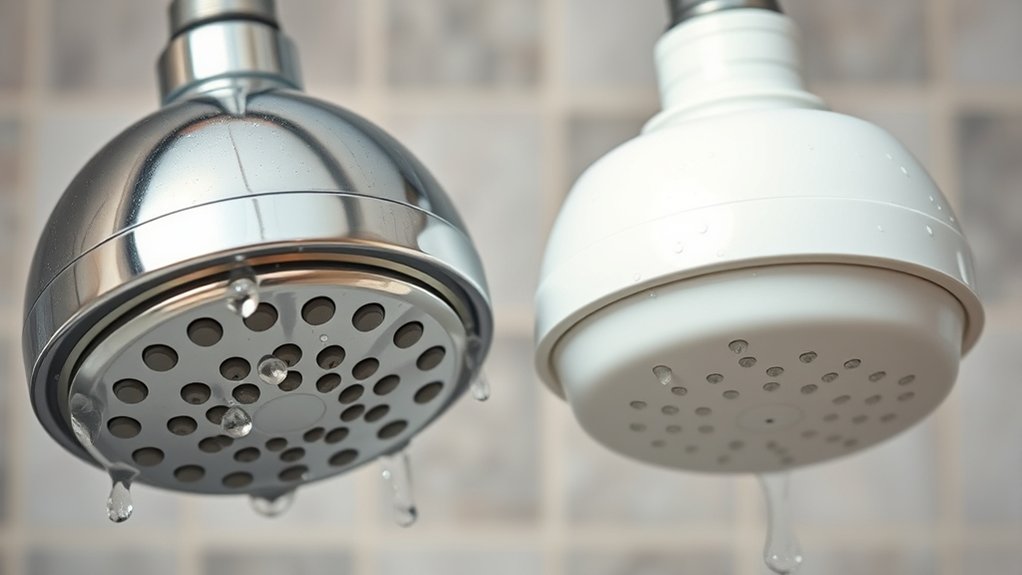
Although both plastic and metal shower heads serve the same fundamental purpose, their durability varies considerably due to material properties. In a durability comparison, metal shower heads, typically made from brass or stainless steel, exhibit superior resistance to impact, corrosion, and temperature fluctuations. Their dense material composition provides enhanced structural integrity, reducing the risk of cracks or breaks over time.
Conversely, plastic shower heads, often constructed from ABS or polypropylene, are lighter and less resistant to mechanical stress, making them more prone to wear and deformation. However, high-grade plastics with reinforced composites can offer moderate durability. When you evaluate durability, consider that metal units generally last longer under typical bathroom conditions, while plastic models may require replacement sooner due to gradual degradation of their material composition.
This technical contrast informs your choice based on expected lifespan and maintenance needs.
Are Plastic Shower Heads Eco-Friendly?
When evaluating the eco-friendliness of plastic shower heads, you need to contemplate their entire lifecycle from production to disposal. Plastic shower heads often contain polymers derived from petrochemicals, raising eco friendly concerns regarding resource extraction and energy-intensive manufacturing processes.
Compared to metal counterparts, plastics may require less energy to produce but typically have lower durability, potentially leading to more frequent replacements. The material composition also influences recyclability; many plastics used in shower heads are thermoset or composite materials that complicate recycling efforts.
Additionally, end-of-life disposal often results in plastic waste accumulation, contributing to environmental pollution if not properly managed. Therefore, while plastic shower heads may offer short-term environmental benefits through reduced production energy, their overall eco-friendliness is limited by material composition, durability, and waste management challenges.
When to Choose a Plastic Shower Head
Considering the environmental trade-offs of plastic shower heads, you might still find them suitable for specific situations. If you prioritize cost over durability, plastic models offer an affordable alternative to metal options, often costing substantially less.
However, you should weigh the concern over materials, as some plastics may degrade faster or leach chemicals, affecting longevity and water quality. Choose plastic shower heads when budget constraints are tight or when you need a lightweight, corrosion-resistant option, such as in low-humidity or temporary installations.
For long-term use, metal or composite materials often provide better durability. Ultimately, assess your priorities for cost vs durability and any specific concerns about material safety to determine whether a plastic shower head fits your needs effectively.
Frequently Asked Questions
Can Plastic Shower Heads Cause Mold Buildup Inside?
Yes, plastic shower heads can cause mold growth inside if moisture accumulates. Mineral buildup also creates surfaces where mold thrives.
Regular cleaning reduces these risks, maintaining hygiene and preventing microbial contamination in your shower head.
How Often Should Plastic Shower Heads Be Cleaned?
You should clean your plastic shower head every 1-2 months to prevent mold concerns. Maintaining this cleaning frequency reduces biofilm buildup and ensures optimal water flow, supported by research on microbial growth in damp environments.
Are Plastic Shower Heads Safe for Hot Water Systems?
You won’t melt your shower with plastic heads! Their plastic durability withstands typical hot water systems well, but prolonged exposure to high temperatures may increase chemical leaching.
Choose high-grade plastics to minimize risks and assure safety.
Do Plastic Shower Heads Affect Water Pressure?
Plastic materials in shower heads typically don’t reduce water pressure substantially. You’ll find that water pressure depends more on your plumbing and shower head design than the plastic itself.
Plastic usually handles flow efficiently without major loss.
Can Plastic Shower Heads Be Recycled After Use?
You can recycle plastic shower heads, but it depends on local recycling streams and disposal guidelines.
Check if your facility accepts the specific plastic type, and follow proper disposal methods to guarantee effective recycling and reduce environmental impact.