Are All Shower Stems the Same Size
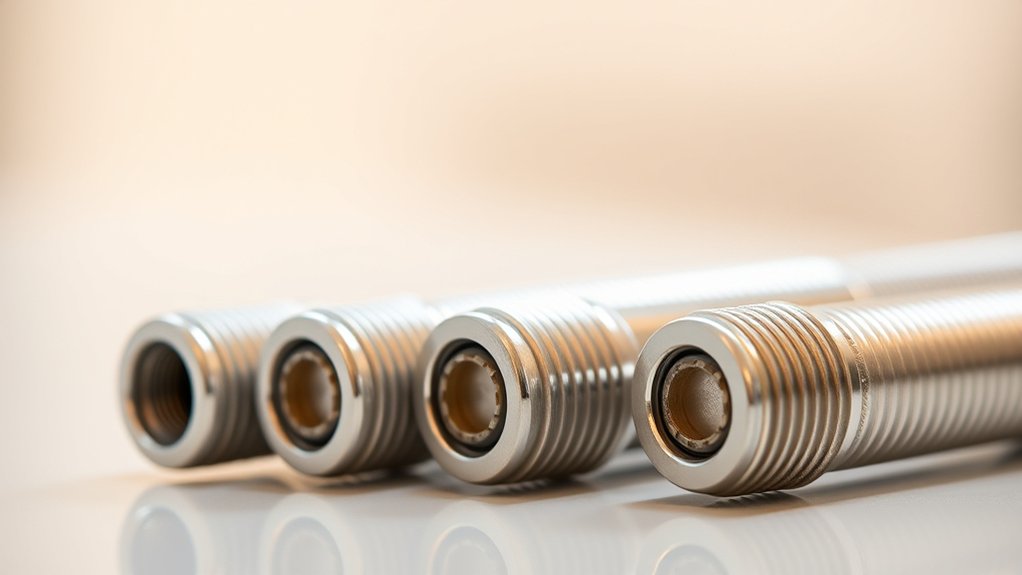
You might assume all shower stems are the same size, but that’s not the case. These components vary considerably in diameter, length, threading, and spline count depending on the brand and valve model. Using the wrong size can lead to leaks or poor function, so identifying the exact specifications is essential before replacement.
Understanding how to measure and verify your stem is key—otherwise, you risk complications that could have been avoided. Taking the time to ensure the correct fit will save you time and money in the long run. Always double-check your shower stem size before making a purchase.
Key Takeaways
- Shower stems vary in size by brand, model, diameter, length, and threading type.
- Common diameters include 1/2 inch and 3/4 inch, but exact measurements differ.
- Stem length typically ranges between 2 to 4 inches, affecting valve fit and function.
- Using an incorrect stem size causes leaks, poor water control, and potential damage.
- Manufacturer specifications must be followed for proper stem compatibility and installation.
What Shower Stems Are and Why Size Is Crucial
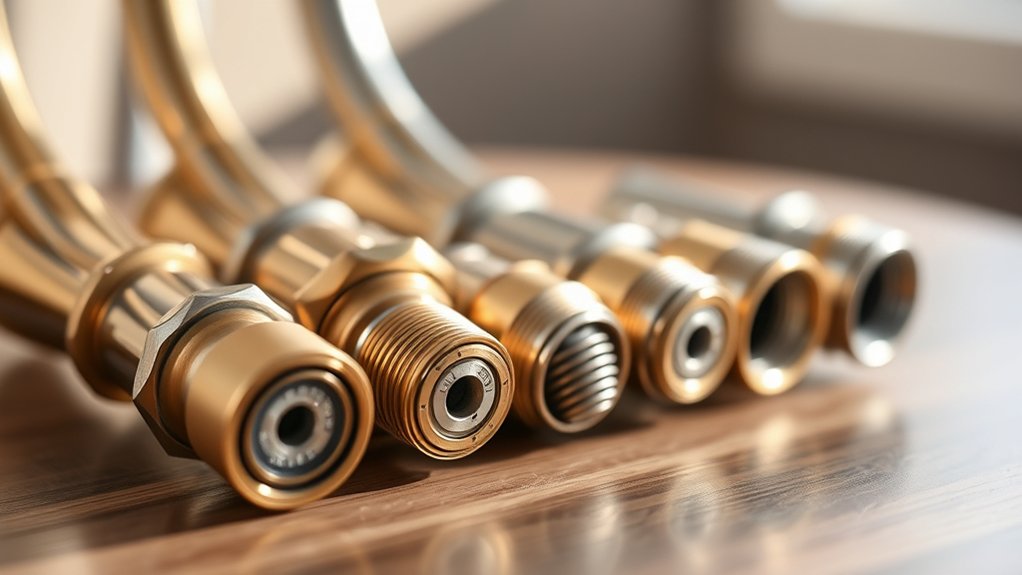
What exactly are shower stems, and why does their size matter? Shower stems are the internal components controlling water flow and temperature in your shower valve. Their dimensions directly affect fit and function.
When you learn how to pick compatible stems, you avoid leaks, poor water control, and damage. Sizes vary by brand and model, so using the wrong stem causes operational issues.
The pros of selecting the correct size include smooth valve operation and longevity. A con is that identifying the right size requires precision and understanding your valve type.
Choosing incompatible stems risks costly repairs and inefficiency. Consequently, knowing the importance of stem size helps you maintain your shower system’s performance and avoid frustrating malfunctions.
How to Measure Your Shower Stem Accurately
How can you guarantee your replacement shower stem fits perfectly? Start by turning off the water supply and removing the handle and trim to expose the stem. Use a caliper or ruler to measure the stem’s length from the base to the tip, noting the number of splines or grooves.
Measure the diameter precisely, since even minor variances affect fit. Check for any threading or seat dimensions that might impact compatibility. While you’re at it, inspect the drain area for buildup. Regular drain maintenance prevents clogs that can interfere with water pressure.
Also, consider tile cleaning around the fixture to avoid debris affecting stem installation. Accurate measurements ensure a proper seal, preventing leaks and costly repairs. Follow these steps to maintain your shower’s functionality and extend its lifespan.
Common Shower Stem Sizes and Types Explained
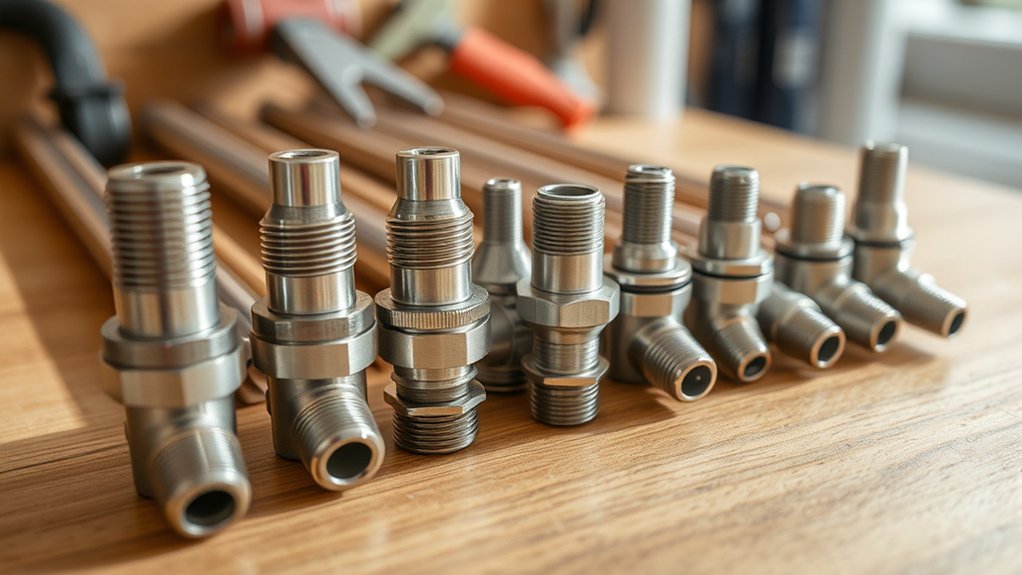
You’ll find shower stems come in a few standard sizes, typically measured by diameter and length. Knowing the type, whether cartridge, compression, or ceramic disc, helps guarantee compatibility with your valve.
Let’s review the common dimensions and stem types to help you select the right replacement.
Standard Shower Stem Dimensions
When selecting a replacement shower stem, understanding the standard dimensions is essential for compatibility and proper function. Shower stems typically follow industry norms to ensure a precise fit, avoiding any unrelated topic or off topic discussion about unusual sizes. Key measurements include diameter, length, and threading specifications.
Consider these standard dimensions:
- Diameter: Commonly 3/4 inch or 1/2 inch, matching the valve body
- Length: Varies between 2 to 4 inches to accommodate valve depth
- Thread Type: Usually NPT (National Pipe Thread) for secure fitting
- Stem Diameter: Typically 7/16 inch for handle attachment
- Splines or Grooves: Standardized for handle compatibility
Knowing these dimensions helps you select the correct stem without guesswork or off topic confusion.
Types of Shower Stems
Which type of shower stem fits your plumbing setup depends on several factors, including valve design, handle style, and manufacturer specifications. Common types include compression stems, cartridge stems, and ceramic disc stems, each varying in size and function.
When carefully replacing a shower stem, you must identify the exact type to ensure compatibility. Compression stems use washers and nuts, while cartridge stems involve a single unit controlling water flow. Ceramic disc stems offer durability with smooth operation.
You should always verify dimensions and confirm that all components are compatible to prevent leaks or malfunction. Using incompatible components can lead to improper sealing or damage.
How Shower Stem Sizes Vary by Brand
How do shower stem sizes differ across various brands? When selecting a replacement, you must consider that showerhead compatibility and valve compatibility are not universal. Each manufacturer may design stems with subtle size variations affecting fit and function.
Key factors causing size variation include:
- Diameter of the stem shaft
- Length of the stem extension
- Thread pitch and type
- Handle connection dimensions
- Valve cartridge interface
These differences impact how well the stem aligns with your existing valve and showerhead. If you ignore brand-specific dimensions, you risk improper sealing or operational issues. Always reference manufacturer specifications to ensure the stem matches your system’s requirements precisely, avoiding compatibility problems that compromise performance and durability.
How to Tell if Your Shower Stem Size Is Wrong
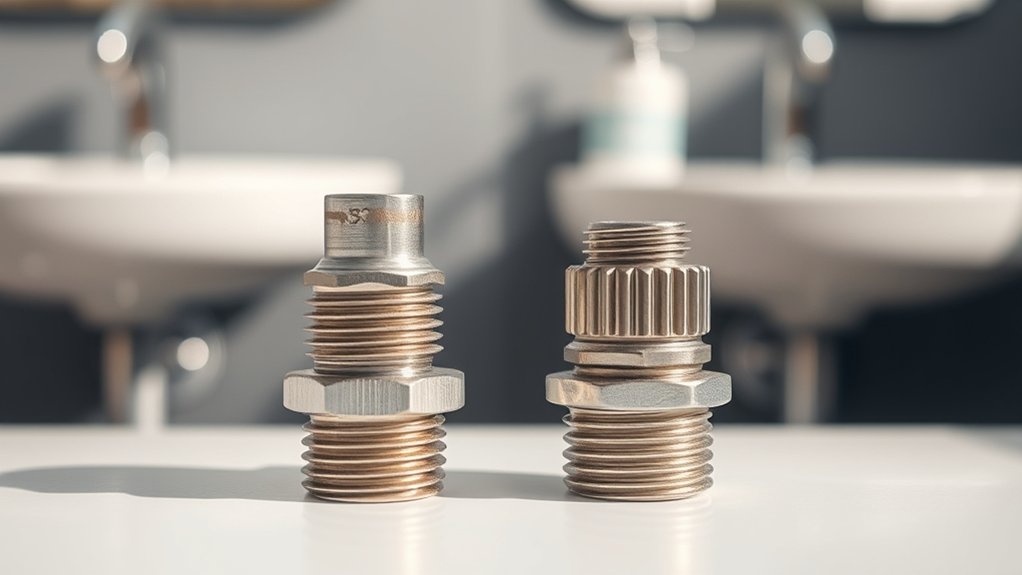
Mistakes in shower stem size often reveal themselves through specific performance issues. If you notice leaks, difficulty turning the handle, or inconsistent water flow, your stem size might be incorrect. These problems stem from improper alignment or incompatible hardware terminology mismatches, such as confusing cartridge versus compression stems.
When you face DIY challenges, start by visually inspecting the stem for signs of wear or misfit. Measure the stem’s diameter and length precisely using calipers to compare against manufacturer specifications. Also, ensure your stem matches the faucet’s threading type and seat size.
Incorrect sizing leads to poor sealing and mechanical strain, which can damage your valve assembly. Identifying these issues early helps you avoid costly repairs and ensures your shower operates smoothly and efficiently.
How to Find Your Shower Faucet Model
You’ll start by identifying the faucet brand, which is usually stamped on the handle or escutcheon plate. Next, locate the model number. Check inside the valve or behind the trim for a label or engraving. Finally, measure the stem dimensions carefully to ensure you select the correct replacement part.
Identifying Faucet Brand
Where can you find the exact model of your shower faucet? Start by identifying the faucet brand, an essential step for ensuring brand compatibility when replacing parts. Look closely at these areas:
- The faucet handle or escutcheon plate, where logos often appear
- Underneath the handle, after removing the decorative cap
- On the faucet body, near the base or spout
- Inside the valve access panel or behind the trim
- Manufacturer’s documentation or installation manual
Locating Model Number
After identifying your faucet brand, the next step is to locate the exact model number. Start by examining the faucet body or handle for stamped or printed numbers; manufacturers often place model numbers discreetly on these parts.
If you don’t see any markings, check the original packaging or purchase receipt. Alternatively, consult the manufacturer’s website using your brand name to find detailed guides or databases for model identification.
Accurately finding compatibility hinges on this step since replacement stems vary by model, even within the same brand. Knowing the model number also helps you select the correct material preferences, such as brass or plastic components, ensuring durability and optimal function.
Precise identification prevents costly errors and streamlines the repair or replacement process.
Measuring Stem Dimensions
How can you guarantee an accurate fit when replacing a shower stem? Precise measurement methods are essential. First, remove the existing stem carefully to avoid common defects like stripped threads or damaged splines.
Use calipers or a ruler for exact readings. Focus on these key dimensions:
- Stem length from base to tip
- Diameter of the stem shaft
- Thread pitch and type
- Number and shape of splines or flats
- Distance between mounting points
Record each measurement accurately, noting any wear or damage that could affect fitting. Comparing these dimensions with manufacturer specifications helps identify your shower faucet model confidently.
Following this method reduces the risk of ordering incompatible parts, ensuring a smooth replacement process without costly errors or delays.
Where to Buy Replacement Shower Stems
Looking for reliable sources to purchase replacement shower stems can save you time and guarantee compatibility with your plumbing system. Start by checking specialized plumbing supply stores, both local and online, as they often stock a broad range of replacement hardware tailored to various brands and models.
Manufacturer websites are also valuable resources, providing exact matches and ensuring you get the correct stem size and threading. Additionally, large home improvement retailers offer a selection of universal stems but verify specifications carefully to avoid incompatibility.
Prioritize vendors with clear return policies and technical support to assist with questions about installation timing and part fit. By choosing trusted suppliers, you minimize downtime and ensure your replacement stem integrates seamlessly with your existing shower components.
Tips for Installing a New Shower Stem Correctly
Before installing your new shower stem, make certain you accurately measure the existing stem to confirm the correct size. Use proper installation techniques, like applying plumber’s tape to threaded areas and tightening connections without over-torquing. These steps help ensure a secure fit and prevent leaks.
Measuring Shower Stem Size
Accurately measuring a shower stem is essential for ensuring a proper fit and avoiding leaks or operational issues. When you approach this task, consider the study design behind product variations and address audience needs by focusing on precision.
Start by verifying the stem’s length, diameter, threading, and spline count. Use calibrated tools like a digital caliper for exact measurements.
Key measurement factors include:
- Stem length from base to tip
- Thread diameter and pitch
- Number of splines or notches
- Distance between splines
- Valve cartridge compatibility
Proper Installation Techniques
How do you guarantee a new shower stem fits perfectly and functions flawlessly? Start by turning off the water supply and removing the existing stem carefully. Clean the valve seat thoroughly to ensure a tight seal; debris here can cause leaks.
Apply plumber’s grease to the stem’s O-rings to ease installation and prevent wear. Insert the stem straight, avoiding cross-threading, then tighten it to the manufacturer’s torque specifications. Test for leaks by briefly restoring water pressure.
If you encounter resistance or leaks, reassess your alignment and sealing. Remember, proper installation isn’t related to unrelated idea 1, nor does it require unrelated idea 2. Focus strictly on precise measurements, clean connections, and correct tools. This subtopic ensures your new shower stem performs reliably and avoids costly repairs.
How to Avoid Leaks and Damage From Wrong Stem Sizes
Why does choosing the correct shower stem size matter? Selecting the wrong stem size can cause leaks, water damage, and inefficient water flow. To avoid these issues, you need to follow precise guidelines that ensure a proper fit and seal.
Here’s how to avoid leaks and damage from wrong stem sizes:
- Measure the existing stem accurately before purchasing a replacement.
- Verify compatibility with your faucet model and manufacturer.
- Use appropriate sealing materials like plumber’s tape or gaskets.
- Avoid forcing the stem into the valve body to prevent cracks.
- Test for leaks immediately after installation to catch issues early.
When to Call a Plumber Instead of DIY Replacement
When should you call a plumber instead of attempting a DIY shower stem replacement? If you’re dealing with complex bathroom design elements, such as integrated valve systems or non-standard fittings, it’s wise to seek professional help.
Replacing hardware in these scenarios requires precise measurements and specialized tools to avoid damaging the plumbing or surrounding surfaces. Additionally, if you encounter persistent leaks after initial attempts or face difficulty accessing the stem due to tile or wall construction, a plumber’s expertise is essential.
Incorrect installations can lead to costly repairs and water damage. Ultimately, when the replacement involves unfamiliar components or risks compromising your bathroom’s integrity, calling a plumber ensures safe, efficient, and code-compliant results, preserving both function and design.
Frequently Asked Questions
Can Shower Stems Affect Water Pressure?
Yes, shower stems can affect water pressure since worn or corroded stems may restrict flow. You should inspect and replace faulty shower stems to maintain optimal water pressure and ensure consistent, efficient shower performance.
Are Shower Stems Compatible With Tub Faucets?
You won’t believe how often incompatibility questions pop up in two word discussion ideas about shower stems and tub faucets! They’re rarely interchangeable; you need exact specs and matching threads for proper fit and function.
Do Shower Stems Wear Out Faster in Hard Water Areas?
Yes, you’ll notice shower stems wear out faster in hard water areas due to mineral buildup reducing durability. Regular maintenance and water softeners can improve wear resistance, preserving stem function despite high water hardness.
Can I Paint or Refinish a Shower Stem?
You can paint or refinish a shower stem, but first ensure proper surface prep for durability. Use corrosion-resistant coatings and follow manufacturer guidelines.
This two word discussion idea1 emphasizes longevity, while two word discussion idea2 focuses on material compatibility.
Are There Eco-Friendly Shower Stem Options Available?
Yes, you can find eco-friendly shower stems made from sustainable materials like recycled brass or biodegradable plastics. Ensure replacement compatibility by checking dimensions and valve types to maintain efficient, long-lasting performance while reducing environmental impact.