Are You Not Supposed to Shower During a Thunderstorm
You might think showering during a thunderstorm is harmless, but experts caution otherwise. Showering during a thunderstorm can be dangerous because lightning can travel through metal pipes and water, posing an unexpected risk if you’re in contact with plumbing.
While direct strikes are uncommon, the potential for electric shock remains measurable. Understanding how this happens and what safer options exist can help you protect yourself when storms roll in.
It’s worth considering these risks before you turn on the tap during a storm. Staying safe means knowing when to avoid plumbing until the thunderstorm passes.
Key Takeaways
- Showering during a thunderstorm is discouraged because water and metal pipes can conduct lightning electricity.
- Lightning can travel through plumbing, making shower fixtures potential pathways for electric current.
- The risk of lightning striking plumbing directly is low but not zero, especially with metal pipes.
- Using plastic plumbing reduces but does not eliminate the risk due to connected fixtures.
- Safer alternatives include sponge baths or delaying showers until after the storm passes.
Is It Safe to Shower During a Thunderstorm?
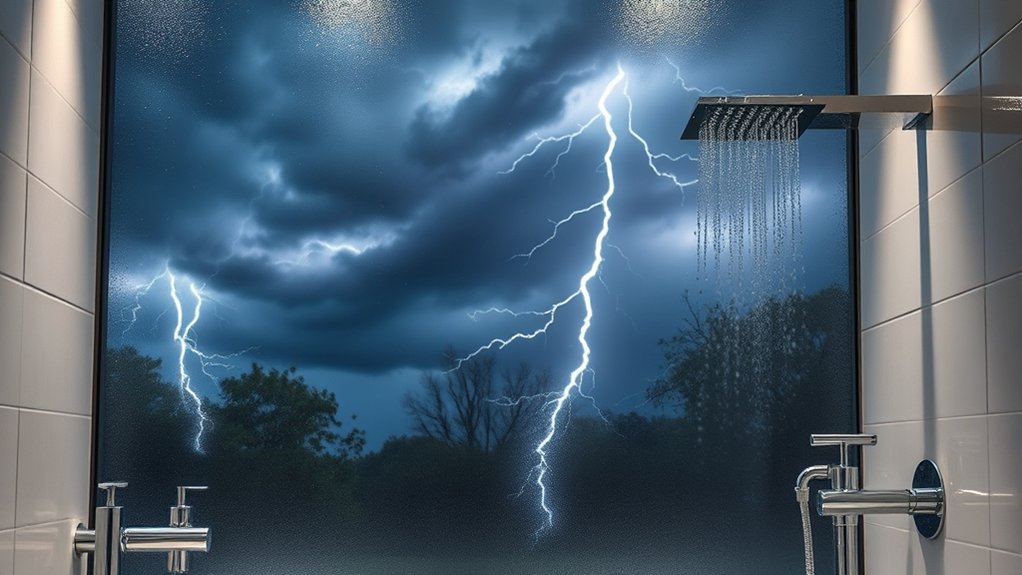
Why should you avoid showering during a thunderstorm? Many showering myths suggest it’s dangerous because water conducts electricity. While water itself is a poor conductor, the minerals and impurities in tap water enable electrical current to travel.
If lightning strikes your home’s plumbing or electrical systems, the electrical energy can pass through water pipes, potentially reaching you during a shower. This risk stems from water conduction via metal pipes, which provide a direct path for electricity.
Plastic pipes reduce this risk but don’t eliminate it entirely, as electrical current can still travel through connected metal fixtures. Consequently, showering during a thunderstorm presents a measurable hazard due to the possibility of electrical shock through water conduction, making it advisable to wait until the storm passes before using water fixtures.
What Experts Say About Showering in Storms
How do experts assess the risks of showering during a thunderstorm? They emphasize lightning safety and debunk common plumbing myths. Experts highlight that while the risk is low, it’s not zero.
Experts stress lightning safety, debunk plumbing myths, and note showering risks during storms are low but real.
You should understand these key points:
- Lightning can cause electrical surges, but direct strikes to plumbing are rare.
- Metal pipes may conduct electricity, but modern plumbing often includes non-metal materials.
- Avoid showering during intense storms as a precaution.
- Experts recommend following local safety guidelines rather than relying on myths.
How Lightning Can Travel Through Plumbing and Water
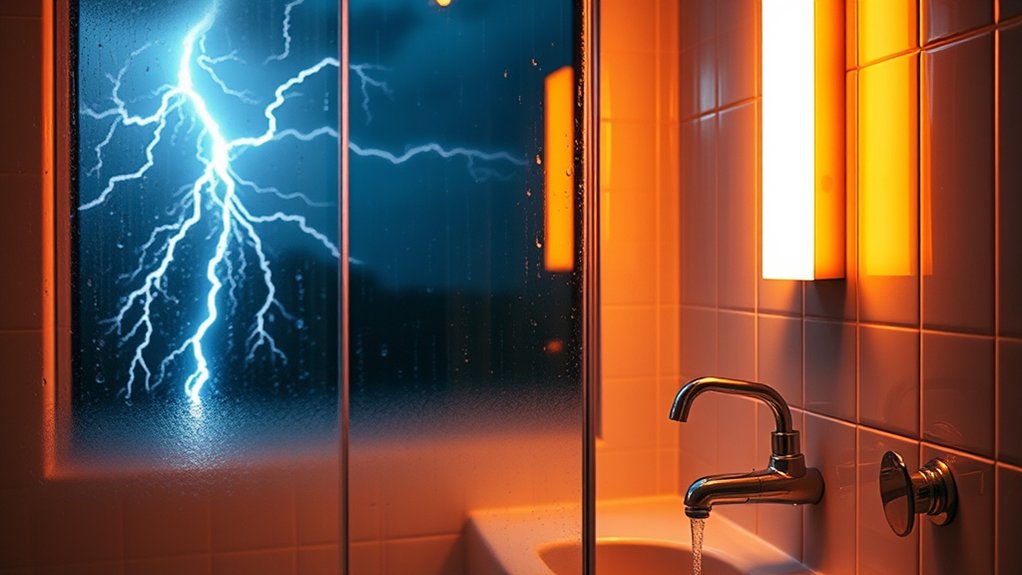
Although lightning rarely strikes plumbing directly, it can travel through water and metal pipes, posing a risk during thunderstorms. You should understand that water, especially when containing minerals, conducts electricity, and metal pipes provide a continuous conductive path.
This plumbing conductance allows lightning’s electrical current to move quickly through your home’s water system. When lightning hits nearby, the electrical charge can enter your plumbing, potentially causing severe injury if you’re in contact with water. This explains the lightning risks associated with activities like showering or washing dishes during a storm.
Since the plumbing system connects various water fixtures, the current can travel through taps, showers, and sinks. Being aware of how lightning exploits plumbing conductance helps you avoid hazardous situations during thunderstorms.
Safe Alternatives to Showering During Thunderstorms
Because lightning can travel through your home’s plumbing and water, exposing yourself to water fixtures during a thunderstorm increases the risk of electric shock. To maintain hygiene safely, consider these safe alternatives to storm showering. You can:
- Use a sponge bath with warm water away from plumbing fixtures.
- Employ no-rinse cleansing wipes designed for skin hygiene.
- Delay showering until the storm passes to avoid risk entirely.
- Use hand sanitizer or antibacterial gels for quick cleanliness.
These options reduce your exposure to conductive water and metal pipes, minimizing electrical hazards during storms. By choosing these safe alternatives, you uphold personal hygiene without compromising your safety.
Avoiding water contact during thunderstorms is essential since lightning’s electrical current can travel unpredictably through your plumbing, making storm showering dangerous.
How to Stay Safe Indoors When Storms Hit
When storms hit, where you position yourself indoors can notably affect your safety. Stay away from plumbing, electrical appliances, and windows to reduce the risk of electrical shock from lightning. Engage in safe indoor activities such as reading, playing board games, or organizing your space. These minimize contact with conductive surfaces.
Maintain lightning awareness by monitoring weather updates via battery-powered devices. Avoid using corded phones and personal electronics connected to outlets, as lightning can travel through wiring. If possible, remain in interior rooms or hallways, where the structure offers better protection.
Frequently Asked Questions
Can Using a Dishwasher Be Dangerous During a Thunderstorm?
You shouldn’t use a dishwasher during a thunderstorm due to electrical myths. Lightning can cause power surges, risking appliance safety.
Avoid running electrical devices to protect yourself and your equipment from potential lightning-related damage.
Is It Safe to Wash Clothes During a Lightning Storm?
Washing clothes during a lightning storm is like dancing near a live wire; it poses washing hazards due to potential lightning-induced electrical surges. For your electrical safety, avoid using washers until the storm passes completely.
Can Lightning Strike Outdoor Pools or Hot Tubs?
Yes, lightning can strike outdoor pools or hot tubs. For lightning safety, you shouldn’t use them during storms since water conducts electricity, increasing your risk of injury.
Always seek shelter indoors when lightning is nearby.
Does Unplugging Appliances Prevent Lightning Damage Indoors?
Unplugging appliances effectively reduces indoor lightning damage by eliminating direct electrical pathways. You’re minimizing surge risks, which safeguards your electronics and prevents fire hazards. This makes it a critical step in indoor lightning mitigation during storms.
Are Metal Sinks More Dangerous During Thunderstorms?
You might not realize it, but metal sinks can increase sink hazards during thunderstorms. Due to metal safety concerns, they can conduct electricity if lightning strikes nearby, making it safer to avoid using them until the storm passes.