Are Shower Caps Bad for Your Hair
Is a shower cap a shield or a trap for your hair? While these simple accessories can protect your strands from water and shampoo, their impact depends heavily on how you use them.
Shower caps can be beneficial, but factors like material choice, fit, and hygiene play essential roles in maintaining hair and scalp health.
Understanding these nuances can help you avoid potential problems.
With the right care, you can make the most of your shower cap’s benefits without harming your hair.
Key Takeaways
- Shower caps protect hair from water and shampoo, preventing damage when used properly with quality materials.
- Improper hygiene and prolonged use without cleaning can cause scalp irritation and buildup, not the cap itself.
- Breathable, smooth materials and proper fit reduce friction and moisture trapping, minimizing hair shaft weakening and breakage.
- Balanced moisture retention under the cap supports hair health, but excessive humidity may weaken hair over time.
- Using shower caps regularly preserves hairstyles and color but should be limited for oily scalps to avoid scalp issues.
Are Shower Caps Bad for Your Hair?

How do shower caps affect your hair health? Contrary to common hygiene myths, shower caps themselves don’t inherently damage your hair. Scientific evidence shows that shower caps primarily function as protective barriers, preventing water and shampoo from soaking your hair.
However, some concerns relate to the materials used, especially in lower-quality caps where fabric dyeing processes may introduce chemicals that could irritate the scalp in sensitive individuals. You should choose caps made from non-toxic, hypoallergenic materials to minimize such risks.
Importantly, shower caps do not cause scalp issues when used properly and cleaned regularly. Misconceptions often arise from improper hygiene practices rather than the caps themselves. Overall, shower caps are safe for your hair if you select quality products and maintain proper cleanliness.
How Shower Caps Impact Hair and Scalp Health
You should understand how shower caps affect both moisture retention and scalp breathability to protect your hair health. Wearing a cap can trap humidity, which may benefit or harm your hair depending on duration and material.
Additionally, improper use might increase hair breakage risk by causing friction or restricting airflow to the scalp.
Moisture Retention Effects
Although shower caps are designed to protect hair from water, they also create a microenvironment that affects moisture retention in your hair and scalp. By trapping humidity, shower caps can enhance scalp hydration, which is beneficial for preventing dryness and flaking.
This controlled moisture retention helps maintain the natural oils essential for hair health. However, excessive moisture buildup under the cap may lead to a damp environment, potentially weakening hair shafts over time.
Clinical evidence suggests that balanced moisture retention supports hair cuticle integrity, reducing brittleness. To optimize the benefits, you should use shower caps intermittently and ensure your scalp is clean before covering it.
This approach helps maintain appropriate scalp hydration without promoting conditions that could compromise hair strength or scalp health.
Scalp Breathability Concerns
Why does scalp breathability matter when using shower caps? Your scalp requires adequate airflow to maintain a balanced environment. When a shower cap restricts scalp airflow, it can create a warm, moist setting that encourages bacterial and fungal growth.
This environment may lead to scalp irritation or exacerbate conditions like dandruff. Studies suggest that prolonged occlusion without proper cap hygiene increases the risk of such issues.
To mitigate these risks, you should ensure your shower cap is clean and dry before use. Opt for caps made from breathable materials or those designed with ventilation features to promote scalp airflow.
Potential Hair Breakage Risks
How exactly do shower caps contribute to hair breakage? When you wear a shower cap, friction between the cap’s material and your hair can cause cuticle damage, especially if your hair regimen includes fragile or chemically treated strands.
Additionally, some caps may trap moisture, weakening the hair shaft over time. Product compatibility also plays a role; if your hair products leave residue, the trapped environment under the cap can exacerbate buildup, leading to stiffness and brittleness.
To minimize breakage risks, ensure your shower cap fits well but isn’t overly tight, and use caps made from smooth, gentle materials. Integrating your cap use thoughtfully within your hair regimen, while considering product compatibility, helps maintain hair integrity and reduces the likelihood of damage from daily shower routines.
What Scalp Problems Can Shower Caps Cause?
When you wear a shower cap for extended periods, your scalp’s natural environment can become compromised. The trapped heat and moisture create a warm, humid setting that encourages fungal growth, such as Malassezia, which is linked to conditions like dandruff and seborrheic dermatitis.
This fungal proliferation disrupts the scalp’s microbial balance, leading to inflammation and scalp irritation. Additionally, the occlusive nature of shower caps can prevent proper air circulation, exacerbating these issues.
If you frequently use shower caps without adequate scalp hygiene or breaks, you increase the risk of persistent irritation, itching, and potential flare-ups of scalp disorders. To minimize these risks, limit shower cap usage duration and ensure thorough scalp cleansing to maintain a healthy, balanced scalp environment.
Can Shower Caps Cause Frizz or Damage Hair Texture?
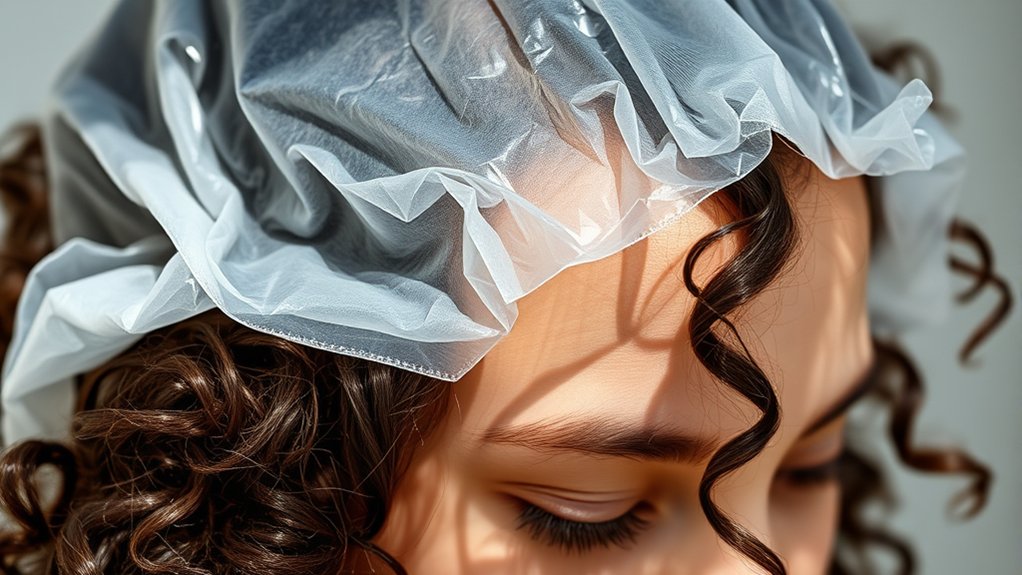
Can using a shower cap affect your hair’s texture or cause frizz? Scientifically, shower caps themselves don’t directly cause frizz or damage hair texture. However, improper use related to heat sensitivity and moisture control can contribute to these issues. When trapped moisture interacts with heat, it may disrupt hair cuticles, leading to frizz.
| Factor | Impact on Hair Texture |
|---|---|
| Heat sensitivity | Increases risk of cuticle damage |
| Moisture retention | Can cause frizz if excessive |
| Material type | Breathable materials reduce damage |
| Fit and duration | Tight, prolonged use may stress hair |
For effective frizz prevention, choose breathable caps and avoid prolonged use in hot environments. This approach minimizes heat sensitivity risks and protects hair texture.
Debunking Common Shower Cap Myths
While improper use of shower caps may contribute to hair issues like frizz, many beliefs about their effects don’t align with scientific evidence. The myth vs reality of shower caps often stems from misunderstandings of material science.
For instance, some think shower caps suffocate hair, causing damage. However, the materials used, typically waterproof plastics, create a barrier that prevents water exposure without restricting airflow entirely.
Another common myth is that shower caps cause scalp buildup; in reality, proper hygiene prevents this issue. You should also know that any damage attributed to shower caps usually results from improper fit or prolonged use, not the cap itself.
Understanding these facts helps you make informed choices about protecting your hair during showers without undue concern.
What Are the Best Materials for Shower Caps?
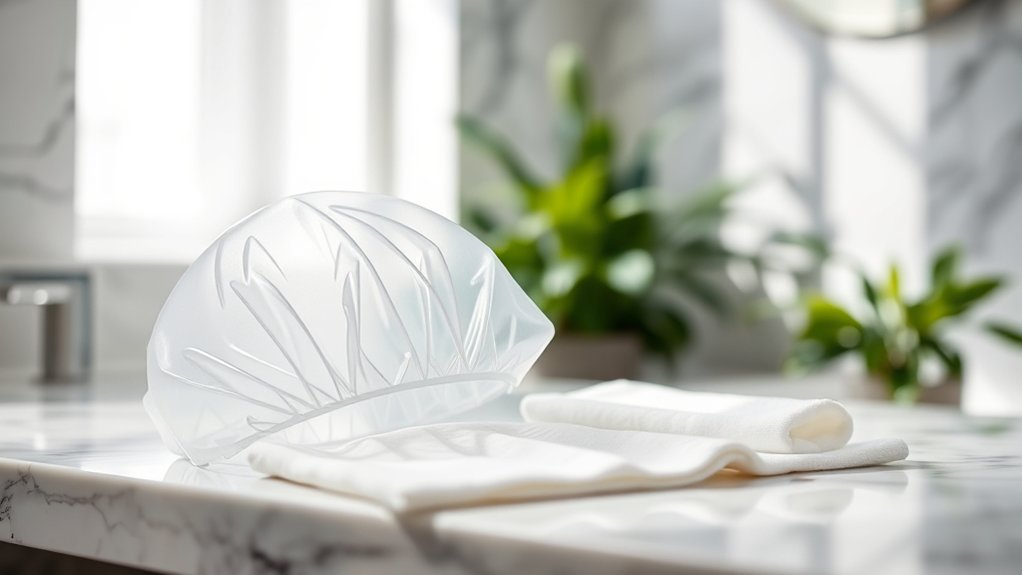
You’ll want to choose shower cap materials that balance breathability and waterproofing to protect your hair effectively. Fabrics like nylon and polyester coated with silicone offer reliable water resistance, while cotton blends provide better airflow to reduce moisture buildup.
Understanding these options helps you prevent scalp irritation and maintain hair health.
Breathable Shower Cap Fabrics
What makes a shower cap truly beneficial for your hair lies in the choice of fabric. Selecting breathable fabrics with appropriate moisture permeability helps maintain scalp health by allowing air circulation while controlling humidity.
Here are three effective materials:
- Cotton blends – These provide natural breathability and moderate moisture permeability, reducing sweat accumulation.
- Microfiber fabrics – Engineered for high moisture-wicking capacity, they keep hair dry without trapping heat.
- Nylon mesh – Offers excellent airflow, allowing moisture to escape and preventing fungal growth linked to excessive dampness.
Using these breathable fabrics ensures you protect your hair from water exposure without creating an overly humid environment that can damage hair cuticles or promote scalp issues. Prioritize moisture permeability to maintain a healthy scalp ecosystem while using shower caps.
Waterproof Material Options
How do waterproof materials protect your hair during showers? They create a barrier that prevents water and chemicals from penetrating your hair, reducing chemical exposure that can cause damage or dryness.
Common waterproof materials include vinyl, polyethylene, and polyurethane, each offering effective water resistance. Vinyl provides durability and noise reduction, minimizing the crinkling sounds typical of some caps, which can enhance your shower experience.
Polyethylene is lightweight and cost-effective but may lack breathability, potentially trapping moisture and increasing scalp humidity. Polyurethane combines flexibility with waterproofing, balancing comfort and protection.
When choosing a shower cap, consider how these materials manage moisture and chemical exposure, as well as noise reduction, to protect your hair health without sacrificing comfort or practicality during your shower routine.
How Often Should You Wear a Shower Cap?
When considering the frequency of shower cap use, it’s important to balance protection and hair health. Overusing a shower cap can trap moisture and heat, potentially leading to scalp irritation or fungal growth. Conversely, occasional use offers effective protection against water damage.
Finding the right balance in shower cap use protects hair without causing scalp irritation or moisture buildup.
Here’s how often you should wear one:
- Use a shower cap during every shower if you want to preserve hairstyles or color treatments, as supported by dermatological studies.
- Limit use to 2-3 times per week if you have an oily scalp to prevent excess moisture buildup.
- Follow evolving fashion trends and brand collaborations that emphasize breathable, antimicrobial materials to reduce risks associated with frequent use.
Balancing these factors helps maintain hair integrity without compromising scalp health.
How to Choose a Shower Cap That Protects Your Hair
Choosing a shower cap that effectively protects your hair requires attention to material quality, fit, and breathability. Opt for caps made from high-grade silicone or coated fabrics, as these materials provide a waterproof barrier while reducing friction that can damage hair cuticles.
Ensure the cap fits snugly without excessive tightness to prevent scalp irritation and hair breakage. Breathability is crucial; caps with soft_luxury linings, such as satin or silk blends, help maintain moisture balance and minimize static.
If you’re budget conscious, several budget_friendly options offer adequate protection without compromising quality. Avoid cheap plastic caps that trap moisture and heat, increasing the risk of scalp issues. By prioritizing these factors, you’ll effectively protect your hair while promoting scalp health.
When Should You Avoid Wearing a Shower Cap?
You should avoid wearing a shower cap if it causes prolonged moisture exposure, which can weaken hair shafts and promote fungal growth.
If you have a sensitive scalp or conditions like eczema, using a cap might worsen irritation or inflammation. Additionally, overusing shower caps can lead to hair damage by trapping sweat and oils, disrupting your scalp’s natural balance.
Prolonged Moisture Exposure
Although shower caps protect your hair from getting wet during showers, wearing them for extended periods can trap moisture and create a damp environment. This prolonged moisture retention may lead to scalp issues due to reduced scalp breathability.
You should avoid wearing a shower cap for too long because:
- Excess moisture encourages fungal and bacterial growth, increasing the risk of scalp infections.
- Reduced scalp breathability can cause irritation and discomfort.
- Constant dampness weakens hair strands, leading to breakage and frizz.
To maintain scalp health and hair integrity, limit shower cap use to the duration of your shower or brief water exposure. Extended wear disrupts the natural moisture balance, undermining the protective benefits shower caps provide during bathing.
Sensitive Scalp Conditions
When should you avoid wearing a shower cap if you have a sensitive scalp? If your scalp is fragile or prone to allergic reactions, it’s important to be cautious. Shower caps can trap sweat and moisture, creating an environment that may irritate a delicate scalp or exacerbate conditions like eczema or psoriasis.
Additionally, some materials used in shower caps, such as latex or certain plastics, can trigger allergic responses. If you notice redness, itching, or discomfort after using a shower cap, discontinue use immediately. Opt for hypoallergenic, breathable alternatives or consult a dermatologist to identify suitable options.
Prioritizing scalp health means recognizing when shower caps might do more harm than good, especially if your scalp barrier is compromised or sensitive to potential irritants.
Overuse and Hair Damage
How frequently you use a shower cap can substantially impact your hair’s health. Overusing it may trap moisture and oils, leading to scalp irritation and weakened hair strands. You should avoid wearing a shower cap in these situations:
- When your scalp is already oily, as the cap can exacerbate buildup and cause follicle blockage.
- After applying leave-in treatments or oils, since the trapped heat may alter the product’s efficacy.
- If you have an unrelated topic like fungal infections or dermatitis, prolonging cap use can worsen symptoms, making this an off topic discussion for typical shower cap advice.
Understanding these factors helps you prevent damage and maintain healthy hair. Avoid excessive reliance on shower caps to reduce risks of hair fragility and scalp issues.
How to Care for Your Shower Cap to Keep It Clean
Why does maintaining a clean shower cap matter for your hair’s health? A dirty cap can harbor bacteria, fungi, and product buildup, which may lead to scalp irritation and compromise hair health. Proper cap maintenance minimizes these risks, ensuring your hair remains protected during showers.
To care for your shower cap, rinse it thoroughly after each use with warm water and mild soap to remove oils and residues. Allow it to air dry completely before storage to prevent microbial growth.
Regularly inspect the cap for tears or signs of wear, replacing it as needed to maintain an effective barrier. By adhering to these practices, you support scalp hygiene and preserve the benefits of using a shower cap without risking adverse effects on your hair health.
Frequently Asked Questions
Can Shower Caps Be Used for Hair Treatments or Conditioning?
Yes, you can use shower caps for hair treatments and conditioning. They act as useful alternatives to plastic wrap, improving hair treatment suitability by trapping heat and moisture.
This trapped heat and moisture enhances product absorption and treatment effectiveness.
Do Shower Caps Help Retain Hair Color After Dyeing?
Think of a shower cap as a vault preserving your hair’s treasure. It boosts color retention by locking in moisture and heat, enhancing treatment efficacy and helping your dye last longer, according to clinical studies on hair care.
Are There Eco-Friendly or Biodegradable Shower Cap Options?
You can find eco friendly options made from biodegradable materials like natural rubber or plant-based plastics. These reduce environmental impact while protecting your hair, aligning with sustainable practices supported by recent environmental studies and product certifications.
Can Children Safely Use Shower Caps Without Discomfort?
Like a gentle hug, shower caps can be safe for children when designed for children’s safety. Choose soft, breathable materials to avoid comfort concerns.
Ensure proper fit to prevent slipping and skin irritation during use.
How Do Shower Caps Compare to Towels for Drying Hair?
When comparing shower caps vs towels for drying hair, shower caps retain moisture without friction, reducing breakage.
Towels absorb water faster but can cause damage if rubbed harshly. You’ll benefit from gentler, controlled drying with caps.