Are Heat Pump Water Heaters Any Good
Heat pump water heaters are gaining attention just as energy costs rise sharply, making them a hot topic for homeowners looking to save. You might be wondering if their promise of 60% or more energy savings truly holds up in real-world conditions.
While their efficiency ratings often range from 2.5 to 3.5 COP, factors like installation location and upfront costs complicate the picture. Understanding these nuances can help you decide if they’re a smart investment for your home.
Key Takeaways
- Heat pump water heaters (HPWHs) save 50% to 70% energy compared to conventional electric heaters, with a COP of 2.5 to 3.5.
- HPWHs perform best in conditioned or semi-conditioned spaces with ambient temperatures above 40°F (4°C).
- Upfront costs are higher, but payback periods average 3 to 7 years, improved by rebates and incentives.
- Regular maintenance like filter cleaning and drain checks extends the lifespan of 10 to 15 years.
- Noise levels range from 45 to 60 decibels, and proper sizing is essential for optimal efficiency and performance.
What Are the Main Benefits of Heat Pump Water Heaters?
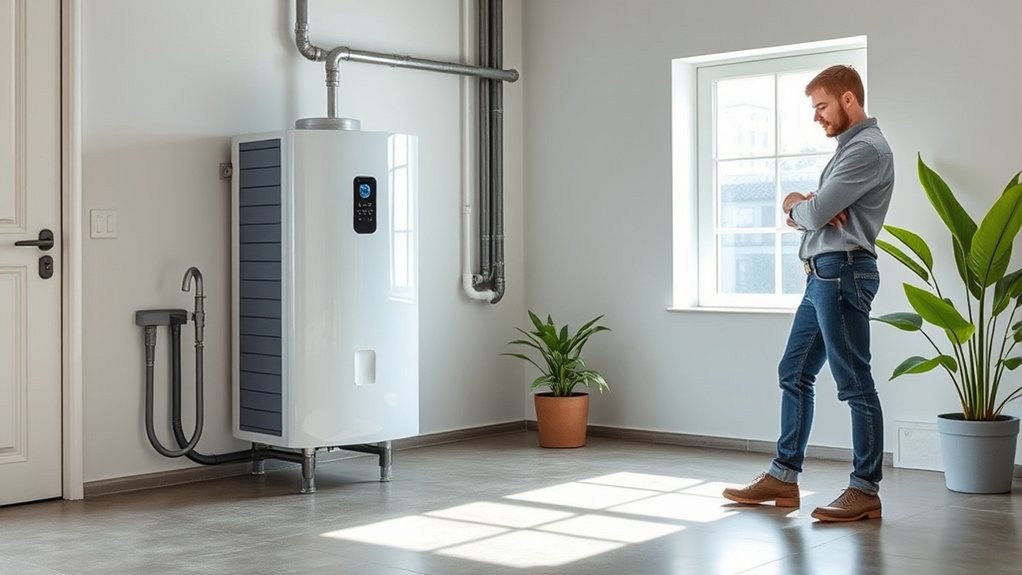
Opening significant energy savings, heat pump water heaters (HPWHs) operate by transferring heat from the surrounding air to heat your water, rather than generating heat directly. This approach boosts energy efficiency, typically delivering a coefficient of performance (COP) between 2.5 and 3.5, meaning you get 2.5 to 3.5 units of heat per unit of electricity consumed.
When evaluating system compatibility, you’ll find HPWHs integrate well with existing electrical infrastructure but require adequate space for airflow and ambient heat extraction. Their efficiency depends on maintaining ambient temperatures above 40°F (4°C), so you should consider location carefully.
Additionally, HPWHs reduce greenhouse gas emissions due to lower electricity usage compared to conventional electric resistance heaters, aligning with sustainability goals while optimizing operational costs.
How Much Can You Save With a Heat Pump Water Heater?
How much can you realistically save by switching to a heat pump water heater? Data shows these units deliver energy savings of 50% to 70% compared to conventional electric water heaters.
This significant reduction stems from their high efficiency, as they use a refrigerant cycle to transfer heat rather than generate it directly. By extracting ambient heat, they consume less electricity, which translates to lower utility bills.
Over a typical 10-year lifespan, you could save several hundred to over a thousand dollars, depending on local energy rates and usage patterns. While the upfront cost is higher, the payback period averages 3 to 7 years.
Over 10 years, savings range from hundreds to over a thousand dollars, with a payback in 3 to 7 years.
Factoring in rebates and incentives further improves your return on investment, making heat pump water heaters a cost-effective, energy-efficient choice.
How Do Heat Pump Water Heaters Work?
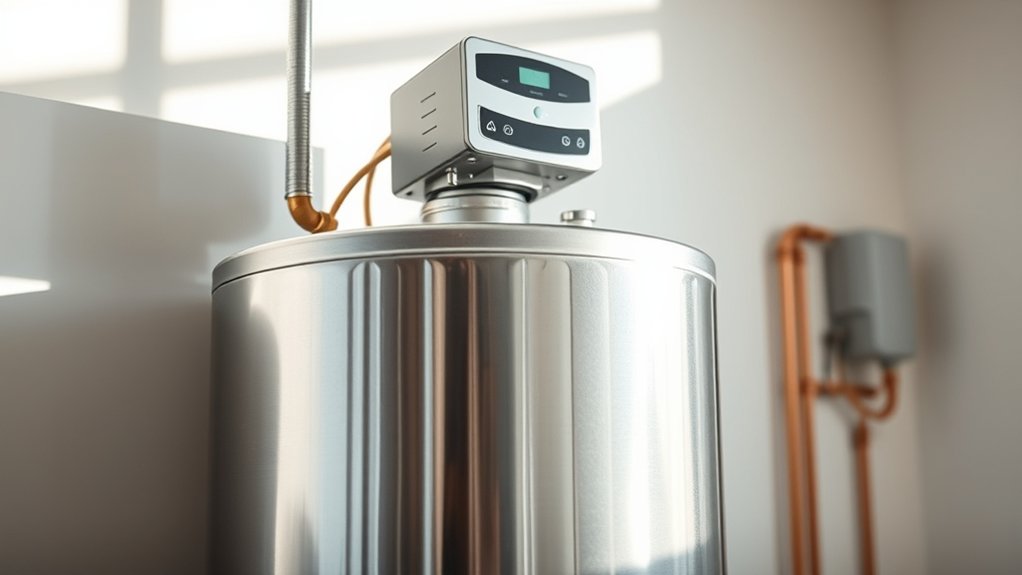
Wondering what sets heat pump water heaters apart from traditional models? They work by extracting heat from ambient air using a refrigerant cycle, then transferring that heat to water stored in the tank.
Unlike electric resistance heaters that convert electricity directly to heat, these systems achieve efficiencies of 200-300%, appreciably reducing energy consumption.
You should note that heat pump failures often stem from neglected maintenance routines, such as clogged air filters or refrigerant leaks, which impair heat transfer efficiency.
Regular inspections and cleaning of components are critical to sustaining performance and extending equipment lifespan.
What Are the Drawbacks of Heat Pump Water Heaters?
You’ll face higher upfront costs with heat pump water heaters compared to conventional models, often 2 to 3 times more expensive. Their efficiency also drops considerably in cold climates, reducing performance by up to 30%.
These factors can impact your overall savings and system reliability depending on your location.
Higher Initial Costs
Why do heat pump water heaters often come with a higher upfront price tag? The main factors include advanced technology, specialized components, and the need for skilled installers. These all contribute to higher initial costs compared to traditional units.
Although you’ll save on energy bills over time, the high upfront investment can be a barrier.
| Cost Element | Explanation |
|---|---|
| Unit Price | Advanced compressors and heat exchangers |
| Installation Fees | Requires certified installers with expertise |
| Electrical Upgrades | May need circuit enhancements |
| Space Requirements | Larger footprint impacts home modifications |
| Maintenance Costs | Specialized parts may increase service expenses |
Understanding these costs helps you weigh immediate expenses against long-term benefits effectively.
Performance In Cold Climates
How do heat pump water heaters perform in cold climates? In snowy temperatures, their efficiency drops as the unit extracts heat from the surrounding air, which becomes scarce and colder.
You’ll see a decline in the coefficient of performance (COP), sometimes falling below 2.0 when ambient air is near freezing. Frost protection mechanisms help prevent ice buildup on the evaporator coil, but activating defrost cycles reduces overall efficiency and increases energy consumption.
Additionally, prolonged exposure to subzero conditions may strain the compressor and increase maintenance needs. For optimal operation, you should install these heaters in conditioned or semi-conditioned spaces rather than unheated garages.
Understanding these limitations is crucial since performance degradation impacts energy savings and operational costs in colder regions.
How Do Heat Pump Water Heaters Compare to Traditional Models?
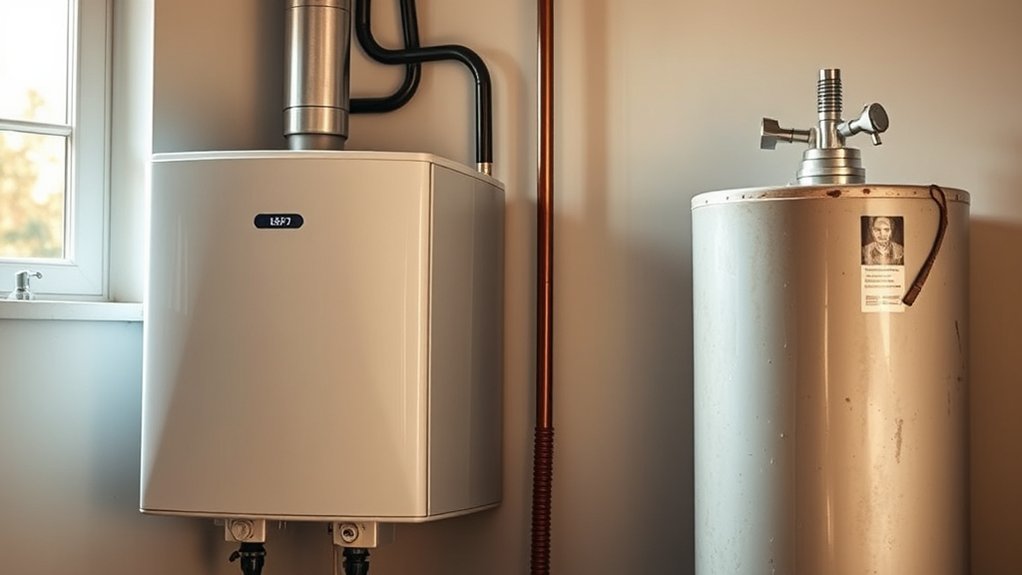
In what ways do heat pump water heaters outperform traditional models? Primarily, they offer superior energy efficiency by transferring heat rather than generating it via electric resistance or combustion. This process consumes roughly 60% less electricity, significantly cutting energy costs.
Heat pump water heaters operate by extracting ambient heat and rejecting excess heat to the surrounding air, optimizing thermal dynamics. Traditional models lose more energy as they rely on direct heating elements, resulting in higher operational costs and carbon emissions.
Additionally, heat pumps maintain consistent water temperatures with less energy input due to their advanced heat rejection systems, which manage latent heat effectively. However, their efficiency can vary depending on installation environment, but from a purely technical standpoint, they deliver measurable performance advantages over conventional water heaters.
Which Homes Are Best for Heat Pump Water Heaters?
You’ll want to contemplate your local climate since heat pump water heaters perform best in moderate to warm environments with consistent ambient temperatures above 40°F. The size of your home affects your hot water demand, so selecting a unit with appropriate capacity is critical to efficiency.
Additionally, these systems require sufficient installation space for airflow and maintenance, which may limit their suitability in smaller or confined areas.
Climate Considerations
Where do heat pump water heaters perform most efficiently? They excel in moderate to warm climates where ambient temperatures consistently stay between 40°F and 90°F. In colder regions, performance drops as the unit must work harder, reducing efficiency by up to 30%.
When evaluating your home’s suitability, consider local climate policy. Some states prioritize renewable incentives that can offset installation costs significantly. For example, California’s aggressive climate policy offers rebates, making heat pump water heaters financially attractive.
Conversely, in areas lacking robust renewable incentives, the payback period extends, diminishing cost-effectiveness. You should also factor in seasonal temperature swings; consistent indoor space for installation enhances year-round efficiency.
Home Size Impact
How does the size of your home affect the efficiency and suitability of a heat pump water heater? Larger homes typically require higher-capacity units to meet increased hot water demand, ensuring consistent supply without efficiency loss.
Conversely, smaller homes benefit from smaller models that operate more efficiently due to lower volume needs. You also need to consider noise considerations; heat pump water heaters generate sound during operation, which may be more noticeable in compact spaces, potentially impacting home aesthetics and comfort.
Proper placement can mitigate noise impact, preserving your home’s ambiance. Data shows that selecting a unit matched to your home size optimizes energy consumption and performance.
Installation Space Needs
Matching the heat pump water heater’s capacity to your home size is only part of the equation; installation space plays a significant role in determining which homes are best suited for these systems. Heat pump water heaters require a minimum clearance of approximately 1,000 cubic feet of air space to operate efficiently, making them ideal for basements or utility rooms with adequate ventilation.
Their space efficiency is lower compared to traditional tanks due to the need for airflow around the unit. Additionally, noise levels ranging from 45 to 60 decibels during operation can impact comfort in smaller or enclosed areas. Consequently, if your home lacks a spacious, ventilated area away from living spaces, a heat pump water heater might not be the best fit despite its energy-saving benefits.
What Does Installing and Maintaining a Heat Pump Water Heater Involve?
Installing and maintaining a heat pump water heater requires careful consideration of space, electrical requirements, and regular system checks to ensure optimum performance. Despite installation myths suggesting complexity, most units need a 240V dedicated circuit and adequate clearance.
Maintenance myths often exaggerate upkeep; you’ll mainly clean filters and inspect condensate drains. Nonetheless, proper installation and periodic checks prevent efficiency drops.
| Aspect | Requirement | Frequency |
|---|---|---|
| Electrical Setup | 240V dedicated circuit | One-time |
| Space Clearance | Minimum 1,000 cubic feet | One-time |
| Maintenance | Filter cleaning & drain check | Every 6 months |
Understanding these parameters ensures you optimize system longevity and energy savings effectively.
Can You Count on Heat Pump Water Heaters to Last?
Although heat pump water heaters rely on advanced technology, you can expect them to deliver reliable performance over time if properly maintained. Studies show these units typically last 10 to 15 years, comparable to conventional water heaters.
Key factors impacting longevity include compressor efficiency, refrigerant integrity, and regular filter and anode rod replacement. Addressing these extends operational life and prevents costly failures.
Debates about their lifespan often veer into irrelevant discussion or nonessential topic territory, distracting from data-driven maintenance strategies. By focusing on manufacturer guidelines and proactive upkeep, you minimize risks of premature breakdowns.
Ultimately, if you commit to scheduled inspections and timely part replacements, heat pump water heaters provide durable, efficient service that justifies their upfront costs and complexity.
Frequently Asked Questions
Are Heat Pump Water Heaters Noisy During Operation?
You won’t find noisy operation overwhelming; heat pump water heaters run quietly, typically below 60 decibels. However, guarantee proper electrical wiring to prevent interference or noise, as faulty wiring can cause operational disturbances or safety concerns.
Do Heat Pump Water Heaters Require Special Electrical Wiring?
Think of upgrading your electrical system like rewiring a classic car for high efficiency. Heat pump water heaters may need special wiring due to their power draw, so consider installation considerations carefully for optimal performance and safety.
Can Heat Pump Water Heaters Be Used in Cold Climates?
You can use heat pump water heaters in cold climates, but cold climate considerations and installation location constraints are essential. Efficiency drops below 40°F, so placing units in insulated, heated spaces improves performance and prevents freezing damage.
Are There Any Rebates or Incentives for Installing Heat Pump Water Heaters?
You’ll find rebate eligibility varies by region, often linked to energy efficiency standards. Incentive programs from utilities or governments can substantially reduce costs.
Check local databases to analyze available rebates before installing your heat pump water heater.
How Quickly Do Heat Pump Water Heaters Heat Water Compared to Tankless Models?
Heat pump water heaters heat water slower than tankless models, typically taking 1-2 hours versus tankless’s instant flow.
Despite lower speed, heat pump efficiency is higher, offering better energy savings in long-term tankless comparison analyses.
Conclusion
You’ll find heat pump water heaters a smart choice if you want to trim energy bills by 60% or more while embracing efficiency with COPs around 2.5–3.5. Though they prefer warmer spaces and a higher initial investment, these units reward you with long-term savings and reliable performance when properly installed and maintained.
In colder or space-limited homes, their output might be a bit modest, but overall, they offer a technically sound, data-backed upgrade over traditional heaters.
In conclusion, heat pump water heaters are an excellent option for those seeking energy efficiency and cost savings in water heating.