Are All Water Pumps Driven by a Belt
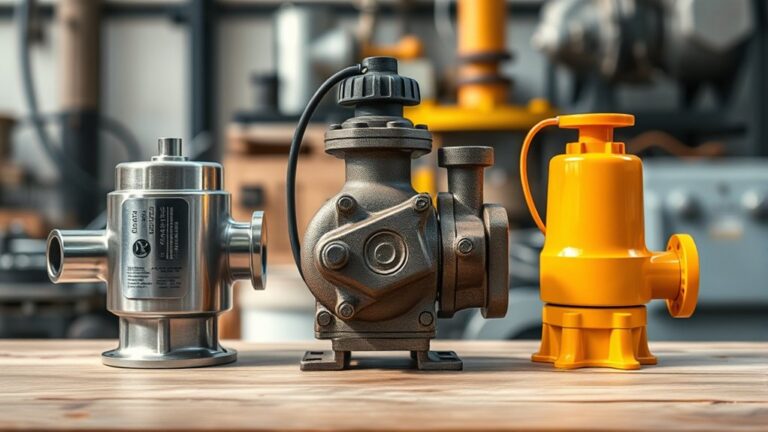
You might assume all water pumps are driven by a belt, but that’s not always the case. While belt-driven pumps are common due to their simplicity and cost-effectiveness, many modern systems use direct coupling or other mechanisms to improve efficiency and reduce maintenance.
Understanding the differences in these drive methods can help you determine which setup best suits your needs. What factors influence the choice between belt-driven and beltless pumps?
Key Takeaways
- Not all water pumps are belt-driven; some use direct coupling with electric motors or hydraulic and pneumatic drives.
- Belt-driven water pumps are common for simplicity and cost-effectiveness but require regular maintenance and belt replacement.
- Direct-coupled pumps offer higher mechanical efficiency and lower maintenance by eliminating belts and reducing moving parts.
- Automotive water pumps often use belts due to compact engine designs, while industrial pumps emphasize durability and safety compliance.
- Choice of drive method depends on operational needs, space constraints, efficiency, and maintenance priorities, not all rely on belts.
Understanding Water Pump Drive Methods
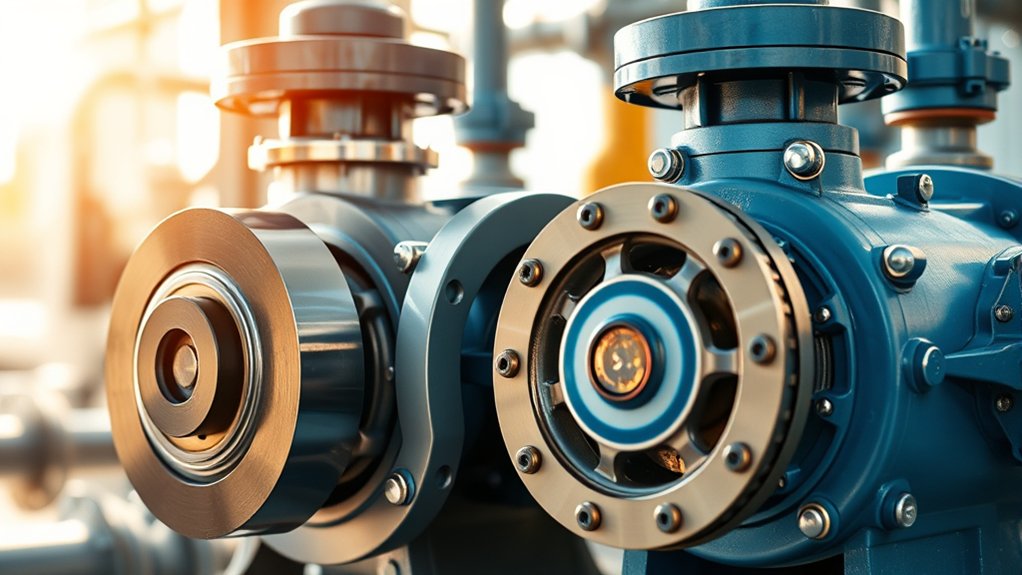
How do water pumps receive the power needed to operate efficiently? You’ll find that power transmission methods vary based on design considerations such as load requirements, space constraints, and maintenance accessibility.
While belts are common for their simplicity and cost-effectiveness, other methods like direct drives or gear-driven systems offer distinct advantages in precision and durability. When selecting a drive method, you must evaluate safety implications thoroughly; improper alignment or tension in belt drives can lead to premature failure or hazards.
Additionally, direct coupling minimizes moving parts, reducing potential safety risks but may complicate installation. Understanding these trade-offs helps you optimize pump performance and reliability. Your choice must balance mechanical efficiency and operational safety to ensure long-term, effective water pump function.
Types of Belt-Driven Water Pumps and Applications
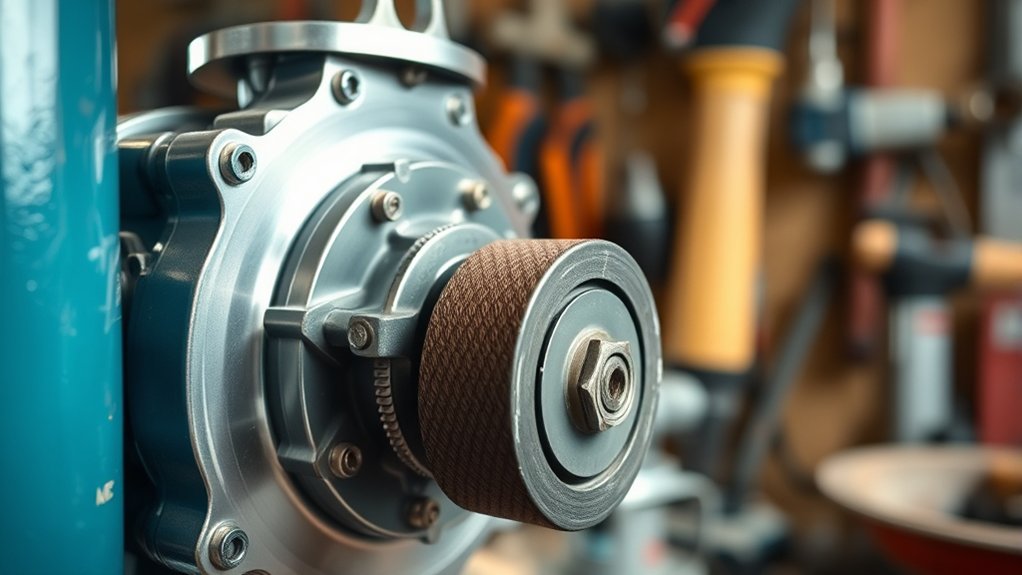
You’ll encounter several common belt types, like V-belts and serpentine belts, each optimized for specific load and speed conditions. In industrial settings, heavy-duty belts handle higher torque demands, while automotive pumps often use compact, flexible belts designed for efficiency.
Understanding these distinctions helps you select the right belt-driven pump for your application.
Common Belt Types
Although water pumps can be driven by various mechanisms, belt-driven systems remain prevalent due to their flexibility and efficiency. When selecting a belt type, you’ll encounter common pulley configurations paired with flat belts, V-belts, and serpentine belts.
Flat belts, used with common pulley designs, offer smooth power transmission and are ideal for moderate loads and speeds. V-belts provide enhanced grip and are suitable for higher torque applications, reducing slippage on common pulleys with angled grooves.
Serpentine belts, with their multi-ribbed profiles, deliver compact, efficient power transfer in tight engine compartments. Understanding these belt types lets you optimize water pump performance by matching belt characteristics like tension, friction, and durability to specific operational demands, ensuring reliable and efficient pump drive systems.
Industrial Vs. Automotive Use
The selection of belt-driven water pumps varies considerably between industrial and automotive settings, reflecting distinct operational demands and design constraints. In industrial environments, you’ll find pumps engineered for continuous, high-load operation, where durability and compliance with industrial safety standards are critical.
Here, color coding often identifies belt types and maintenance schedules, reducing human error and enhancing safety protocols. Conversely, automotive belt-driven pumps prioritize compactness and efficiency, designed to operate under variable engine speeds with rapid thermal cycling.
While industrial pumps emphasize robust construction and standardized safety measures, automotive pumps focus on integration within constrained engine bays. Understanding these differences helps you choose the right belt and pump system, ensuring reliability and adherence to safety requirements tailored to each application’s unique demands.
How Electric Water Pumps Work
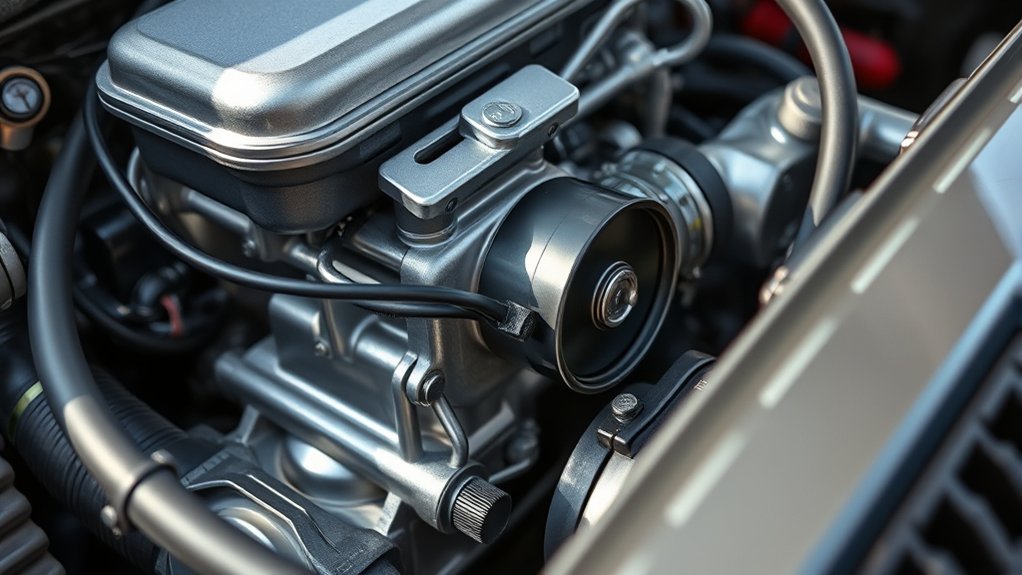
Electric water pumps operate by using an electric motor to drive the impeller, which circulates coolant through the engine’s cooling system. When you activate the pump, the electric motor generates rotational force, precisely controlling the impeller speed. This guarantees consistent coolant flow, optimizing engine temperature regulation.
The motor’s design integrates pump bearings to minimize friction and wear, enhancing durability and efficiency. These bearings support the impeller shaft, maintaining alignment under varying loads and speeds.
Unlike belt-driven pumps, electric pumps provide variable flow rates based on real-time cooling demands, improving fuel efficiency. By isolating the pump from engine speed, you gain finer thermal management control.
Understanding the role of electric motors and pump bearings clarifies how electric water pumps achieve reliable, efficient coolant circulation without mechanical belt connections.
How Direct Coupling Powers Water Pumps
You’ll find that water pumps can also be powered through direct coupling, where the pump shaft connects directly to the engine or motor shaft without intermediary components like belts. This method eliminates belt slippage and reduces maintenance needs, offering higher mechanical efficiency and more precise power transmission.
When you analyze pump systems, it’s important to avoid irrelevant topic digressions or off topic discussions such as belt tensioning or pulley alignment, which don’t apply here. Direct coupling demands precise shaft alignment to prevent undue wear or vibration, ensuring optimal performance.
Unlike belt-driven systems, direct coupling simplifies the drive mechanism but requires careful installation and rigid support structures. Understanding this distinct power transmission approach helps you appreciate alternatives to belt-driven pumps without confusing the technical differences.
Hydraulic Water Pumps and Pneumatic Alternatives
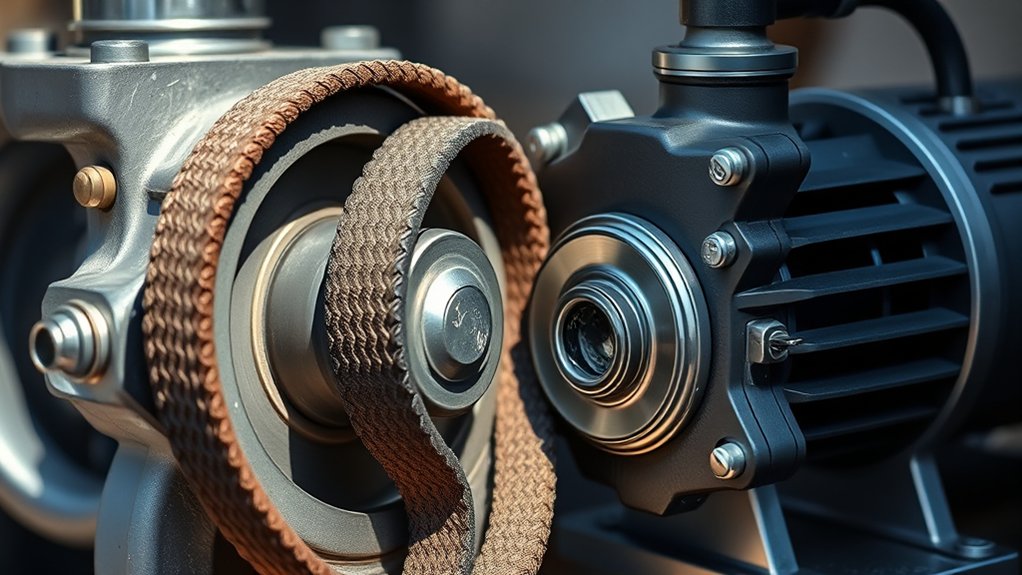
Hydraulic water pumps rely on fluid pressure to transfer energy and move water efficiently, offering advantages in applications where electrical or belt-driven systems might falter. You benefit from frictionless hydraulics, which reduce mechanical wear and increase system longevity.
These pumps excel in environments requiring precise control of flow and pressure, leveraging incompressible fluid dynamics for consistent performance. When considering pneumatic substitutes, you find alternatives that use compressed air to drive pump mechanisms.
While pneumatic pumps provide flexibility and reduced fire risk in hazardous areas, they generally offer lower efficiency compared to hydraulic systems. Both hydraulic and pneumatic options eliminate the need for belts, minimizing maintenance.
Your choice hinges on specific operational demands, such as pressure requirements, environmental constraints, and energy efficiency priorities.
Pros and Cons of Belt-Driven vs. Beltless Pumps
You’ll want to weigh the efficiency differences between belt-driven and beltless pumps, as belt slippage can impact energy transfer.
Consider maintenance demands: belt-driven systems require regular tension checks and replacements, while beltless designs often simplify upkeep.
Finally, factor in initial costs and long-term expenses to determine which setup aligns best with your operational needs.
Efficiency Comparison
How do belt-driven pumps compare to beltless models in terms of efficiency? Belt-driven pumps often experience slight energy losses due to belt slippage and friction, which can reduce overall efficiency. However, they allow for adjustable inlet velocity by varying pulley sizes, letting you optimize flow rates within the pump casing.
Conversely, beltless pumps, typically direct-coupled, eliminate transmission losses, providing higher mechanical efficiency. The fixed coupling means inlet velocity depends solely on motor speed, limiting flexibility but improving energy transfer.
You’ll find beltless designs more compact and efficient under consistent operating conditions, while belt-driven systems offer tunable performance at the cost of marginal efficiency losses. Ultimately, your choice hinges on whether you prioritize adjustable inlet velocity and operational flexibility or seek maximal transfer efficiency and streamlined pump casing design.
Maintenance Requirements
A critical factor in choosing between belt-driven and beltless pumps lies in their maintenance demands. Belt-driven pumps require more frequent maintenance scheduling due to belt wear and tension adjustments. Conversely, beltless pumps simplify upkeep by eliminating belts but may introduce other complexities.
Consider these points:
- Belt-driven pumps need regular lubrication of bearings and periodic belt replacement to maintain performance.
- Beltless pumps reduce mechanical components, thus lowering lubrication needs and potential failure points.
- However, beltless systems often require precise alignment and monitoring to avoid motor and pump misalignment issues.
Understanding these maintenance nuances helps you select the pump type that aligns with your operational priorities and maintenance capacity, ensuring optimal reliability and uptime.
Cost Considerations
Although initial expenses vary, evaluating the total cost of ownership reveals key differences between belt-driven and beltless pumps. In a cost comparison, belt-driven pumps generally have lower upfront costs but incur ongoing expenses due to belt replacements and maintenance.
Conversely, beltless pumps often demand higher initial investment but reduce maintenance frequency and associated labor costs. You should also consider warranty implications; beltless systems frequently offer longer or more comprehensive warranties, reflecting their reduced wear components and reliability.
When factoring in downtime and repair frequency, beltless pumps may provide better long-term value despite their price. Ultimately, your choice depends on balancing upfront budget constraints against lifecycle costs and how warranty coverage aligns with your maintenance capabilities and risk tolerance.
How to Choose the Right Drive Method for Your Water Pump
Why does selecting the appropriate drive method for your water pump matter? The drive method directly impacts performance, efficiency, and maintenance. You need to evaluate key technical parameters before deciding.
- Assess inlet design: Ensure the drive method complements the pump’s inlet configuration to maintain optimal flow and prevent cavitation.
- Analyze cooling methods: Some drives generate more heat; select one compatible with your system’s cooling capacity to avoid overheating.
- Match operational demands: Consider torque requirements, speed variability, and load conditions to choose between belt, direct, or gear drives.
Frequently Asked Questions
Can Water Pumps Operate Underwater Without Damage?
You can operate certain water pumps underwater, but you’ll face waterproofing challenges and underwater operation risks.
Only specially designed pumps with proper seals prevent damage, ensuring reliable performance despite harsh submerged conditions.
What Maintenance Is Required for Water Pump Seals?
You should perform regular maintenance checks on water pump seals to detect wear or leaks early.
Replace seals promptly when damaged to prevent failures and ensure optimal pump performance and longevity in your system.
How Does Water Pump Efficiency Impact Energy Bills?
Like a finely tuned engine, your water pump efficiency directly lowers energy bills by minimizing power waste. When efficiency drops, energy consumption spikes, causing higher costs.
Maintaining optimal performance saves you money and improves system reliability.
Are There Eco-Friendly Water Pumps Available?
Yes, you can find eco options like variable speed and solar-powered water pumps that optimize energy savings. These pumps adjust performance precisely, reducing power consumption and enhancing efficiency.
This helps you minimize environmental impact and lower your operational costs.
What Safety Precautions Are Needed When Installing Water Pumps?
You’ll prioritize safety installation by wearing protective gear and ensuring proper grounding. Before finalizing, conduct thorough pump testing to detect leaks or malfunctions, preventing hazards and confirming efficient, secure operation throughout the system.
Conclusion
You might assume all water pumps rely on belts, but about 40% of modern systems use direct-drive or beltless designs. These reduce maintenance and improve efficiency by eliminating belts and pulleys.
However, belt-driven pumps still offer cost-effective simplicity in many applications. When choosing your pump, weigh the trade-offs between maintenance needs, reliability, and installation complexity.
To find the best fit for your specific operational demands and environment, consider whether all water pumps driven by a belt are necessary or if alternative systems might better suit your needs.