Are All Water Pumps Aluminum
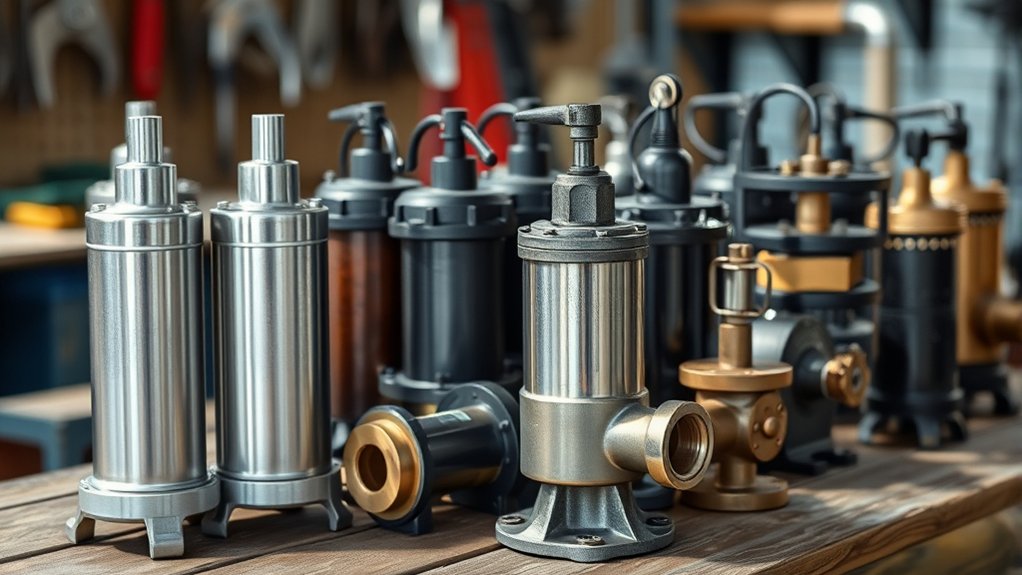
Think of water pumps as the backbone of fluid movement, each material representing a different kind of strength and resilience. When asking, “Are all water pumps aluminum?” it’s important to understand that aluminum is just one of several materials used in their construction.
You might assume aluminum dominates this space due to its lightness and corrosion resistance, but that’s only part of the story. The choice of material hinges on various factors like environment, fluid type, and durability requirements. This prompts a closer look at when and why alternatives like cast iron or stainless steel might take precedence.
Key Takeaways
- Not all water pumps are aluminum; materials include cast iron, stainless steel, and plastic composites based on application needs.
- Aluminum pumps are lightweight and corrosion-resistant but may wear faster in harsh, abrasive environments compared to cast iron.
- Cast iron pumps offer superior durability under heavy loads and abrasive fluids but are heavier and costlier than aluminum.
- Stainless steel pumps excel in corrosion resistance and high-temperature tolerance, suitable for chemical exposures beyond aluminum’s capacity.
- Plastic composite pumps provide corrosion resistance and light weight but may have slightly lower energy efficiency than metal pumps.
How To Choose The Right Water Pump Material?
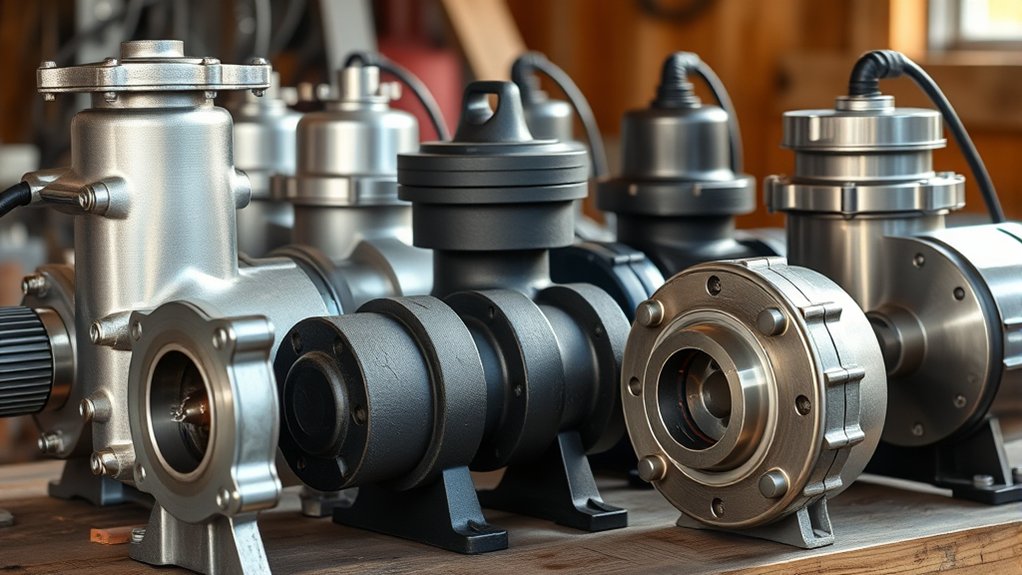
How do you select the right material for a water pump to guarantee peak performance and durability? First, evaluate the operational environment and the fluid characteristics the pump will handle. Materials must offer high wear resistance to withstand abrasive particles and continuous friction, ensuring longevity.
You should also consider noise reduction properties, especially in residential or industrial settings where minimizing sound pollution is crucial. Metals with inherent damping capabilities or composite materials can reduce vibration-induced noise effectively.
Additionally, assess thermal conductivity and corrosion resistance to prevent material degradation under varying temperatures and fluid chemistries. Balancing these factors ensures the pump maintains efficiency and reliability. Ultimately, your choice must align with specific application demands, prioritizing wear resistance and noise reduction for optimal water pump functionality.
Why Are Many Water Pumps Made From Aluminum?
You’ll find many water pumps made from aluminum because its lightweight nature reduces overall system weight without sacrificing strength.
Aluminum also offers excellent corrosion resistance, which extends the pump’s operational lifespan in various environments.
Understanding these benefits helps explain why aluminum is often the material of choice in pump manufacturing.
Aluminum’s Lightweight Advantage
Why do manufacturers favor aluminum for water pump construction? You’ll find aluminum’s lightweight nature markedly reduces overall pump weight, enhancing efficiency and ease of installation. Compared to heavier metals, aluminum’s density is approximately one-third, which lowers mechanical load and energy consumption in operation.
Additionally, incorporating recycled aluminum in manufacturing further improves sustainability without compromising strength or durability. While nonmetal alternatives like composites exist, they often lack aluminum’s balance of weight, thermal conductivity, and mechanical performance significant in water pumps.
Corrosion Resistance Benefits
Beyond aluminum’s lightweight advantage, its impressive corrosion resistance plays a crucial role in water pump manufacturing. You’ll find that aluminum forms a natural oxide layer, protecting the metal from oxidative damage in aquatic environments.
This characteristic ensures longevity and reliable operation, especially where water purity is paramount. Corrosion can introduce contaminants, compromising filtration efficiency and overall system performance.
By using aluminum, manufacturers minimize the risk of metal degradation, maintaining consistent water quality. Moreover, its resistance reduces maintenance frequency and associated costs.
When you rely on aluminum pumps, you enhance durability without sacrificing filtration accuracy. This balance is essential in applications demanding stringent water purity standards, making aluminum an optimal material choice for water pumps focused on long-term, efficient filtration and contaminant control.
When Should You Choose Cast Iron Over Aluminum Pumps?
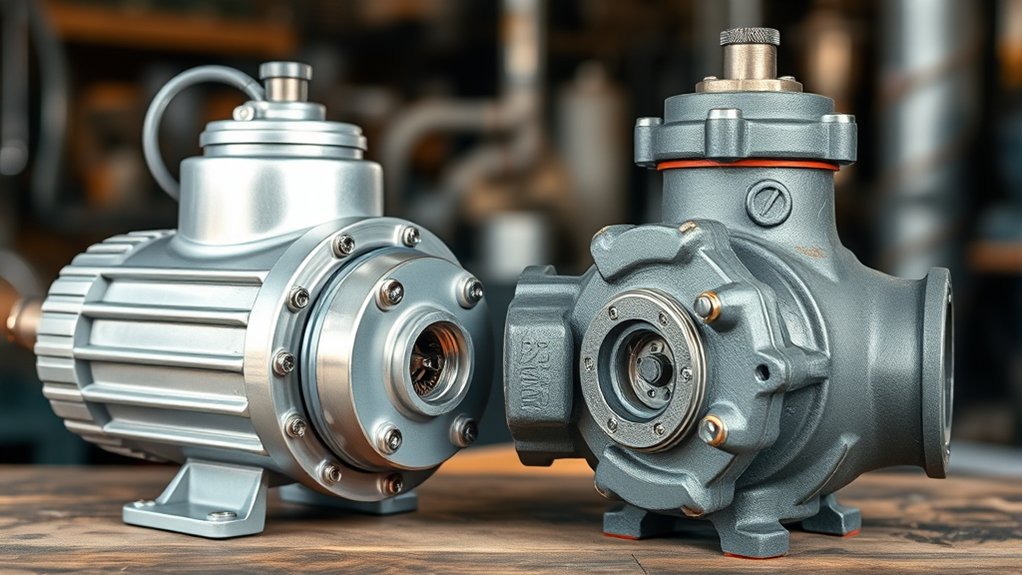
When do cast iron pumps provide a clear advantage over aluminum models? You’ll prefer cast iron pumps when durability under heavy loads or abrasive conditions is critical. Cast iron durability surpasses aluminum, especially in industrial applications where mechanical stress is frequent.
However, aluminum vs cost often favors aluminum as it’s lighter and typically less expensive upfront.
| Factor | Cast Iron Pump |
|---|---|
| Durability | Superior, withstands wear |
| Weight | Heavier, less portable |
| Cost | Higher upfront, longer lifespan |
| Application | Heavy-duty, abrasive fluids |
Choose cast iron if long-term robustness outweighs initial cost. Aluminum suits cost-sensitive, lightweight needs but may wear faster under harsh conditions.
How Do Stainless Steel Water Pumps Handle Tough Conditions?
Resilience defines stainless steel water pumps, which excel in challenging environments where corrosion, high temperatures, and chemical exposure threaten other materials. You’ll find stainless steel durability critical for tough condition performance, especially when aluminum or cast iron may fail.
Stainless steel pumps thrive where corrosion, heat, and chemicals overpower other materials.
Here’s how they handle harsh conditions:
- Corrosion Resistance: Stainless steel’s chromium content forms a passive layer, preventing rust and chemical degradation.
- Thermal Stability: It withstands elevated temperatures without warping or losing strength.
- Mechanical Strength: High tensile strength ensures structural integrity under pressure fluctuations.
- Chemical Compatibility: Resistant to acids and alkalis, stainless steel pumps operate reliably in aggressive fluids.
Why Choose Plastic Composite Water Pumps?
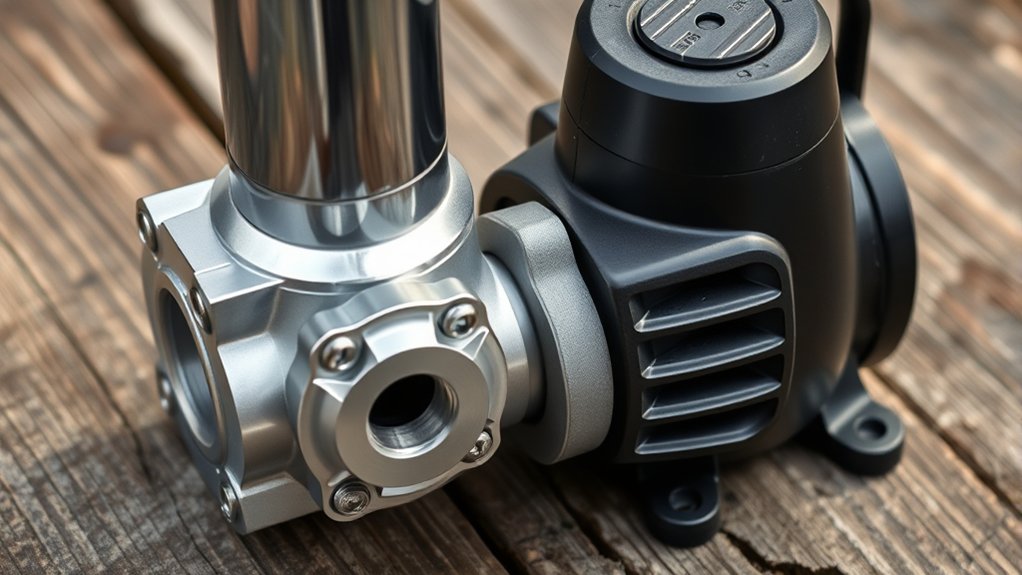
Why opt for plastic composite water pumps in certain applications? You’ll find that plastic composite durability offers excellent corrosion resistance and lightweight benefits compared to metals. These pumps reduce installation strain without sacrificing structural integrity.
However, you should consider energy efficiency tradeoffs. Plastic composites may cause slightly higher friction losses, impacting power consumption.
| Feature | Analysis |
|---|---|
| Plastic Composite Durability | High resistance to chemicals and corrosion |
| Weight | Significantly lighter than aluminum pumps |
| Energy Efficiency Tradeoffs | Slightly lower efficiency due to surface friction |
| Cost | Often lower upfront and maintenance costs |
Choosing plastic composite pumps means balancing durability and weight against marginal energy efficiency differences for your specific needs.
How Does Your Environment Affect Water Pump Material?
You need to consider corrosion resistance when selecting a water pump material, especially if your environment exposes it to moisture or chemicals. Temperature fluctuations also affect material performance and durability, so understanding thermal tolerance is crucial.
Assessing these factors helps ensure your pump operates efficiently and lasts longer.
Corrosion Resistance Factors
Corrosion presents a critical challenge when selecting water pump materials, directly impacting performance and longevity. You must evaluate environmental factors carefully, as ignoring them is an unrelated topic and an irrelevant concept in making durable choices.
Consider these corrosion resistance factors:
- Water Chemistry: High salinity or acidic conditions accelerate corrosion, requiring materials with superior resistance.
- Exposure Duration: Continuous immersion versus intermittent contact affects corrosion rates differently.
- Oxygen Levels: Elevated oxygen can increase oxidation, demanding materials with protective oxide layers.
- Presence of Contaminants: Chlorides, sulfates, and industrial pollutants intensify corrosive effects, influencing material selection.
Temperature Impact on Materials
How does temperature influence the performance and durability of water pump materials? Temperature effects play a critical role in determining a pump’s operational lifespan and efficiency.
When exposed to elevated temperatures, certain alloys, including aluminum, can experience accelerated alloy aging, which weakens their microstructure and reduces mechanical strength. Conversely, lower temperatures may increase material brittleness, raising the risk of cracks under stress.
You must consider these temperature-dependent changes when selecting water pump materials for your environment. For instance, aluminum’s thermal conductivity helps dissipate heat but may still succumb to alloy aging over time.
Other materials, like cast iron or stainless steel, might better resist temperature-induced degradation. Ultimately, understanding temperature effects ensures you choose a material that maintains structural integrity and performance under your specific operating conditions.
What Maintenance Differences Exist Between Water Pump Materials?
What sets the maintenance needs of aluminum water pumps apart from those made of cast iron or stainless steel? Aluminum pumps generally require closer monitoring for corrosion, especially in harsh environments, due to their higher environmental impact sensitivity. They also tend to generate less noise, reducing wear on components over time.
Cast iron pumps demand frequent inspections for rust and structural integrity, while stainless steel pumps resist corrosion but may need attention to prevent galling.
Key maintenance differences include:
- Corrosion monitoring frequency (higher for aluminum).
- Noise generation impact on component wear (lower in aluminum).
- Structural inspections for rust (critical for cast iron).
- Surface treatment checks to prevent galling (necessary for stainless steel).
Understanding these distinctions helps you tailor maintenance protocols effectively.
Tips For Selecting And Caring For Your Water Pump Material
When choosing the right water pump material, you need to contemplate factors like environmental conditions, fluid type, and maintenance capabilities. Analyze the compatibility of the material with the fluid’s corrosive properties to prevent premature failure.
Selecting water pump materials requires careful consideration of environment, fluid corrosiveness, and maintenance needs.
Consider pumps made from recycled materials for enhanced sustainability without compromising structural integrity. Evaluate pump color options, as certain coatings can improve corrosion resistance and heat dissipation.
Regularly inspect seals and bearings based on the material’s wear patterns to optimize longevity. When cleaning, use appropriate solvents that won’t degrade the pump’s surface or internal components.
Store the pump in a dry, temperature-controlled environment to minimize material fatigue. By rigorously assessing these factors, you ensure efficient performance and extend the operational life of your water pump, tailored to your specific application needs.
Frequently Asked Questions
Can Aluminum Water Pumps Be Used for Hot Water Applications?
You can use aluminum water pumps for hot water applications if they’re designed to handle high temperatures. Ensure proper installation tools and check if recycled materials affect heat resistance or durability before proceeding.
Are Aluminum Water Pumps Recyclable?
Yes, aluminum water pumps are highly recyclable. You’ll find their recycling feasibility excellent, substantially reducing environmental impact by conserving energy and raw materials compared to producing new aluminum.
This makes them an eco-friendly choice in pump manufacturing.
Do Aluminum Water Pumps Require Special Installation Tools?
Installing aluminum water pumps isn’t rocket science, but you’ll want to ensure tool compatibility carefully. Using improper tools risks aluminum corrosion and damage, so specialized torque wrenches and corrosion-resistant materials guarantee a precise, durable installation every time.
How Long Do Aluminum Water Pumps Typically Last?
You can expect aluminum water pumps to last around 5 to 10 years, depending on aluminum durability and fluid compatibility. Proper maintenance and using compatible fluids substantially extend their operational lifespan and performance consistency.
Are Aluminum Water Pumps Compatible With All Fluids?
You shouldn’t assume aluminum compatibility with all fluids; its chemical properties can cause corrosion or degradation. Always verify fluid safety data before use, ensuring the aluminum pump materials align with the specific fluid’s characteristics and operational conditions.
Conclusion
Choosing the right water pump material is like selecting the perfect tool for a complex machine—each offers unique strengths. Aluminum’s lightweight efficiency suits many needs, but cast iron’s rugged durability or stainless steel’s resilience may better withstand harsh conditions. Plastic composites resist corrosion where others falter.
By analyzing your environment and maintenance demands, ensure your pump not only performs but thrives. Turning potential challenges into seamless flow and lasting reliability is key. Remember, not all water pumps are aluminum, and selecting the right material makes all the difference.