Are Shower Hoses Standard Size
You might assume shower hoses are a standard size, but the reality is more complex. While many use a common 1/2-inch thread, variations in length, connector type, and regional standards can affect compatibility.
Understanding these differences is key to avoiding leaks and ensuring a proper fit. Let’s explore how these factors influence your choice and what you need to measure before replacing your shower hose.
Key Takeaways
- Shower hoses typically follow standard sizes, with 1/2-inch BSP thread connectors common for broad compatibility across brands and setups.
- Standard hose lengths usually range from 59 to 79 inches, balancing usability and installation needs in most bathroom layouts.
- Using standard sizes ensures hoses fit without adapters, preventing leaks and simplifying installation and replacement.
- Measuring existing hose length and connector diameter precisely guarantees selecting a compatible standard replacement hose.
- While adapters exist, matching standard connectors is preferred for secure, leak-free connections and consistent water flow.
What Does “Standard Size” Actually Mean for Shower Hoses?
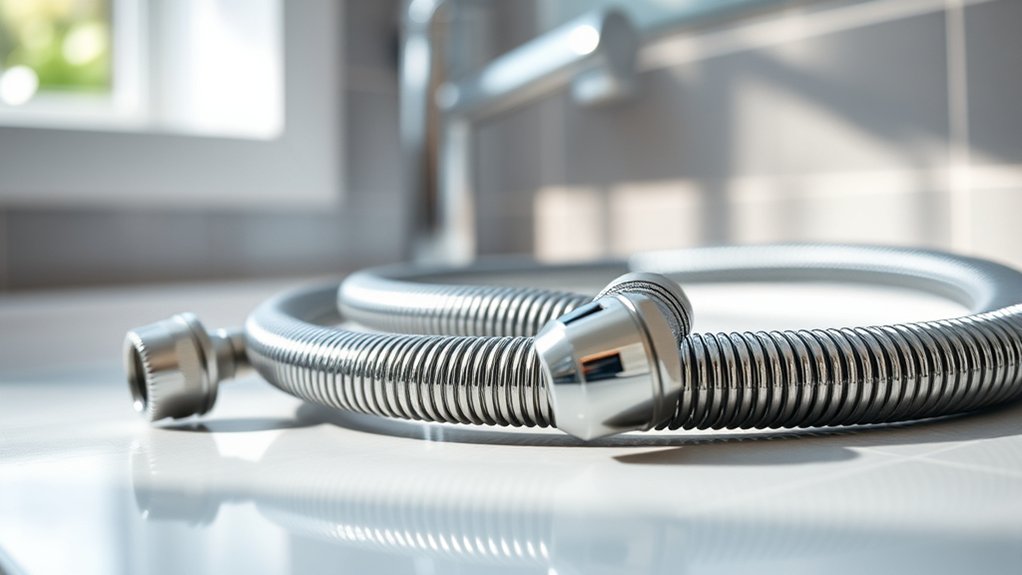
What exactly does “standard size” mean when it comes to shower hoses? It refers to the commonly accepted dimensions and connection types that ensure compatibility across most shower fixtures.
When you select a hose labeled as standard, you expect it to fit easily without requiring adapters. This consistency simplifies installation aesthetics, allowing your setup to look clean and professional.
Manufacturers often adhere to these standards, which promotes pricing transparency. You pay for quality and compatibility, not guesswork.
Understanding these norms helps you avoid costly mistakes or mismatched parts. By focusing on standard sizes, you streamline both the selection and replacement process, ensuring your shower hose performs reliably while maintaining a neat appearance in your bathroom setup.
How Long Are Shower Hoses?
How long should a shower hose be to provide both flexibility and convenience? Typically, shower hoses range from 59 to 79 inches (1.5 to 2 meters). This length allows you to move the showerhead freely while maintaining adequate water pressure and minimizing kinks.
When selecting a hose, consider your bathroom layout. Too short restricts movement; too long may cause tangling or reduce water flow efficiency. Just like evaluating interest rates for ideal financial returns, choosing the right hose length ensures maximum utility and performance.
If your home integrates solar panels for energy efficiency, you might want to factor in eco-conscious plumbing choices, including durable hoses that reduce waste and last longer. Ultimately, a hose around 63 inches balances convenience with practical installation needs.
What Are the Common Shower Hose Connection Sizes?
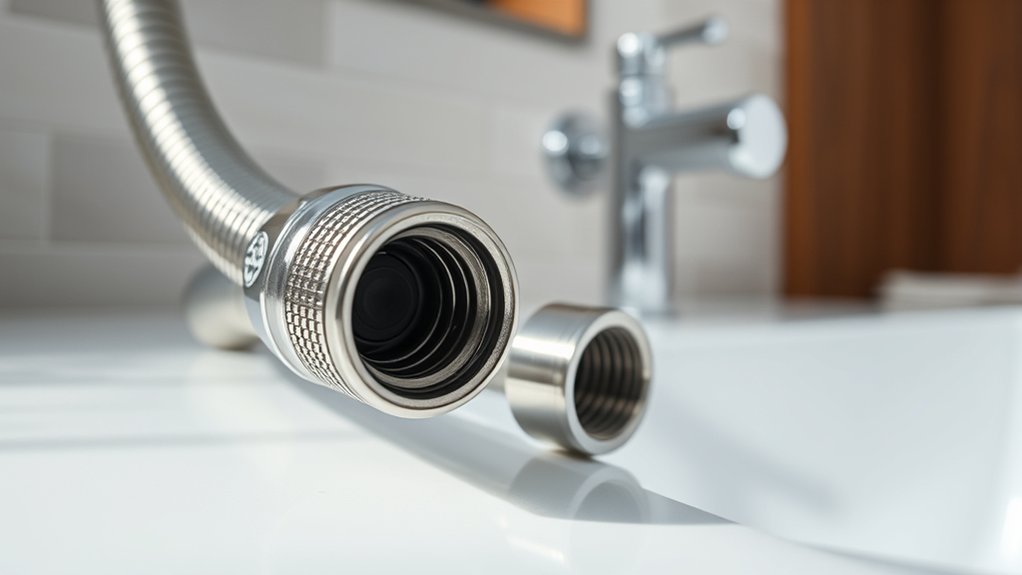
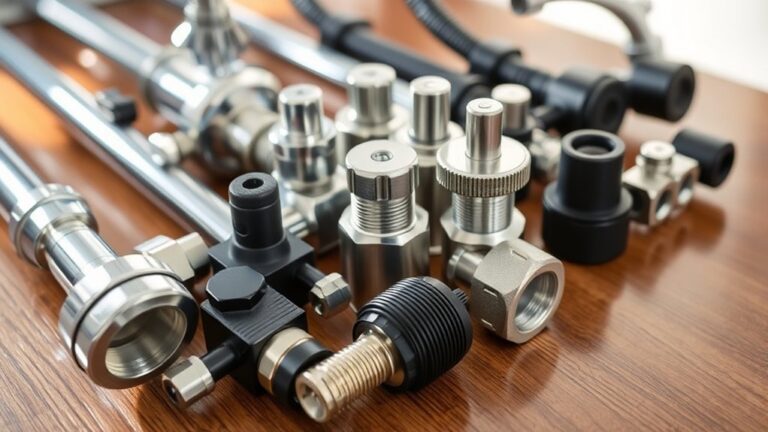
Which connection sizes will fit your shower hose and fixtures? Most shower hoses use standard 1/2-inch BSP (British Standard Pipe) thread connectors, common in many regions for plumbing fittings. These universal connectors ensure thread compatibility across different brands and models, simplifying replacements and upgrades.
You’ll also encounter 3/8-inch fittings, especially in specialized or older systems, but these are less common. When selecting a hose, verify the thread type on both the hose ends and your fixture to avoid leaks or improper fits.
Adapters exist to bridge mismatched sizes, but using hoses with matching connectors is more reliable. Understanding universal connectors and thread compatibility helps you choose the right hose, ensuring a secure, leak-free connection in your shower setup.
How Different Shower Systems Affect Shower Hose Size
Different shower systems demand varying hose sizes to maintain optimal water flow and compatibility. When selecting a hose, you must consider the system type, whether it’s a fixed showerhead, handheld, or dual setup, as each requires specific hose lengths and connection diameters.
For example, handheld showers often use flexible, longer hoses to allow maneuverability, while fixed systems use shorter, stiffer hoses. Ignoring these distinctions can lead to improper fitting or reduced performance.
It’s important not to confuse this topic with irrelevant topics like unrelated concepts in plumbing that don’t affect hose size, such as water heater capacity. Instead, focus solely on how system design dictates hose specifications to ensure you choose a hose that fits perfectly and functions efficiently within your particular shower setup.
Why Shower Hose Diameter Matters
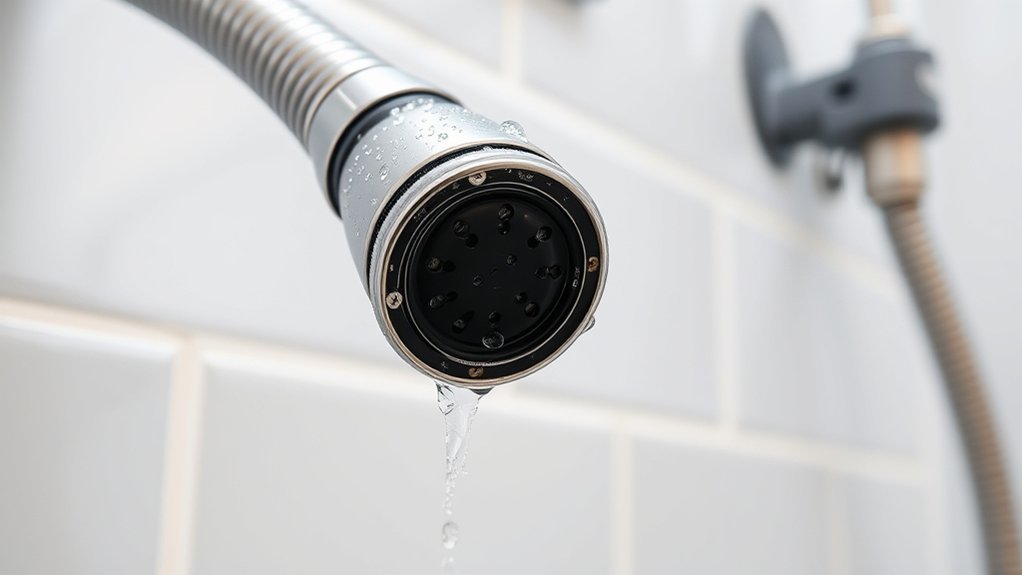
You need to contemplate shower hose diameter because it directly affects water flow and pressure. If the hose doesn’t match your fixtures, you risk leaks or poor performance.
Plus, the right diameter influences the hose’s durability and flexibility, ensuring it lasts and functions properly.
Impact On Water Flow
How does the diameter of your shower hose affect water flow? The shower hose diameter directly influences the water flow impact by determining resistance within the hose.
A larger diameter reduces friction, allowing water to flow more freely and maintain pressure, which improves overall shower performance. Conversely, a smaller diameter increases resistance, restricting water flow and potentially lowering pressure at the showerhead. This difference can be critical if your water supply pressure is already low.
When selecting a hose, you want to balance flexibility with optimal diameter to ensure efficient water delivery. Understanding the water flow impact of shower hose diameter helps you avoid issues like weak streams or uneven spray, ensuring a consistent and satisfying shower experience.
Compatibility With Fixtures
Why does shower hose diameter matter when connecting to fixtures? The hose diameter directly affects how well it fits your showerhead and water outlet. If the diameter doesn’t match, you’ll face compatibility issues such as leaks, poor water pressure, or the need for adapters.
To avoid these problems, measure the diameter of your existing fixtures before purchasing a hose. Standard diameters are typically 1/2 inch, but variations exist, so don’t assume compatibility.
For installation, ensure you use proper washers and tighten connections securely without overtightening, which can damage threads. Following these installation tips helps maintain a watertight seal and optimal performance.
Being precise about hose diameter ensures your shower setup functions reliably and efficiently without unnecessary modifications.
Durability And Flexibility
Matching the correct shower hose diameter not only guarantees compatibility but also impacts the hose’s durability and flexibility. When you choose a hose with a larger diameter, you often gain improved durability due to thicker walls and stronger materials.
However, this can introduce flexibility constraints, making the hose less pliable and harder to maneuver. Conversely, smaller diameter hoses offer greater flexibility but may involve durability tradeoffs, as thinner materials can be more prone to kinks or damage over time.
You need to balance these factors based on your usage: if you require frequent bending, prioritize flexibility; if longevity under high water pressure is your concern, durability takes precedence. Understanding these tradeoffs ensures you select a hose that performs well and lasts longer in your specific shower setup.
Can Any Shower Hose Fit Your Existing Setup?
Can you simply swap any shower hose into your existing setup? Not always. While many hoses fit standard fixtures, compatibility myths can lead you astray. You need to check specific factors before replacing your hose.
Not every shower hose fits all setups—check compatibility before swapping to avoid installation issues.
Consider these points to ensure a proper fit:
- Thread size and type: Most use 1/2-inch BSP threads, but some models differ.
- Connection style: Some hoses feature swivel connectors; others don’t, affecting ease of installation.
- Material compatibility: Matching hose flexibility with your setup avoids leaks or stress points.
Timing considerations also matter. If your current setup is older or non-standard, a generic hose might not fit or perform well. Prioritize matching technical specifications over assumptions to maintain functionality and avoid costly errors.
How to Measure Your Current Shower Hose for Replacement
How do you guarantee your new shower hose fits perfectly? Start by measuring your existing hose length and diameter precisely, avoiding distractions by unrelated topics or random tangents. Use a tape measure for length, and a caliper for the diameter of the connectors to ensure compatibility.
| Measurement Aspect | Tool Needed | What to Measure |
|---|---|---|
| Hose Length | Tape measure | Full length from end to end |
| Connector Diameter | Caliper | Outer thread diameter |
| Thread Type | Visual check | Match male/female connector type |
Confirming these measurements helps you avoid purchasing incompatible hoses. Focus strictly on these technical details and steer clear of unrelated topics to keep your replacement process efficient and straightforward.
What Are the Most Popular Shower Hose Lengths and Why?
You’ll find shower hoses typically come in lengths ranging from 59 to 79 inches, with 59 inches being the most common. The length you choose depends on factors like shower size, user height, and installation type.
Understanding these variables helps you pick a hose length that balances flexibility and ease of use.
Common Hose Lengths
Why do certain shower hose lengths become more popular than others? It often boils down to practical design considerations like material compatibility and packaging standards that manufacturers follow. These factors ensure hoses fit a range of shower setups while maintaining durability and ease of installation.
Here are the most common hose lengths you’ll encounter:
- 59 inches (1.5 meters): Standard length balancing flexibility and reach.
- 79 inches (2 meters): Offers extra length for larger or corner showers.
- 39 inches (1 meter): Compact option for confined spaces or wall-mounted showers.
These lengths are widely adopted because they meet typical user needs and comply with industry packaging standards, minimizing waste and simplifying inventory management. Understanding these common sizes helps you select the right hose without guesswork.
Factors Influencing Length Choice
What determines the ideal shower hose length for your setup? Key factors include your shower space, user mobility, and installation challenges like tight corners or fixture placements. Price contrasts also matter; longer hoses typically cost more and may require reinforced materials to avoid kinks.
Here’s a quick comparison of popular lengths:
| Hose Length | Typical Use |
|---|---|
| 59 inches | Standard showers |
| 79 inches | Larger showers, more reach |
| 98 inches | Accessible showers, flexibility |
Choose the length that fits your setup without excess slack to prevent tangling. Measure accurately to avoid installation challenges and unnecessary expense. Balancing length and price ensures optimal performance without compromise.
Benefits of Various Lengths
Selecting the right shower hose length directly impacts your shower experience by balancing reach and maneuverability. Common lengths include 59, 79, and 98 inches, each offering specific benefits depending on your setup. When choosing, consider:
- 59 inches: Ideal for compact showers, ensuring installation compatibility without excess slack, reducing wear and tear.
- 79 inches: Offers flexibility for most standard showers, balancing ease of movement and durability considerations.
- 98 inches: Best for larger bathtubs or handheld use, providing maximum reach but requiring careful installation to avoid kinks.
Tips for Choosing the Right Shower Hose Size and Type
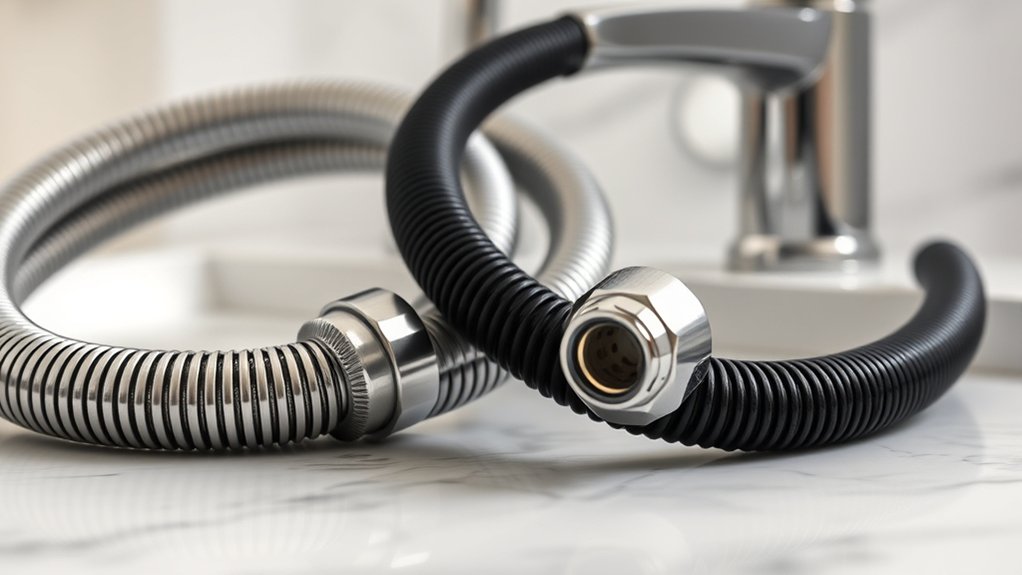
How do you determine the ideal shower hose size and type for your setup? Start by checking shower hose compatibility with existing fittings to avoid leaks. Then, consider hose material durability. Metal hoses resist kinks, while reinforced plastics offer flexibility.
Measure the distance from your faucet to the showerhead to select an appropriate length.
| Factor | Recommendation |
|---|---|
| Length | Match faucet to showerhead |
| Diameter | Standard 1/2 inch for most |
| Material | Stainless steel for durability |
| Compatibility | Check thread type and size |
| Flexibility | Choose based on usage needs |
Where to Buy Shower Hoses That Match Your Size Needs
Where can you find shower hoses that precisely fit your size requirements? Start by exploring specialized plumbing supply stores, where you’ll find hoses designed with concerned drainage features and durable cosmetic coatings. These coatings prevent corrosion and maintain aesthetics.
Alternatively, online retailers offer extensive catalogs with detailed specifications, allowing you to compare lengths and fittings efficiently. Lastly, home improvement centers provide a practical option, often stocking standard and custom sizes suitable for most installations.
- Plumbing supply stores: expert staff and high-quality materials
- Online retailers: wide selection and detailed product info
- Home improvement centers: convenient access and variety
Frequently Asked Questions
How Do Shower Hose Materials Affect Durability and Flexibility?
You’ll find durability factors differ with materials: metal resists kinks but reduces flexibility, while rubber boosts flexibility tradeoffs but may wear faster. Choosing depends on balancing these for your shower’s performance and longevity needs.
Are There Eco-Friendly Shower Hose Options Available?
You’ll find eco-friendly options that practically save the planet with shower hoses made from recycled materials. These durable, flexible hoses combine sustainability and performance, letting you upgrade your bathroom responsibly without sacrificing quality or function.
Can Shower Hoses Be Used With Water Filters?
You can use shower hoses with water filters, but ensure shower hose compatibility by checking connection sizes. Proper filtration integration requires compatible fittings to maintain water flow and prevent leaks, ensuring effective filtration without compromising hose performance.
How Often Should You Replace a Shower Hose?
You should replace your shower hose every 1-2 years to maintain optimal performance.
Regular two word discussion ideas include “wear inspection” and “leak detection” to monitor replacement frequency and prevent water damage or reduced water flow.
Do Shower Hoses Impact Water Pressure?
You won’t believe how a clogged shower hose can crush your water pressure like a bulldozer! Two word ideas, diameter and length, directly affect flow.
Don’t let unrelated discussion distract you; hose condition matters most practically.