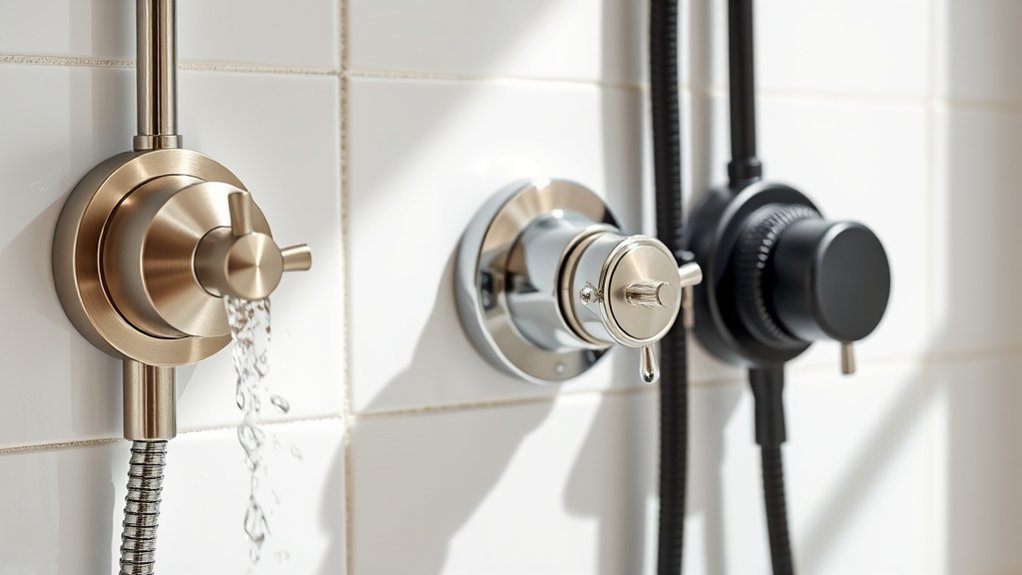
Are All Shower Valves the Same
When you choose a shower valve, you can’t assume all shower valves are the same. Differences in mechanisms, temperature control, and compatibility with your plumbing setup directly impact performance and safety.
Understanding how pressure-balanced valves compare to thermostatic types, or how material quality affects longevity, is crucial. These factors shape not only your shower experience but also maintenance needs and costs.
So, which valve truly fits your bathroom’s demands? Taking the time to evaluate these aspects ensures you select the right shower valve for your home.
Key Takeaways
- Shower valves differ in design, flow rates, and mixing capabilities, making them non-interchangeable with unrelated fixtures like kitchen faucets.
- Valve types include pressure-balancing, thermostatic, manual mixing, and digital, each offering different temperature control precision and safety features.
- Plumbing material compatibility (copper, PEX, CPVC) affects valve selection due to specific connection requirements and installation constraints.
- Valve materials vary from durable metals (brass, stainless steel) to cost-effective plastics, influencing longevity, corrosion resistance, and safety.
- Safety features like anti-scald technology and pressure balance mechanisms are not standard in all valves and impact user comfort and protection.
What Is a Shower Valve and Why It Matters
Why does a shower valve matter in your plumbing system? It’s the critical component regulating water delivery to your showerhead, ensuring safe and efficient operation. Understanding shower valve history reveals its evolution from rudimentary, manually operated devices to sophisticated, precision-engineered units.
Modern manufacturing techniques utilize durable materials and advanced machining, improving reliability and lifespan. As you examine your system, recognize that the valve’s design directly impacts water pressure and temperature consistency.
Ignoring valve quality can lead to leaks, inconsistent flow, or even damage to your plumbing infrastructure. By grasping what a shower valve is and its role, you can make informed decisions about maintenance or replacement.
This knowledge helps you optimize performance and avoid costly repairs, underscoring the valve’s essential function within your home’s plumbing network.
How Shower Valves Control Water Flow and Temperature
You’ll find that shower valves use different mechanisms, like cartridge, ball, or ceramic disc, to control water flow with precision. Temperature regulation depends on how these valves blend hot and cold water, often incorporating thermostatic or pressure-balancing methods.
Keep in mind that variations in water pressure directly affect valve performance and your shower experience.
Valve Mechanism Types
How do shower valves regulate both water flow and temperature with accuracy? They rely on specific valve mechanism types, each engineered to balance hot and cold water precisely. The main types include compression, cartridge, ball, and thermostatic valves.
Compression valves use separate controls for hot and cold, requiring manual adjustment. Cartridge valves utilize a movable stem to mix water efficiently, offering smoother control. Ball valves employ a rotating ball to adjust flow and temperature simultaneously.
Thermostatic valves incorporate sensors for automatic temperature maintenance. Avoid considering irrelevant topics or stray details like handle aesthetics when analyzing valve functions; focus purely on internal mechanisms. Understanding these types helps you select a valve that meets performance needs without confusion from non-technical factors.
Temperature Regulation Methods
Where do shower valves achieve precise control over water flow and temperature? They use temperature regulation methods that mix hot and cold water in controlled proportions. Understanding these methods helps you avoid irrelevant discussion or unrelated topics like valve aesthetics or installation complexity.
| Method | Mechanism | Control Precision |
|---|---|---|
| Pressure-Balancing | Balances hot/cold pressure | Moderate |
| Thermostatic | Uses a temperature sensor | High |
| Manual Mixing | User-controlled mixing | Low |
| Digital | Electronic sensors & valves | Very High |
Each method adjusts flow to maintain temperature. For instance, thermostatic valves respond instantly to temperature changes, while pressure-balancing valves prevent scalding under pressure fluctuations. You’ll want to focus on these mechanisms when selecting a valve, not irrelevant discussion about unrelated topics.
Water Pressure Impact
Understanding temperature regulation methods provides a foundation for analyzing how water pressure affects shower valve performance. When you adjust a shower valve, it modulates water flow based on pressure differentials, ensuring consistent temperature.
Variations in water pressure can lead to fluctuations in flow rate and temperature stability, especially if valves lack pressure-balancing mechanisms. Unlike unrelated plumbing terms like backflow preventers or sump pumps, which address different water system challenges, shower valves focus on precise control within residential systems.
If water pressure spikes or drops, your valve compensates to maintain comfort, but extreme pressure changes may overwhelm standard valves, causing inconsistent output. Thus, selecting a valve designed to handle your home’s pressure range is crucial.
This technical understanding helps you avoid issues common in non shower topics and ensures reliable performance.
Pressure-Balanced vs. Thermostatic Shower Valves: Which Is Best?
You’ll notice pressure-balanced valves adjust water flow to maintain temperature during pressure changes, while thermostatic valves precisely regulate temperature regardless of pressure fluctuations.
Installation and maintenance requirements vary, with thermostatic units typically demanding more complex setups and upkeep. Additionally, cost and energy efficiency differ, making your choice dependent on your specific needs and budget constraints.
Temperature Control Differences
How do pressure-balanced and thermostatic shower valves differ in managing water temperature? Pressure-balanced valves primarily maintain a consistent temperature by adjusting the water pressure from hot and cold supplies, preventing sudden fluctuations caused by demand changes. However, this method doesn’t precisely control temperature; it’s focused on pressure balance, making other temperature factors an irrelevant topic here.
In contrast, thermostatic valves use a dedicated temperature sensor to regulate water temperature actively, maintaining it within a narrow range regardless of pressure changes. This precise control separates thermostatic valves from the unrelated concept of pressure-only adjustments.
Installation And Maintenance Needs
Although both pressure-balanced and thermostatic shower valves serve similar functions, their installation and maintenance requirements differ substantially. When you install a pressure-balanced valve, you’ll find it involves fewer components and less precise calibration, making it more straightforward.
Thermostatic valves demand meticulous setup, including accurate temperature sensor placement and integration with your plumbing system. Maintenance also varies: pressure-balanced valves typically require less frequent servicing, mainly cartridge replacement, while thermostatic valves need regular calibration and cleaning to maintain temperature accuracy.
Avoid getting sidetracked by unrelated topics or random discussion, as the focus should remain on these technical contrasts. Understanding these differences ensures you choose a valve that matches your technical skill level and long-term maintenance willingness, rather than confusing the topic with irrelevant information.
Cost And Energy Efficiency
What factors influence the cost and energy efficiency of pressure-balanced versus thermostatic shower valves? Pressure-balanced valves generally come at a lower initial cost, making them a popular choice for budget hacks. However, thermostatic valves offer superior temperature control, reducing water waste and enhancing energy savings over time.
While thermostatic models may align less with current cosmetic trend demands due to their bulkier design, their precise temperature regulation minimizes the need for constant adjustments, conserving hot water usage. If you prioritize upfront affordability, pressure-balanced valves suit your budget, but for long-term energy efficiency, thermostatic valves outperform.
Ultimately, your choice depends on balancing immediate costs against operational savings, factoring in both functional performance and aesthetic preferences without compromising efficiency.
Matching Shower Valves to Your Plumbing Setup
Where you install your shower valve plays a crucial role in selecting the right type for your plumbing setup. You need to assess your existing pipe configuration, water pressure, and valve compatibility to ensure seamless integration.
Avoid assuming shower valves are interchangeable with unrelated topic fixtures like kitchen fixtures, as their flow rates and mixing capabilities differ significantly. Evaluate whether your plumbing uses copper, PEX, or CPVC piping since some valves require specific connection types.
Also, consider the valve’s compatibility with your system’s pressure balancing or thermostatic controls. Taking these technical factors into account prevents costly modifications and ensures optimal performance.
How Shower Valve Designs Impact Temperature Control
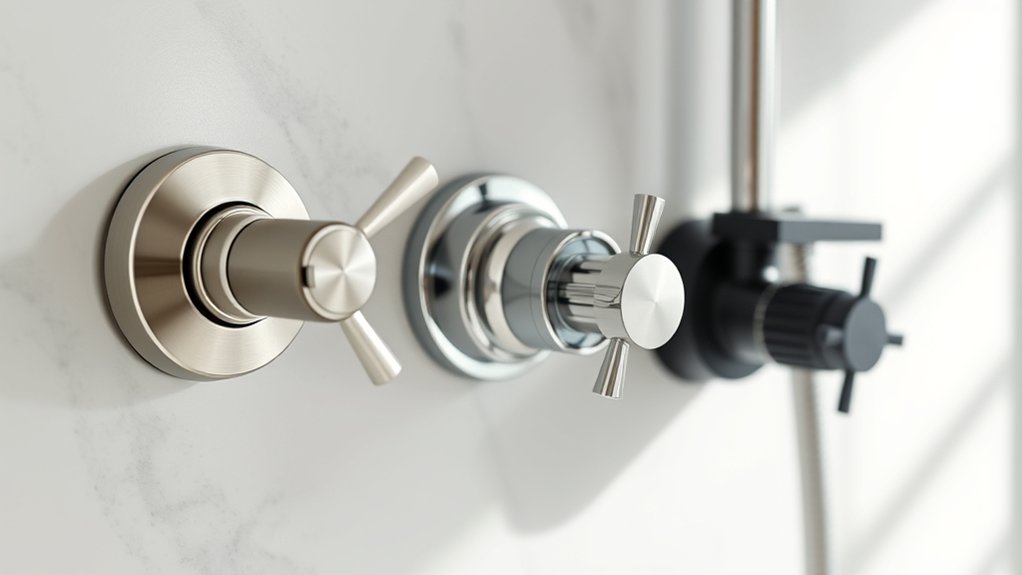
How exactly do different shower valve designs influence your ability to control water temperature? The design dictates how precisely you can adjust the mixing of hot and cold water. Pressure-balance valves automatically regulate pressure fluctuations, preventing sudden temperature swings but limiting fine-tuning.
Thermostatic valves maintain a set temperature regardless of pressure changes, offering superior control. Diverter valves, meanwhile, can affect temperature consistency depending on flow distribution. Beyond function, valve aesthetics impact user experience. Sleek designs often integrate smoother control mechanisms, enhancing precision.
Additionally, valve noise is a critical consideration; some designs generate audible sounds during adjustments, which can indicate turbulence or inefficient flow paths, potentially compromising temperature stability. Understanding these design factors helps you select a valve that ensures consistent, comfortable temperature control tailored to your shower environment.
Valve Materials: Durability and Safety Considerations
Beyond design, the materials used in shower valves markedly affect both durability and safety. When selecting a valve, you should prioritize metals like brass or stainless steel due to their superior corrosion resistance, which directly enhances valve durability.
Plastic components, while cost-effective, tend to degrade faster under heat and pressure, increasing failure risk. You must also consider lead-free alloys to mitigate health hazards, aligning with safety considerations.
The valve’s internal seals and cartridges, often made from ceramic or rubber, influence longevity and leak prevention. Pay close attention to material certifications and compliance with plumbing standards, as these validate both durability and safety aspects.
Key Safety Features in Shower Valves
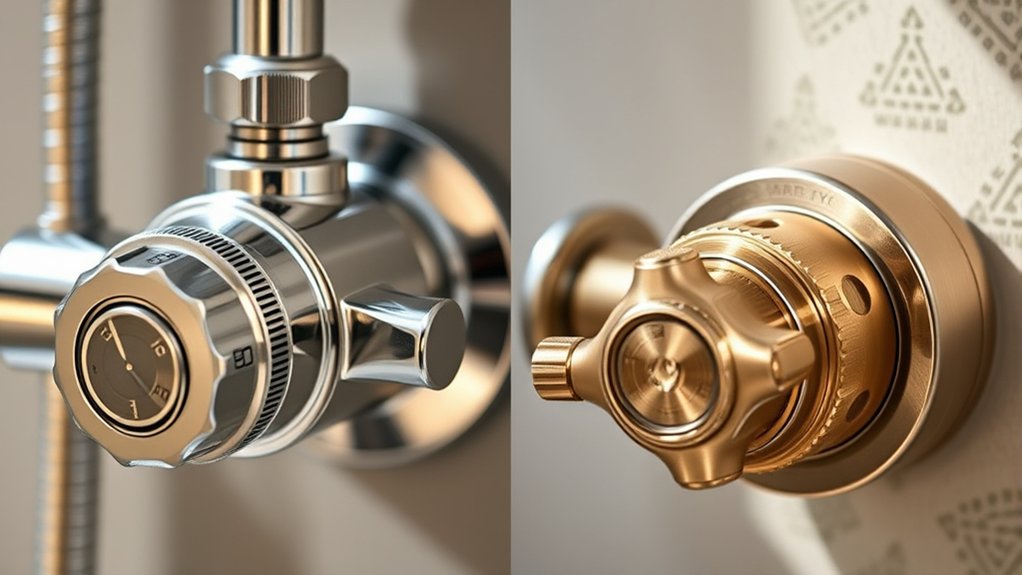
You need to prioritize shower valves equipped with anti-scald technology to maintain consistent water temperature and prevent sudden spikes.
Look for pressure balance mechanisms that regulate hot and cold water flow, ensuring safety during pressure fluctuations. These features are critical for protecting you from burns and enhancing overall shower control.
Anti-Scald Technology
Why does anti-scald technology matter in shower valves? It directly protects you from sudden temperature spikes that can cause burns. Unlike an unrelated topic or a random idea, this feature ensures water temperature remains within a safe range, even if cold water supply fluctuates.
Anti-scald valves use thermostatic elements that detect temperature changes and adjust accordingly. This technical precision means you avoid unexpected scalding without compromising comfort. You won’t face the issues caused by unrelated topic interruptions or random idea disruptions in water flow.
Pressure Balance Mechanisms
How does a pressure balance mechanism enhance your shower valve’s safety? It maintains a consistent temperature by automatically adjusting for fluctuations in water pressure from the hot or cold supply lines.
When water demand changes, such as a toilet flush causing a drop in cold water pressure, the mechanism shifts to balance the pressure, preventing sudden scalding or chilling. This feature is distinct from anti-scald technology that directly limits temperature but complements it by stabilizing pressure variables.
While discussing unrelated topics like random trivia on shower designs might be interesting, focusing on pressure balance is crucial for safety and comfort. Without this mechanism, your shower experience could be erratic and unsafe, emphasizing that not all shower valves incorporate pressure balance features, making your choice critical.
How to Choose the Right Shower Valve for Your Bathroom Upgrade
When selecting a shower valve for your bathroom upgrade, what factors should you prioritize to guarantee peak performance and compatibility? First, assess your plumbing system’s pressure requirements and valve type, pressure balance or thermostatic, to ensure precise temperature control.
Next, verify valve dimensions and installation depth to match existing plumbing, preventing costly modifications. Consider material durability, favoring corrosion-resistant metals for longevity.
Also, factor in your bathroom’s aesthetic elements; the valve’s control design should complement shower decorations and tile patterns, maintaining visual cohesion. Finally, evaluate maintenance accessibility to facilitate future repairs.
Signs You Need to Replace Your Shower Valve
What indicators reveal that your shower valve requires replacement? If you notice inconsistent water temperature despite adjusting the handle, it signals internal cartridge wear or mineral buildup compromising valve function.
Leaks around the valve trim or in the wall indicate seals or valve body deterioration, which demands prompt replacement to prevent water damage. Additionally, if the valve handle feels loose or sticks, internal components may be failing.
Avoid confusing these symptoms with an unrelated topic like water pressure issues caused by random concept factors such as municipal supply fluctuations. Persistent issues limited to the valve itself strongly suggest replacement rather than patch repairs.
Recognizing these technical signs ensures you replace your shower valve proactively, maintaining system integrity and consistent performance.
Installation and Maintenance Tips for Shower Valves
Why does proper installation and maintenance matter for your shower valve? Correct installation ensures optimal functionality and longevity, preventing leaks and pressure issues. Maintenance preserves valve aesthetics, avoiding corrosion or mineral buildup that can degrade performance and appearance.
Proper installation and maintenance ensure your shower valve functions well, lasts longer, and stays free from leaks and corrosion.
Considering valve pricing, investing in quality parts and professional installation can reduce long-term repair costs.
To maintain your shower valve effectively, focus on these key actions:
- Inspect seals and cartridges regularly for wear or damage
- Clean valve components to prevent mineral deposits
- Tighten fittings to avoid leaks without over-torquing
- Use manufacturer-recommended parts for replacements
Frequently Asked Questions
Can Shower Valves Be Used With Smart Home Systems?
Over 70% of smart home devices require compatibility testing before integration. You can use shower valves with smart integration, but you’ll need to ensure your valve supports digital controls and is tested for seamless compatibility with your system.
Do Shower Valves Affect Water Pressure in Other Fixtures?
Yes, your shower valve compatibility directly impacts pressure balancing, which can affect water pressure in other fixtures. Properly selected valves maintain consistent flow, preventing pressure drops that might otherwise disrupt your home’s overall water system performance.
Are There Eco-Friendly Shower Valve Options Available?
Yes, you’ll find eco-friendly valves designed to minimize water waste while maintaining pressure. Many also offer smart home compatibility, allowing precise control and monitoring.
This enhances efficiency and reduces environmental impact in your daily shower usage.
How Do Shower Valves Impact Water Heater Efficiency?
You know what they say: “A chain is only as strong as its weakest link.” Shower valve compatibility directly affects water heater efficiency by ensuring optimal flow and temperature control, preventing energy waste and improving system performance.
Can a Shower Valve Prevent Scalding in Homes With Children?
Yes, you can enhance shower valve safety by installing valves with childproof temperature controls that limit maximum water temperature. This effectively prevents scalding and ensures precise, consistent water temperature to protect children in your home.