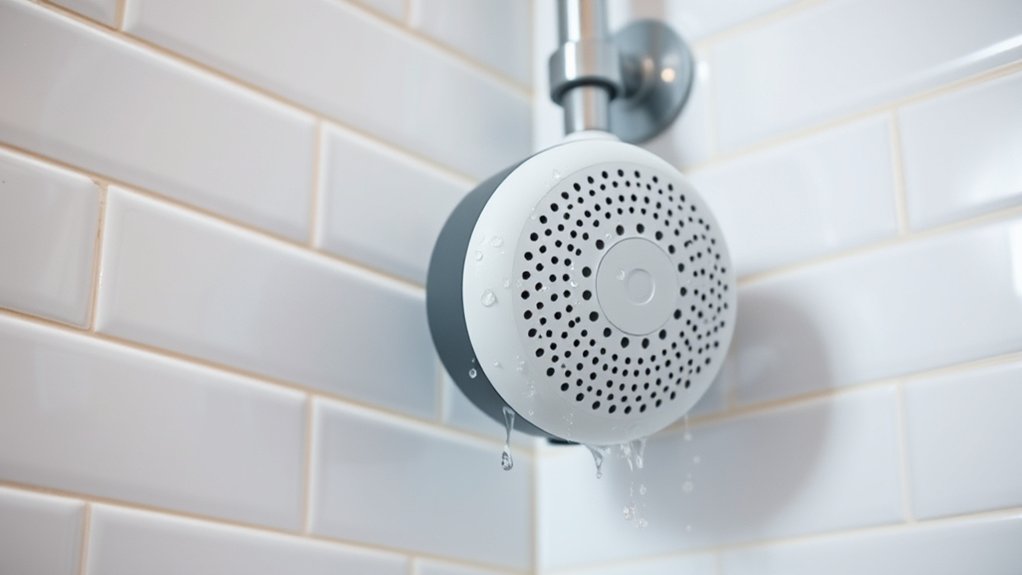
Are Shower Speakers Safe
If you’re considering a shower speaker, safety is a key concern you shouldn’t overlook. Shower speakers must meet specific waterproof standards, like IPX7, and use sealed, non-toxic materials to prevent water damage and electrical risks.
But it’s not just about the rating; factors like proper placement, charging methods, and material durability also play critical roles. Understanding these technical details can help you avoid hazards and extend your speaker’s lifespan.
Key Takeaways
- Shower speakers with at least an IPX7 rating ensure reliable waterproofing and reduce electrical shock risks in wet environments.
- Specialized waterproof materials and sealed enclosures prevent water ingress and enhance user safety during shower use.
- Proper Bluetooth security and corrosion-resistant designs maintain functionality and safety amid steam and humidity exposure.
- Avoid charging shower speakers in wet areas and regularly inspect seals to prevent electrical short circuits.
- Monitor volume levels to protect hearing, as shower speakers can produce sound above 85 dB near the ears.
What Waterproof Ratings Mean for Shower Speakers
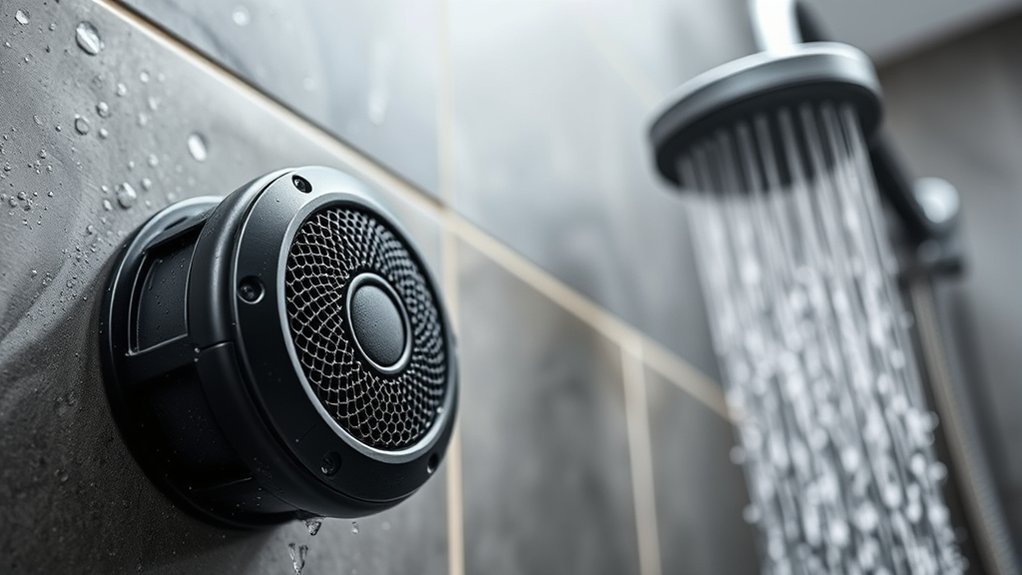
How do waterproof ratings affect the safety and performance of shower speakers? These ratings, typically expressed as IP codes, quantify a speaker’s resistance to water and dust ingress.
Waterproof ratings, shown as IP codes, measure a speaker’s ability to resist water and dust intrusion.
For shower environments, you should look for at least an IPX7 rating, which guarantees protection against immersion in water up to 1 meter for 30 minutes. This ensures the speaker maintains functionality and safety despite exposure to steam and splashes.
A higher waterproof rating correlates with improved durability, which can positively influence battery life by preventing water damage to internal components. Additionally, selecting brands with a strong brand reputation ensures adherence to rigorous waterproof standards and reliable product performance.
Consequently, understanding waterproof ratings helps you choose a shower speaker that balances safety, longevity, and audio quality efficiently.
How Shower Speakers Stay Safe Around Water and Electricity
You’ll notice shower speakers use specialized waterproof materials and sealed enclosures to prevent water ingress. They also incorporate electrical safety features like low-voltage operation and insulation to minimize shock risk.
Understanding these design elements helps guarantee the devices function safely in wet environments.
Waterproof Design Features
Why do shower speakers remain safe around water and electricity? They use advanced waterproof coatings and carefully selected battery chemistry to prevent damage and hazards. The coatings form a protective barrier, repelling moisture and preventing short circuits.
Meanwhile, battery chemistry optimized for wet environments minimizes leakage risks. These features ensure durability and user safety.
| Feature | Purpose | Benefit |
|---|---|---|
| Waterproof Coatings | Seal internal components | Prevent water ingress |
| Battery Chemistry | Use sealed, water-resistant cells | Reduce corrosion and leaks |
| Sealed Speaker Grills | Block water entry | Maintain sound quality |
| Durable Housing | Resist physical and moisture damage | Extend product lifespan |
This precise engineering keeps your shower speaker reliable and safe under constant exposure to water.
Electrical Safety Mechanisms
What keeps shower speakers safe when electricity meets water? These devices integrate multiple electrical safety mechanisms to prevent hazards. They employ low-voltage power supplies, often under 12 volts, reducing shock risk.
Insulation materials and sealed circuits ensure no direct contact between water and electrical components. Additionally, many shower speakers comply with IPX7 or higher waterproof ratings, confirming protection against immersion.
From a disaster preparedness standpoint, these safeguards minimize electrical faults that could lead to short circuits or fire. Manufacturers also consider allergy considerations by using hypoallergenic casing materials to avoid skin reactions during prolonged exposure in moist environments.
Materials That Make Shower Speakers Durable and Safe
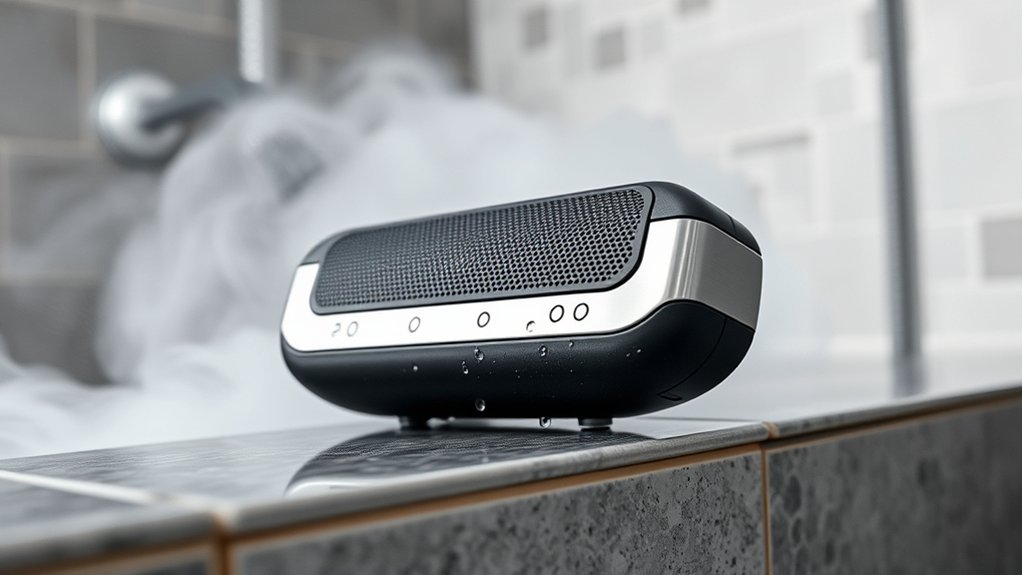
You’ll find that durable shower speakers use waterproof and rust-resistant materials like silicone and stainless steel to prevent damage in wet environments.
The internal components must be non-toxic and safely insulated to avoid any health risks or electrical hazards. Understanding these material choices helps you select a speaker that’s both safe and long-lasting.
Waterproof And Rust-Resistant Materials
Although many electronic devices claim water resistance, shower speakers require materials that withstand constant exposure to moisture without degradation. You need shower speakers constructed with high-grade waterproof materials such as silicone, ABS plastic, or treated polycarbonate, which provide effective barriers against water ingress.
These materials help maintain functionality and prevent internal damage. Additionally, rust resistant components are essential for durability, especially in metal parts like speaker grills or mounting brackets. Stainless steel or anodized aluminum alloys resist corrosion, ensuring longevity despite repeated wet conditions.
When selecting a shower speaker, verify its IP rating. IPX7 or higher is ideal as it reflects the device’s waterproof integrity. Prioritizing these waterproof materials and rust resistant components guarantees your shower speaker remains safe and operational over time.
Non-Toxic And Safe Components
How do non-toxic and safe components contribute to the durability and safety of shower speakers? Using non-toxic materials ensures that the speaker’s casing and internal parts do not release harmful substances during prolonged exposure to heat and moisture.
Manufacturers often select BPA-free plastics and hypoallergenic silicone, which maintain chemical safety while resisting degradation. These materials prevent leaching of volatile organic compounds (VOCs), reducing health risks in humid environments like showers.
Additionally, chemically stable compounds enhance structural integrity by resisting corrosion and wear from water and steam. By prioritizing chemical safety in material selection, you get a shower speaker that’s both durable and safe for daily use without compromising your health or the device’s longevity.
This evidence-based approach ensures long-term reliability and user protection.
Can Shower Speakers Handle Steam and Humidity?
Can shower speakers reliably withstand the constant exposure to steam and humidity typical of bathroom environments? Yes, but it depends on their design and materials. Steam concerns arise because continuous moisture can infiltrate electronic components, causing corrosion or short circuits.
To combat humidity effects, quality shower speakers use waterproof ratings like IPX7, ensuring protection against immersion in water and high moisture levels. These ratings indicate sealed enclosures that prevent steam from damaging internal circuitry.
Additionally, manufacturers often use corrosion-resistant metals and hydrophobic coatings to enhance durability. When selecting a shower speaker, verify its IP rating and material specifications to ensure it can handle your bathroom’s steam and humidity.
Properly rated devices maintain functionality and safety, addressing steam concerns and mitigating humidity effects effectively.
Are Bluetooth Connections Safe for Shower Speakers?
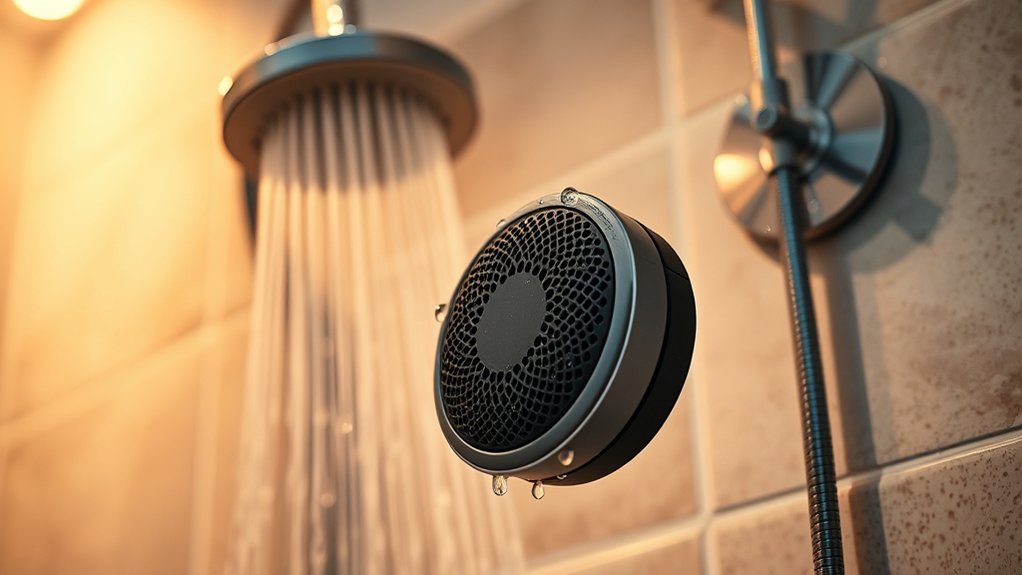
Ensuring your shower speaker withstands steam and humidity is just one part of maintaining its overall safety and performance. Bluetooth safety is crucial since your device relies on wireless signals that can be affected by interference.
Bluetooth connections use short-range radio waves, minimizing exposure risks. However, wireless interference from other devices can degrade audio quality or cause disconnections.
| Factor | Impact on Bluetooth Safety | Mitigation |
|---|---|---|
| Signal Range | Limited, reduces exposure | Keep close proximity |
| Wireless Interference | Causes dropouts | Minimize devices nearby |
| Water Exposure | No direct effect on signal | Use waterproof casing |
| Power Source | Battery-operated | Avoid overcharging |
| Encryption | Protects data integrity | Use devices with secure pairing |
How to Prevent Electrical Hazards With Shower Speakers
Why should you prioritize preventing electrical hazards when using shower speakers? Electrical shock and device failure risks increase with improper handling and water exposure. To minimize these hazards, always use shower speakers designed with waterproof ratings of at least IPX7, ensuring reliable water resistance.
Avoid charging the speaker in humid or wet environments to prevent electrical short circuits. Maintain regular inspections for damaged seals or exposed wiring, as these are common safety misconceptions. People often assume all waterproof devices are impervious to water damage.
Additionally, use only manufacturer-recommended chargers and cables to avoid voltage irregularities. By following these evidence-based precautions, you can safely enjoy your shower speakers while reducing the risk of electrical hazards related to water exposure and misuse.
Can Shower Speakers Hurt Your Hearing?
While preventing electrical hazards is crucial for safe shower speaker use, protecting your hearing is equally important. Exposure to high sound levels through shower speakers can lead to noise-induced hearing loss if you listen at excessive volumes for prolonged periods.
Preventing electrical hazards is vital, but safeguarding your hearing from loud shower speaker volumes is equally essential.
Research shows that sound levels above 85 decibels (dB) can damage your auditory system. Most shower speakers can reach or exceed this threshold, especially when used in close proximity to your ears.
To maintain hearing safety, you should monitor your speaker’s volume and avoid sustained exposure to loud sounds. Using shower speakers responsibly minimizes risks of temporary or permanent hearing impairment.
Ultimately, understanding and controlling sound levels is key to enjoying your audio without compromising your auditory health.
Tips for Using Shower Speakers Safely in the Shower
How can you use shower speakers safely without risking damage to your hearing or electrical safety? First, keep the volume at a moderate level to protect your ears from noise-induced hearing loss, as excessive volume can distort voice quality and increase risk.
Ensure your shower speaker has a waterproof rating of at least IPX7 to prevent electrical hazards. Regularly charge the battery within recommended limits to maintain optimal battery life and avoid malfunctions.
Position the speaker securely, avoiding direct water jets, which can degrade internal components and reduce voice quality over time. Use original chargers and cables to minimize electrical risks.
Finally, clean the speaker according to manufacturer guidelines to prevent moisture buildup that can compromise both safety and audio performance. Following these tips ensures safe, high-quality use.
When to Replace or Repair Your Shower Speaker
When should you consider replacing or repairing your shower speaker? If you notice diminished sound quality, persistent connectivity issues, or physical damage such as cracks or water ingress, it’s time to evaluate your options.
Repair can be viable if the problem involves a simple fix like replacing the battery or repainting worn surfaces to maintain water resistance. However, tampering with internal components may void warranty implications, so always consult the manufacturer’s guidelines first.
Simple repairs like battery replacement can help, but check the warranty before opening internal parts.
If corrosion or extensive internal damage is present, replacement is safer and more cost-effective than repair. Prioritize models with clear warranty policies to avoid unexpected costs.
Regularly assessing your shower speaker’s condition ensures safety and optimal performance without risking electrical hazards or water damage.
Frequently Asked Questions
Can Shower Speakers Be Used With Voice Assistants?
You can easily connect shower speakers with voice assistants, turning your bathroom into a command center. Just mind voice assistant compatibility and battery life considerations to ensure seamless control and uninterrupted audio performance during your routines.
Do Shower Speakers Affect Water Pressure?
Shower speakers don’t affect water pressure because they aren’t integrated into plumbing. Their waterproof ratings ensure durability against moisture, but you won’t experience any water pressure impacts when using them in your shower environment.
Are Shower Speakers Compatible With All Smartphone Brands?
Over 85% of shower speakers use Bluetooth, ensuring broad compatibility. You’ll rarely face compatibility concerns, but some features might be limited due to brand ecosystems, especially between iOS and Android devices.
Always check specs first.
How Long Do Shower Speaker Batteries Typically Last?
You’ll find shower speaker batteries typically last 6 to 12 hours per charge. Durability testing shows battery chemistry, often lithium-ion, influences longevity and recharge cycles, ensuring consistent performance under humid conditions and repeated use.
Can Shower Speakers Be Used Outdoors Besides Showers?
Yes, you can use shower speakers outdoors if they have strong outdoor durability and weather resistance ratings, like IPX7 or higher. These ratings ensure they withstand water, humidity, and occasional splashes without performance loss.