Are Polyester Shower Curtain Liners Safe
You might wonder if polyester shower curtain liners truly offer a safe option for your bathroom environment. Scientific analyses show that polyester, especially PET-based fibers, provide durability and resist mildew better than many materials. However, safety depends on factors like chemical additives and indoor air quality impact.
Understanding these nuances can help you make an informed choice. Let’s explore how polyester liners compare to other materials and what to consider for your health and home.
Key Takeaways
- Polyester liners are chemically stable and resist mold growth, making them generally safe for shower use.
- They lack harmful plasticizers and emit low VOCs compared to vinyl liners, reducing health risks.
- Polyester’s hydrophobic fibers minimize water absorption, helping prevent mold and microbial buildup with proper care.
- Odor indicators are minimal in quality polyester liners, reflecting safer chemical formulations and low synthetic smells.
- Regular washing and thorough drying are essential for maintaining hygiene and preventing mold on polyester liners.
What Are Polyester Shower Curtain Liners Made Of?
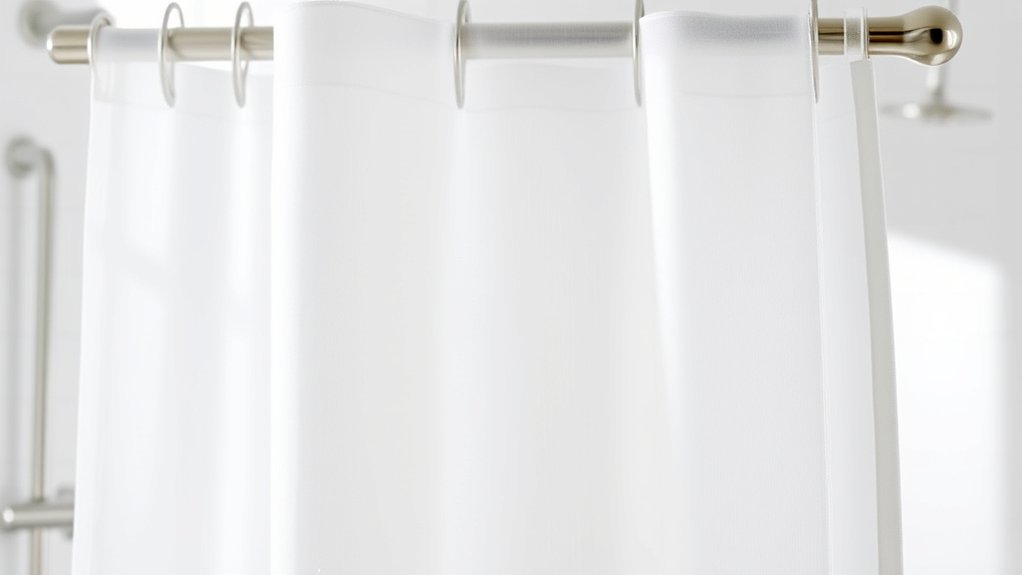
Polyester shower curtain liners consist primarily of polyethylene terephthalate (PET) fibers, a type of thermoplastic polymer known for its durability and water resistance. When you choose a polyester liner, you’re selecting a material engineered to withstand moisture while maintaining structural integrity.
PET fibers’ synthetic nature allows for easy integration of colors and patterns, which plays a significant role in color psychology and influences your bathroom decor ambiance. You can opt for vibrant or calming hues to evoke specific moods, enhancing the overall aesthetic.
Additionally, polyester’s resistance to stains and mildew supports the liner’s longevity, meaning it sustains both function and appearance over time. Understanding the material composition helps you make an informed choice aligned with your bathroom’s design and practical needs.
How Do Polyester Liners Protect Against Water and Mold?
How exactly do shower curtain liners keep your bathroom free from water damage and mold growth? Polyester liners function as water-resistant barriers, preventing water from escaping the shower area. Unlike vinyl, polyester’s dense weave repels water without relying on chemical coatings, debunking common waterproofing myths that all liners are equally impervious.
By limiting moisture exposure on bathroom surfaces, polyester liners reduce the conditions mold requires to thrive. Addressing mold myths, polyester itself doesn’t inhibit mold growth; instead, its quick-drying properties and resistance to water absorption minimize mold-friendly environments. Regular cleaning and proper ventilation remain essential to prevent mold.
Are Polyester Shower Curtain Liners Safe to Use?
What makes shower curtain liners safe for everyday use? Polyester liners are generally considered safe due to their chemical stability and resistance to microbial growth. You won’t find harmful plasticizers or volatile organic compounds (VOCs) commonly present in some vinyl liners, reducing potential health risks.
However, concernful reuse is important; repeated use without proper cleaning can lead to mold accumulation and exacerbate odor concerns. To maintain safety, you should regularly wash polyester liners using mild detergents and ensure thorough drying to prevent microbial buildup.
Scientific studies confirm that polyester’s hydrophobic properties minimize water absorption, limiting mold growth compared to more porous materials. By practicing proper hygiene and mindful replacement intervals, you can safely use polyester shower curtain liners without compromising indoor air quality or health.
How Do Polyester Liners Compare to Vinyl and PEVA Alternatives?
When choosing a shower curtain liner, you might wonder which material offers the best balance of safety, durability, and environmental impact. Polyester liners generally outperform vinyl alternatives in terms of mold resistance, as their tightly woven fibers allow better air circulation and faster drying.
Vinyl liners, often made from PVC, may off-gas harmful chemicals, raising safety concerns. PEVA liners, a common vinyl alternative, reduce chemical exposure but typically lack the durability of polyester.
Additionally, polyester resists tearing and maintains structural integrity longer under humid conditions. From an environmental perspective, polyester is recyclable, while PVC-based vinyl poses challenges in waste management.
How to Choose Safe and Eco-Friendly Polyester Shower Curtain Liners
To choose safe and eco-friendly polyester shower curtain liners, you should prioritize high-quality, non-toxic materials verified by recognized eco-certifications. Look for labels that confirm rigorous safety standards and environmental responsibility.
Additionally, proper care extends the liner’s lifespan, reducing waste and overall environmental impact.
Material Quality And Safety
How can you ensure a polyester shower curtain liner is both safe and eco-friendly? Start by selecting liners made from high-quality recycled materials, which reduce environmental impact by minimizing virgin polyester production.
Verify that the polyester is free from harmful additives such as phthalates and formaldehyde, common in lower-quality products, as these can pose health risks. Pay attention to allergen implications; untreated polyester tends to be hypoallergenic, but poor manufacturing may introduce irritants.
Choose liners with tightly woven fibers to resist mold and mildew growth, critical for maintaining indoor air quality. Finally, prioritize products with transparent sourcing and manufacturing details to confirm material safety and sustainability.
This evidence-based approach helps you minimize exposure to toxins while supporting eco-friendly practices.
Eco-Friendly Certifications
A reliable eco-friendly certification serves as a key indicator of a polyester shower curtain liner’s safety and environmental impact. When you choose liners with recognized eco-friendly labels, you ensure the product has undergone rigorous certification processes that verify low chemical emissions, non-toxicity, and sustainable manufacturing.
Certifications like OEKO-TEX Standard 100 or Global Recycled Standard provide scientifically backed assurance that harmful substances are minimized or absent. These labels also confirm that production adheres to environmental criteria, reducing pollution and resource consumption.
Care And Longevity Tips
Selecting polyester shower curtain liners with verified eco-friendly certifications is only the first step in ensuring safety and sustainability. To maximize their lifespan and maintain safety, follow specific care tips.
Regularly wash liners with mild detergent in cold water to prevent fiber degradation and microbial growth. Avoid harsh chemicals or bleach, which compromise material integrity and release harmful substances.
After washing, air dry liners thoroughly to inhibit mold and mildew development. For longevity tips, avoid direct sunlight exposure, as UV rays can weaken polyester fibers over time.
Additionally, use corrosion-resistant hooks to prevent physical wear during use. By applying these evidence-based care tips, you’ll preserve your polyester liner’s safety and functionality, reducing environmental impact and ensuring a healthier bathroom environment.
How to Clean and Maintain Polyester Shower Curtain Liners
Why does regular cleaning matter for polyester shower curtain liners? Regular cleaning prevents mold and mildew buildup, which thrive in moist environments and degrade liner integrity. You should wash your liner every 2-4 weeks using a gentle cycle with warm water and mild detergent.
Avoid bleach, as it can weaken polyester fibers. Adding a cup of white vinegar helps remove soap scum and inhibits microbial growth. After washing, air-dry the liner fully to prevent moisture retention, which fosters bacteria.
Spot-clean stubborn stains with a soft brush and baking soda paste. Remember, two word discussion ideas like “cleaning frequency” or “drying methods” are key to maintaining liner safety. Subtopic irrelevant details, such as unrelated bathroom accessories, don’t impact liner hygiene or durability and can be disregarded.
What to Look for When Buying a Polyester Shower Curtain Liner
When buying a polyester shower curtain liner, focus on material quality indicators such as fabric density and weave tightness, which affect durability and mold resistance.
Check for water resistance features like a waterproof coating or hydrophobic treatment to prevent water absorption and mildew growth. These factors directly influence the liner’s performance and longevity in a moist environment.
Material Quality Indicators
A high-quality polyester shower curtain liner combines durability, water resistance, and safety features to guarantee long-term performance. When selecting one, focus on durability testing results that assess tensile strength, abrasion resistance, and colorfastness to ensure the material withstands daily use without degradation.
Additionally, check for odor indicators; quality liners should emit minimal or no synthetic smell, reflecting low volatile organic compound (VOC) emissions and safer chemical formulations. Avoid liners with strong chemical odors, as they may release harmful substances.
Also, examine the fabric weave density and weight, since tighter weaves generally correlate with better durability and resistance to mold growth. Prioritize liners that provide clear data on these material quality indicators, supported by third-party testing, to ensure safety and longevity in your bathroom environment.
Water Resistance Features
Beyond material quality, water resistance stands as a key factor in evaluating polyester shower curtain liners. You need a liner that effectively repels water to prevent seepage, which can lead to mold growth.
Look for liners labeled with a high hydrostatic resistance rating, indicating their ability to withstand water pressure without allowing moisture penetration. A tightly woven polyester fabric with a durable water repellent (DWR) coating enhances water resistance, promoting faster drying and reducing water accumulation.
This barrier is critical for mold prevention, as persistent dampness creates an ideal environment for mold spores to thrive. When selecting a liner, check for certifications or lab tests confirming water resistance properties, ensuring you invest in a product that supports a hygienic and mold-free bathroom environment.
Frequently Asked Questions
Can Polyester Liners Reduce Bathroom Odors?
You’ll feel like you’re standing in a desert as polyester liners drastically reduce moisture, blocking mold growth that fuels odors. Their water-resistant fibers scientifically minimize dampness, effectively curbing bathroom smells and maintaining a fresher environment.
Do Polyester Shower Liners Cause Skin Irritation?
You typically won’t experience skin irritation from polyester shower liners unless you have skin sensitivity to synthetic materials.
Studies show polyester’s material safety is high, minimizing allergic reactions and making it generally safe for most users.
Are Polyester Liners Recyclable After Use?
You can’t easily recycle polyester shower curtain liners due to recycling limitations in facilities. Instead, consider disposal options like repurposing or specialized textile recycling programs.
These approaches help minimize environmental impact and manage waste scientifically and responsibly.
How Long Do Polyester Shower Liners Typically Last?
You’ll find polyester shower liners last about 2-3 years, thanks to their material composition’s durability.
Durability questions often arise, but evidence shows polyester resists mold and wear better than vinyl, extending liner lifespan considerably.
Can Polyester Liners Be Customized or Cut to Size?
You can cut polyester shower curtain liners to a custom size, ensuring a precise fit. Use sharp scissors and handle fabric care properly by washing gently to maintain integrity and prevent fraying, as supported by textile studies.