What Is the Volume of a Bathtub
Imagine your bathtub volume as a container whose capacity isn’t just about size but shape and depth as well. You might think it’s as simple as length times width times depth, but contours and material thickness play an essential role.
Understanding how to accurately calculate this volume can help you manage water use more efficiently—and that’s only the beginning of what you need before filling up. Considering these factors ensures you get a more precise measurement of your bathtub’s true capacity.
Key Takeaways
- Bathtub volume typically ranges from 40 to 80 gallons depending on shape and size.
- Rectangular tubs generally have the highest volume due to their uniform depth and dimensions.
- Calculate volume by measuring interior length, width, and depth, then converting cubic inches to gallons.
- Deeper tubs with sloped sides hold more water than shallow, straight-sided tubs of similar length.
- Features like armrests and material thickness reduce internal capacity, affecting total water volume.
Common Bathtub Shapes and Their Typical Volumes
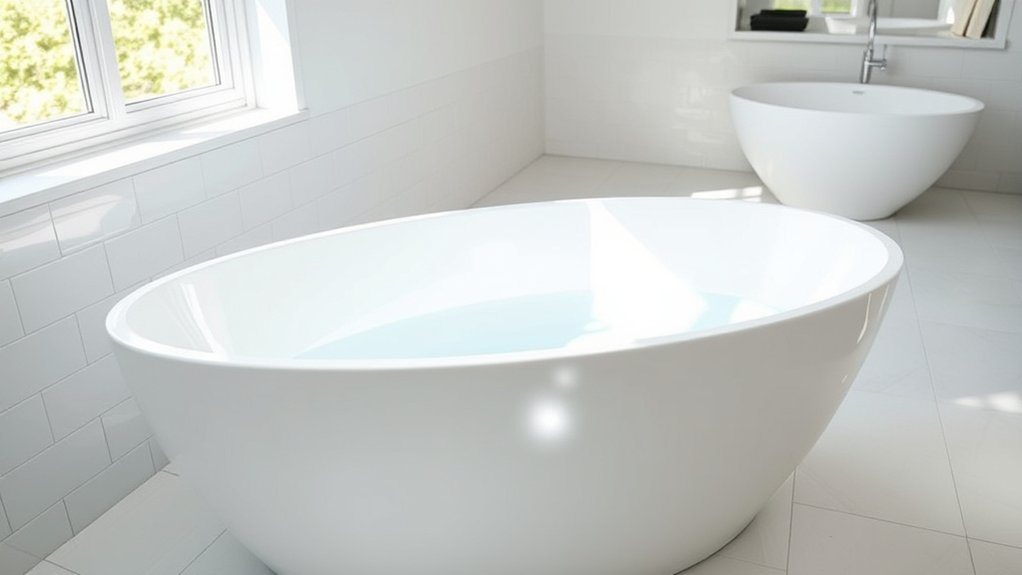
How do bathtub shapes affect their volume? The shape directly influences capacity by defining the internal space available for water. For example, rectangular tubs typically offer the most volume due to their uniform depth and length, making them a practical choice in bath design.
Oval and corner tubs, while aesthetically pleasing, often have reduced volume because of their curved edges and unique contours. Material choices also impact volume slightly; thicker materials reduce internal space but improve insulation.
When selecting a bathtub, you’ll notice that standard volumes range from 40 to 80 gallons, depending on shape and size. Understanding these typical volumes helps you choose a tub that fits your space and water usage preferences efficiently without needing complex calculations.
How to Calculate the Volume of Your Bathtub
Knowing the typical volumes of various bathtub shapes gives you a baseline, but calculating the exact volume of your specific tub requires precise measurements. Start by measuring the interior length, width, and depth of your bathtub in inches. Multiply these dimensions to find the cubic inches, then convert to gallons by dividing by 231 (the number of cubic inches in a gallon).
For irregular shapes, break down the tub into simpler geometric sections and calculate each volume separately before summing them. Accurate volume measurement aids bath maintenance and supports leak prevention by ensuring you don’t overfill the tub, avoiding stress on seals.
Measure the deepest point inside the tub
Record length and width at the top edge
Use a ruler or tape measure for precision
Key Factors That Influence Bathtub Volume
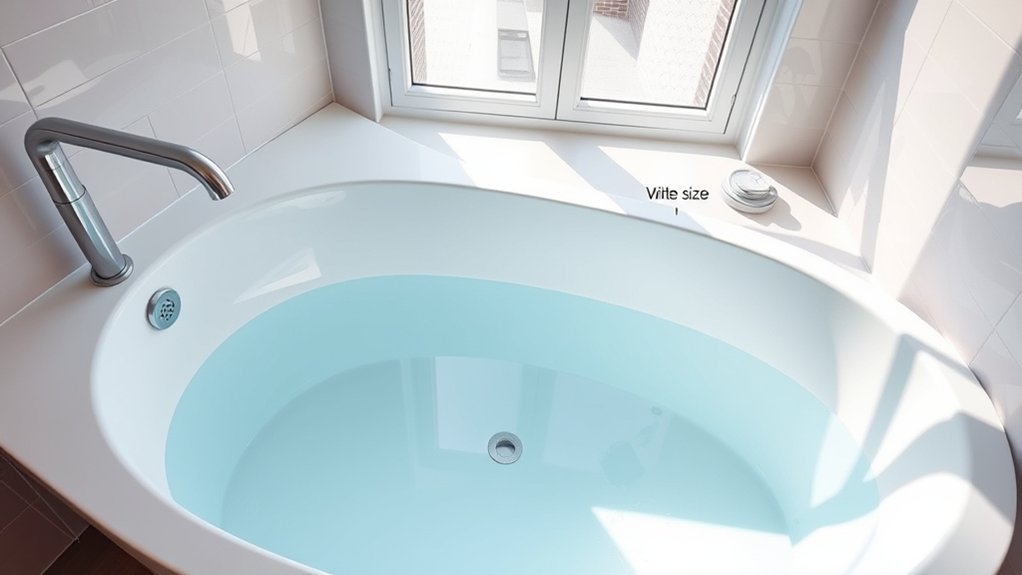
What determines the volume of your bathtub goes beyond just its dimensions. You must consider the shape, depth, and contour, as these geometric factors directly impact how much water it holds. For instance, a deeper tub with sloped sides usually contains more volume than a shallow, straight-sided model of similar length.
Material thickness also influences internal capacity, subtly affecting volume.
When planning bathroom budgeting, understanding these factors helps you select a tub that balances water capacity with cost-efficiency. Additionally, bath decor choices like integrated armrests or built-in seating can reduce usable volume, so factor these into your calculations.
Why Knowing Your Bathtub’s Volume Saves Water
Selecting a bathtub with the right volume directly impacts your water usage during each fill. When you know your tub’s exact capacity, you avoid overfilling, which conserves water and reduces utility costs.
Proper volume control also enhances bath safety by preventing overflow and slippery spills. Additionally, precise water use limits moisture buildup, aiding allergy reduction by minimizing mold and dust mite growth.
Consider these practical benefits:
- Filling just enough water to cover your body comfortably without excess
- Preventing water from spilling onto floors, reducing slip hazards
- Controlling humidity levels to keep the bathroom environment healthier
Estimating Water Volume Needed for a Comfortable Bath
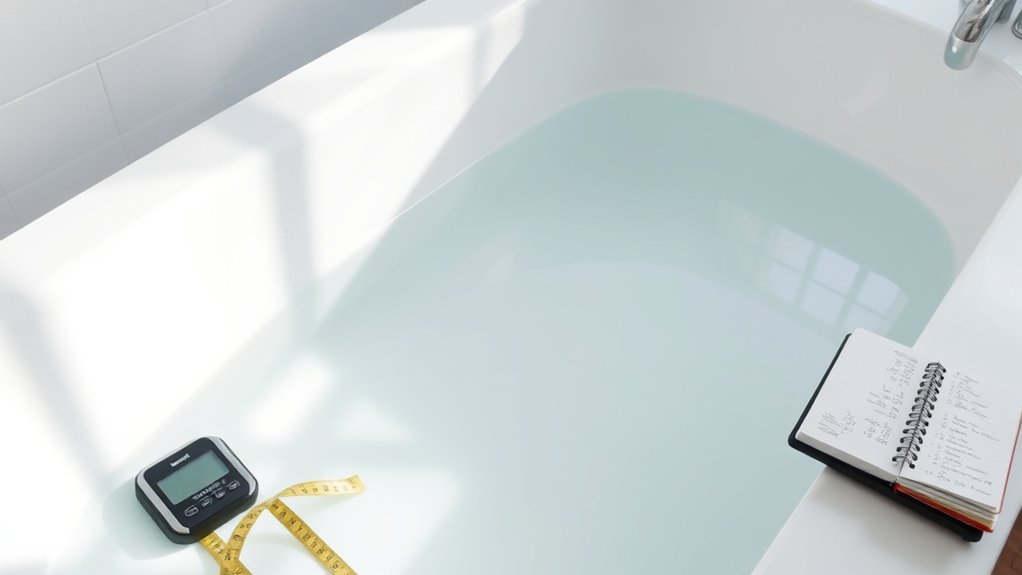
You’ll want to start by considering the average bathtub dimensions, typically around 60 inches long, 30 inches wide, and 14-16 inches deep. Using these measurements, you can calculate the water capacity by multiplying length, width, and fill depth, then converting cubic inches to gallons.
This approach helps you estimate the volume needed for a comfortable bath without overfilling.
Average Bathtub Dimensions
How much water do you need to fill a bathtub comfortably? Understanding average bathtub dimensions helps you estimate this volume accurately. Most standard bathtubs measure roughly 60 inches long, 30 inches wide, and 14 to 20 inches deep.
These measurements influence not only water capacity but also bathroom acoustics and bathtub aesthetics, affecting your overall bathing experience.
Consider these typical dimensions:
- Length: 5 feet (60 inches) for adequate legroom
- Width: 2.5 feet (30 inches) to fit most bathroom layouts
- Depth: 14 to 20 inches for sufficient water depth without overflow
Knowing these figures helps you plan water usage efficiently while maintaining comfort and visual appeal in your bathroom design.
Calculating Water Capacity
Exactly how much water does it take to fill your bathtub comfortably? To calculate water capacity, first measure your tub’s length, width, and depth in feet. Multiply these dimensions to get the volume in cubic feet, then convert to gallons by multiplying by 7.48.
Keep in mind, you don’t fill the tub to the brim; fill to about 70-80% to avoid overflow when you get in. This volume varies depending on your bath etiquette preferences and the soap brands you use, as some soaps require more water for optimal rinsing.
Accurately estimating water volume ensures efficient use, saves water, and maximizes comfort. Use this precise method to balance your soak with practical water consumption.
How to Get the Most Out of Your Bathtub’s Volume
To maximize your bathtub’s water capacity, focus on filling it efficiently without exceeding safe levels. You can optimize space by selecting a tub shape that complements your bathroom layout and body size. Understanding these factors helps you get the most practical use out of your tub’s volume.
Maximizing Water Capacity
Where can you make adjustments to increase the amount of water your bathtub holds? Start by evaluating the tub’s shape and dimensions. Oversized tubs naturally hold more, but you can optimize smaller ones too.
Minimize bathwater waste by ensuring the tub’s drain and overflow systems are properly sealed and positioned to allow a higher fill level without risk. Consider these practical modifications:
- Adjust the overflow drain height to increase maximum fill volume safely
- Select tubs with steeper walls and deeper basins for greater capacity
- Use water displacement techniques, like removing bath pillows or accessories, to allow more water volume
Efficient Space Utilization
Maximizing your bathtub’s water capacity is only part of the equation; making the most of the available space guarantees you get optimal use without unnecessary waste. To efficiently utilize your bathtub’s volume, focus on practical design features like ergonomic contours that conform to your body, minimizing unused voids.
Avoid irrelevant topic digressions such as unrelated bathroom storage, which distracts from space optimization. Employ two word discussion ideas like “shape optimization” and “depth calibration” to guide your choices.
For example, selecting a tub with a uniform depth enhances consistent water displacement, while maximizing length and width within your bathroom’s footprint increases usable volume. By prioritizing these precise factors, you harness your bathtub’s full potential without compromising comfort or function, ensuring a technically sound and practical bathing experience.
Frequently Asked Questions
What Materials Are Commonly Used to Make Bathtubs?
You’ll find bathtubs made from ceramic for durability and acrylic for insulation. Ceramic offers a sturdy, long-lasting surface, while acrylic provides excellent heat retention and lighter weight, making both materials practical for various bath designs.
How Long Does It Take to Fill a Bathtub?
In the age of steam engines, you’d wonder: how long does your bathtub filling take? Typically, it’s about 15 to 20 minutes, depending on water pressure and faucet flow rate.
Monitor flow for precise timing.
Can Bathtub Volume Affect Bathroom Heating Costs?
Yes, your bathtub volume impacts bathroom heating costs. Larger volumes increase bathtub heat loss, requiring more energy to maintain water temperature.
Are There Eco-Friendly Bathtubs With Smaller Volumes?
Yes, you’ll find eco friendly tubs designed with smaller volumes to reduce water use. These models optimize space and insulation, helping you save energy and minimize environmental impact without sacrificing comfort or functionality in your bathroom.
What Is the Average Weight of a Filled Bathtub?
You’ll find the average capacity of a bathtub is about 80 gallons, and the filled weight, including water and the tub itself, often reaches around 700 pounds, depending on materials and exact volume.
Conclusion
Now that you know how to calculate your bathtub’s volume, you can avoid overfilling and save water like a savvy Victorian conserving coal. Measuring accurately guarantees you get just the right amount of water for a comfortable bath, optimizing both comfort and efficiency.
Remember, understanding your tub’s shape and dimensions helps you make informed decisions, reducing waste and enhancing your bathing experience. With precise, practical water use every time, you’ll maximize the benefits of knowing the volume of a bathtub.