How Do You Clean a Bathtub That Is Not Porcelain
When cleaning a bathtub that is not porcelain, you’ll want to start by figuring out what material you’re dealing with—acrylic, fiberglass, or enamel-coated cast iron all need different care. Identifying the material is important because using harsh cleaners or scrubbing too hard can cause damage. Choosing the right cleaner and technique is key to maintaining your tub’s condition.
You might be surprised how a few simple steps can protect your tub and keep it looking fresh longer. Gentle cleaning methods often work best and help avoid scratches or discoloration. Let’s explore how to do this properly.
Key Takeaways
- Identify the tub material by texture and weight to choose appropriate cleaning methods and avoid damage.
- Use mild, pH-neutral cleaners designed for non-porcelain tubs; avoid harsh abrasives, bleach, and ammonia.
- Clean fiberglass and acrylic tubs by rinsing, applying mild cleaner, gentle scrubbing with a sponge, then rinsing and drying.
- Remove tough stains with a baking soda paste applied gently after testing a small hidden area for safety.
- Prevent water stains and scratches by wiping the tub dry after use with a soft cloth and maintaining regular cleaning.
How to Identify Your Non-Porcelain Bathtub Material
How can you tell what material your non-porcelain bathtub is made of? First, look at the surface texture and weight. Acrylic tubs feel lighter and warmer to the touch, with a glossy finish, while fiberglass is slightly rougher and less durable.
Cast iron tubs are heavy, cold, and have a smooth enamel coating, offering high material durability. Steel tubs also feel heavy but might chip more easily. Knowing this helps you choose appropriate cleaning methods and installation tips.
For example, acrylic tubs require gentle handling during installation to avoid cracks, whereas cast iron needs sturdy support due to its weight. Identifying your tub’s material accurately ensures you maintain it properly and avoid damage during cleaning or installation.
How to Choose Safe Cleaners for Your Non-Porcelain Tub
Knowing the material of your non-porcelain bathtub guides you in selecting the right cleaning products that won’t cause damage. For effective non porcelain maintenance, avoid harsh abrasives or acidic cleaners, which can erode surfaces like fiberglass, acrylic, or enamel-coated tubs.
Instead, choose mild, pH-neutral cleaners designed specifically for your tub’s material. Look for labels that specify safety for non-porcelain finishes to protect tub durability. Avoid bleach or ammonia, as they can discolor or weaken the surface over time.
Testing a cleaner on a small, hidden area first helps ensure it won’t cause harm. By picking gentle, compatible cleaners, you maintain both the appearance and structural integrity of your tub, making your cleaning routine safer and more efficient.
Step-by-Step Cleaning for Non-Porcelain Fiberglass and Acrylic Tubs
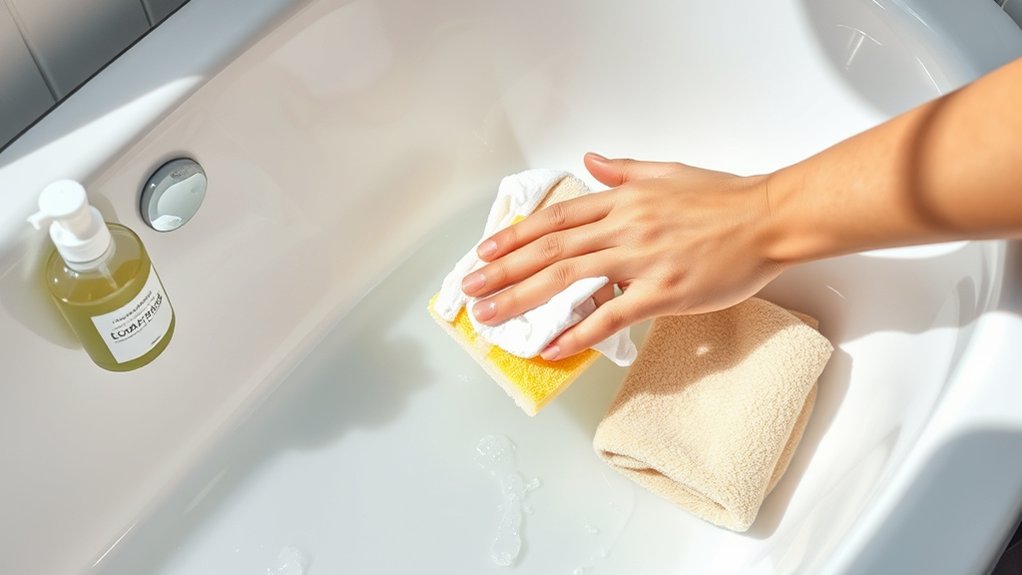
When cleaning fiberglass or acrylic tubs, you’ll want to follow a careful routine that avoids damage while removing grime effectively. To protect the non porcelain durability and maintain fiberglass integrity, use gentle, non-abrasive cleaners and soft cloths.
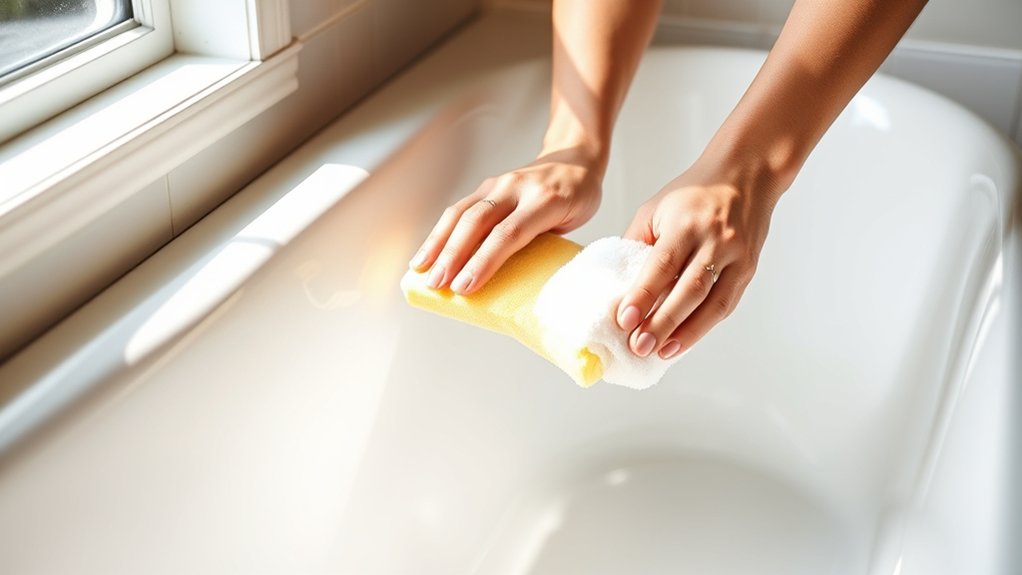
Start by rinsing the tub with warm water, then apply a mild cleaner, letting it sit briefly. Next, scrub gently with a sponge in circular motions to lift dirt without scratching. Finally, rinse thoroughly and dry with a microfiber cloth to prevent water spots.
| Step | Action | Tip |
|---|---|---|
| 1 | Rinse with warm water | Loosens dirt without damage |
| 2 | Apply mild cleaner | Avoid harsh chemicals |
| 3 | Gently scrub & rinse | Preserve fiberglass integrity |
How to Remove Tough Stains Without Damaging Your Tub
After gently cleaning your fiberglass or acrylic tub, you might still notice stubborn stains that won’t budge with mild cleaners. To tackle these without harming your tub’s surface, choose stain removers designed for non porcelain durability.
Before applying any product, perform tub material testing on a small, hidden area to ensure it won’t cause discoloration or damage. Use a soft cloth or non-abrasive sponge to apply the cleaner, scrubbing gently in circular motions.
Avoid harsh scrubbing pads or acidic chemicals, as they can erode the tub’s finish. If stains persist, try a paste made from baking soda and water, letting it sit for 15 minutes before wiping. This method respects your tub’s material while effectively removing tough stains.
How to Prevent Scratches and Discoloration While Cleaning
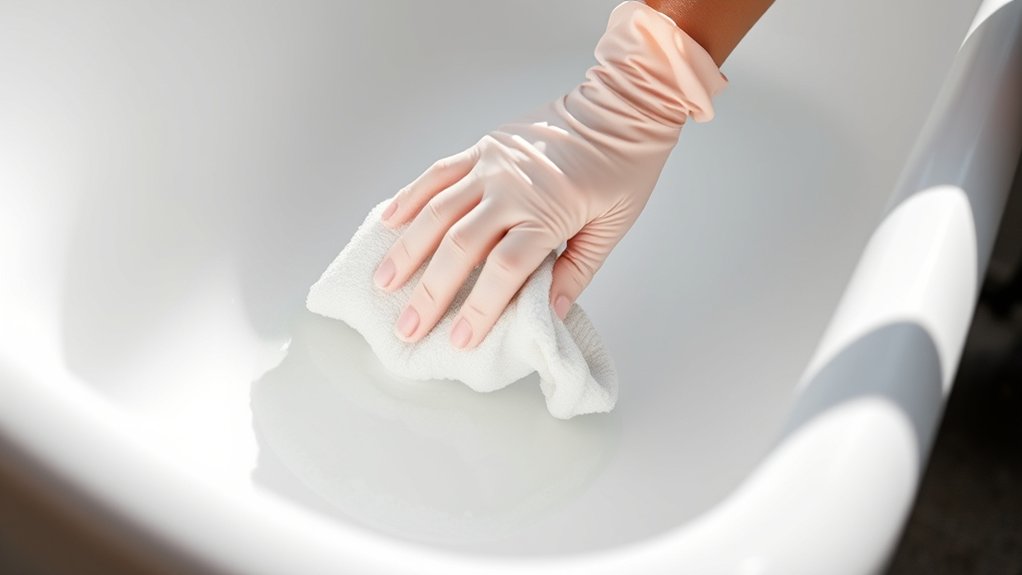
To keep your non-porcelain bathtub looking its best, always choose gentle cleaning tools like soft sponges or microfiber cloths. Avoid abrasive scrubbers that can cause scratches and dull the surface.
Using non-abrasive cleaners will help prevent discoloration and maintain your tub’s finish over time.
Choose Gentle Cleaning Tools
Why should you opt for gentle cleaning tools when tackling a non-porcelain bathtub? Using harsh scrubbers or rough brushes can scratch or dull delicate surfaces like acrylic, fiberglass, or enamel. Gentle tools protect the finish and keep your tub looking new longer.
Here’s what you should use:
- Soft microfiber cloths that trap dirt without scratching
- Non-abrasive sponges designed for sensitive surfaces
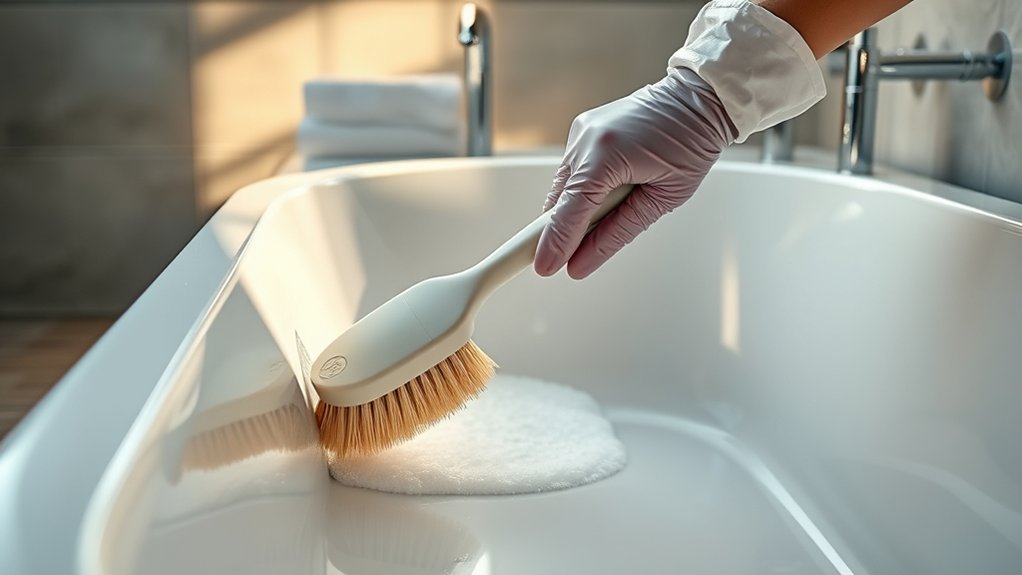
- Soft-bristled brushes for grout or corners
- Nylon scrub pads instead of steel wool or metal brushes
- Rubber gloves to protect your hands and improve grip
Use Non-Abrasive Cleaners
How exactly can you keep your non-porcelain bathtub spotless without causing scratches or discoloration? Start by identifying tub materials, as this guides your cleaning choices.
Materials like acrylic, fiberglass, or enamel require gentle care. Use non-abrasive cleaners specifically designed for your tub type to avoid damaging the surface.
Avoid harsh scrubbing pads or powders that can leave micro-scratches. Instead, opt for liquid or cream cleaners labeled non-abrasive, which effectively remove grime without harming the finish.
Apply the cleaner with a soft cloth or sponge, gently wiping in circular motions. Rinse thoroughly to eliminate residue that might dull the surface.
Natural and DIY Cleaning Solutions for Non-Porcelain Bathtubs
Where can you find effective, natural cleaning solutions that won’t damage your non-porcelain bathtub? Consider DIY options using gentle, eco-friendly ingredients that protect surfaces like acrylic or fiberglass.
Avoid harsh chemicals and recycled solvents that might harm chalk finishes or delicate coatings. Instead, try these safe, natural cleaners:
- Baking soda mixed with water to form a paste for scrubbing
- White vinegar diluted with water for disinfecting and dissolving soap scum
- Liquid castile soap combined with warm water as a mild cleanser
- Lemon juice for tackling stains and adding a fresh scent
- Olive oil to restore shine without abrasive effects
These solutions clean effectively while preserving your tub’s finish, ensuring you avoid damage and maintain a fresh bathroom environment naturally.
How to Maintain Your Non-Porcelain Bathtub’s Shine Between Cleanings
To keep your non-porcelain bathtub shining between deep cleanings, wipe it down gently after each use to prevent buildup. Always choose non-abrasive cleaners to protect the surface from scratches.
Plus, drying the tub thoroughly helps you avoid water stains and keeps it looking fresh longer.
Regular Gentle Wiping
Why wait for grime to build up when you can keep your non-porcelain bathtub looking fresh with just a quick, gentle wipe? Regular wiping prevents dirt and soap scum from settling, making deep cleaning easier.
Use soft cloths or microfiber dusting gadgets to avoid scratches. Keep your wiping tools in a dry, accessible spot with smart storage tips to encourage frequent use. Here’s what you should do:
- Wipe down the tub after each use with a damp microfiber cloth
- Use dusting gadgets to reach tight corners and fixtures
- Store cloths and gadgets nearby for easy access
- Avoid harsh scrubbing; gentle pressure works best
- Dry the surface to prevent water spots and mildew
This habit keeps your tub shiny and reduces the need for intense cleaning sessions.
Use Non-Abrasive Cleaners
How often do you reach for harsh chemicals when cleaning your non-porcelain bathtub? Instead, choose non-abrasive cleaners that are gentle yet effective. These products protect your tub’s surface and keep it looking shiny without causing damage.
Always pick cleanup safe options to avoid residue buildup.
Here’s a quick guide to non-abrasive cleaners:
| Cleaner Type | Benefits |
|---|---|
| Mild Dish Soap | Cuts grease, safe on surfaces |
| Baking Soda Paste | Removes stains gently |
| White Vinegar | Dissolves soap scum |
| Commercial Non-Abrasive | Designed for delicate tubs |
Using these regularly maintains your tub’s shine between deep cleanings while preventing scratches and dullness.
Prevent Water Stains
When was the last time you noticed water spots dulling your bathtub’s surface? Preventing water stains is key to maintaining your non-porcelain bathtub’s shine between cleanings.
Here are some practical two word discussion ideas to keep in mind:
- Wipe dry: Use a soft cloth or squeegee after each use to remove standing water.
- Vinegar spray: Lightly mist vinegar solution weekly to break down mineral deposits.
- Soft cloth: Avoid abrasive materials that can scratch and trap stains.
- Proper ventilation: Keep the bathroom dry to reduce moisture buildup.
- Routine check: Inspect for early stains and address them promptly.
Frequently Asked Questions
Can I Use Bleach to Disinfect a Non-Porcelain Bathtub?
You can use bleach to disinfect a non-porcelain bathtub, but you must consider bleach safety and the tub’s chemistry. Always dilute bleach, ventilate well, and test a small area first to avoid damaging the surface.
How Often Should I Deep Clean My Non-Porcelain Bathtub?
Don’t let dust settle. Deep clean your non-porcelain bathtub every two weeks.
Stick to this maintenance schedule to prevent buildup, keep surfaces sparkling, and prolong your tub’s life with simple, consistent care.
Are There Special Tools Recommended for Cleaning Non-Porcelain Tubs?
You should use soft sponges or microfiber cloths as cleaning tools for non porcelain surfaces to avoid scratches. Non-abrasive brushes also work well, ensuring you clean gently yet effectively without damaging your bathtub’s finish.
Can Hard Water Damage a Non-Porcelain Bathtub Surface?
Yes, hard water can damage your tub material by leaving mineral deposits that dull its surface and cause staining. You should regularly clean and use water softeners or specific cleaners to protect and maintain your tub’s finish.
Is It Safe to Use a Steam Cleaner on Non-Porcelain Tubs?
You’ll be glad to know steam cleaning is generally safe for non-porcelain tubs, improving cleaning safety by killing 99.9% of bacteria.
Just avoid excessive heat on acrylic to prevent warping or damage.
Conclusion
Now that you know how to care for your non-porcelain tub, cleaning will be as smooth as silk. By choosing gentle cleaners and scrubbing softly, you’ll protect the surface while keeping it spotless.
Remember, a little patience and the right approach prevent scratches and stains from sticking around like unwelcome guests. Stick to these steps, and your tub will shine beautifully, ready for relaxing soaks anytime you want.
With proper care and the right techniques, cleaning a bathtub that is not porcelain becomes an easy and effective routine.