How Do You Think the Bathtub Ring Formed
You’ve likely noticed that stubborn bathtub ring along your bathtub’s edge, but understanding how the bathtub ring formed requires looking closely at water chemistry and daily use patterns.
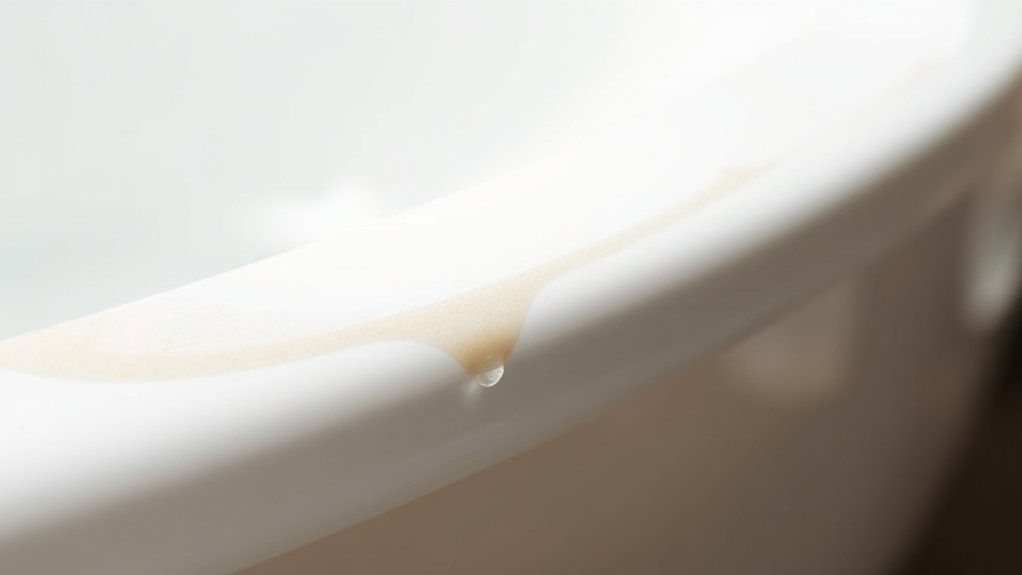
When mineral-rich water evaporates, calcium and magnesium ions precipitate, creating a tough mineral layer. This layer then binds with soap residues and body oils, especially near the waterline where evaporation is highest.
However, the full story behind how these elements interact and build up over time reveals essential details worth exploring further.
Key Takeaways
- Mineral deposits from hard water settle on the tub surface as water evaporates, forming visible rings near the waterline.
- Soap reacts with calcium and magnesium ions, creating insoluble soap scum that adheres stubbornly to the tub.
- Body oils combine with mineral buildup and soap scum, creating a tenacious layer that contributes to ring formation.
- Cleaning removes surface dirt but leaves microscopic mineral and soap layers that gradually accumulate into rings.
- Bathing habits, like long soaks and heavy soap use, increase residue buildup and accelerate bathtub ring formation.
Why Bathtub Rings Form
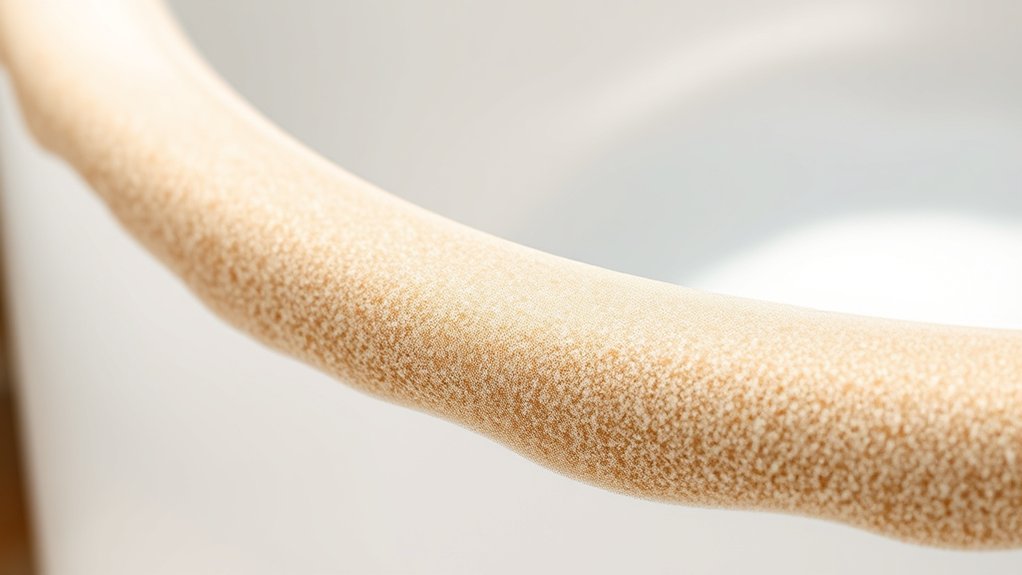
Why do bathtub rings form despite regular cleaning? You have to consider the underlying bathroom chemistry. Even after you scrub, subtle mineral deposition continues to occur on the tub’s surface.
These deposits consist mainly of minerals suspended in water that gradually settle as the water dries. Over time, this accumulation becomes visible as a ring, especially near the waterline where evaporation is highest.
Your cleaning routine may remove surface dirt but often fails to eliminate these microscopic mineral layers entirely. Additionally, bathroom chemistry involves interactions between soap residues and minerals, which can bind and adhere stubbornly.
Understanding this helps you realize why standard cleaning alone doesn’t prevent rings, signaling the need for targeted approaches that address these specific mineral deposits to maintain a spotless bathtub.
How Minerals and Hard Water Cause Bathtub Rings
The persistent presence of mineral deposits in your bathtub stems largely from the characteristics of the water supply, particularly its hardness. Hard water contains elevated levels of calcium and magnesium ions, which precipitate when water evaporates, causing mineral deposition along the tub’s edges.
This mineral buildup creates a rough surface that facilitates soap scum accumulation. When soap interacts with these minerals, insoluble compounds form, adhering stubbornly to the bathtub surface. Over time, mineral deposition combined with soap scum accumulation produces the visible bathtub ring.
Understanding this process highlights why regular cleaning is essential; without it, the combined effect of minerals and soap residues intensifies, making removal increasingly difficult. By recognizing hard water’s role, you can better target prevention and remediation strategies for bathtub rings.
Why Soap Scum and Body Oils Build Up in Bathtub Rings
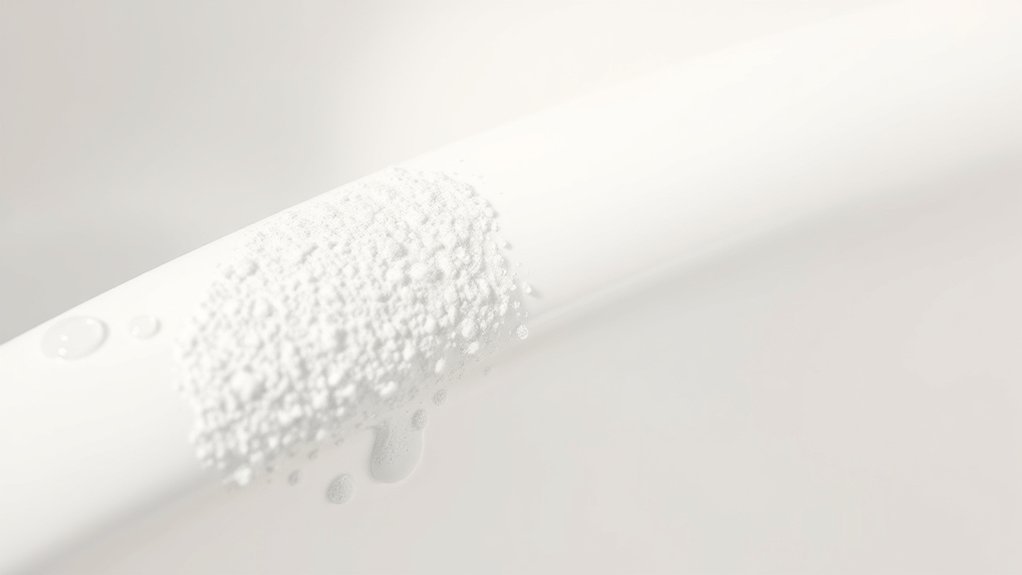
How exactly do soap scum and body oils accumulate to form stubborn bathtub rings? When you bathe, soap interacts with the calcium and magnesium ions present in hard water, creating insoluble soap scum.
Simultaneously, your body oils, which are hydrophobic, adhere to the tub’s surface and combine with this mineral buildup. This combination forms a tenacious layer that resists simple rinsing. Soap scum acts as a binder, trapping body oils and accelerating ring formation along the waterline.
Understanding this interaction highlights why ring prevention requires addressing both mineral content and residue removal. Although bathing habits influence residue volume, the chemical reaction between soap, minerals, and oils primarily drives buildup.
To minimize rings, you must target these compounds through thorough cleaning and water softening strategies.
How Bathing Habits Affect Bathtub Ring Formation
Since soap scum and body oils interact chemically to form bathtub rings, your bathing habits play a significant role in the rate and extent of buildup. Frequent, longer baths increase exposure to tap water chemistry elements like calcium and magnesium, accelerating ring formation.
Using more soap or oily products elevates residue deposition, negatively impacting bathroom aesthetics. Conversely, quick showers reduce contact time, limiting buildup.
| Bathing Habit | Effect on Ring Formation | Impact on Bathroom Aesthetics |
|---|---|---|
| Long Soaks | Increases mineral and oil residue | Promotes visible, stubborn rings |
| Frequent Baths | Accumulates soap scum rapidly | Diminishes bathroom cleanliness |
| Use of Oily Products | Adds to organic residue | Enhances ring visibility and texture |
| Quick Showers | Minimizes residue contact | Maintains cleaner, more polished look |
How to Prevent and Remove Bathtub Rings
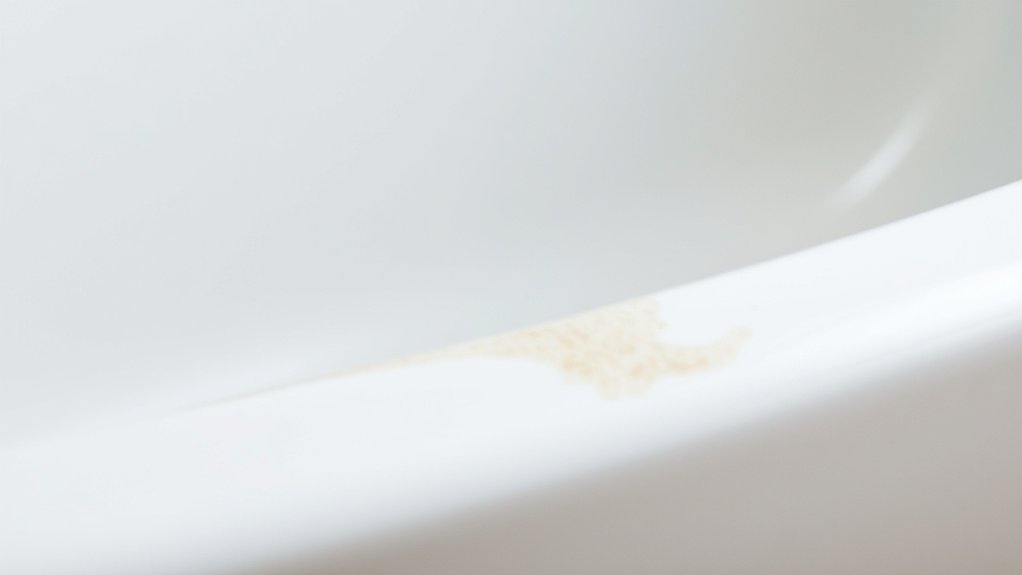
Why does bathtub ring buildup seem inevitable despite regular cleaning? The answer lies in mineral deposits, soap scum, and body oils adhering to the tub’s surface. To effectively tackle these issues, you need targeted prevention strategies and removal techniques. Start by:
- Applying a daily rinse to minimize residue accumulation.
- Using a water softener to reduce mineral content.
- Selecting non-abrasive cleaners with chelating agents for thorough removal.
- Wiping down the tub after each use to prevent drying and buildup.
Employing these methods disrupts the formation process, making maintenance manageable. For removal, focus on enzymatic or acidic solutions that break down organic material and mineral scale. Consistent application of these prevention strategies and removal techniques will substantially reduce bathtub ring formation, keeping your tub cleaner for longer.
Frequently Asked Questions
Can Bathtub Rings Damage the Bathtub Surface Permanently?
Yes, bathtub rings can permanently damage your tub’s surface if ignored. Proper bathroom maintenance prevents buildup; don’t fall for cleaning myths that recommend harsh abrasives, which might worsen surface erosion instead of protecting it.
Are Certain Bathtub Materials More Prone to Rings?
Yes, porous materials like natural stone absorb dusty residue and mineral buildup more readily, making rings harder to remove. Non-porous surfaces resist accumulation, so you’ll see fewer, less stubborn bathtub rings on acrylic or enamel finishes.
Do Water Softeners Completely Eliminate Bathtub Rings?
You wouldn’t trust a raincoat to keep you dry in a storm, just like water softeners don’t completely eliminate bathtub rings. They reduce mineral deposits but require regular bathtub maintenance for thorough removal.
Can Bathtub Rings Cause Skin Irritation or Allergies?
Yes, bathtub rings can increase irritation risk due to residual bathtub chemistry, including minerals and soaps. These compounds may disrupt your skin’s barrier, potentially triggering allergic reactions or dermatitis, especially with sensitive or compromised skin.
Is Professional Cleaning Required for Stubborn Bathtub Rings?
You don’t always need professional cleaning for stubborn bathtub rings; effective removal strategies and consistent maintenance routines often suffice. However, if rings persist despite your efforts, consulting a professional ensures thorough, precise treatment and prevents surface damage.
Conclusion
You might not realize that up to 85% of households experience hard water, which accelerates bathtub ring formation by depositing calcium and magnesium ions. These minerals combine tightly with soap scum and body oils, especially near the evaporating waterline, creating stubborn rings.
By understanding how your bathing habits and water quality contribute, you can prevent mineral buildup and maintain a cleaner tub. Regular cleaning disrupts this chemical bonding, stopping rings before they harden.
Taking these steps can help you effectively prevent bathtub ring formation and keep your tub looking fresh and clean.